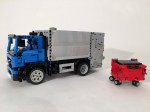
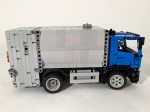
Hybrid Garbage Truck


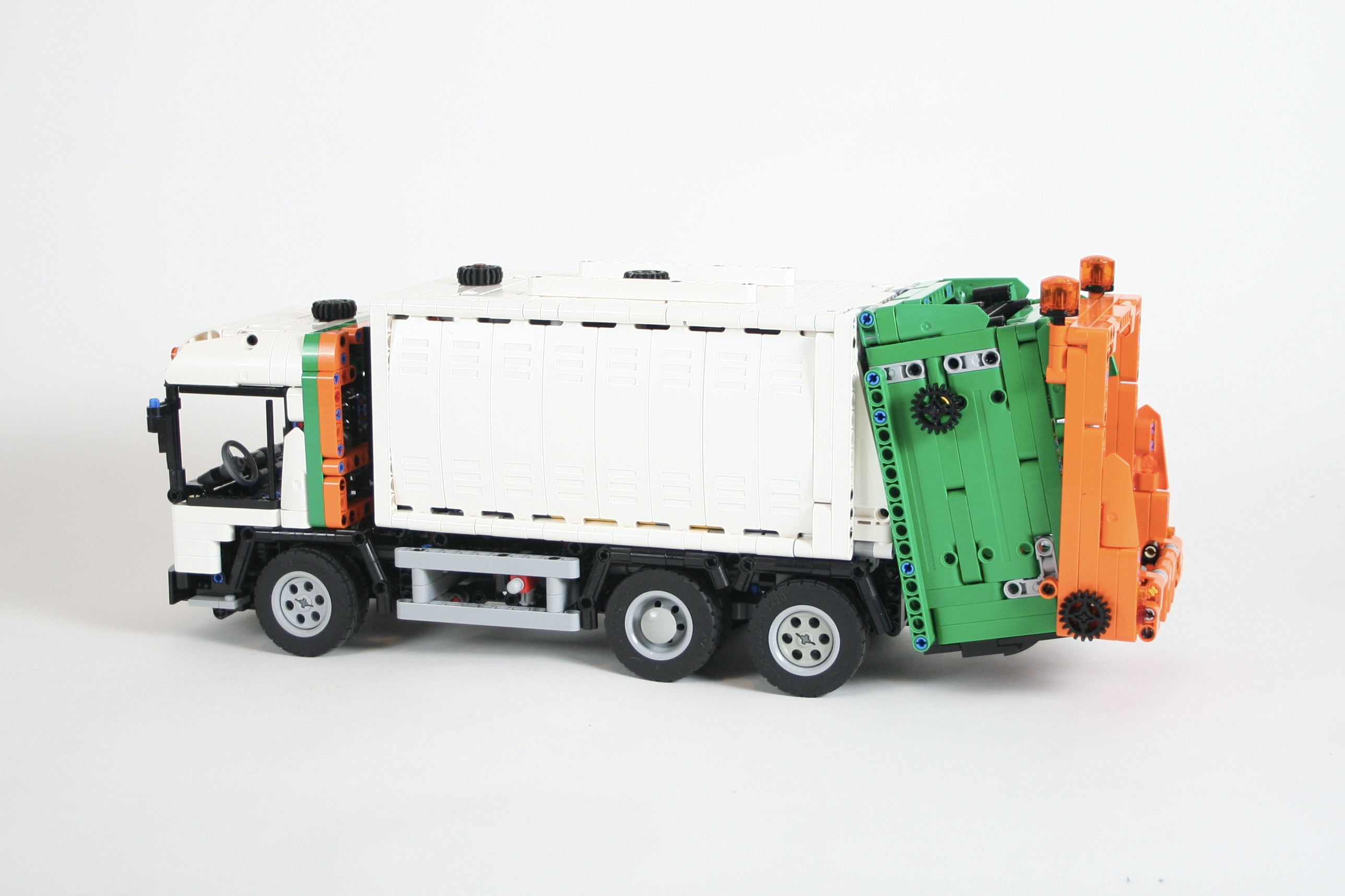
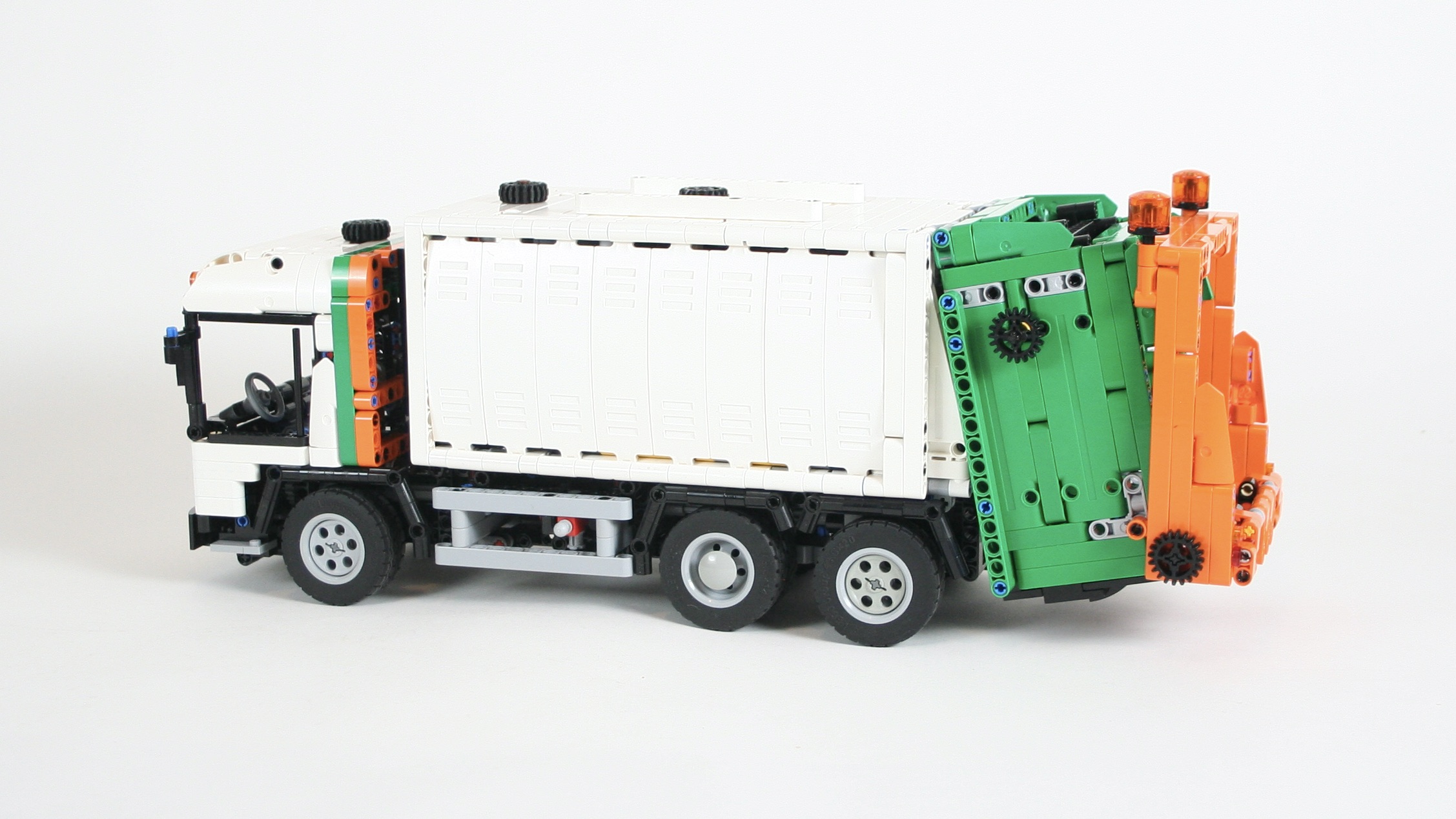
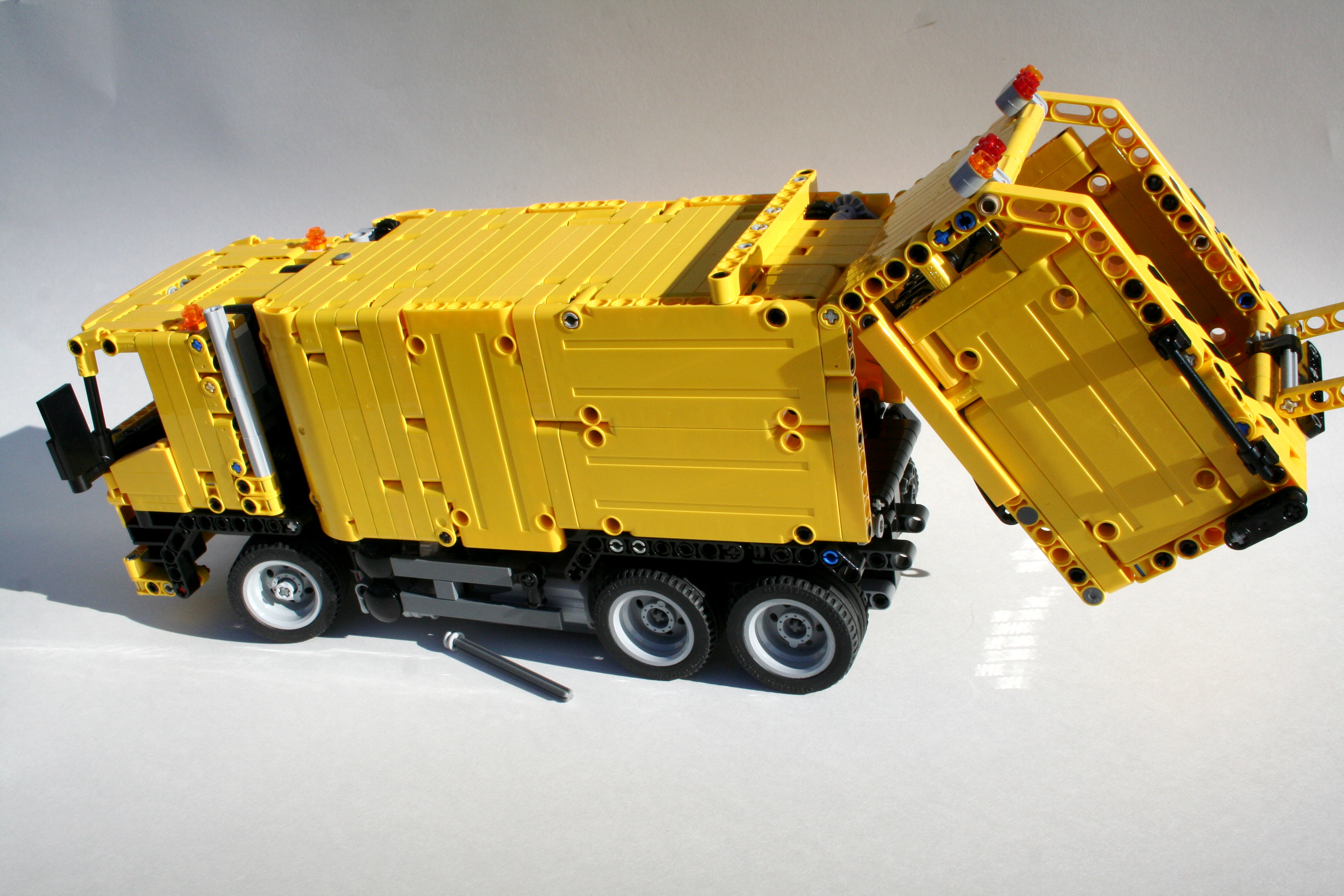
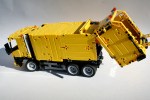
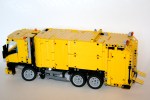
I had on my goals to complete another Garbage Truck for while. Now it is finally completed.

Instructions are available at Rebrickable.com.

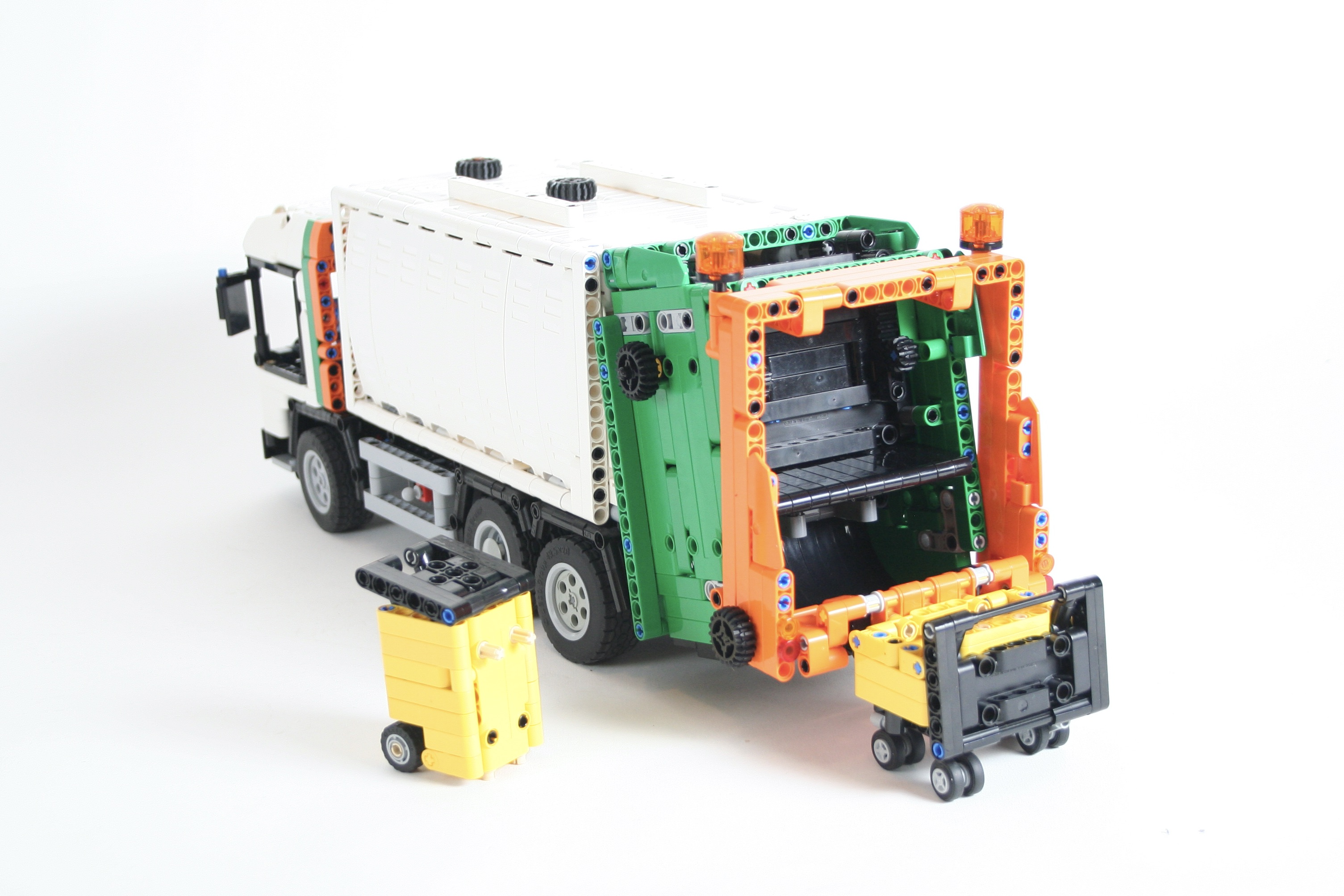
I like trucks, and I like building them. Garbage trucks are the most interested to me. Not only do they look interesting to my eyes, but mechanically they have a lot going on inside of them. Naturally, recreating this out of LEGO fits well with the type of building I enjoy. When I started on this project, I settled on a couple of standards. First, it would be 1:21 scale, second, it would be manually functioned, and finally, it would be a rear loader.

I worked on this model differently than I normally do. Generally I design a crude frame, and place all the mechanical aspects on this frame, and slowly build out the rest of model until it is done. On the garbage truck, I worked on three sections on the build in tandem: the chassis, the body, and the compactor.

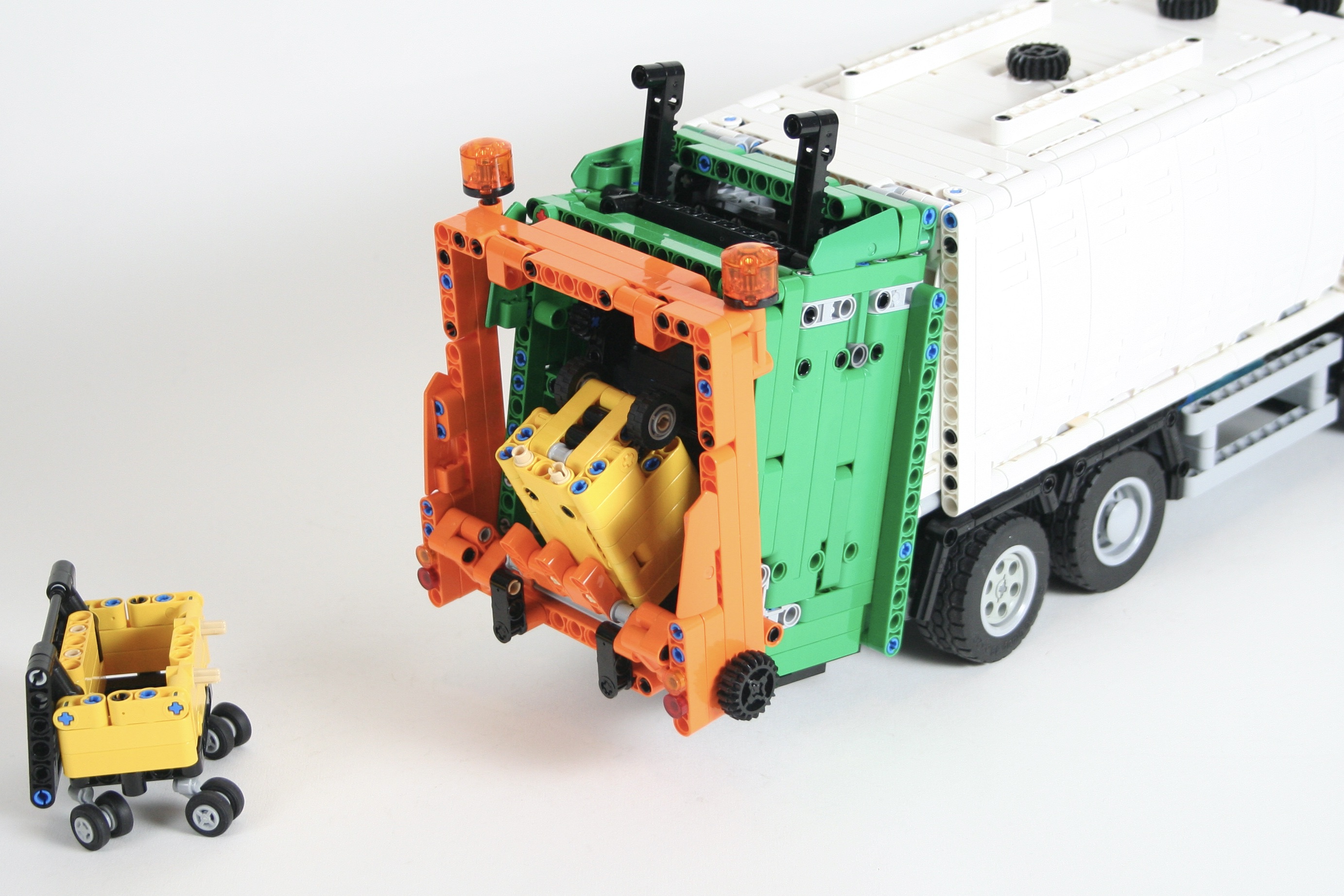
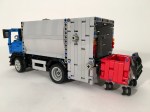
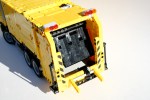
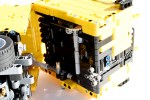
The compactor started first, and was the hardest to get right. I settled on a function that is controlled by one gear on the left of the truck. The gear moves the compactor door mount, and an interval resistance gear allows for movement of the compactor plate. The one gear controls the two movements. So when trash is added to the hopper, moving the gear extends the door down, pivots the plate, moves the door up, and then pivots the plate open again.

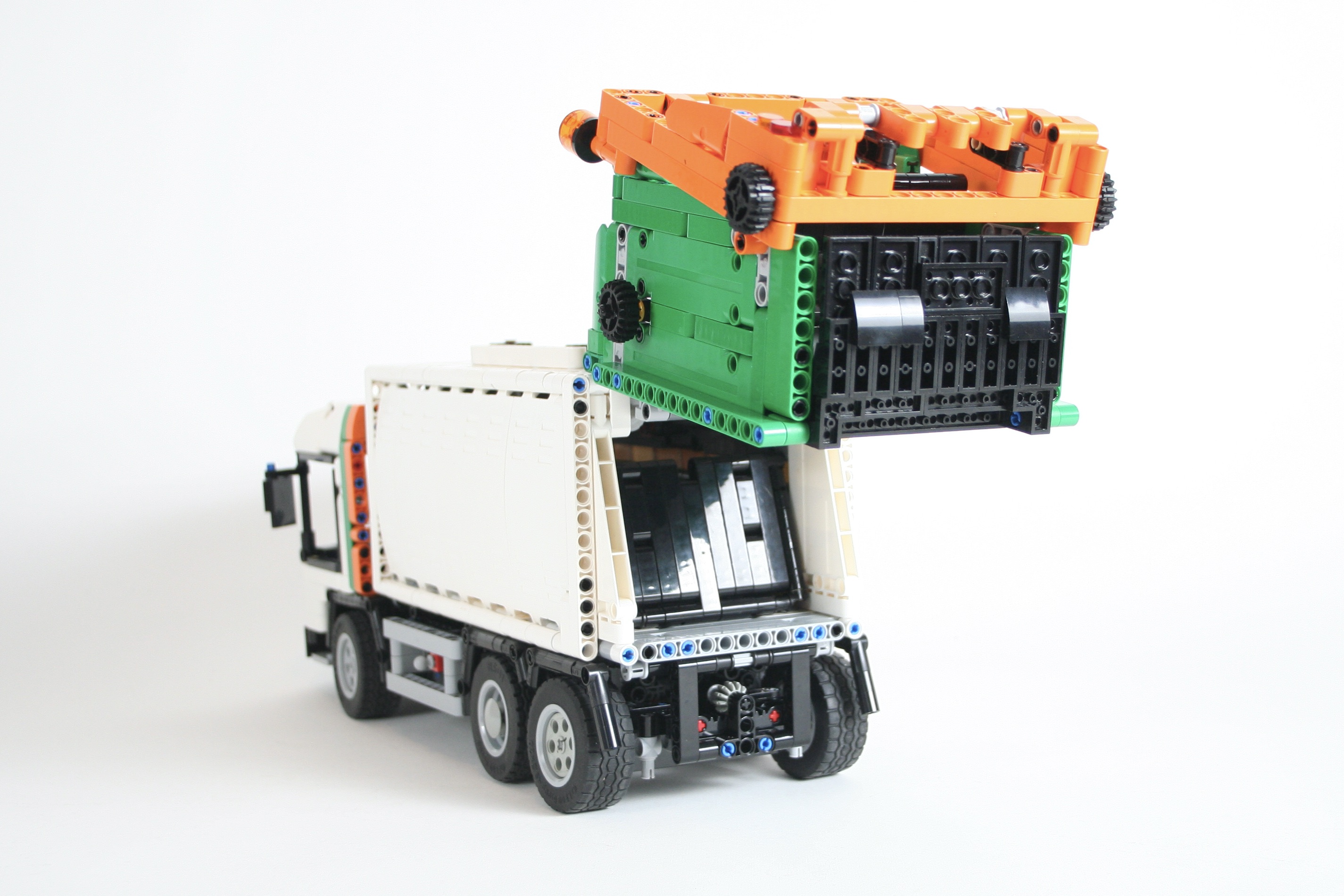
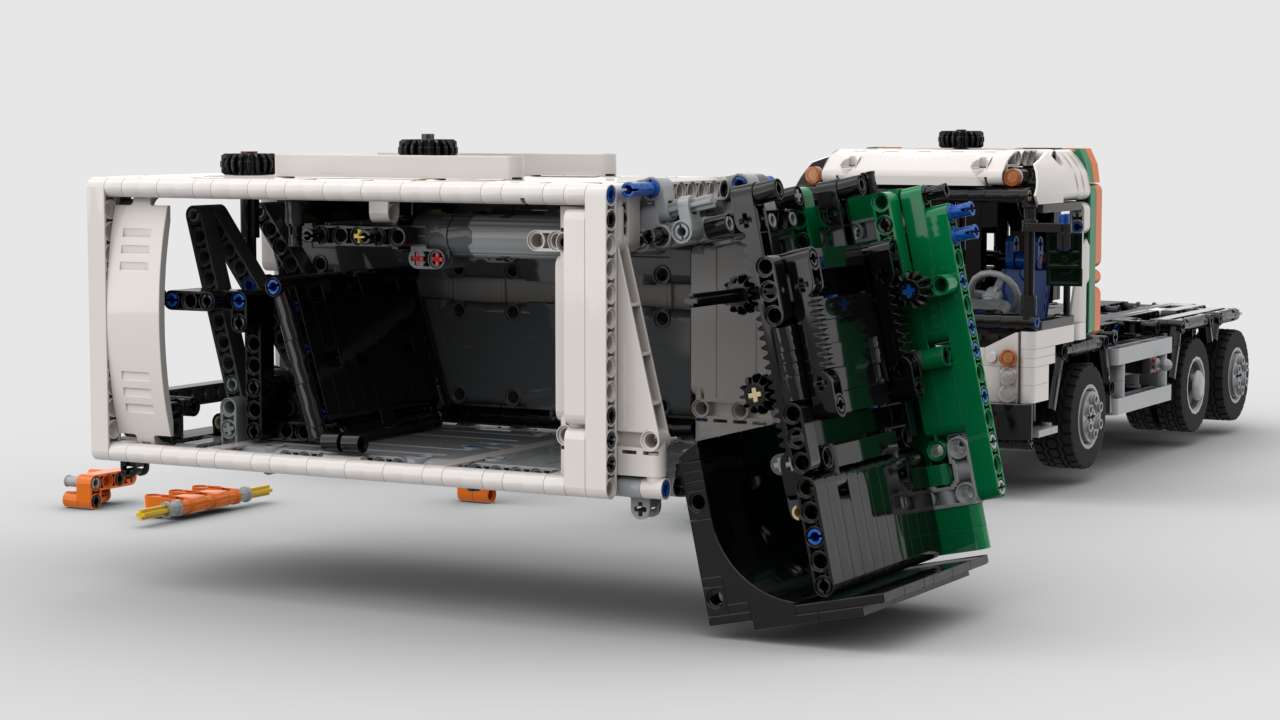
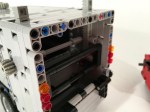
The body was started soon, and would need to work hand in hand with both the compactor and the chassis. The body would house both the extractor plate to push trash out of the truck, and the mechanism to pivot the compactor up to open. These two functions were simple to design, but what took the most time was making sure the body was strong to support the functions and the rear compactor, and to be smooth internally to make sure trash would not get stuck.

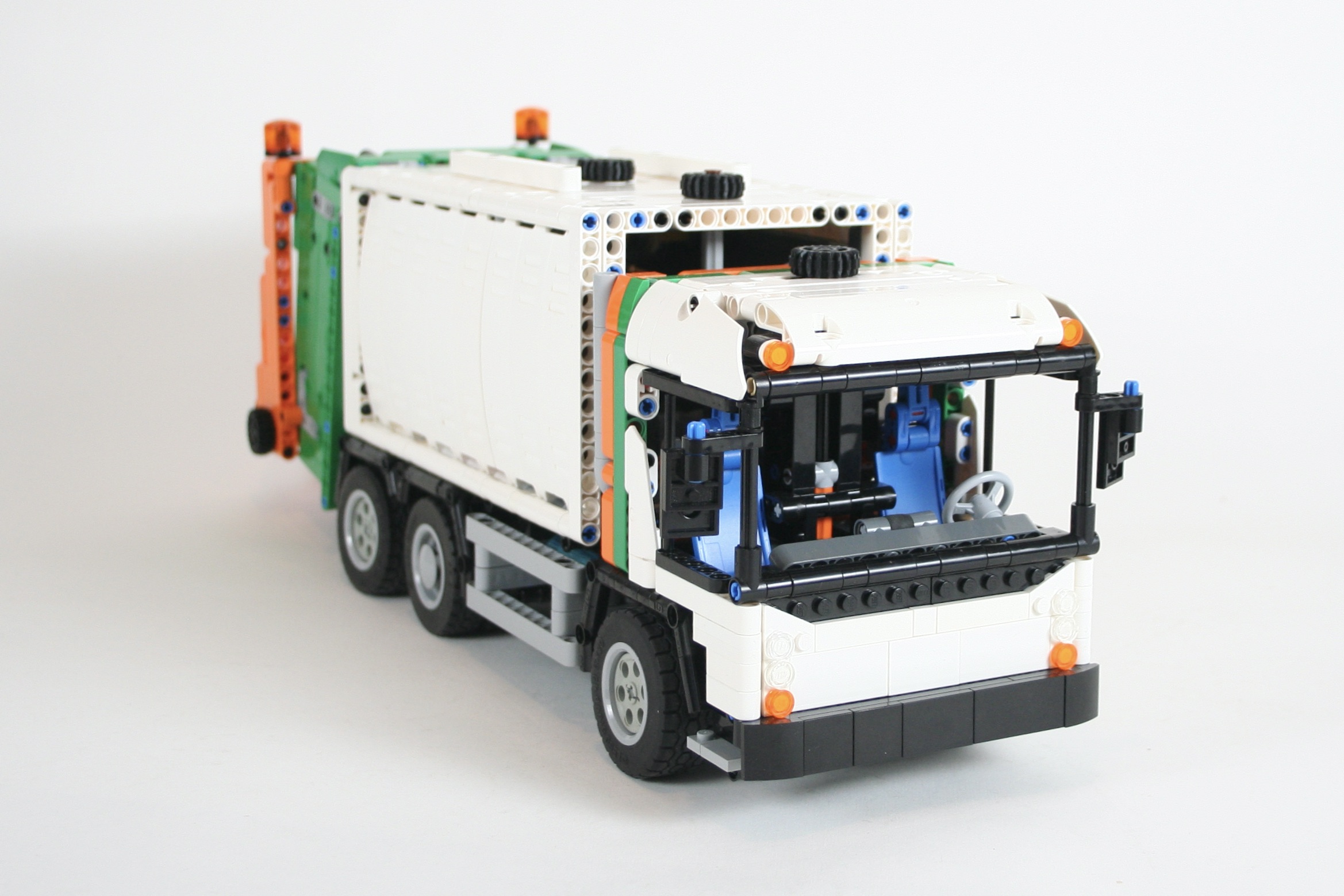
The chassis followed a more common building process. I started with the hardpoints like the wheelbase, length and engine placement, and slowly added in all the other parts needed. Right from the beginning I decided on a three axle chassis with axle 1 and axle 3 steering. Axle 2 would be the drive axle. As I built, it was clear there was a lot of extra space in the chassis. I added a little hybrid/EV drive to fill the space. The torque from the drive axle routes through a center differential that splits the torque between a fake electric motor and a fake piston engine. A resistance plate is added to the front of the piston engine so the torque will always start with the electric motor. When the speed increases, the torque will overwhelm the resistance plate and start using the fake piston engine too. It works just like a real hybrid engine. A selector is on the left side of the truck to select EV only where only the electric motors is used, or to select hybrid where both are used.

The truck and body are easily connected by four pins at the corner of the body. The cab tilts to make it easy to work on the engine. Finally, I created two small dumpsters for to hold trash. A small one and a larger one, and each fits with on the rear of the truck.

This ended up being one of my favorite models since the Ionos. The truck looks great, but packs lots of functional elements. The hybrid function works great and will be used again for another project. When I presented it at a show people could not get enough of watching the trash get cycled through the compactor. I always enjoy building a garbage truck, and I look forward to the next one I make.

Happy building.
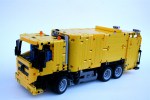
Iveco Skip Loader


I have done a lot of small scale trucks, and it was time for me to do something bigger. 2 studs bigger to be precise.

Full gallery is here.

01

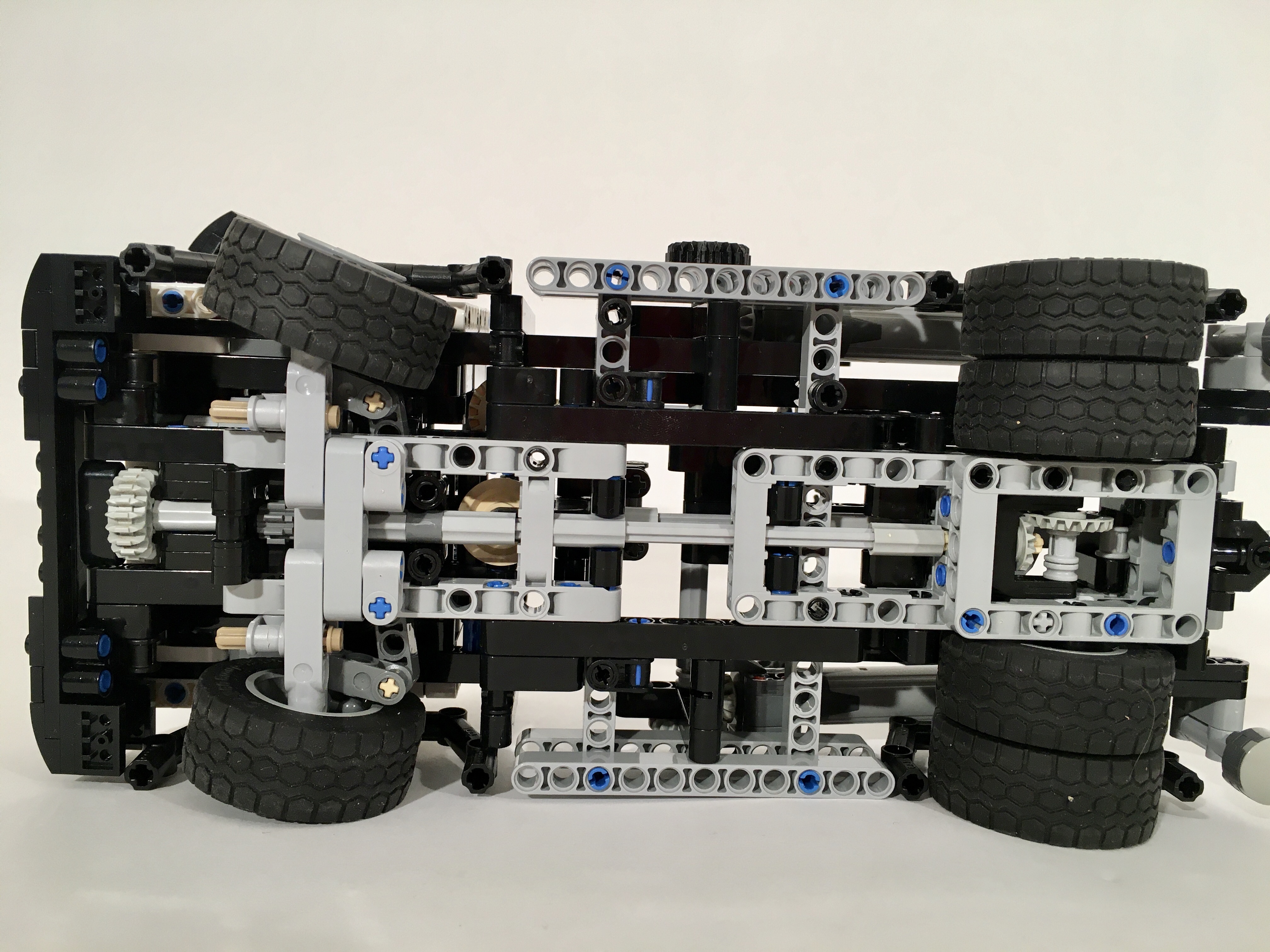
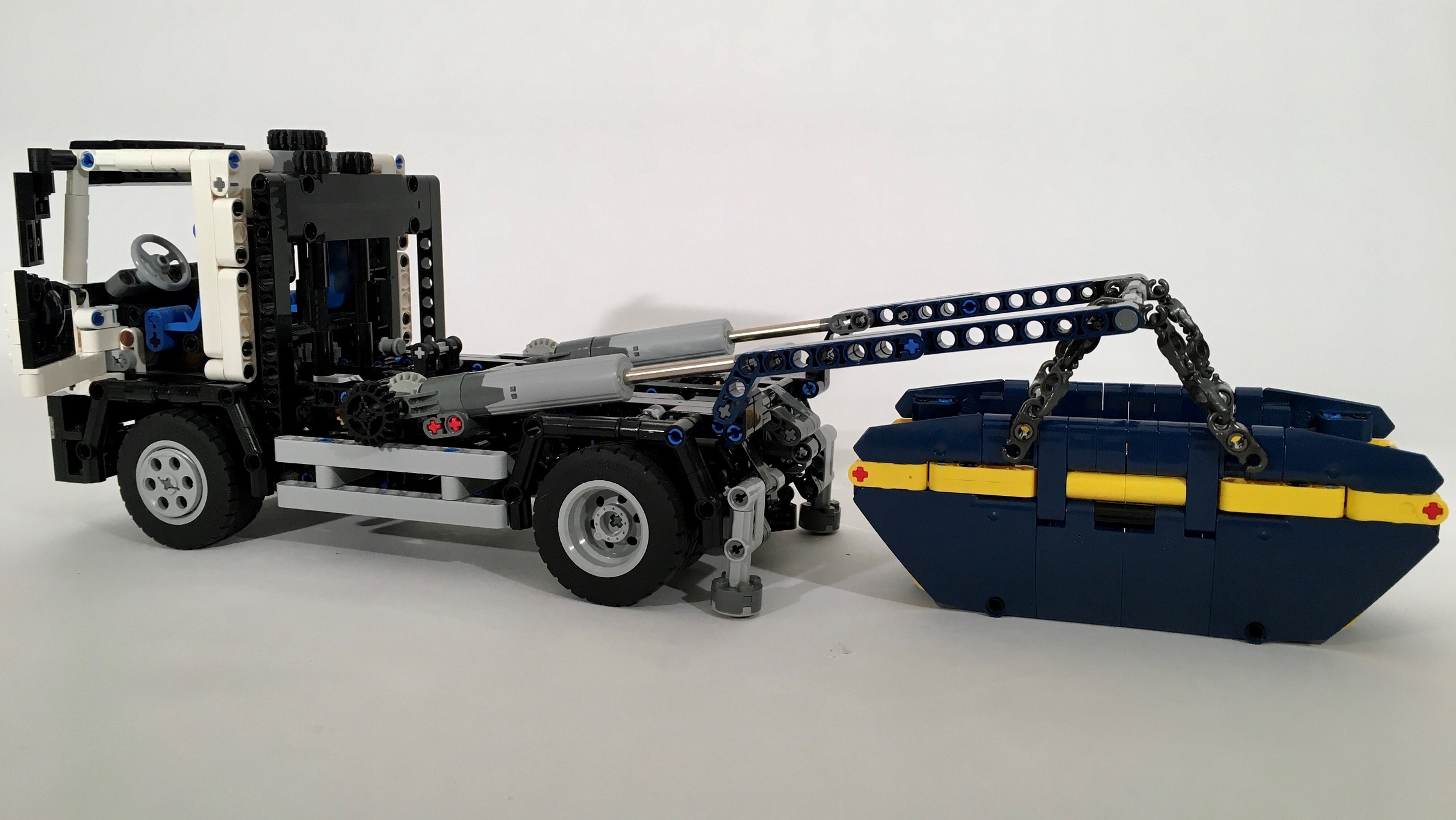
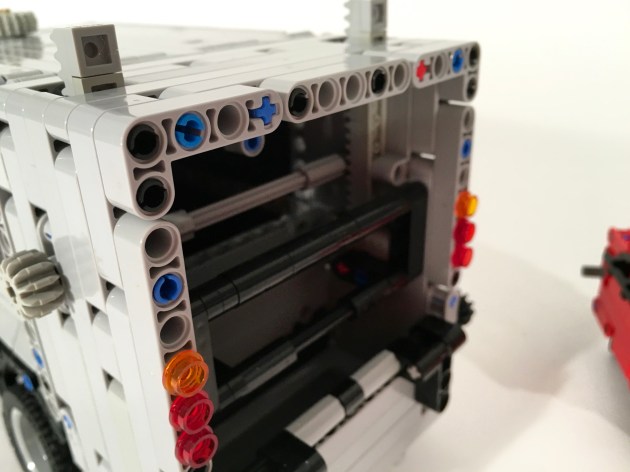
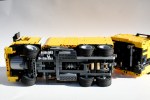
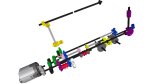
This project stared as a desire to make another small truck. I have used the 43.2mm tire in my trucks a lot, and I have used the 49.5mm tire only once. I was ready for the newer size again, so I found a nice little truck to model, and I was off. I very much like the shape of the 49.5mm tire, but it presents some challenges to scale. I works much better as a 15 stud wide size, and trucks often have a dual tires on the drive axle. This leaves only 5 studs of width to work with for the chassis and driveline. While a differential will fit within this space, keeping the axle connected to the differential does not happen when driving the finished truck. So I have a 8l axle with stop connected to a bevel gear on one side, and a 5l axle with stop. The gear then runs to the front of the truck where it connects to a V-4 engine.

fullsizeoutput_190b.jpeg

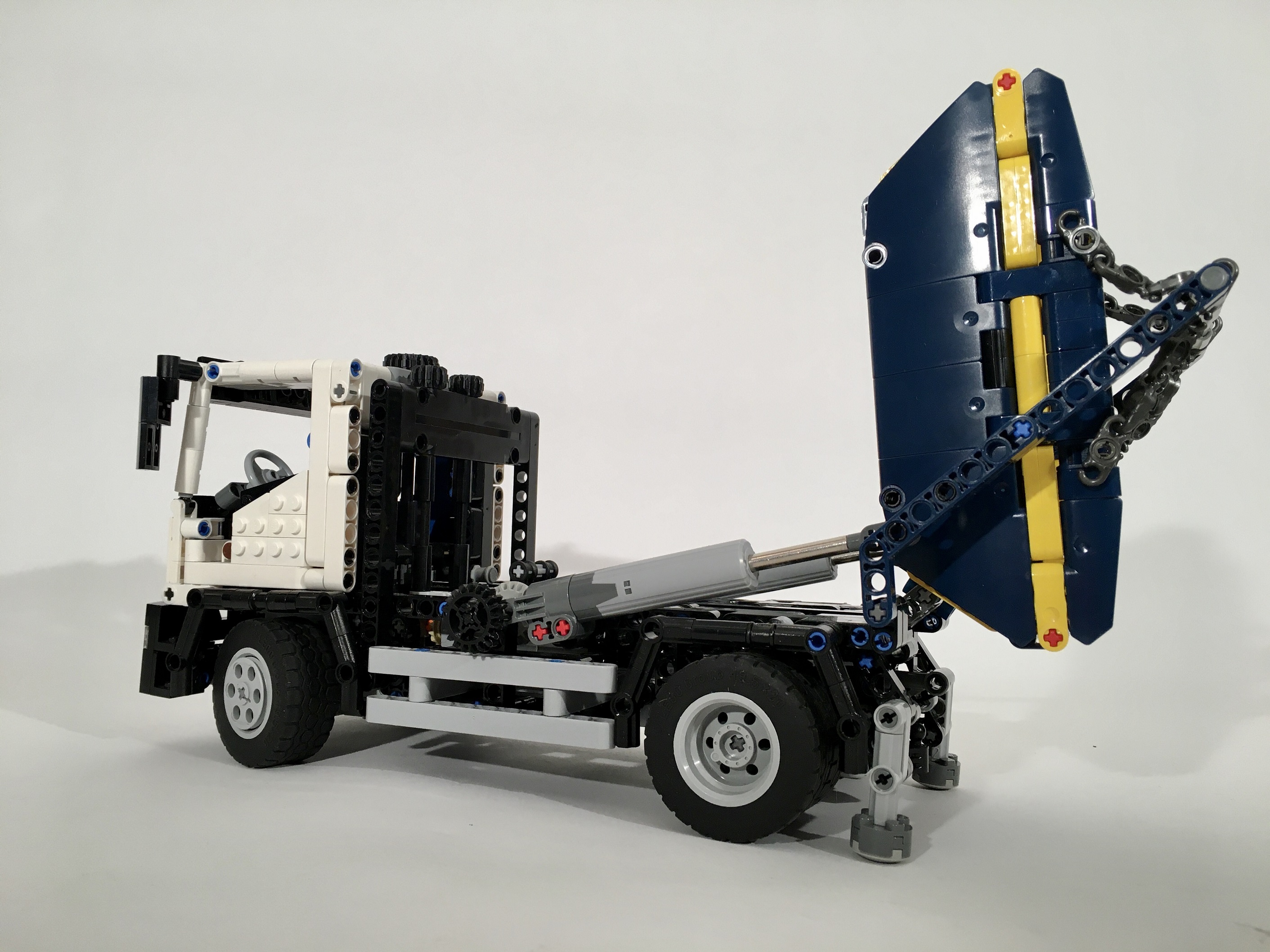
Adding the skip functions were the next challenge. Adding the rear outriggers was not very difficult, but then it was complicated by adding the skip hook. Both are moved by mLA that are mounted far forward in the truck and connected by long liftarms to the back. It took a while to get the geometry of all of this to work together in conjunction with the lifting arms, but in the end it all worked well. The lifting actuators are moved by a gear on the side, and the other two functions are moved by two gears on the top of the cab protector.

11

Working on the cab came next, and I used a mix of system and technic bricks. I made sure the cab could tilt, and there is a locking mechanism. The steering HOG is on the top of the cabin, and connects when the cab is down.

Finally, I added a little trailer. I added a simple function to lock the skip in place. The trailer can be towed by the truck, and when it is time to add a skip the hitch goes under the truck so it can get close enough to drop the skip.

The truck ended up doing everything I wanted. The tip and lift functions work well, and the trailer was a fun little addition. The colors work well for this truck, and the cab turned out as well. Maybe I will need to do another MOC in this scale.

Happy Building.


Mini Mack Cabover


Sometimes I need to build something small to refresh my mind. This was the result of stepping away from other projects for a while, and spending a couple of hours on something small.

The full gallery may be found on Flickr.com.

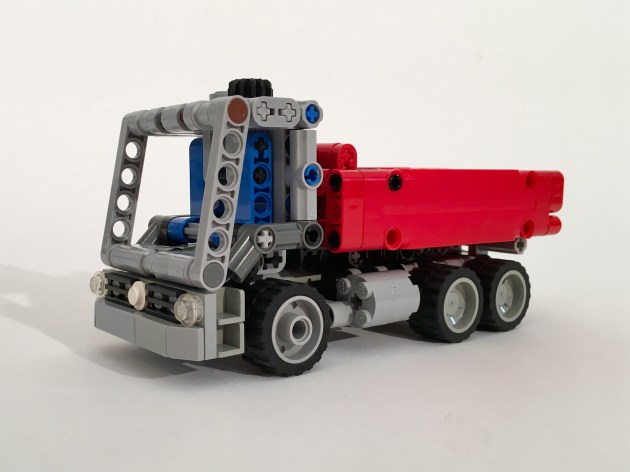
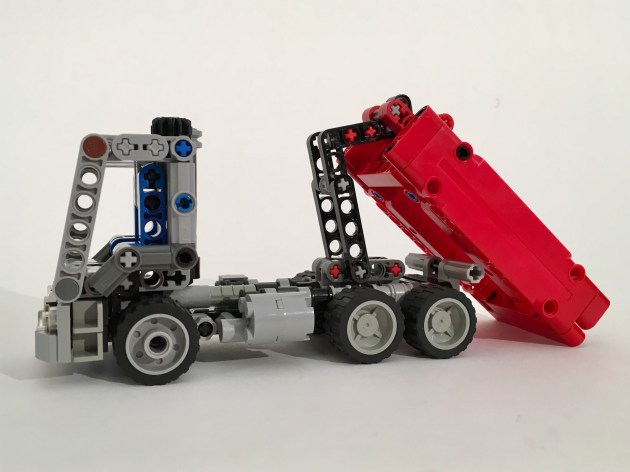
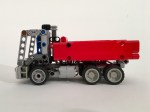
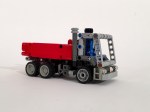
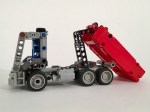
Recently I wondered if I could build something like LEGO set 8065; a small truck with one function. I liked the little roll off dumpster idea, and I see plenty of the Mack version around here. I had a couple of hours, so I thought, let’s see what I can build. The single function of the truck is the roll off feature. A worm gear moves the arm up and down, and the little hook catches a bar on the dumpster.

The rest of the truck is build on liftarms and connectors. The truck is 8 studs wide, and the space between the two rear axles is 4.5 studs. These two measurements made the chassis more challenging than it should have been. I built a simple cab, and added a little bumper, and the truck was done.

The truck works well. It only does one thing, so it should. It was fun to do a quick little build, and make something small and simple. Until something more substantial…

Happy Building!

Volvo FE Garbage Truck


My favorite vehicles to build are garbage trucks (Ok, maybe trial trucks). I enjoy the many functions that I can create. I enjoy the diversity of shapes, sizes and colors, and I enjoy how ubiquitous they are. But I have not built many. So it was time to fix that.

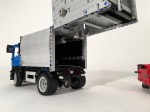
Volvo FE Refuse

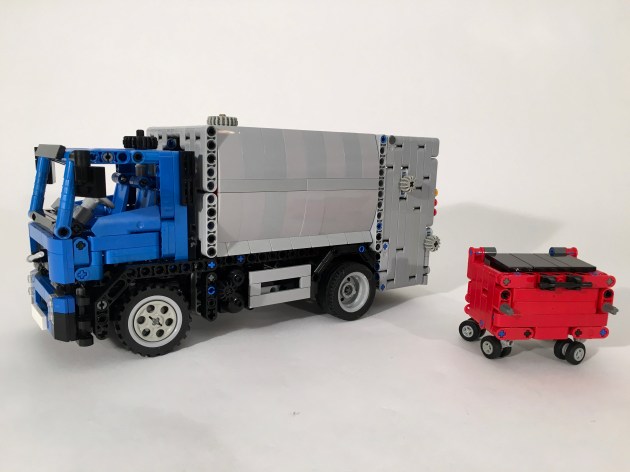
I was originally going to do a large scale truck, but as my temporal limitations are becoming ever more apparent, I decided to do something smaller this time. The 13 stud wide truck is popular in the Technic community, so I decided to go with that. I very much enjoy the Volvo FE, so that was my truck. Since my last truck was one with three axles and Power Functions, this one would have two axles and be manually controlled.

Volvo FE Extraction

I searched high and low for garbage box that would work well: Gesink-Norba, Heil, McNeilius, EZ-Pak, Dennis-Eagle, Ros Roca. All required a compactor that would need a round base for the trash to collect. Curves are hard to do in LEGO. I had some trouble with refuse compaction cycle working well on the Axor due to the floor curve on the hopper. I wanted a compaction cycle that was more simple and more reliable. So I designed my own.

It’s dead simple.

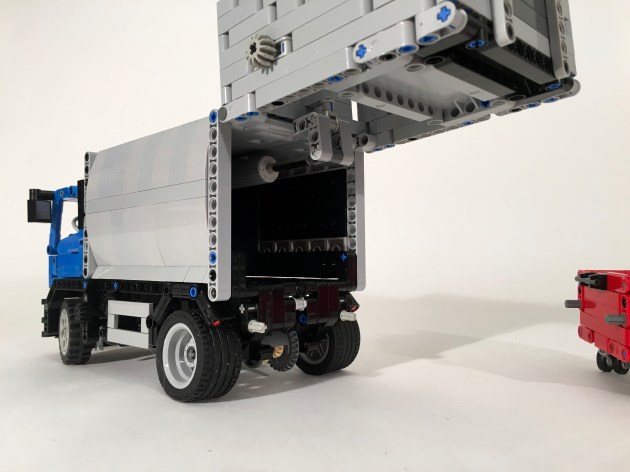
There is a angled elevator in the hopper that goes straight up and down. The center gear on the outside of the hopper that moves the elevator. When refuse is placed on the elevator and lifted, the refuse will fall over an internal wall at the top of the cycle. The refuse falls into the compaction bin, until the rear hopper is opened. Bigger parts sometimes gets stuck on the cross axle.

Volvo FE Hopper

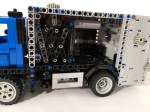
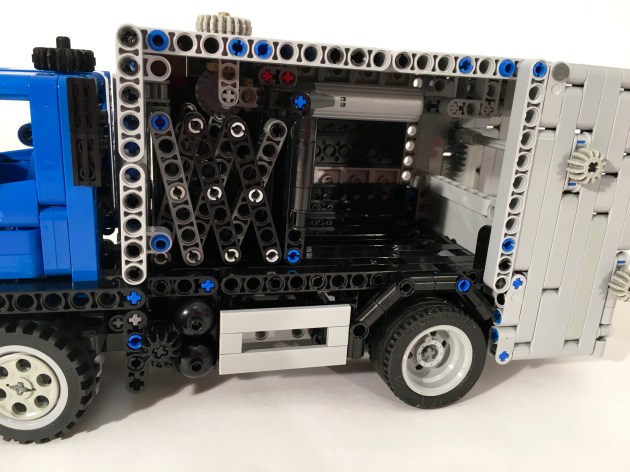
Inside the compaction bin, is an extraction plate. Turn the gear down near the front left wheel, and you drive a mLA to move the internal extraction plate. Everything works well for small LEGO refuse parts. I built the side of the compaction bin with slopes and tiles. After a number of panel attempts, this one seemed to be the best looking option. I very much enjoy the shape.

Volvo FE Compactor

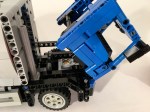
Since I had a little more internal room, I added a driveline to the truck. A rear differential powers a small fake inline 2 cylinder engine under the cab. To check it out, the cab tilts forward. The steering axle serves as a friction connector so the cab does not open unless you intend it to tilt. The doors open, and the bodywork was designed to mirror the Volvo FE 2011 body style. I built a small red refuse bin to show off the functions of the truck.

This may be my favorite build of the year. All the functions work perfectly, and the model looks great. I think I could add a tilting bin function, and add another mLA to give more strength to the extraction plate, but other than that I am not sure I would change anything. I will keep this one built for a while.

Happy building.


Mercedes Benz Axor Refuse


I am a big fan of garbage trucks.  For some reason I find the combination of a smaller truck,with many features all with a complicated compaction device is a great basis for a complicated LEGO Technic model.  Plus, trucks are fun.

The hardest part was going to be the rear compaction device, so that is where I started.  I decided to use a Geesink Norba design as it would give me the largest opening for the trash in the rear because the mechanicals would be on the bottom on and the top of the opening.  13 studs wide is not much space.  In addition, this would allow me to have the rear hopper pivot up to let the trash out when it was full.  I would need to have three functions going though the pivoting hopper.  One at the pivot, and two connecting at the base when the hopper was closed.
The dumpster lift would be driven through a knob gear when the hopper was closed on the bottom.  The compation device would be operated with a gear on the bottom and a mini linear actuator on the top.  This mini linear actuator would also function as the opener for the rear compactor.  All the motors would be housed on the bottom, with one motor placed next to thebattery box.  The extractor would be operated by another mini linear actuator using a scissors mechanism to move the ejector plate.

The chassis was constructed with a PF XL in front of the steering axle.  The motor would power both the drive, and the extractor changed by a changeover.  The steering motor is placed on the right of the truck.  On the left, another PF M motor powers both the dumpster lift and the lower hopper compaction device.  All power came from a 8878 rechargeable battery box, through two PF IR receivers, and powered four motors: One XL for drive and the extraction plate, one M for steering, one M for the dumpster lift and lower compaction, and one M for upper extraction and hopper opening.
The model worked well, particularly steering and the drive.  However the extraction and the hopper opening was a little less reliable.  The hopper was too heavy for a single mini linear actuator, and the compaction device was not stiff enough.  It happened to get caught on some of the internal edges on the inside of the hopper.  The next garbage truck will need to be built a little more sturdy.
The full gallery may be seen here.