Unimog U20


I am slowly on my way to building each Unimog.

Instructions may be found at Rebrickable.com.

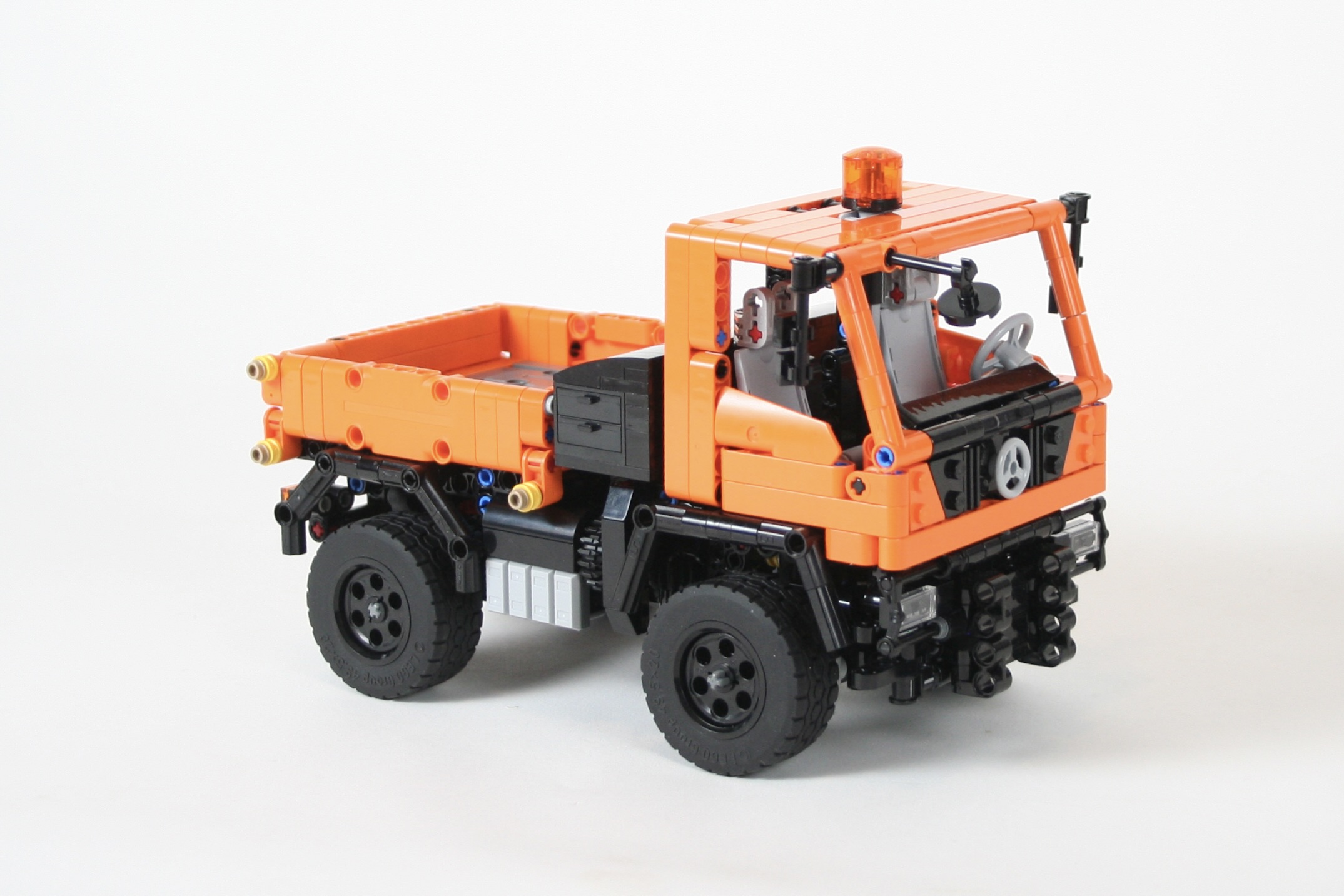
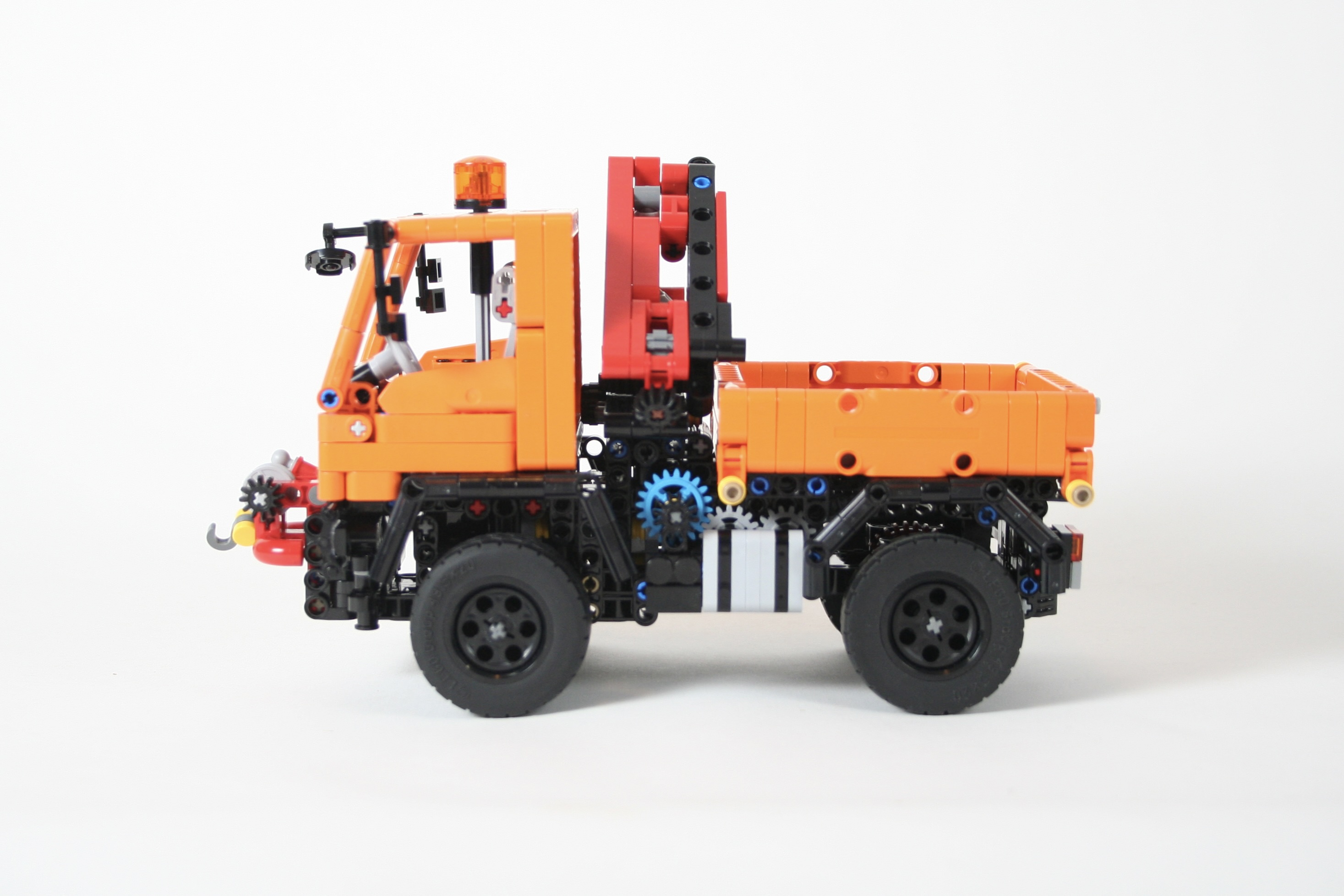
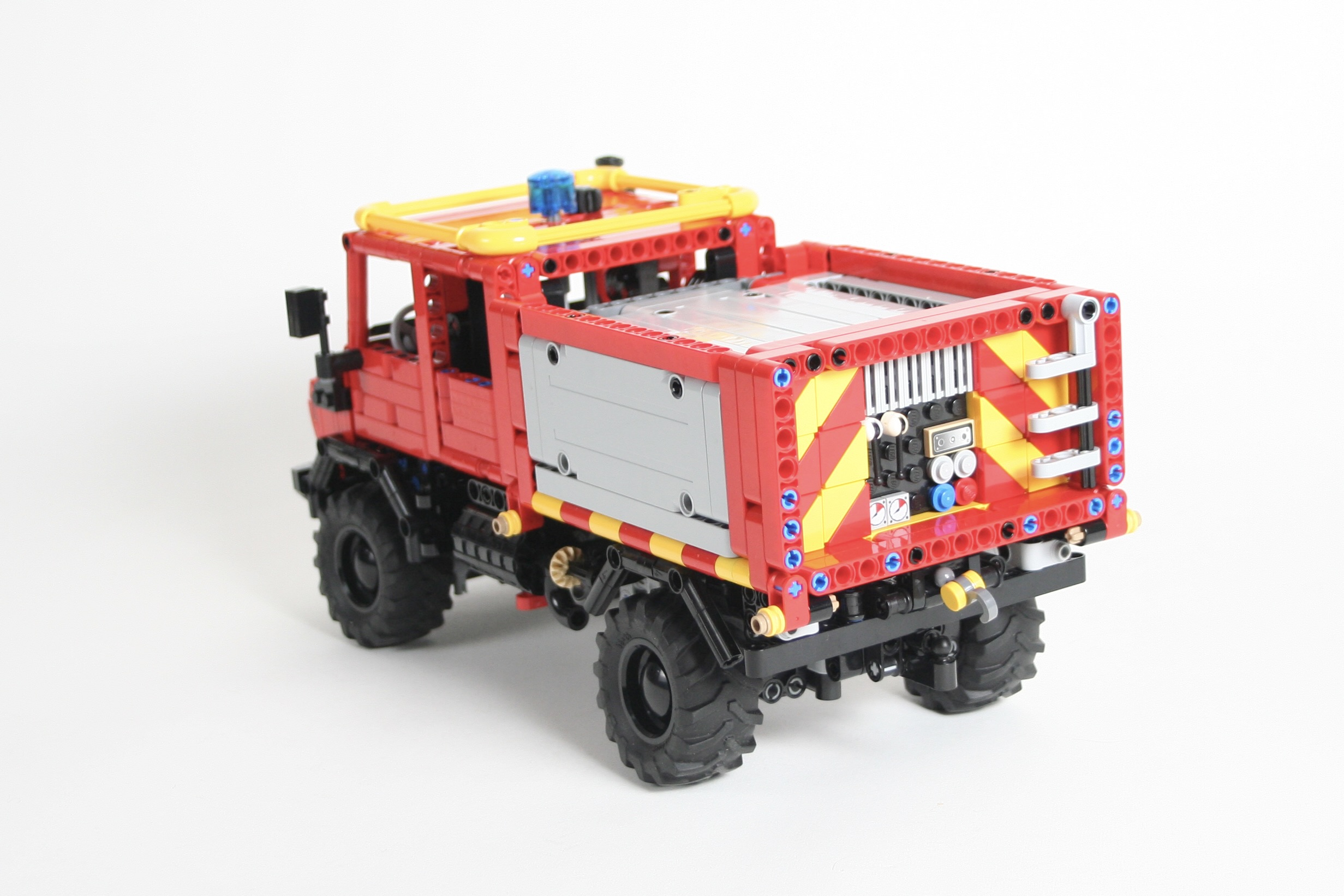
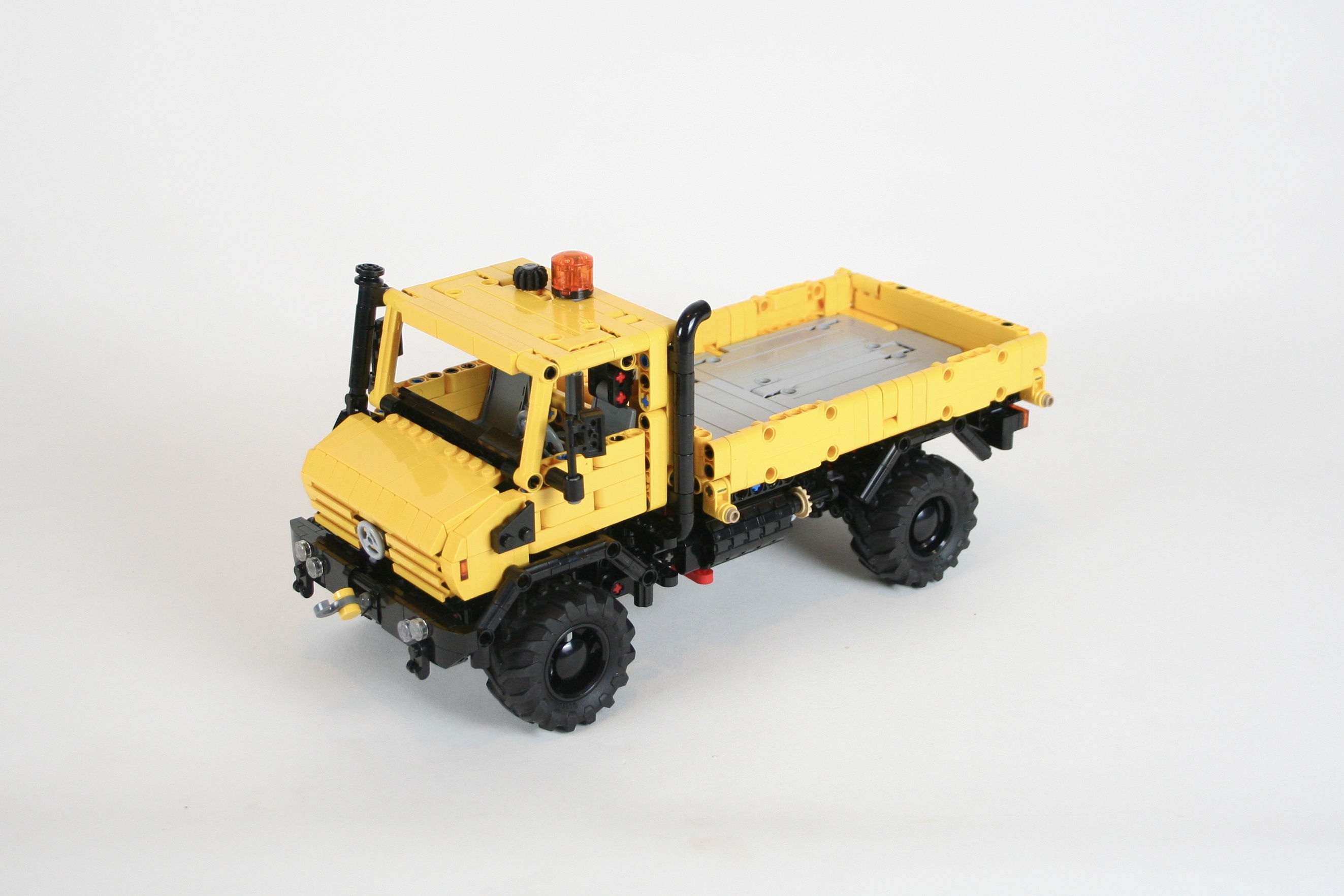
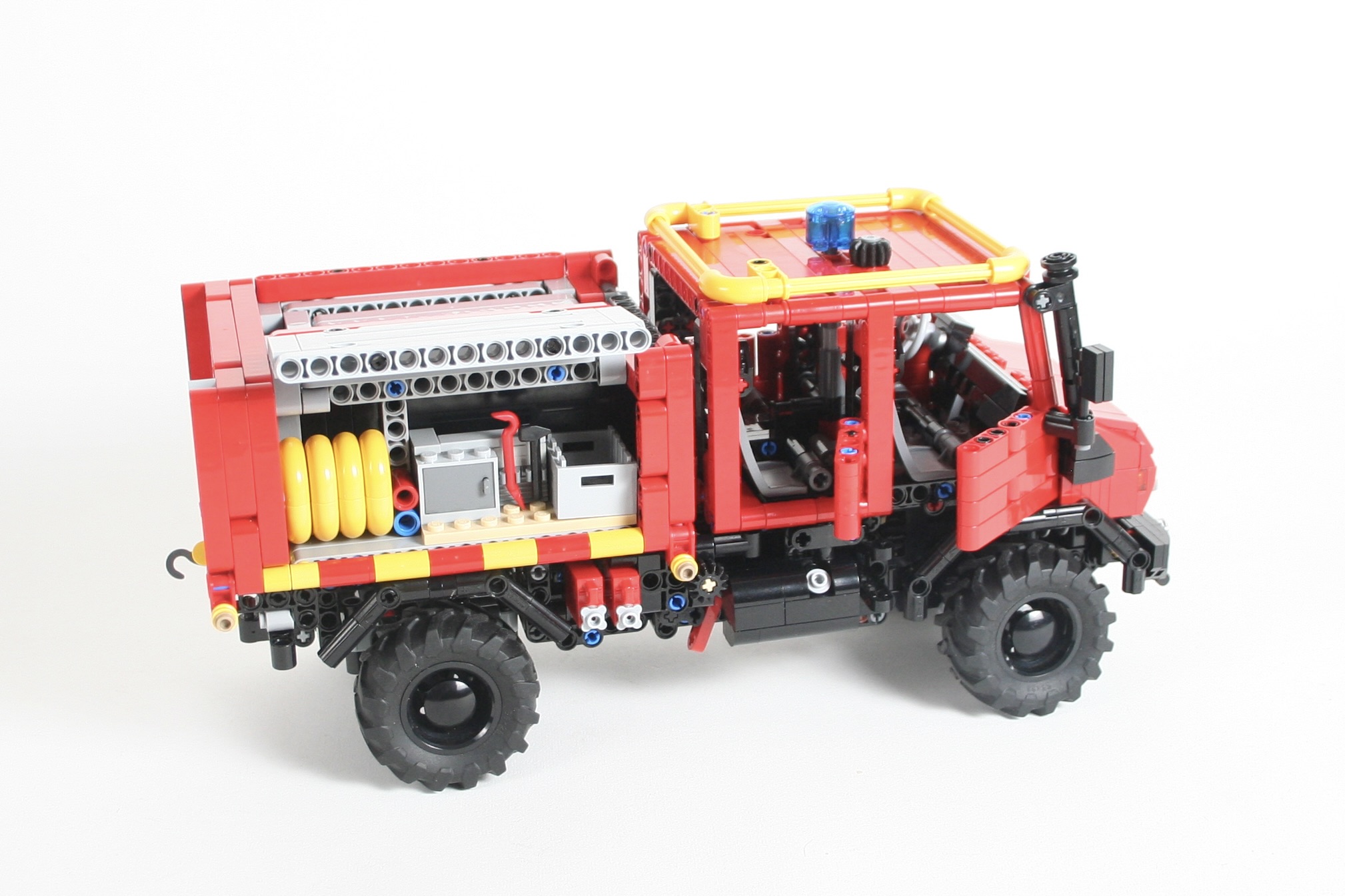
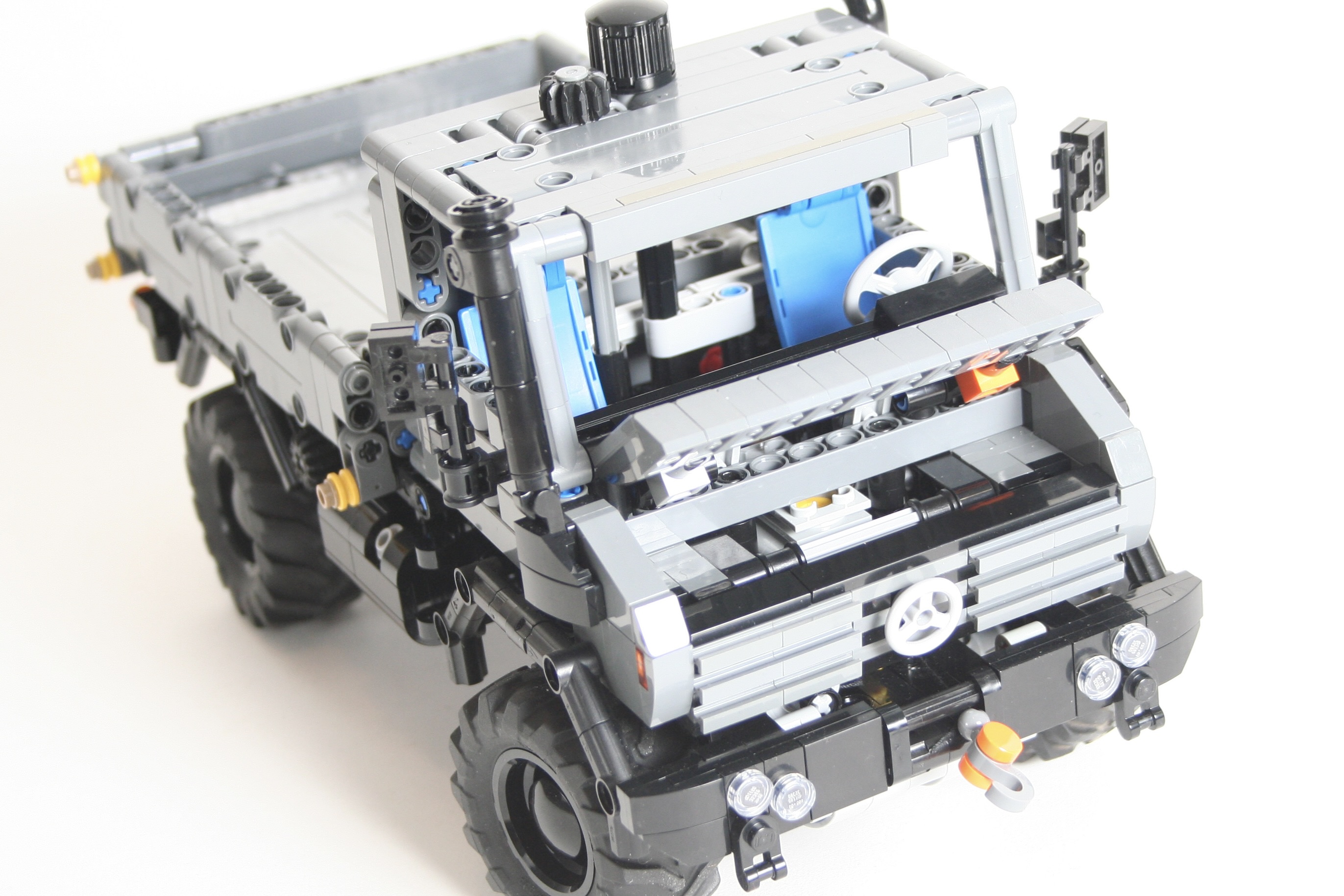
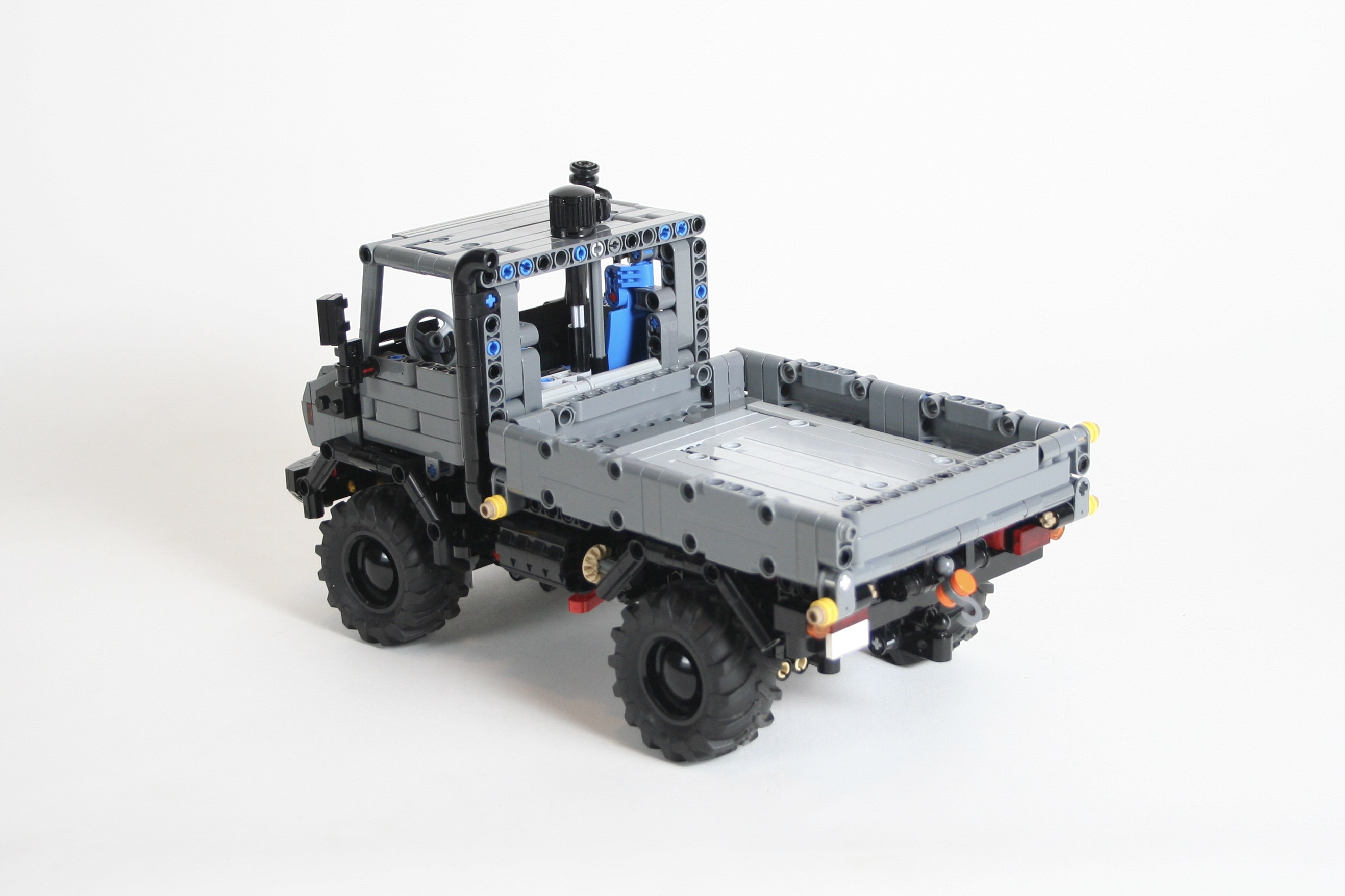
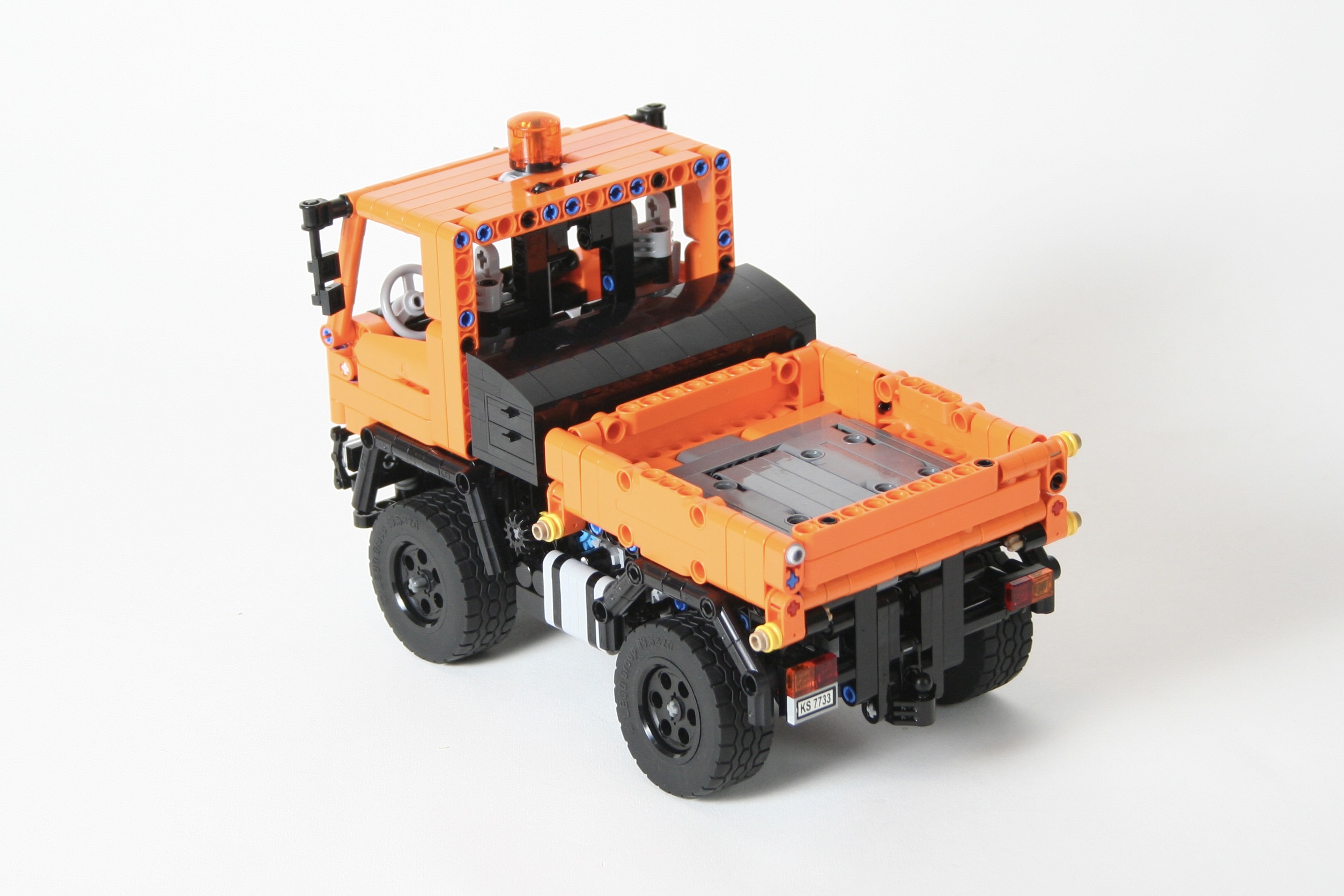
I like to think of the Unimog U20 as “the weird one.” It was built by taking the Unimog U300 chassis, and inserting a Mercedes Benz Accelo cab to the chassis. As such, it is one of the few Unimogs with a distinct cab over design. It also means it does not have the unique nose design that I have come to love about Unimogs. But, I have build so many U400s and U4000s so it was time to expand into another version.

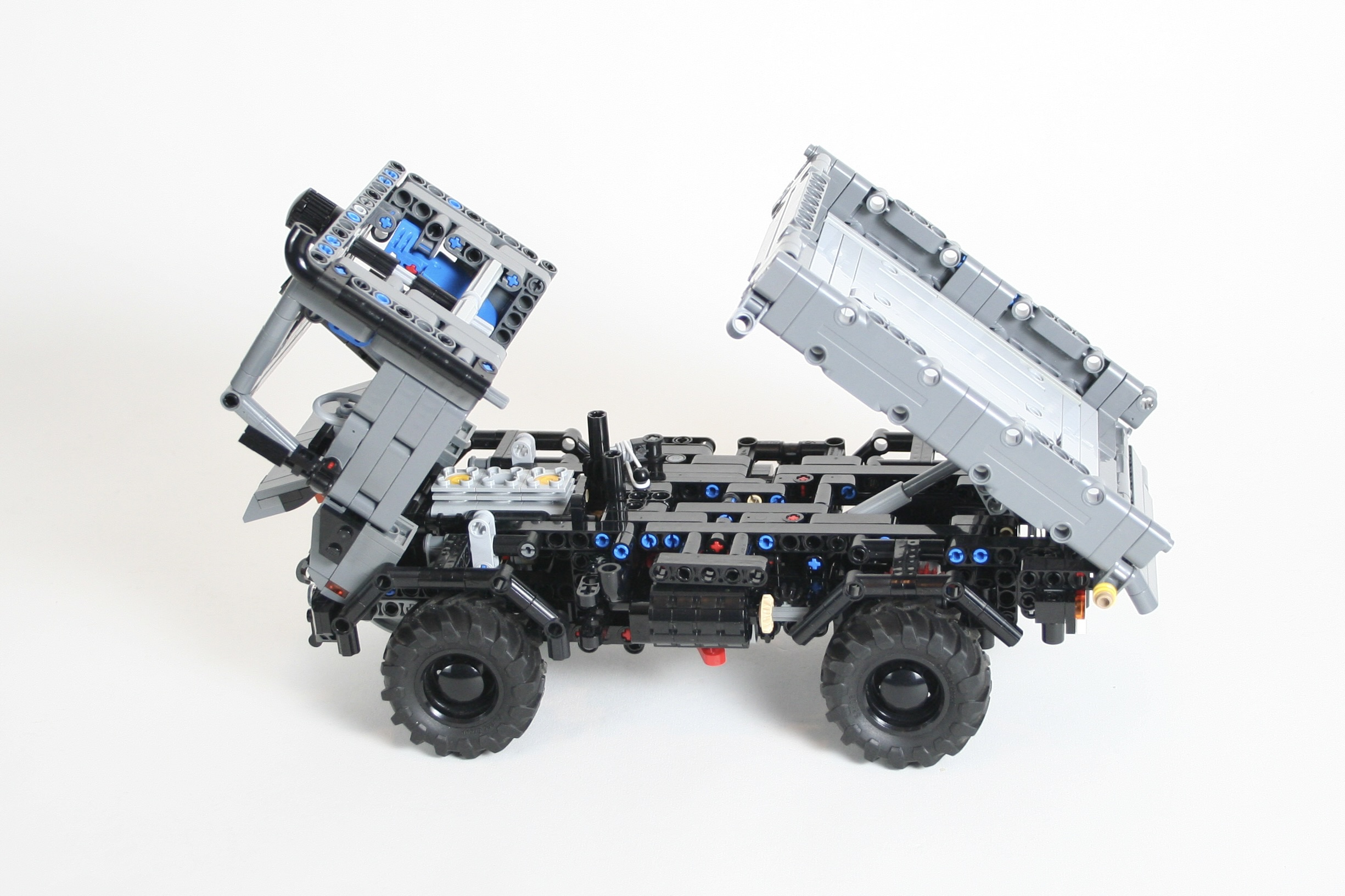
This design is similar to many of my other 1:21 scale trucks. But the U20 is smaller than some of these other trucks, so some changes needed to be made. First, the truck is narrower than others, so the U20 would be 14 studs wide in the chassis rather than the more common 15 studs wide. Second, the wheelbase is very short; 16 studs. Since much of this space would be taken up with the engine, steering, and the bed tipping mechanism, adding additional features in the chassis would be difficult.

After designing the rear axle and steering axle, placing the engine was the next task. It is placed just behind the steering HOG, and drives directly to the rear axle without an ability to change gears. On the left of the truck is a HOG that moves the bed tipping mechanism up and down. The chassis was designed to support all the other front attachments that we designed for U423.
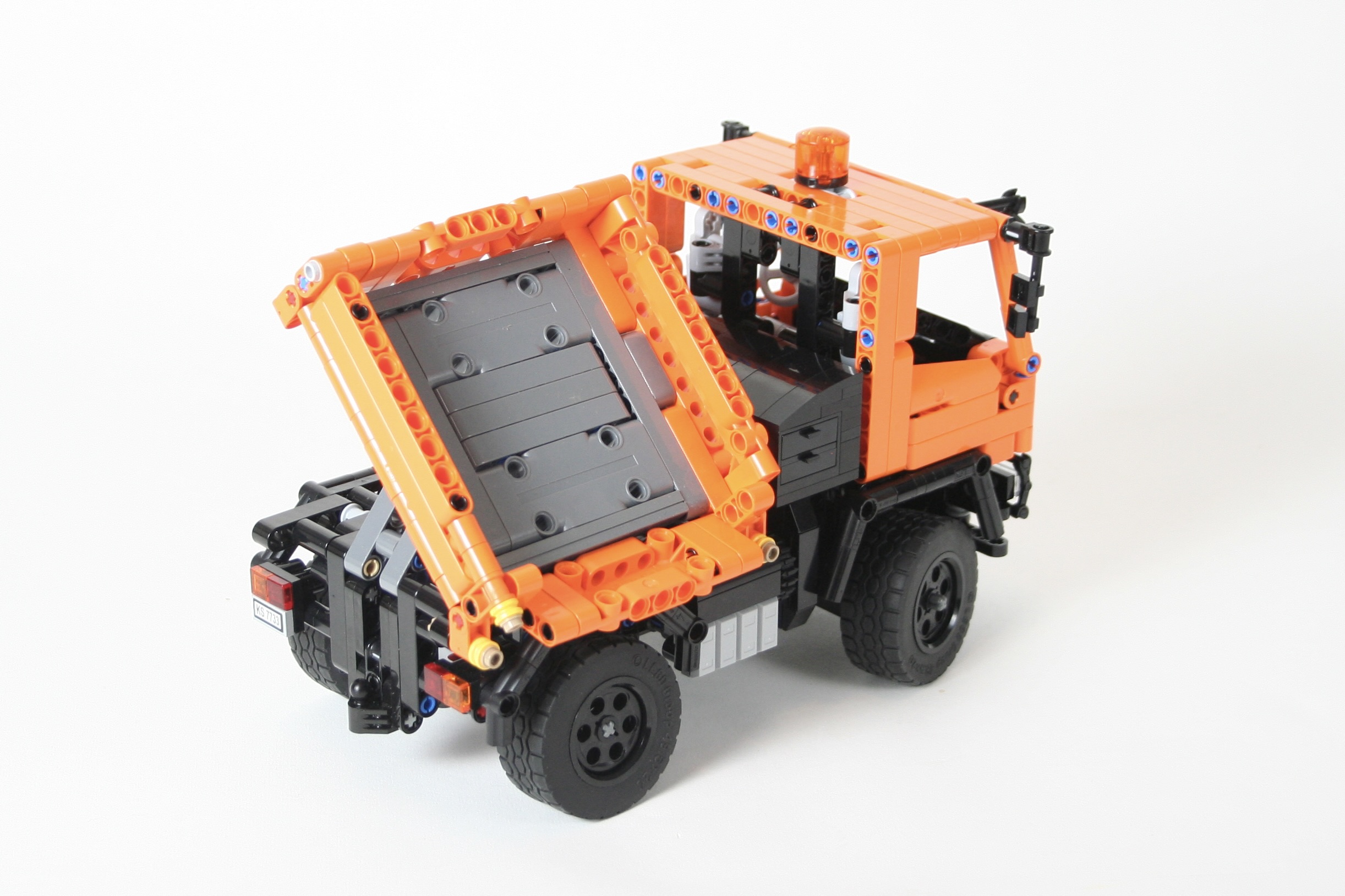
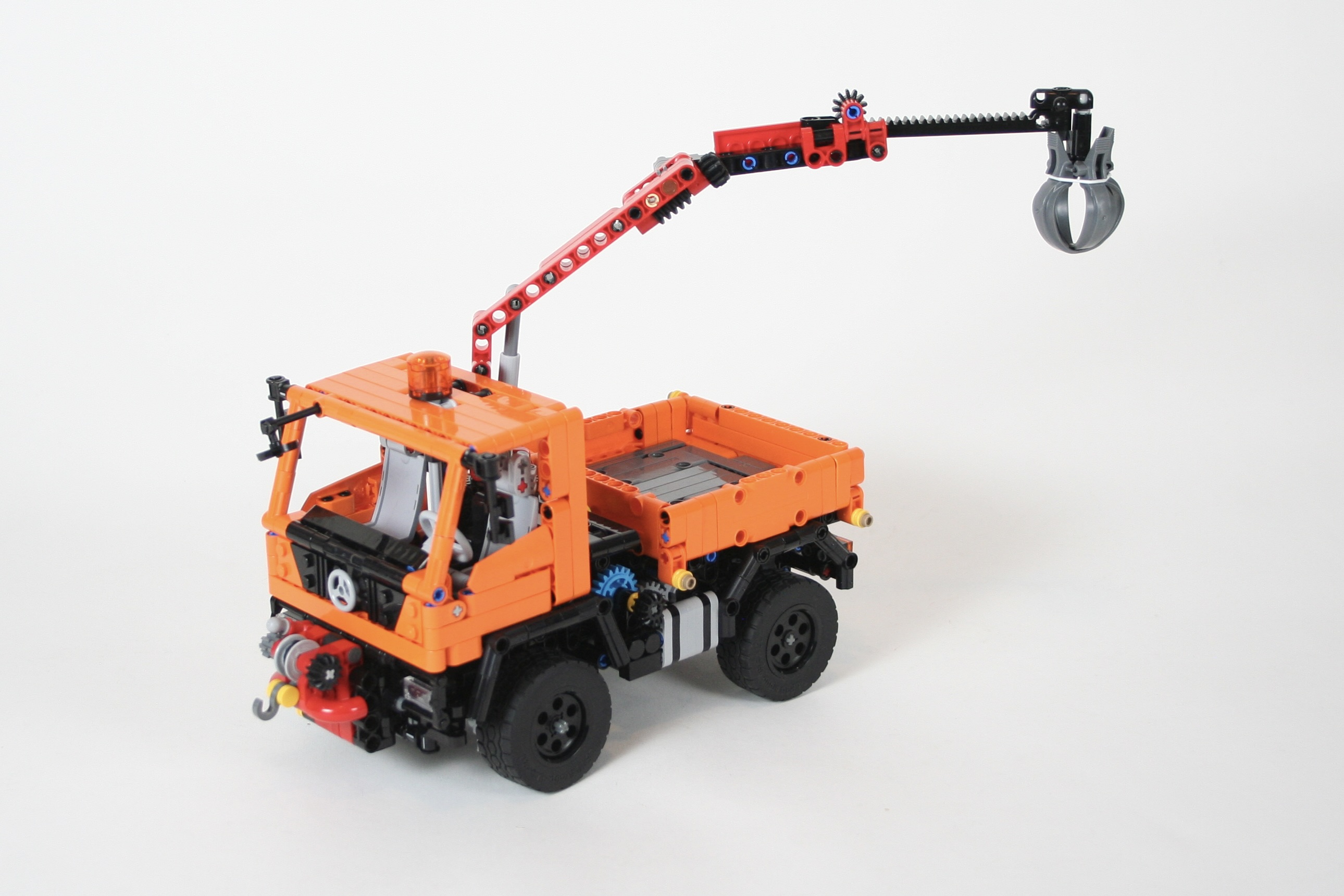
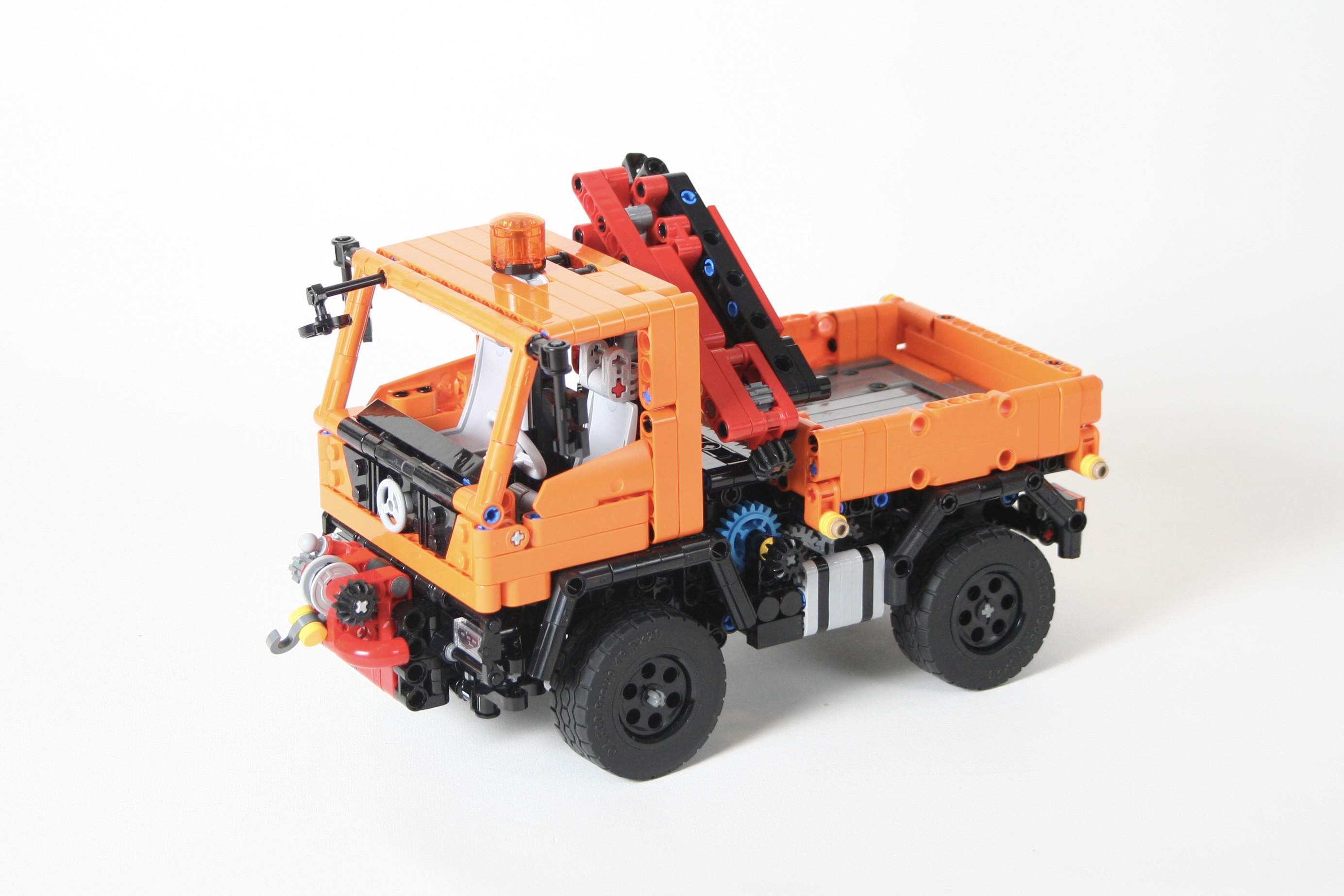
The U20 has a strange body addition behind the cab and in front of the bed. Since the U20 is based on the U300 but has a different cab, a significant portion of the engine is behind the cab and mounts high and in the way of the bed. As such, a little toolbox was designed to bring value to this space that is otherwise unused. I designed a little removable toolbox, and a little center mounted crane. Both can be removed by sliding out two axles (though the bed needs to tip out of the way to do so).
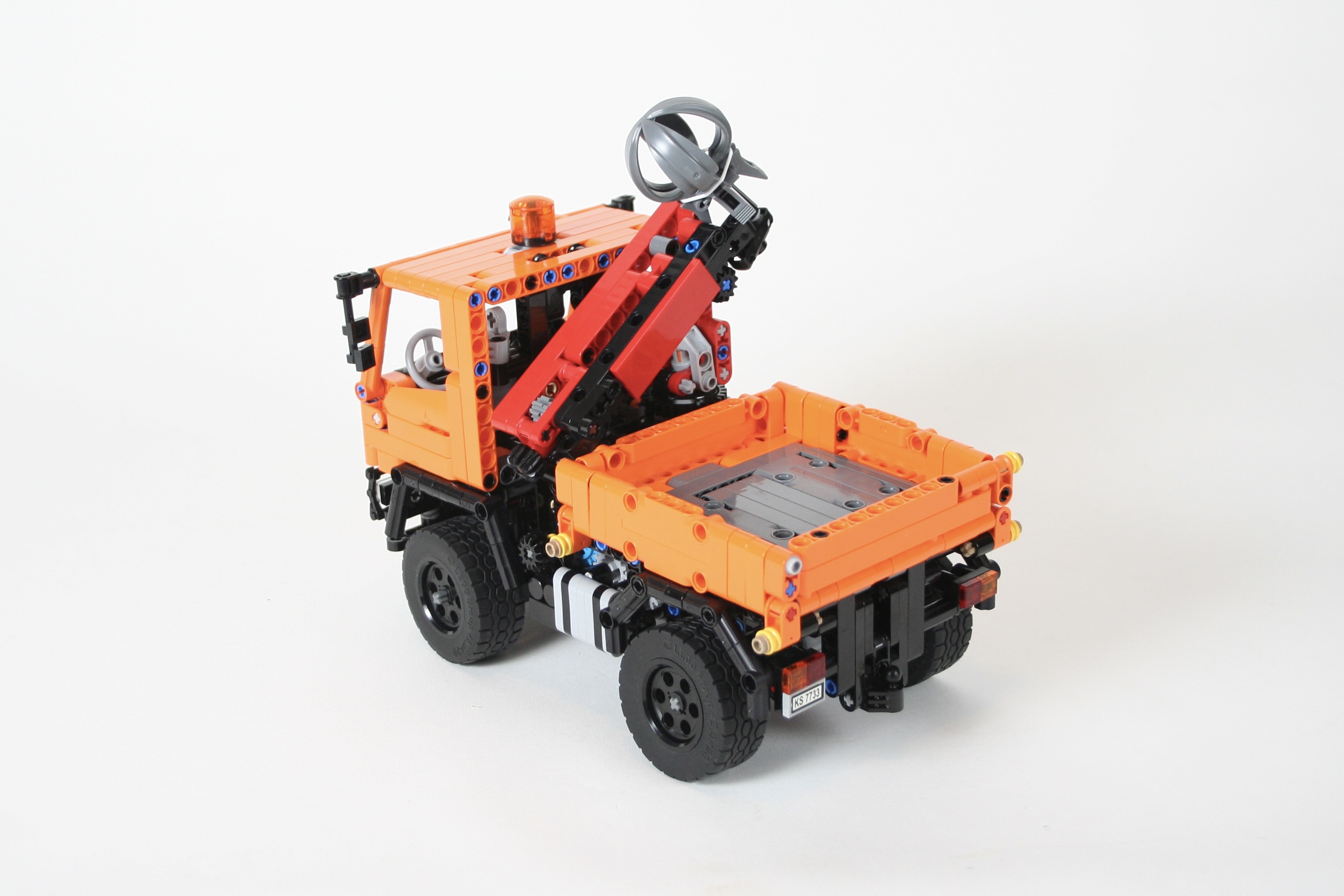
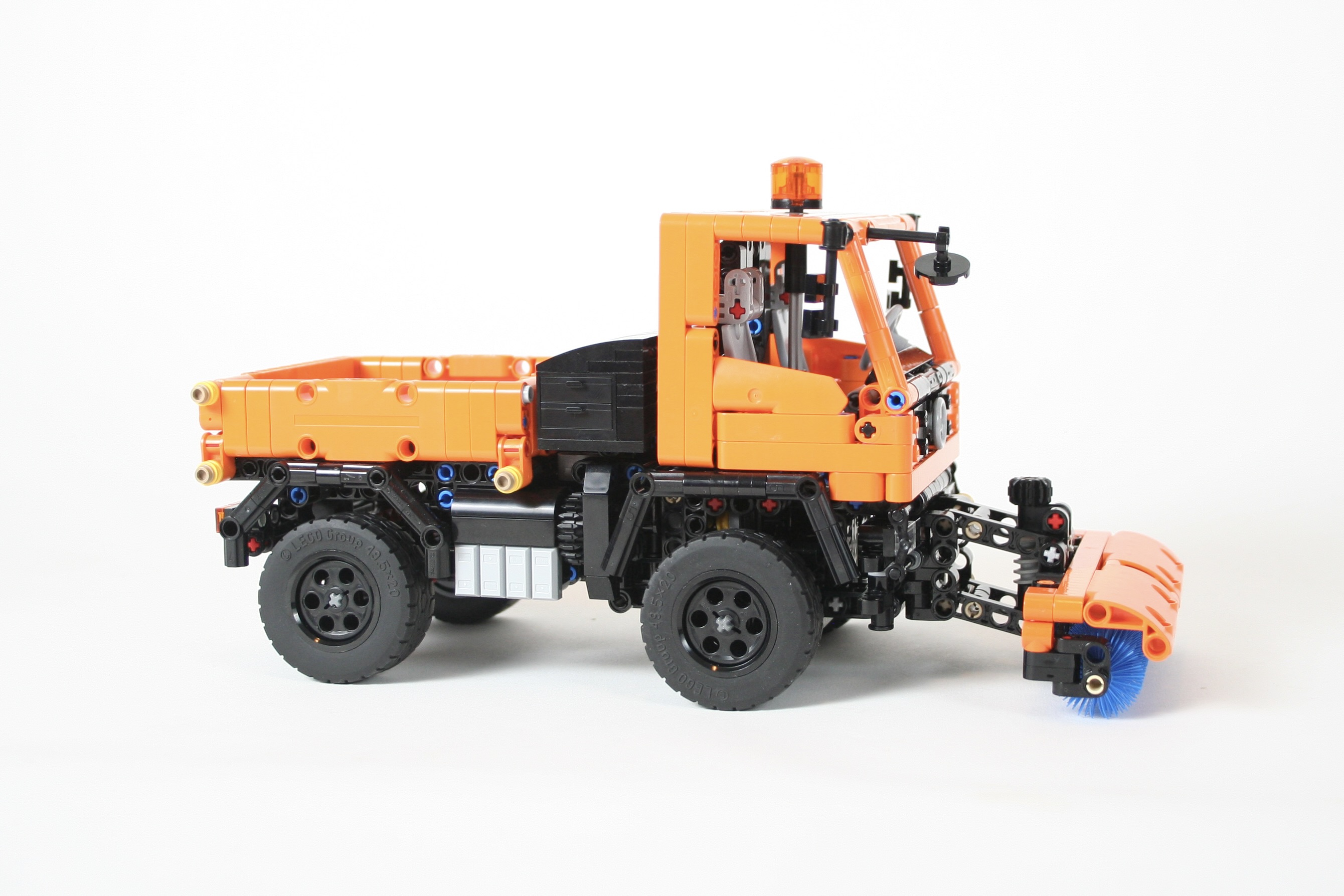
In addition to other attachments that will work on the front of the U20, I designed a little sweeper for this truck. When installed the sweeper will move when the truck moves.

The build was a nice addition to the other Unimogs I have build. It looks great with the U423 and the U4000 on my shelf. It continues my work of recreating many of the various Unimogs that I have been designed over the years. I would have liked this MOC to have as many functions as some of the other trucks, but I guess they should each be a little different. Until the next build,

Happy Building!
Blizzard Blazer Update


Sometimes I need to do a small MOC to reset my creativity.

Free instructions may be found at Rebrickable.com.

I have been working on a number of MOCs for the last couple of weeks, and each of them have been stuck on some part. Sometimes when I get into this situation, it is helpful for me to put each of them aside, and design something small, simple, and quick. It helps me feel like I still have some creative ability, and satisfies the accomplisher in me.

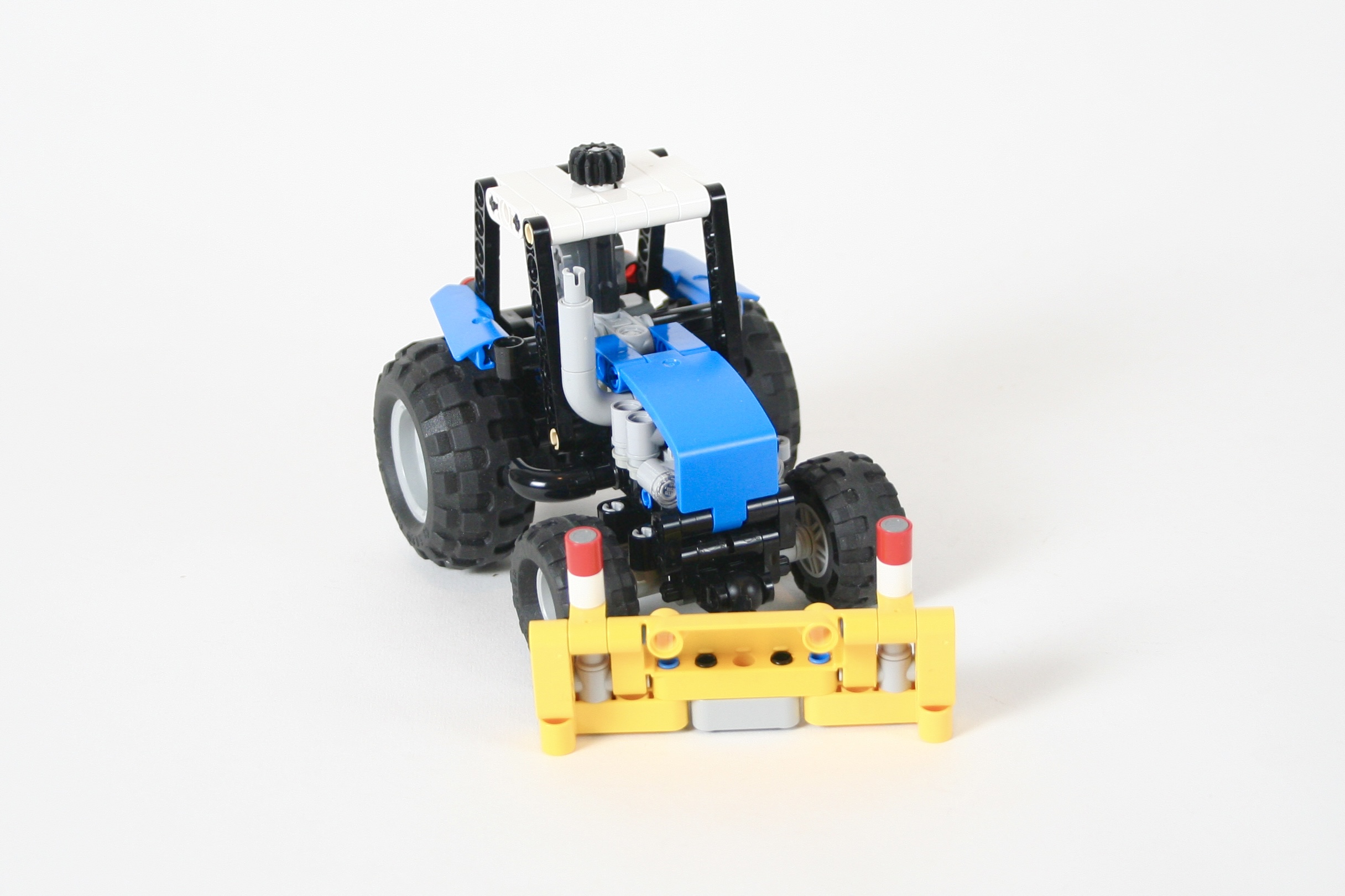
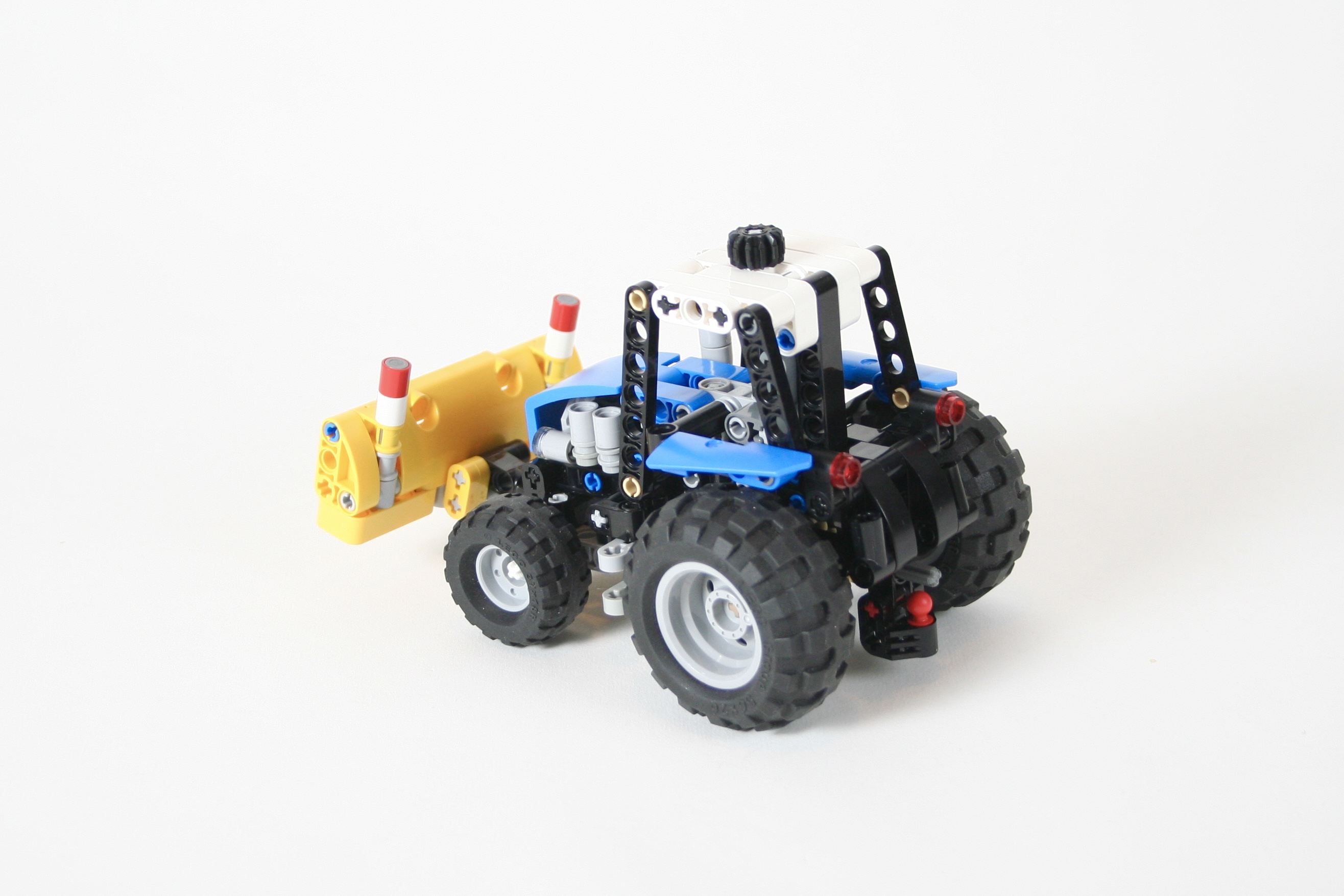
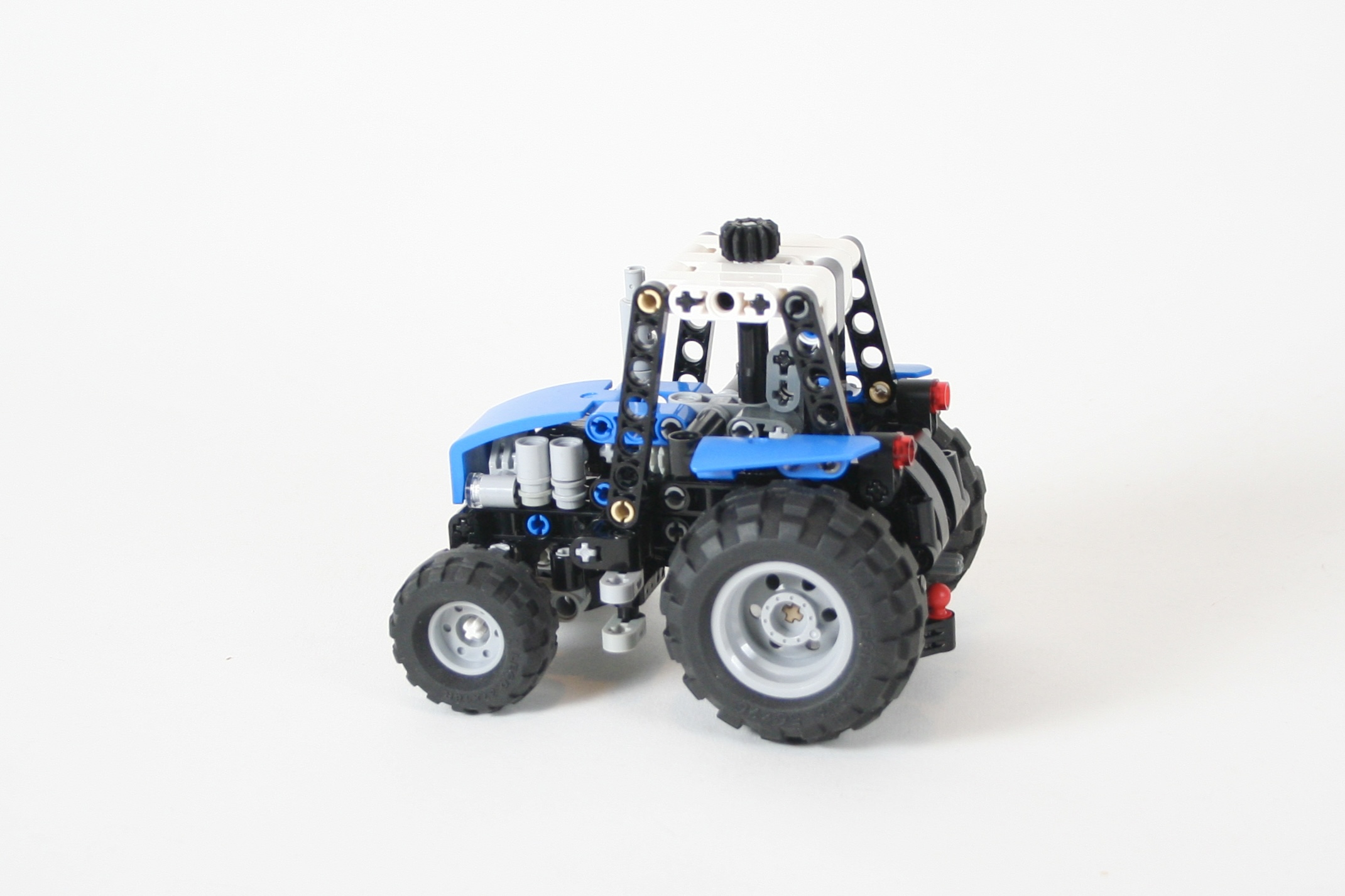
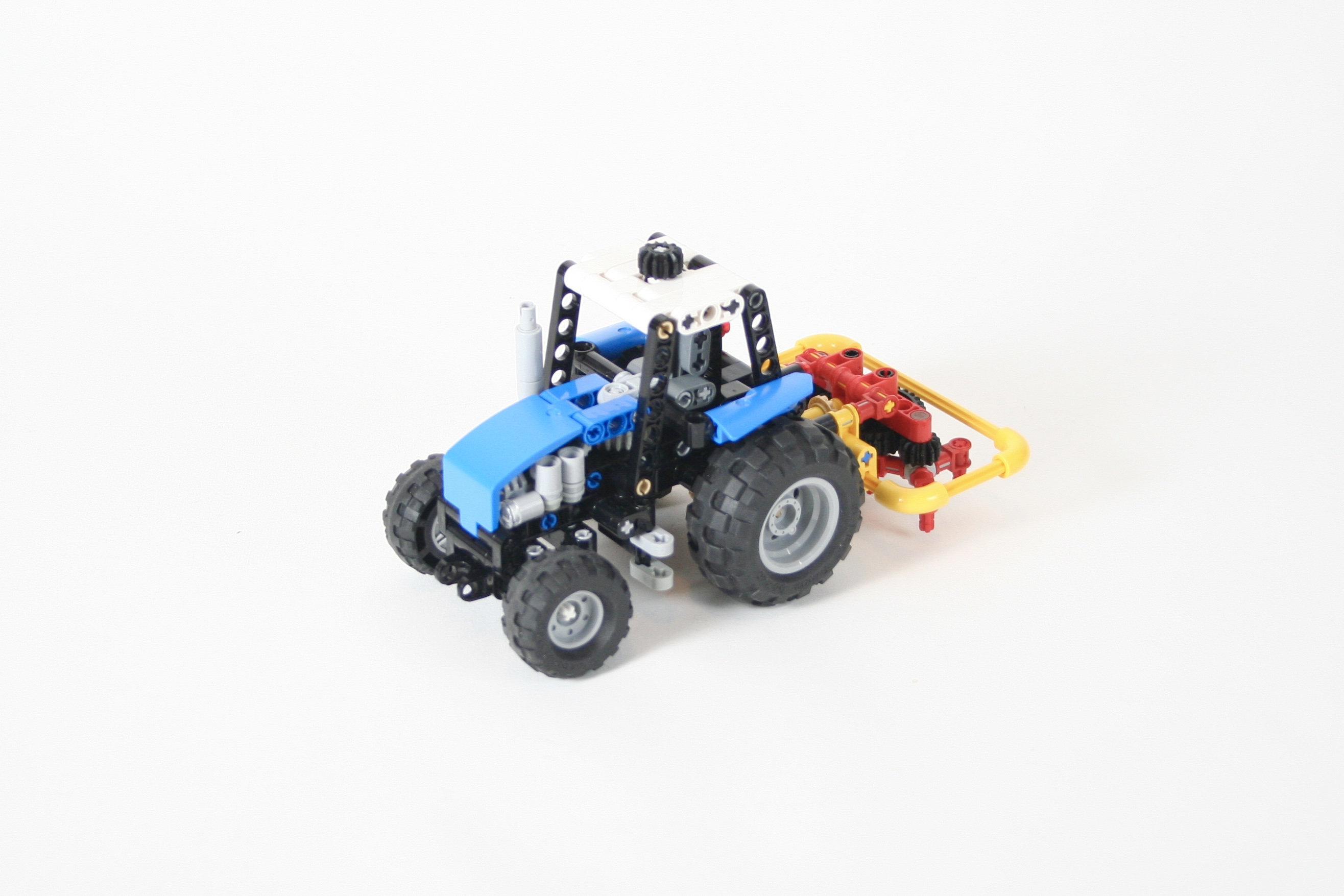
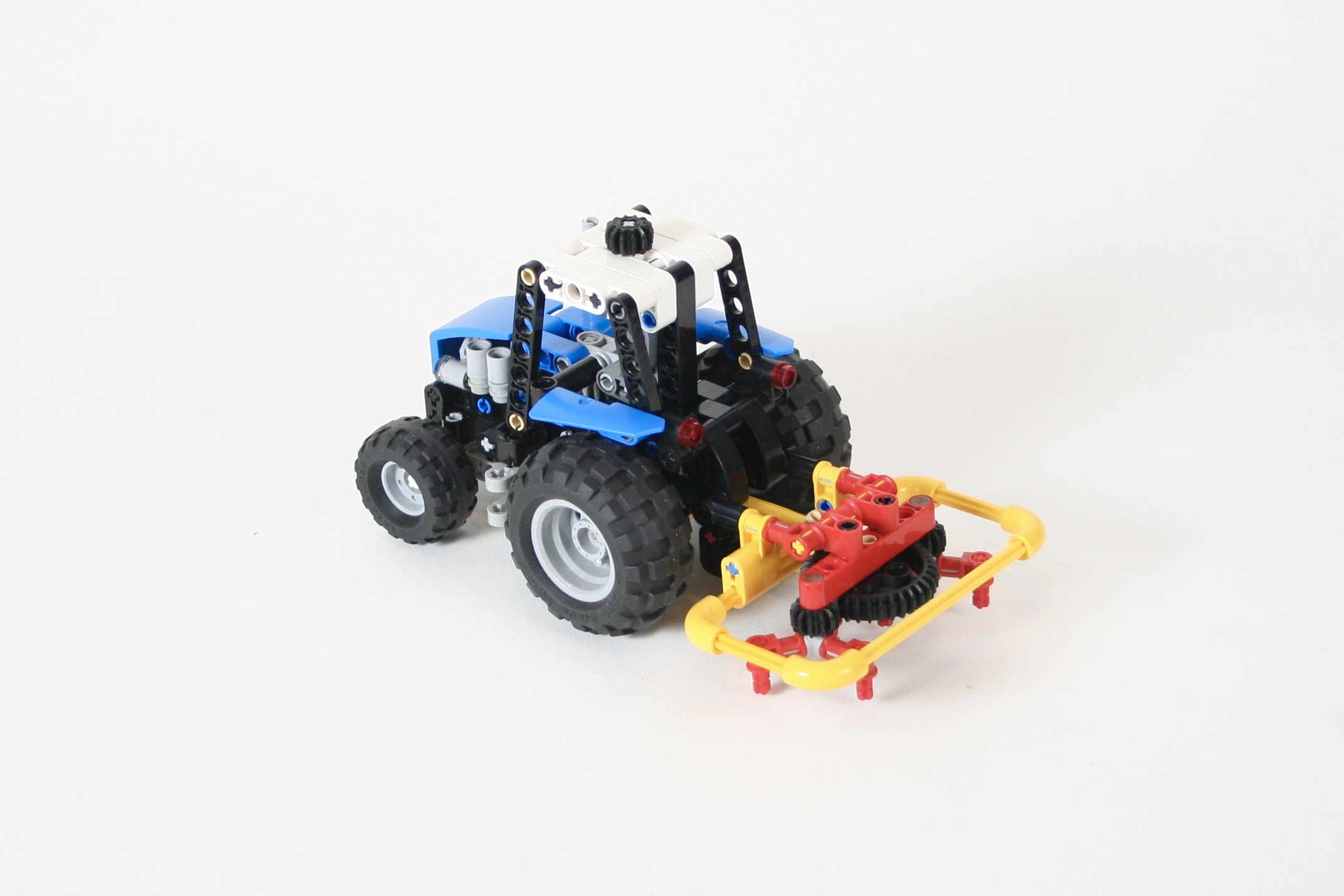
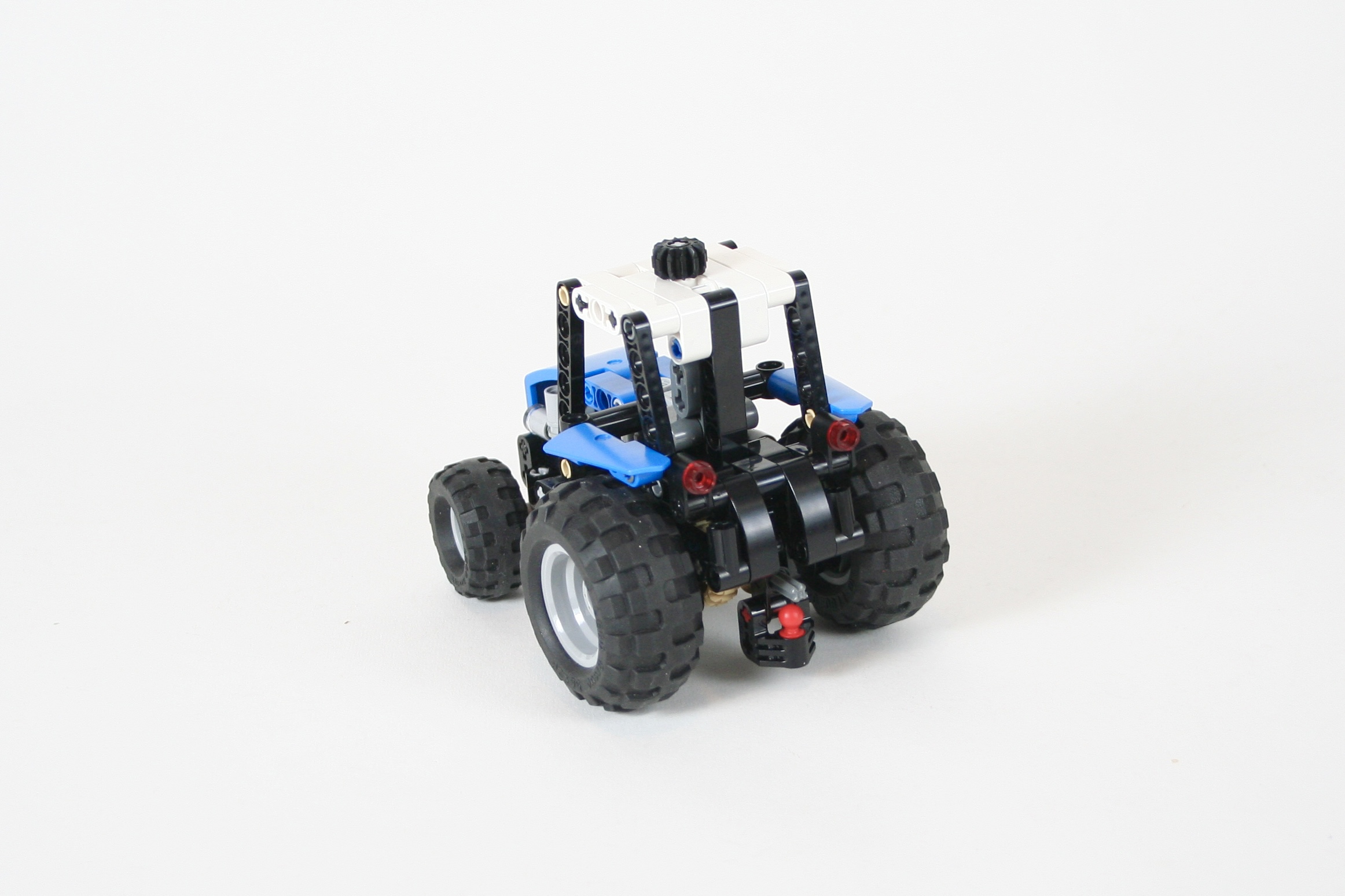
This little tractor was the result of three days of designing and building. It was modeled off the 6524 Blizzard Blazer set from 1988, which to the best of my memory, was the first set I ever acquired. This little tractor has a simple steering design, with a HOG on the top of the cabin. Additionally, a little PTO is run off one of the rear wheels and can power an attachment. Finally, a mount for a front attachment is included, as is an attachment and hitch at the rear of the tractor.

To demonstrate the versatility of this small tractor, I built a hay wagon, and two attachments. Naturally, a little snow plow was built for the front. A little hay tedder was built for the rear which is powered by the PTO. Finally, the hay wagon connects to the rear hitch and has a steerable axle. Free instructions for the wagon are also available at Rebrickable.com.

While this is not one of the best builds I have made in the last couple of years, it served a specific function of clearing my creative head. It accomplished this. It was a fun little build, and I’m sure there will be more like it in the coming years.

Happy building.

Unimog U4000/5000


Time for another Thirdwigg Unimog!

Instructions are available at Rebrickable.com.

I am now averaging about one Unimog a year now, so it was about time for me to make another one. The 1:21 scale truck is now fairly common, for good reason: it’s a playful size, it does not take too much space or too many parts, and yet gives plenty of space for functions. The popularity of the U423 led me to try a U4000/5000 version.

As I started designing, I wanted to have the standard functions: steering, a drivetrain, an engine. But once I placed these functions, I was left with a lot of space, and the truck was missing something to set it apart from all the other Unimogs. I added a simple two speed transmission, but I still wanted another function. After some looking at a number of photos of the U5000, I started noticing a common feature: a winch.

With a little bit of work, I was able to add both a front and rear winch. The front is mounted to the right of the engine with a HOG on top of the cabin next to the steering HOG. The front winch has a lock, which can be released by moving the step on the right of the truck. The rear winch is controlled by a HOG on the right of the truck, with a lock under the fuel tank.

In addition, I wanted some options for bodies, so I created two chassis lengths. The short wheelbase (U4000) has a 19 stud wheelbase, and the long wheelbase (U5000) has a 24 stud wheelbase. Both are similar in design, but have different bed lengths. The U5000 version also allows for both a standard, and four door cab. For the long wheelbase version, I built a fire truck box, and a long bed. For the short wheelbase version, I built a bed and a little camper. The camper features a bathroom, little kitchen, and a table to converts to a bed. Also, plenty of storage compartments are both inside and on the outside of the camper. Finally, a little tipper trailer is available. I built it to match the Dark Bluish Grey U4000, but it can be made in many colors.

I have created instructions for each of these versions, and each can be found at Rebrickable.com: U4000 SWB Truck, U5000 Fire Truck, U5000 LWB Truck, Trailer, Camper.

Just like the U423, I was very happy with how these trucks turned out. The Dark Bluish Grey version is my favorite. The trucks work well, and have all the functions a 1:21 scale truck should. I love all the functions; playing with the winch is great fun! The hood is a little too fragile for my liking, but it looks just like it should. Also, it was a great reason to finally build a camper, and this won’t be the last time. But first, we may need to do another Unimog in 2024. Stay tuned….

Happy Building…

Porsche 718 Boxster


There are many great Porsche 911s, so it was time to try a Boxster.

Instructions are available at Rebrickable.com.

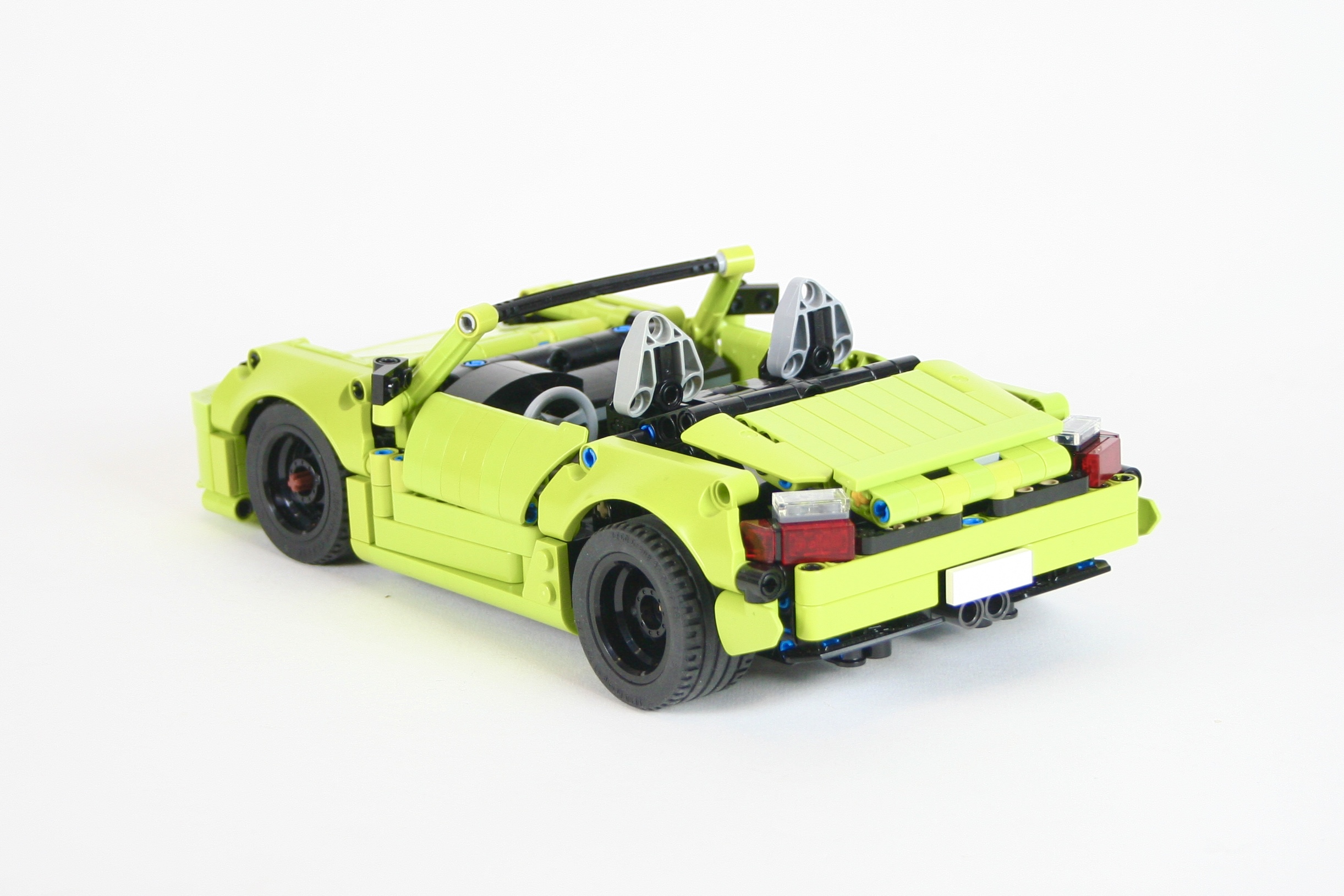
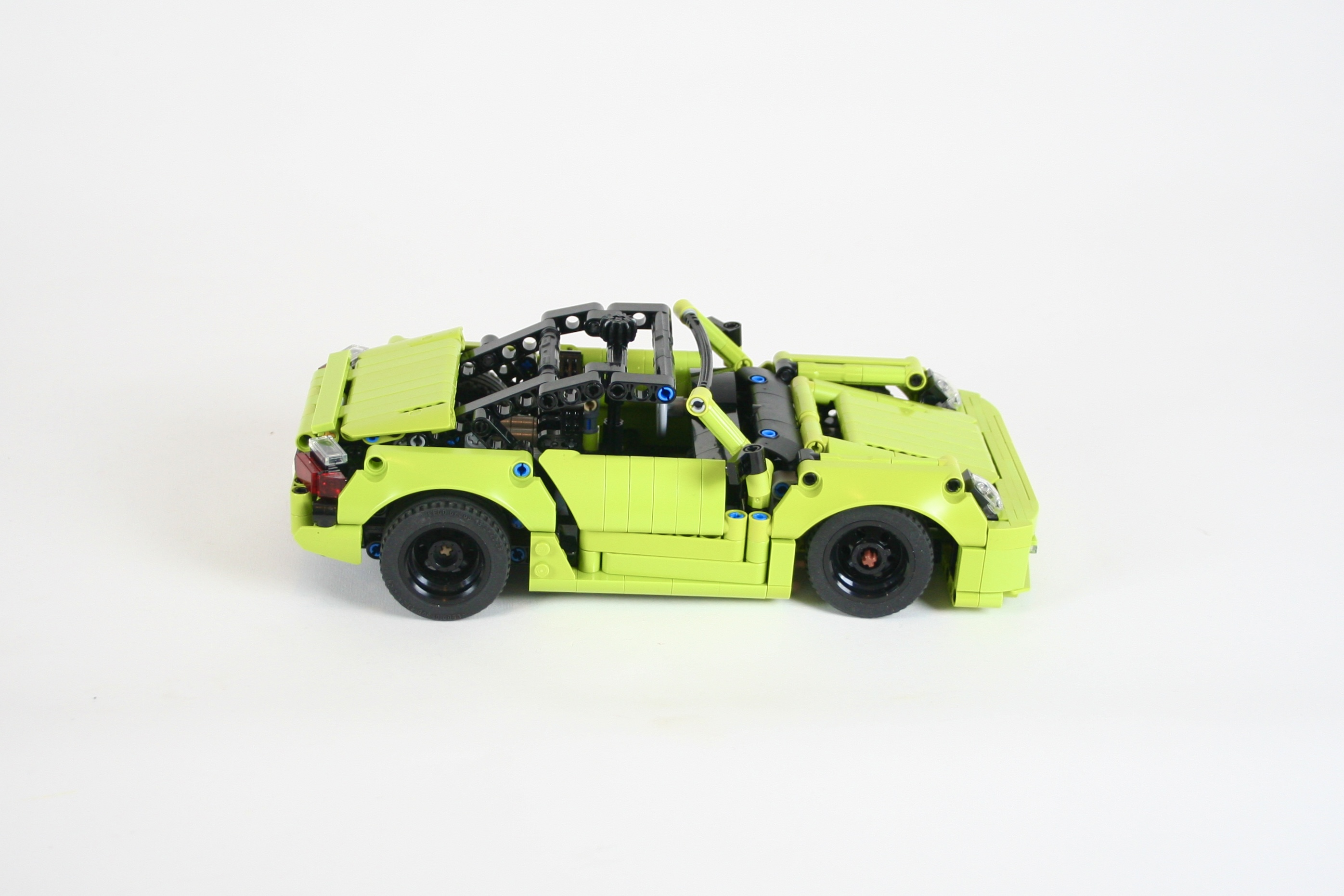
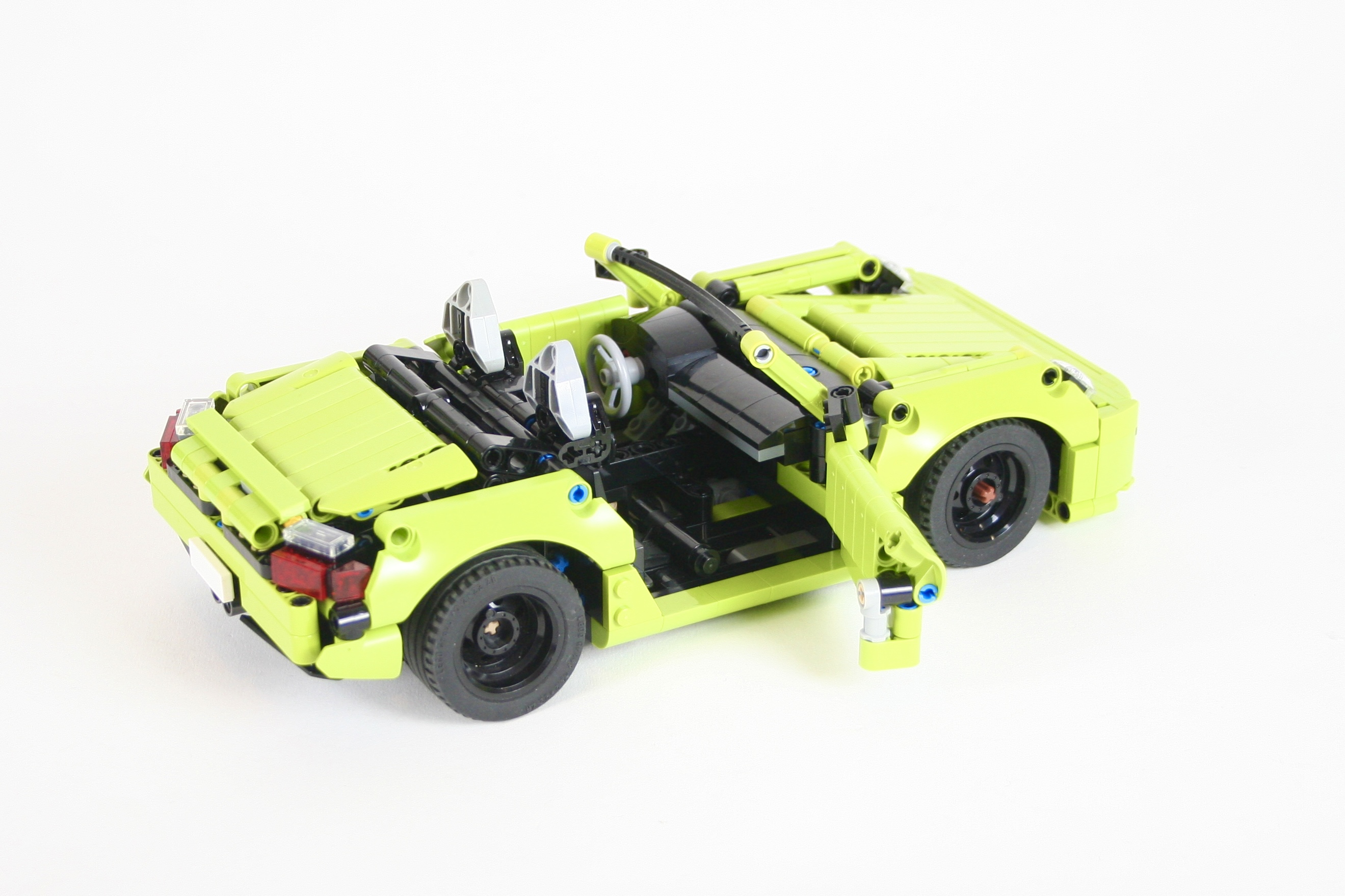
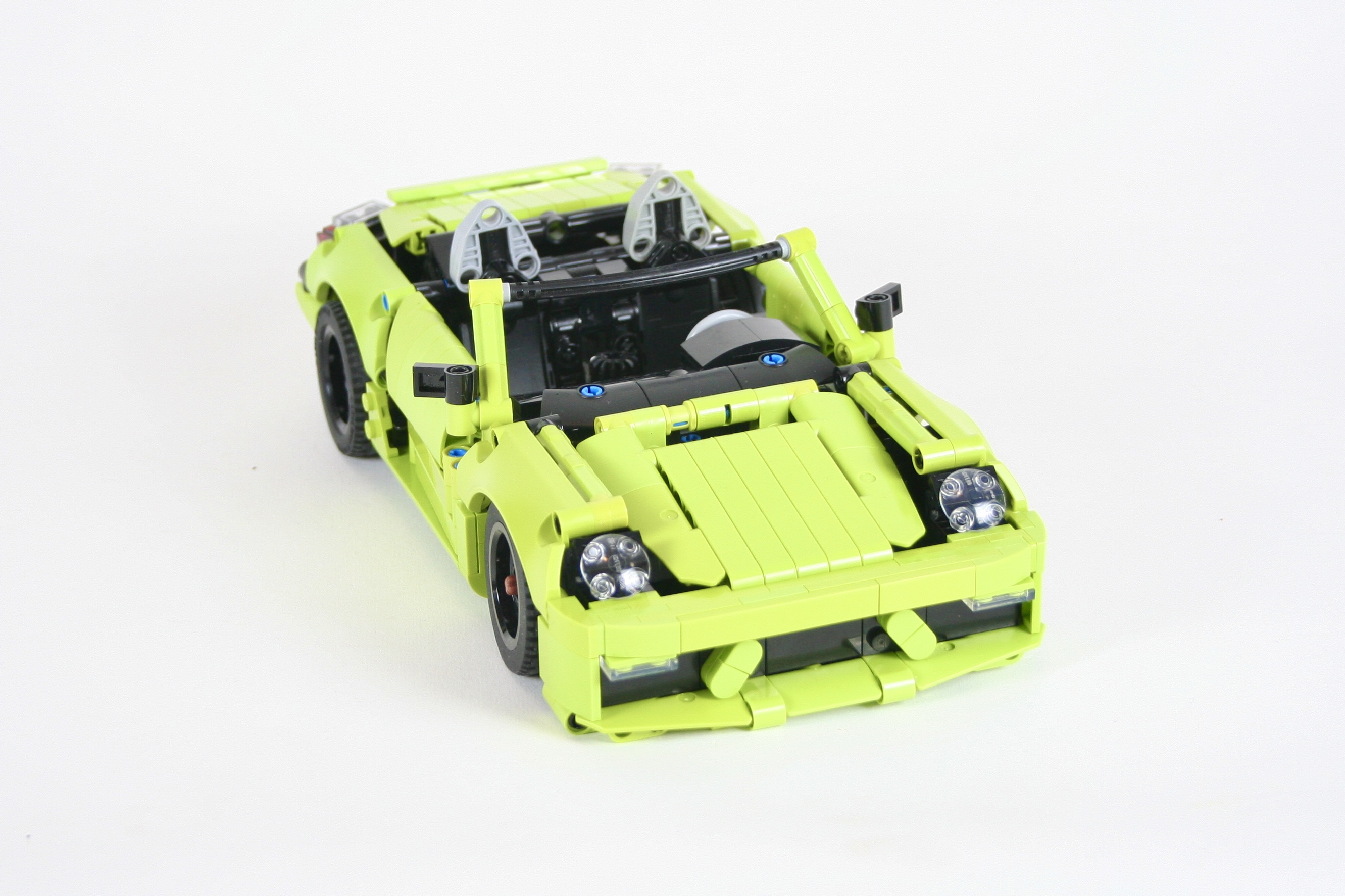
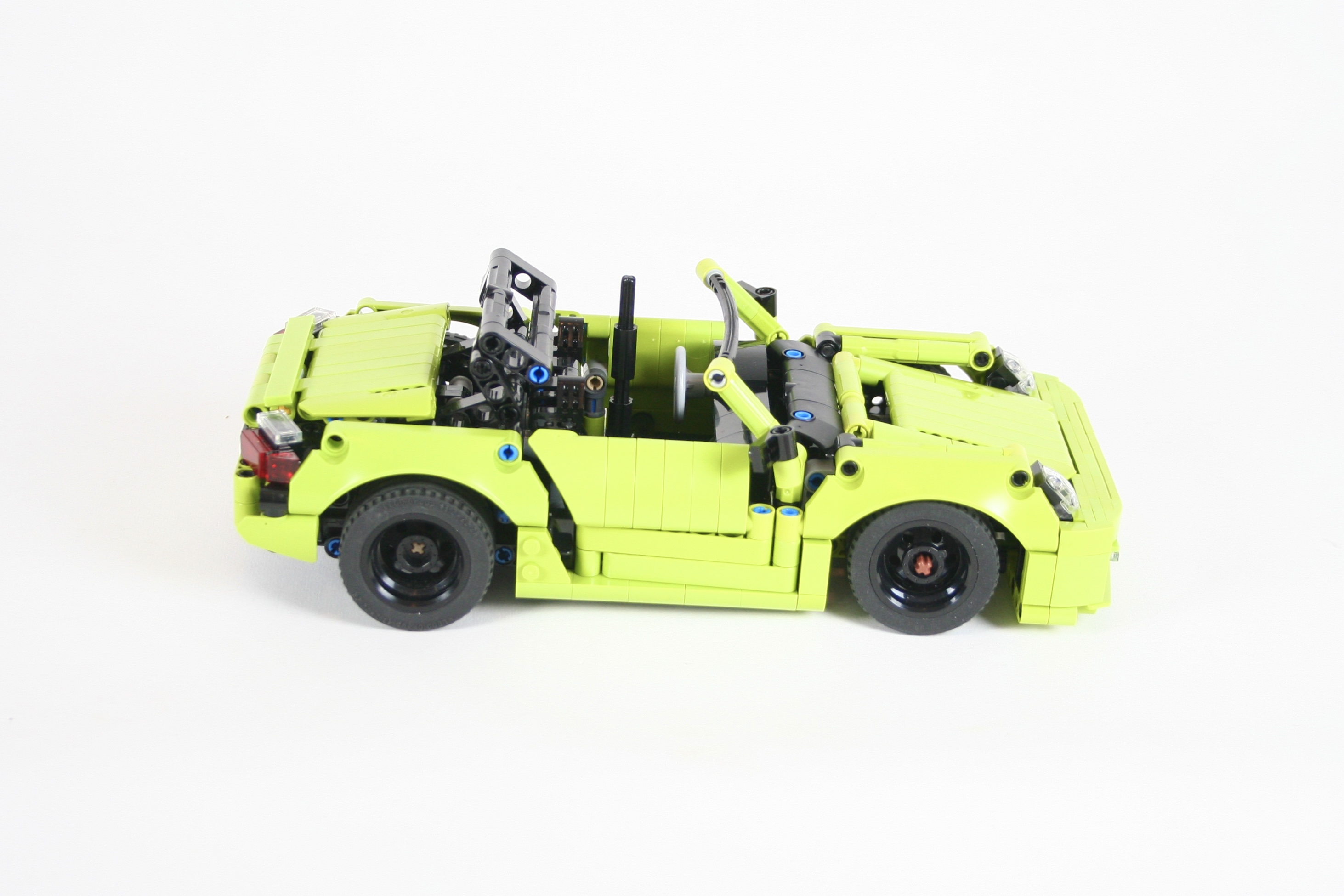
Like many car enthusiasts, I am love any Porsche. I have made my fair share of 911s, which is right of passage for LEGO car designers. But at some point, I looked around and did not find any Boxsters. So it was time to design one.

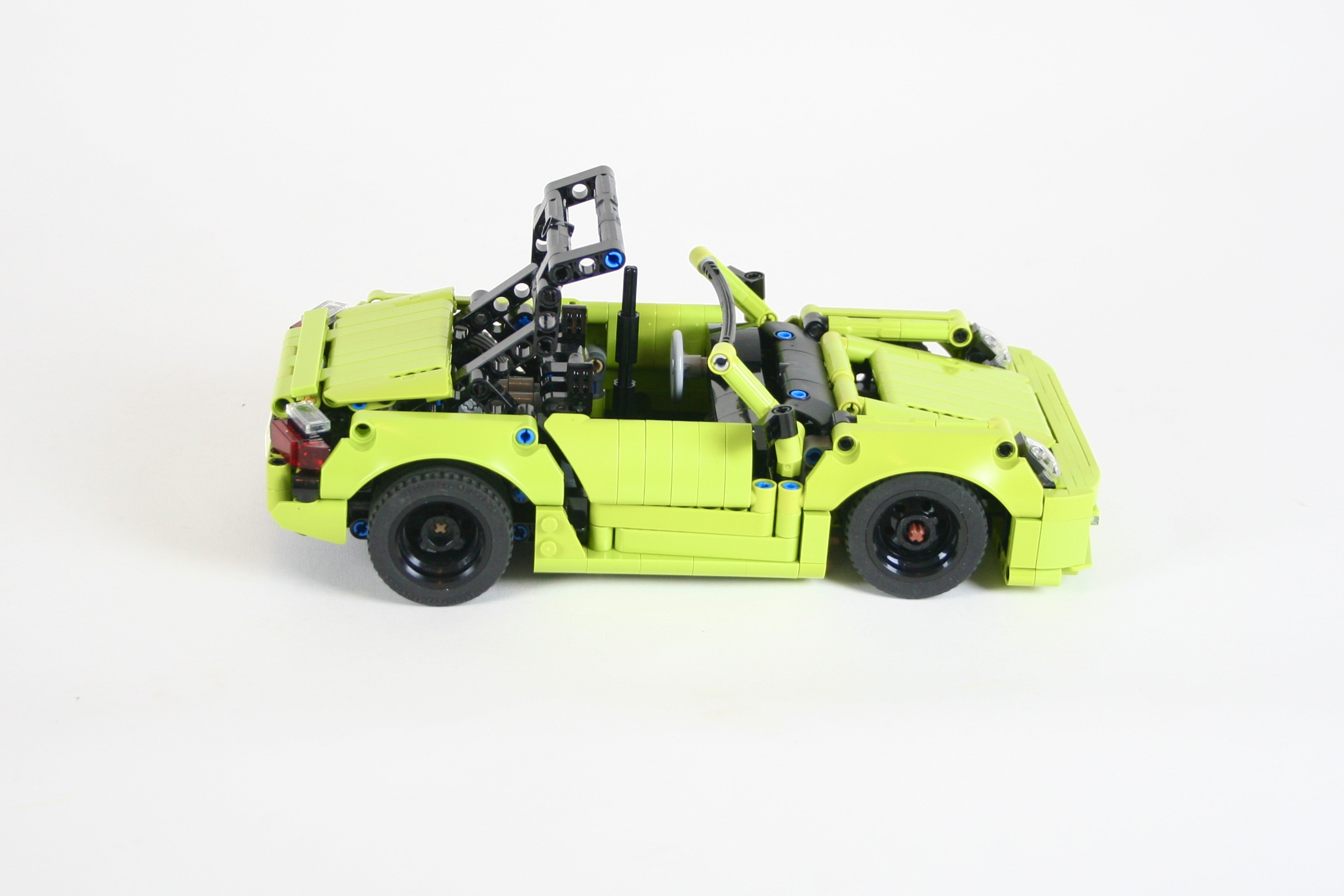
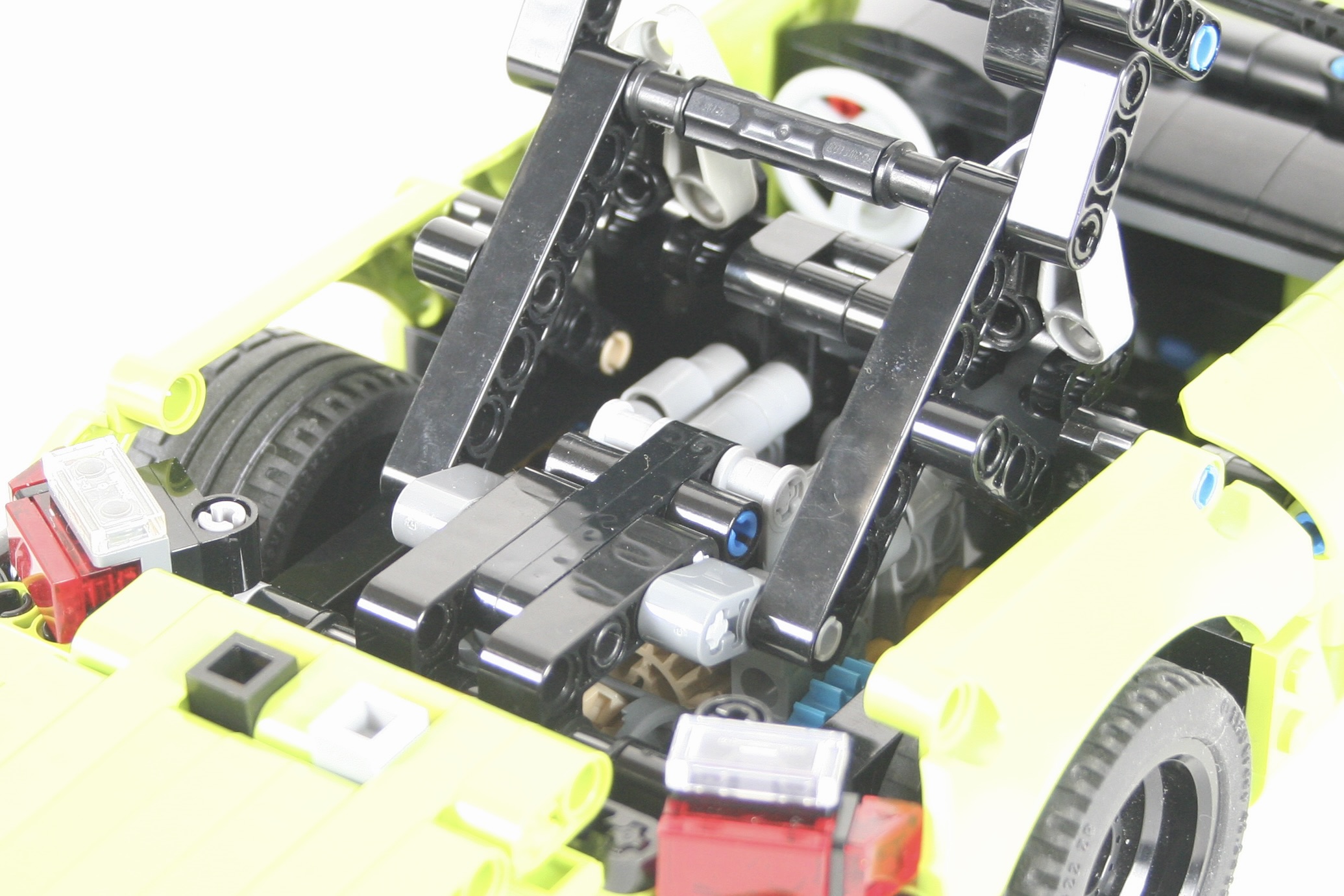
I had been playing around with some boxer engines for years, and I was finally able to come up with a design that I liked for this scale. The little axle based engine that has worked well for many smaller Technic builds is a great, and versatile design. It’s a little tall for small scale builds, but generally works well and is great to watch in these smaller cars. But it works because of gravity, so a flat engine design does not work. I tried ways to connect the axle pistons, but then the engine got so wide it would not work in this size car. Finally, after a number of drafts, and way too many months, a little design started to take shape. Built around a cam based crankshaft, pistons are mounted on a Technic connector and swing in and out to represent the engine. It is not a true flat engine, but it works smoothly, looks the part, and fits these small cars well.

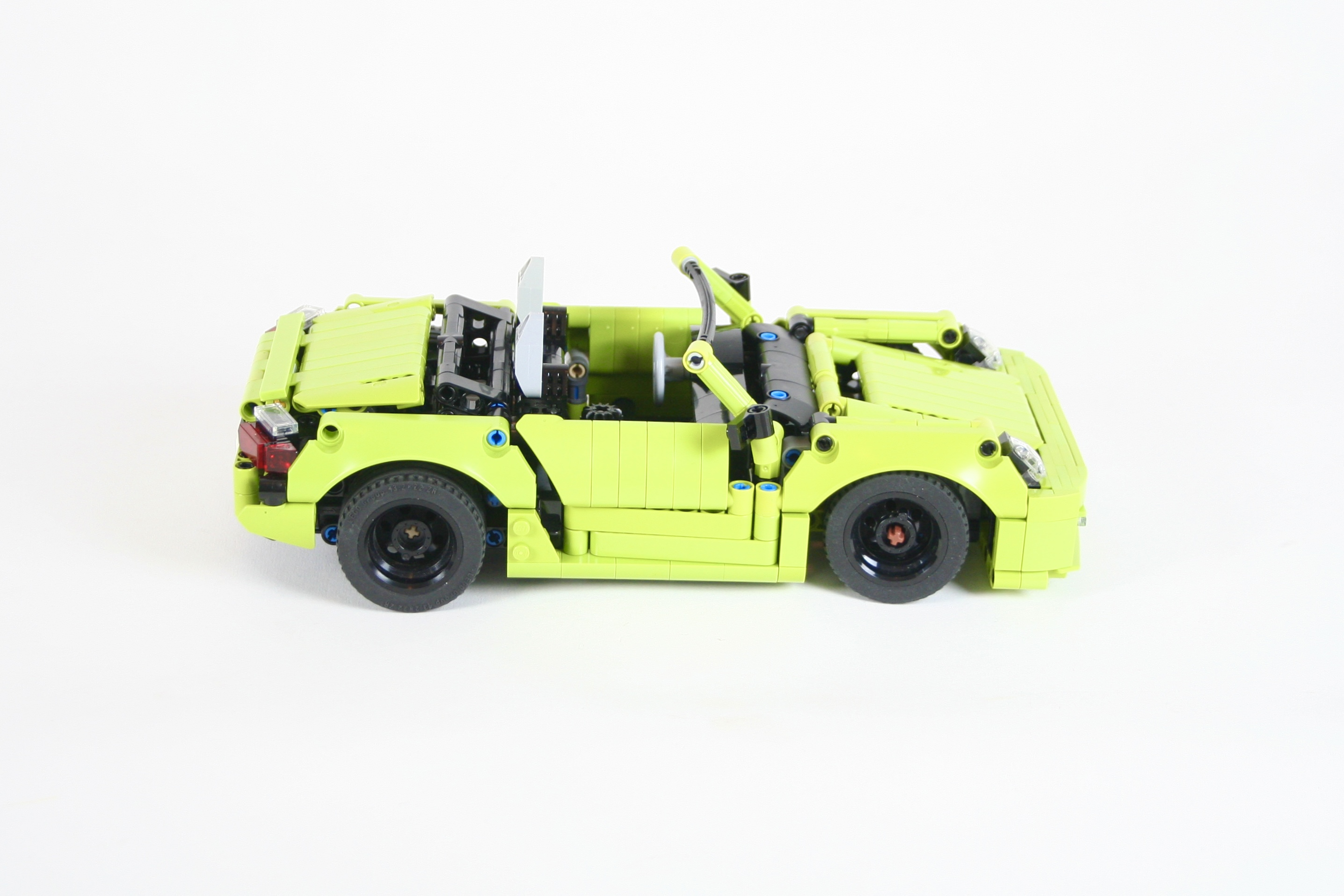
Once the engine was done, building the car around it was rather fun. I worked on the doors and side of the car next, and it was at this point, I decided on the Lime color. Adding the fenders and rear deck came next, then I had to pause to build the roof. It took some time, and a number of drafts, but I finally came up with a simple roof design that would fold into the rear of the car. The roof was not too stable when up, so I use a HOG extension in the middle of the roof to give it a little support.

The car turned out to be a great little testbed for another engine design. I am pleased with how it works, and will be an idea I use in another build. The front bumper could be a little more rounded, but maybe I will update that on a future Cayman or something.

Happy building.

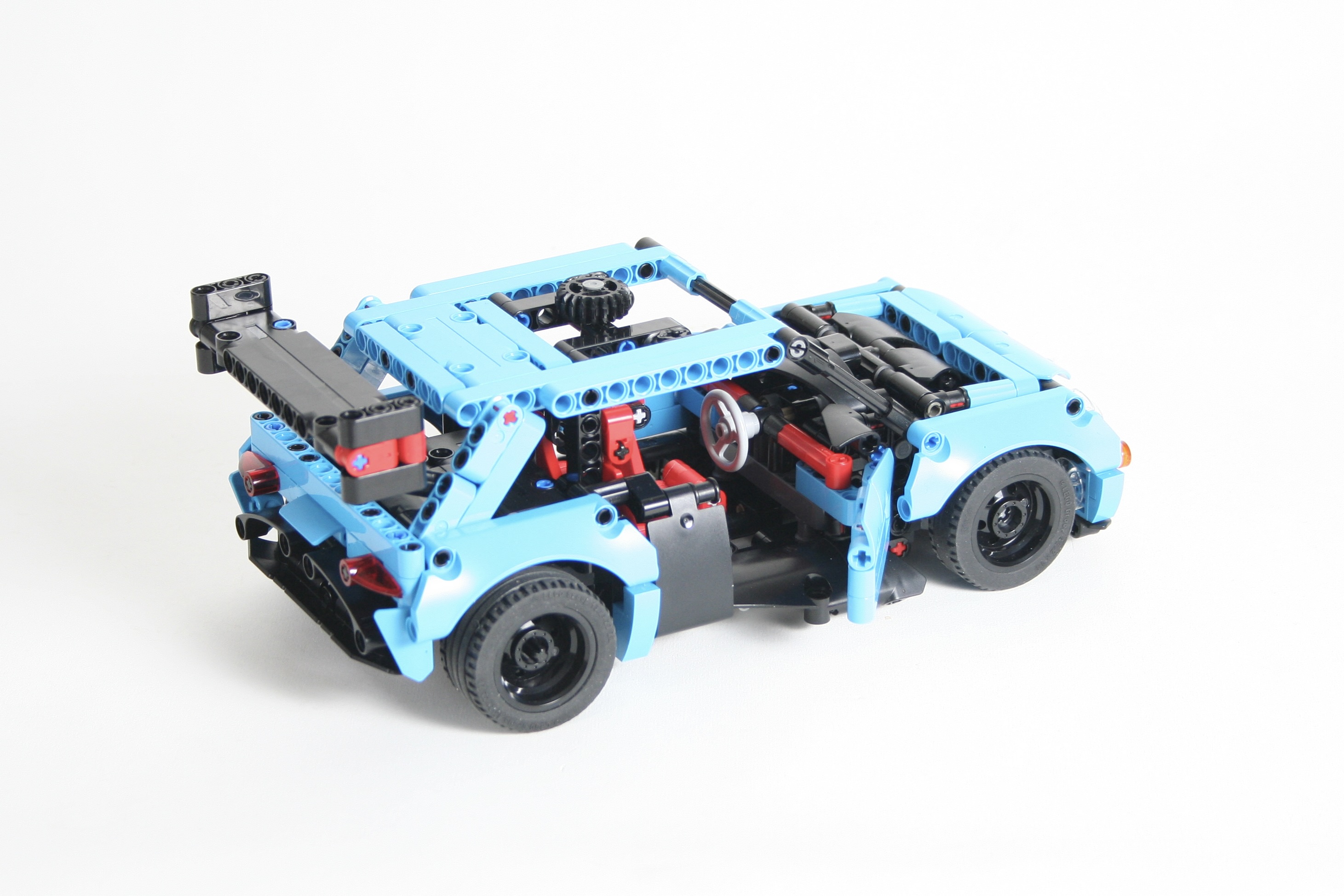
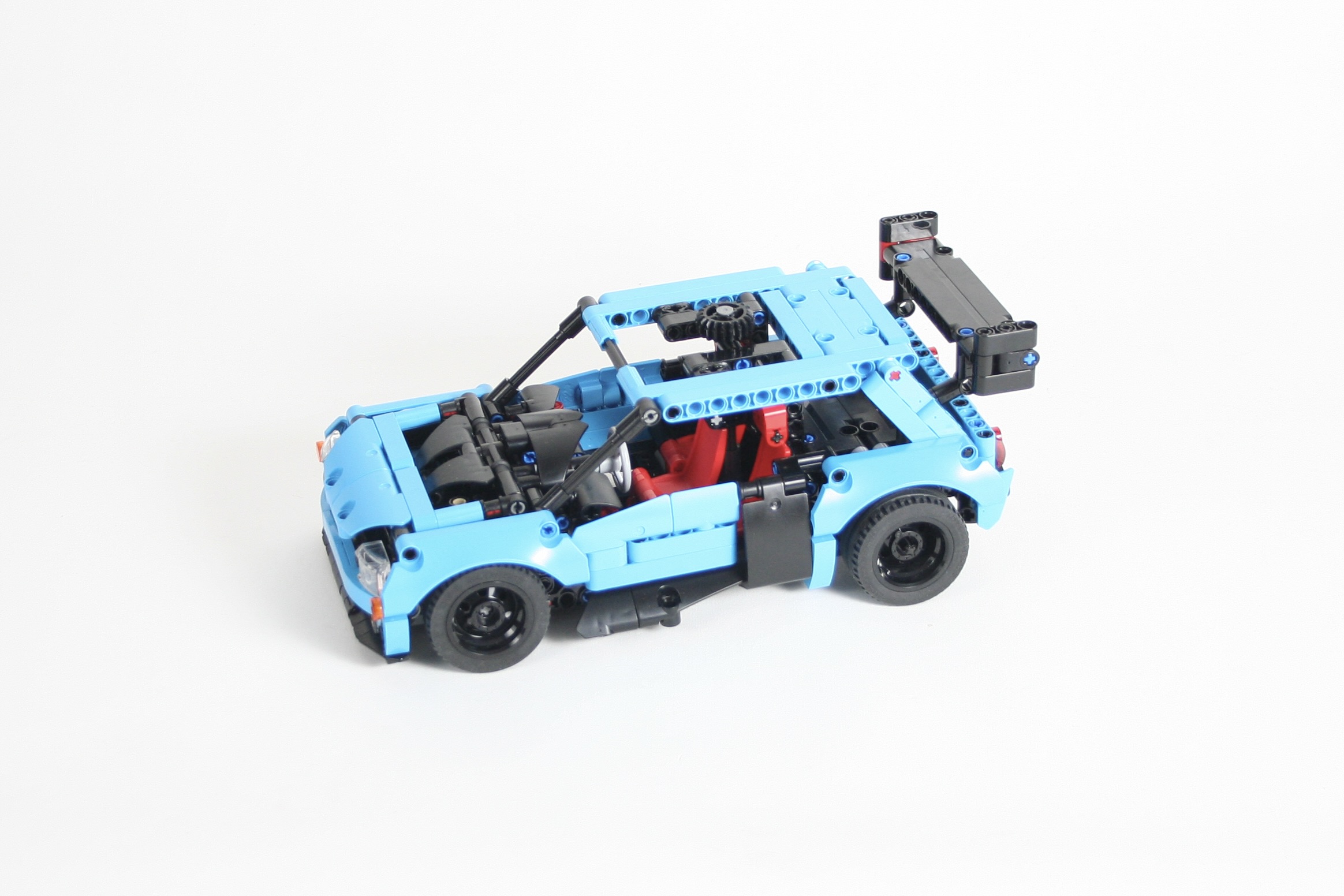
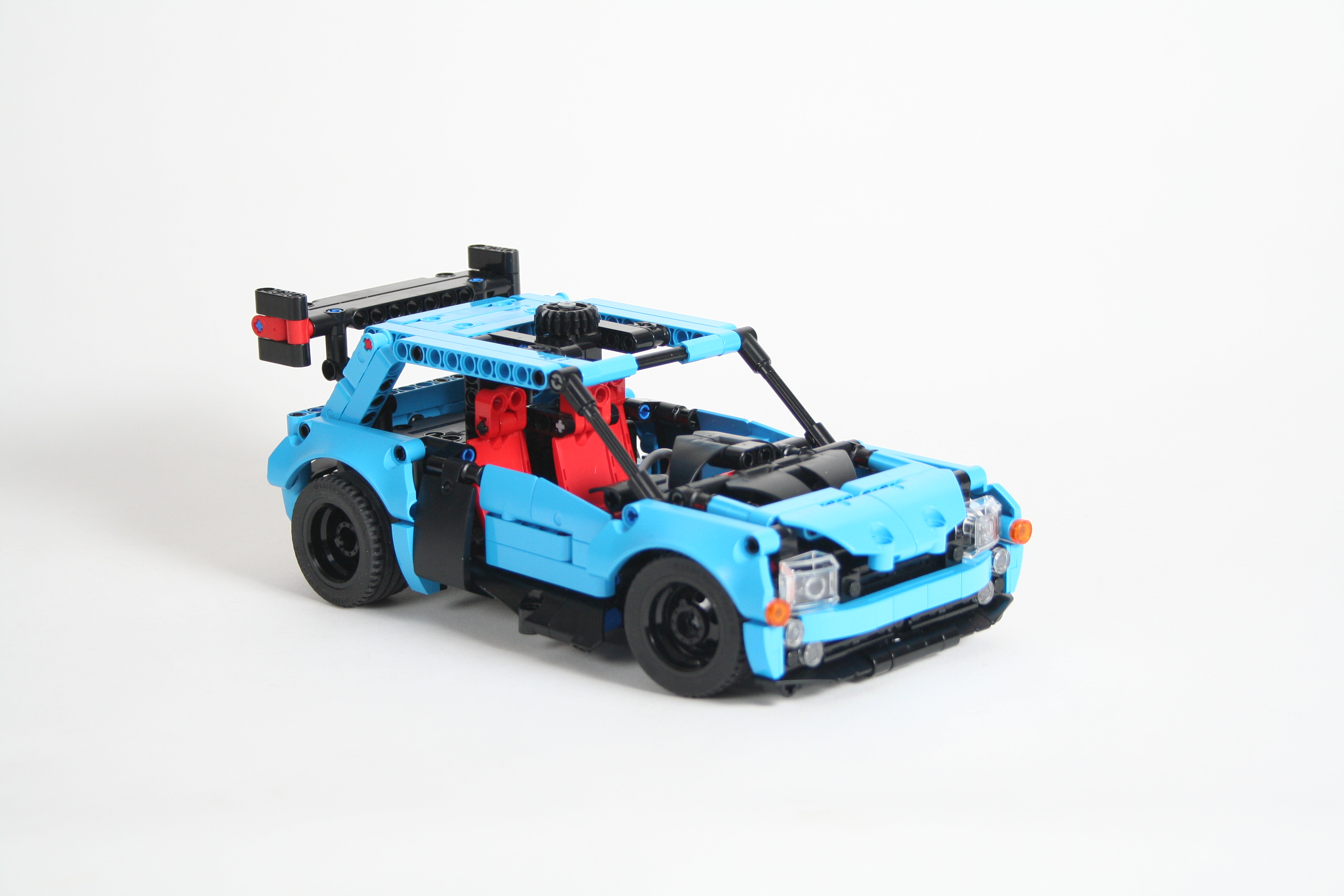
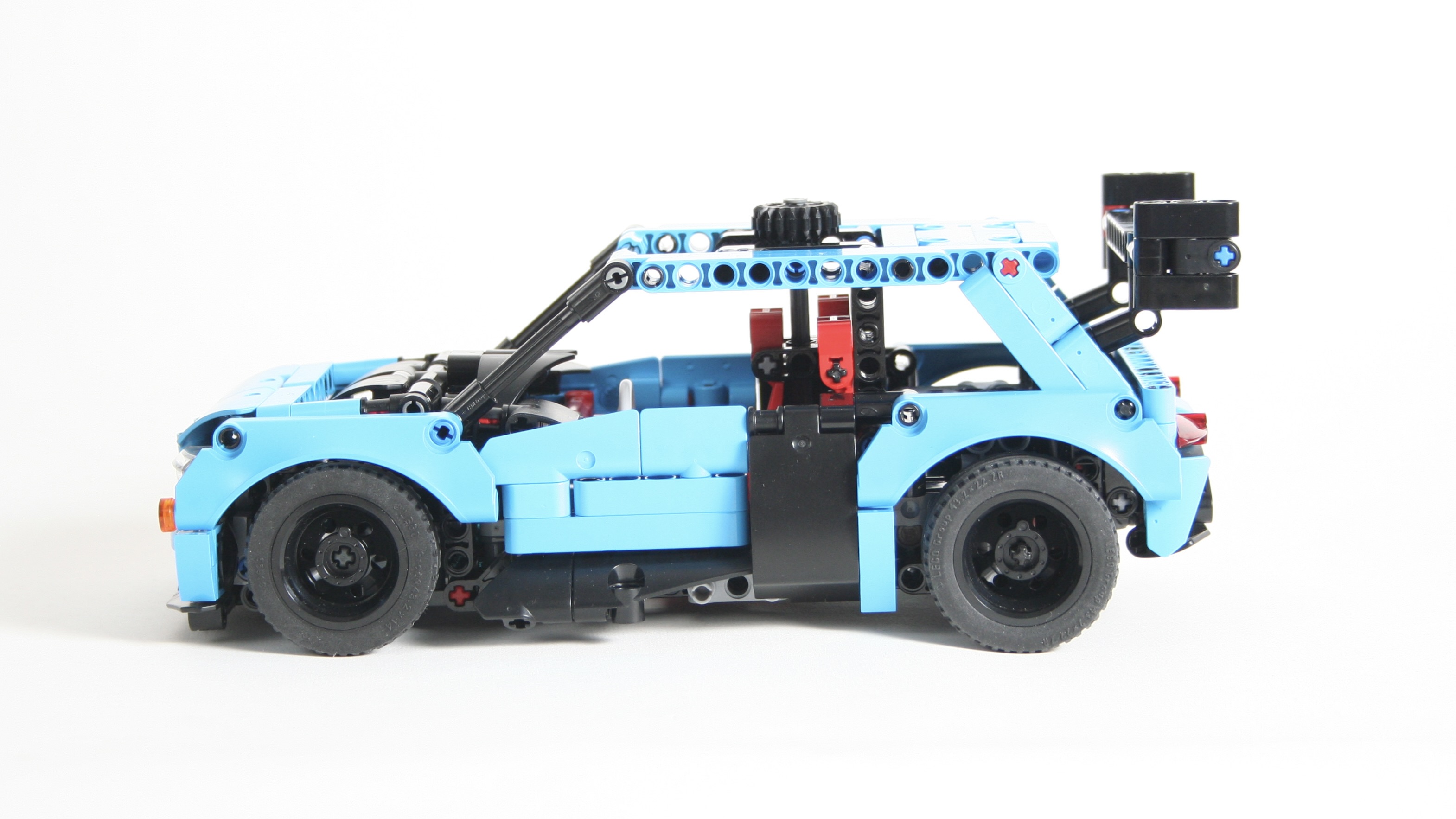
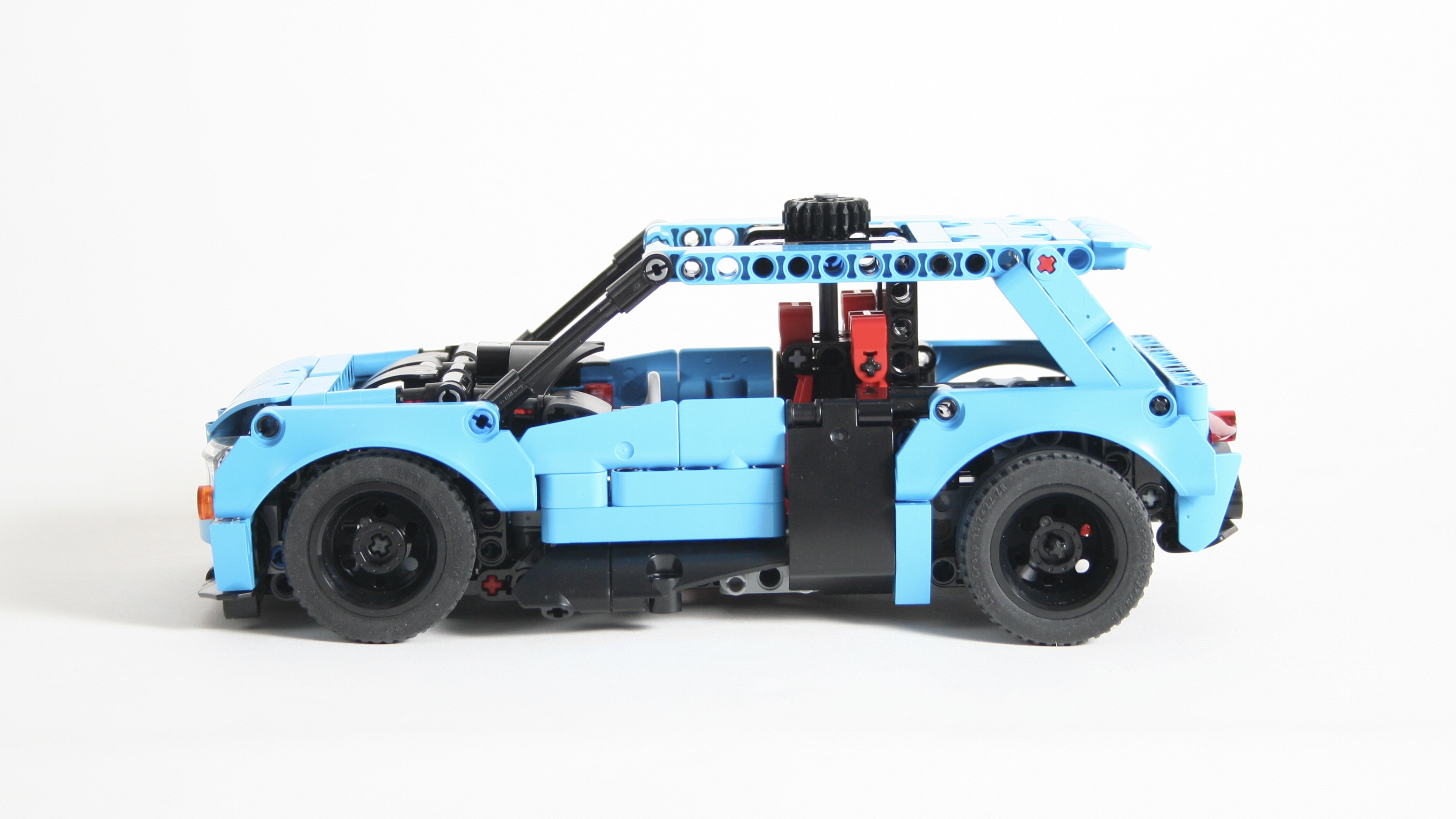
AWD E-Hatch


Another small car, but this time an EV with AWD!

Free Instructions may be found at Rebrickable.com.

I have been enjoying the small LEGO car theme that has been growing ever since the release of LEGO set 42098. Not only was it a well designed set, it opened up the 15 stud wide car theme which has been going strong ever since. I have enjoyed many builds by a lot of other designers, and I have had a lot of fun with many of my own builds.

I was tinkering with some ideas recently on a fake electric drive for this scale, and through this tinkering I found another idea that would work well for a front steering axle. Applying a fake motor to the rear axle was simple enough as the differential could drive an electric motor directly. But for the front, I removed the differential, but still used the gear to drive a fake motor. Using a CV joint on each side on which to mount the wheel would allow for the steering to work. The steering knuckle pivots are out of line of the CV joint pivot, but since the CV joint allows for frictionless movement of an axle, it allowed for a the center axle to flex a little bit during the steering movement. The center axle is mounted on a pivot that manages the movement.

The system works well, and means the front fake electric motors is always turning when the car is moving. The steering gets a little gummy at full lock as the front axle would be better with a differential, but the idea works well enough.

Adding in a HOG was simple enough, and I had enough space to add a connection to the front steering wheel. I wanted to try a different interior setup with seating for three, so this worked well with the center steering. Also, I complicated things just a little bit on the front axle, by having the axle a half stud lower than the rear to give the car a leaning forward look.

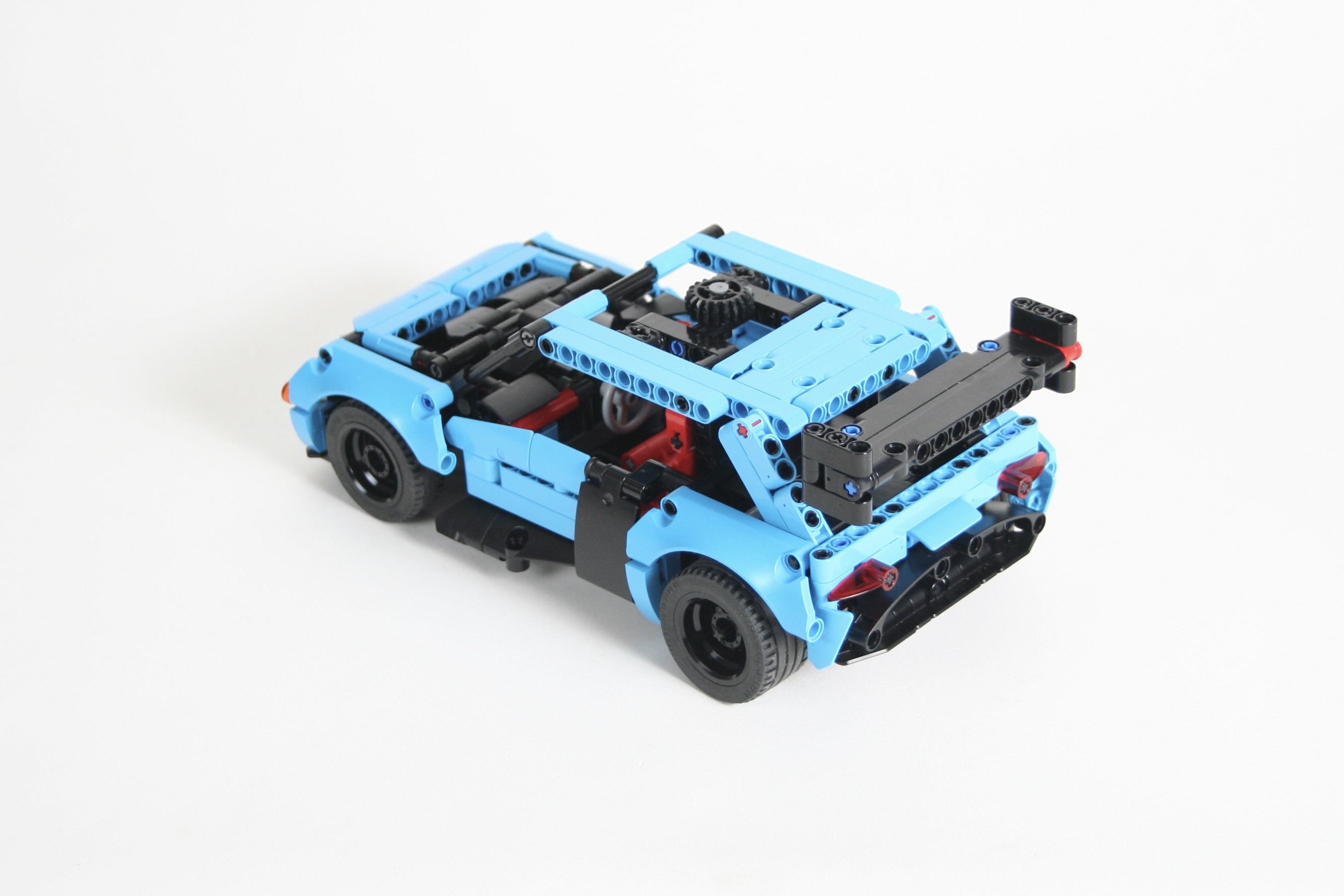
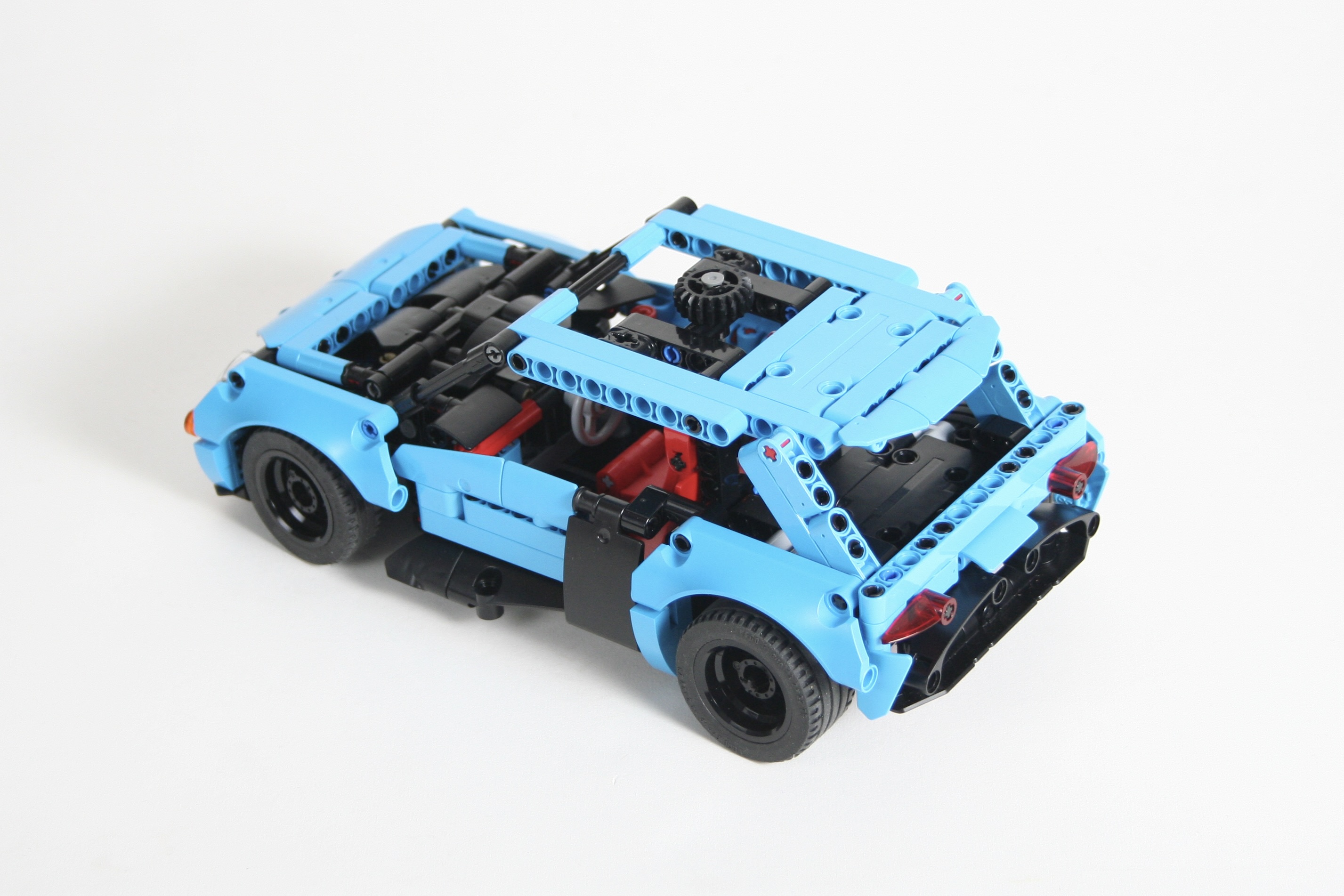
Finally, I worked on the bodywork to give an updated look to the classic rally hatchback from yesteryear. The comically large wing, and the large side intakes harken to the Renault Turbo 5 and the more recent R5 Turbo 3E.

I have enjoyed building in this scale, and it will not be the last time I do so. It was fun to try another feature for this scale, and I think with a little more work, the front axle will be perfect. I love the design on the car as the black, red, and dark azure look great with the proportions and bodywork. I hope you enjoy too.

Happy building!
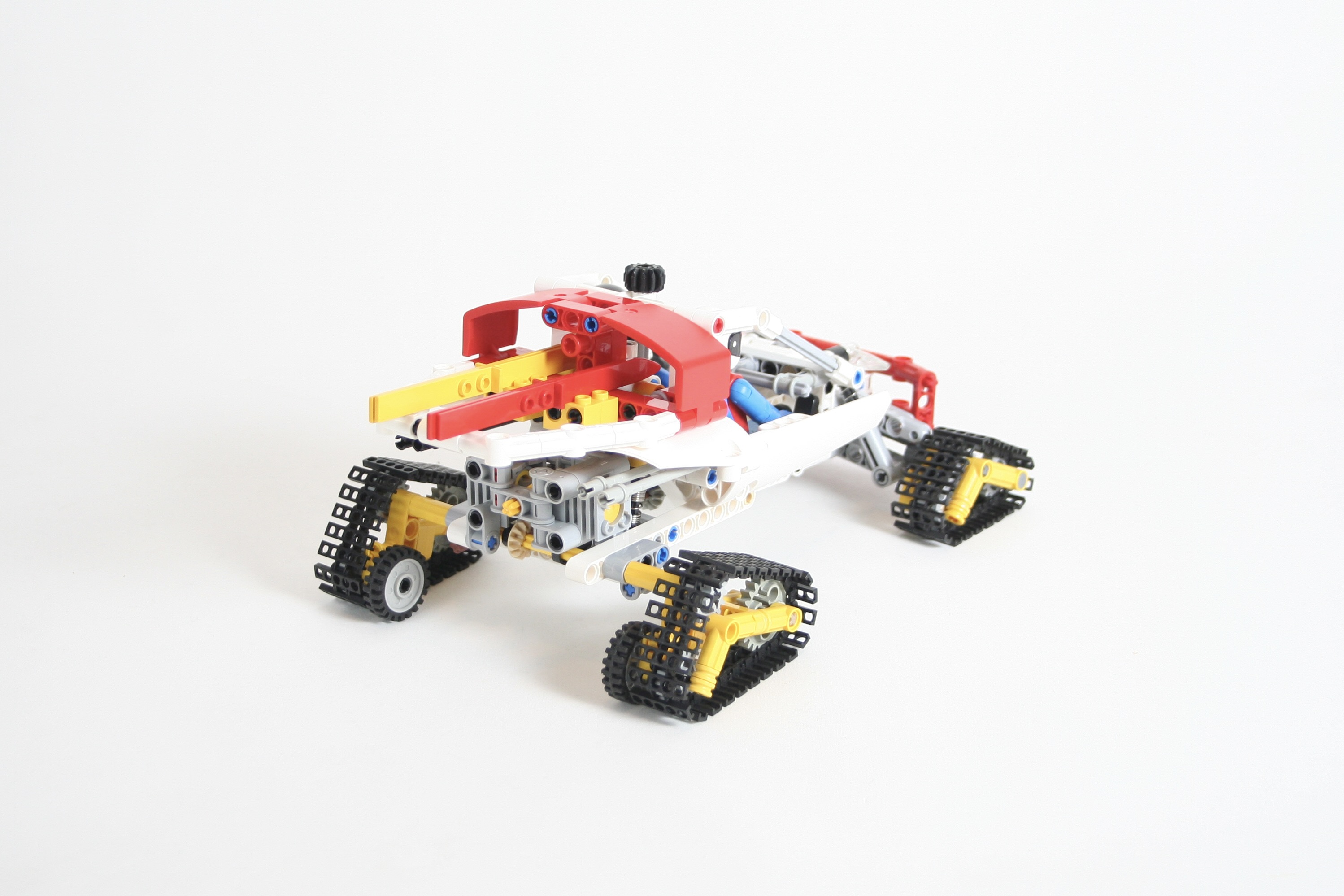
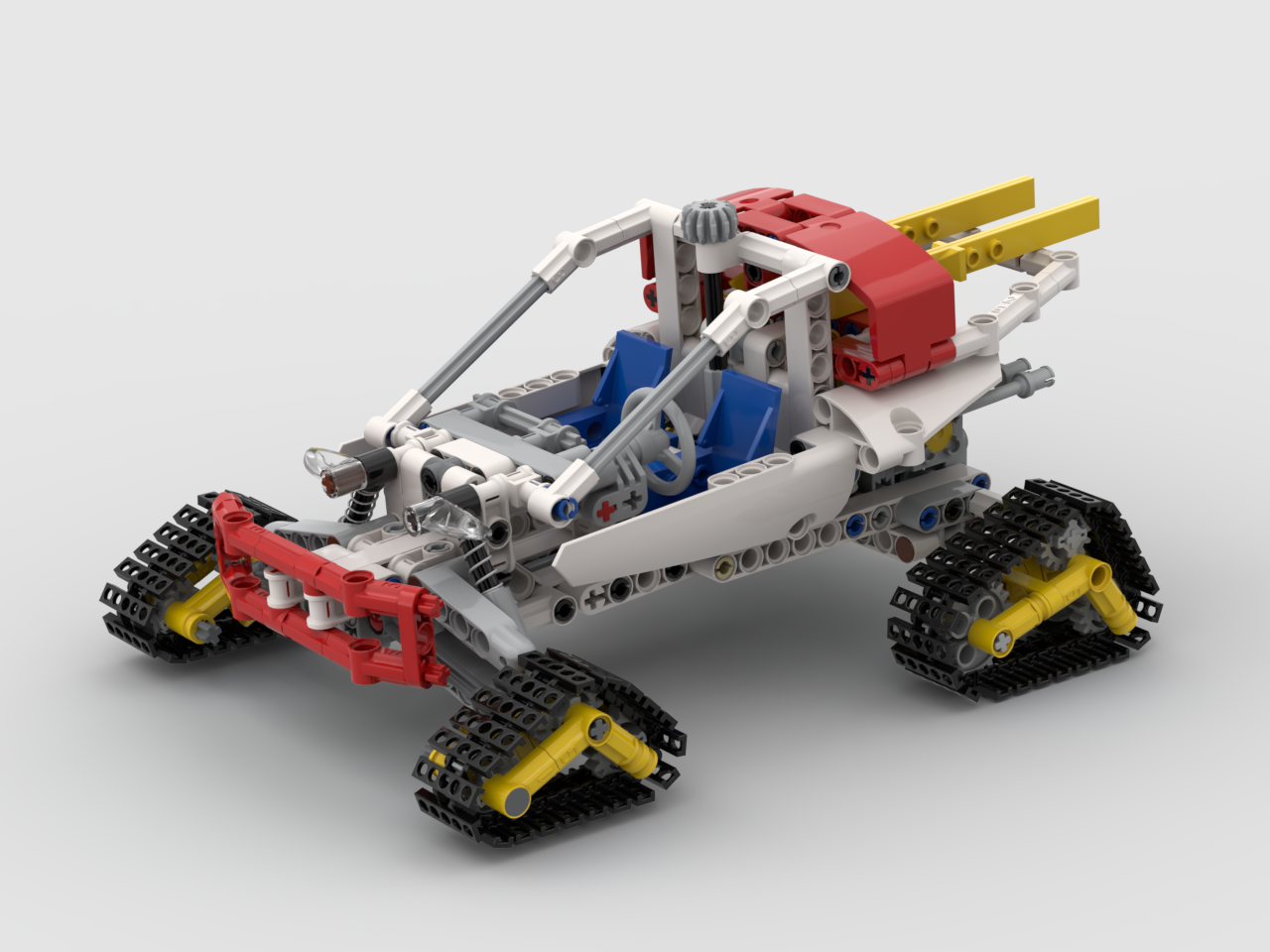
Snow Patrol


Another build for a Eurobricks Technic Contest.

Free Instructions may be found at Rebrickable.com.

About twice a year, Eurobricks hosts a Technic build challenge, and I try to participate in as many as I am able. It keeps me building, and challenges me to build something I usually do not. And a friendly competition is always a good idea. This winter, TC26 was launched, and asked participates to build an arctic vehicle. I wanted to participate, but I did not have too much extra capacity during this season, so I decided to build something a little smaller.

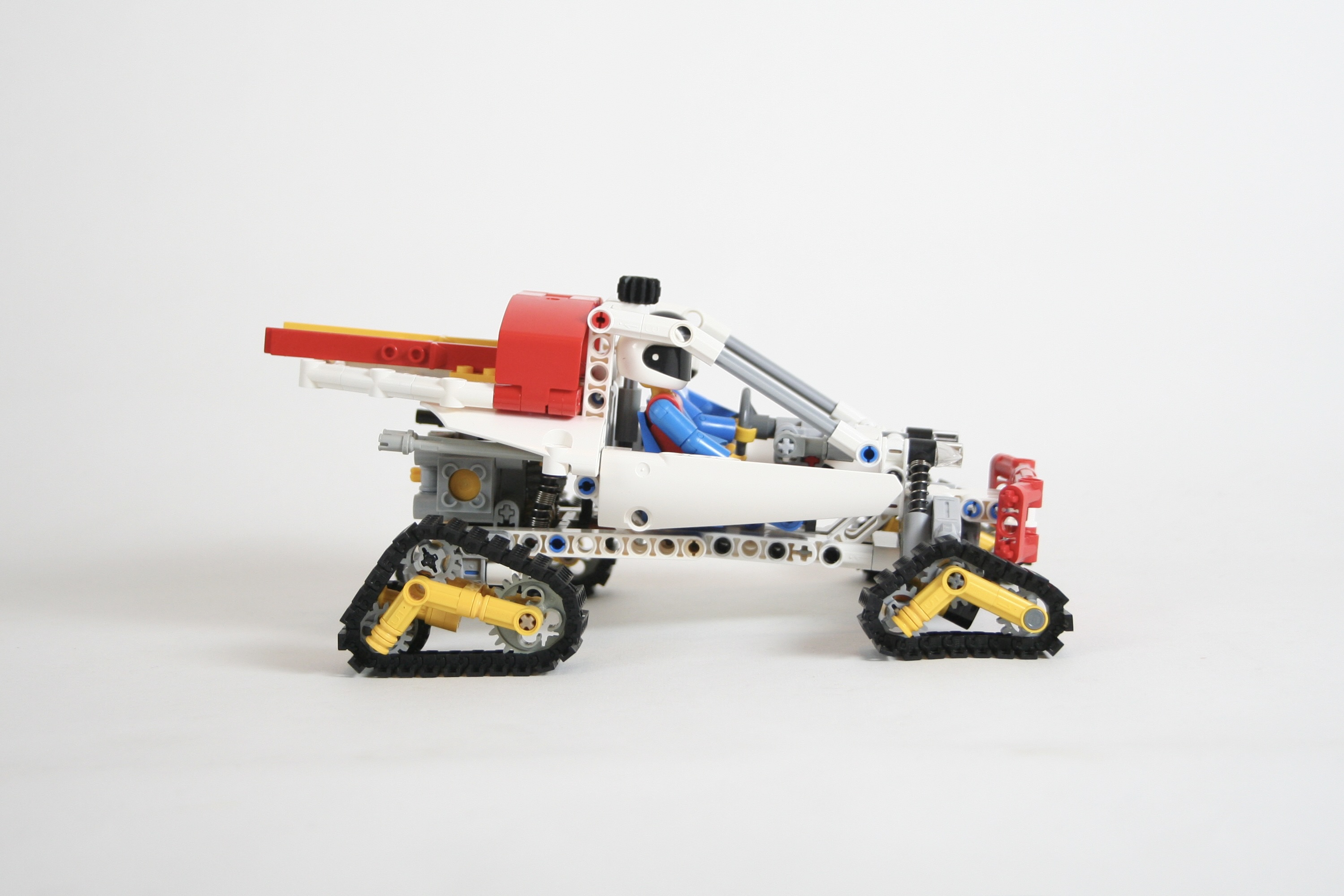
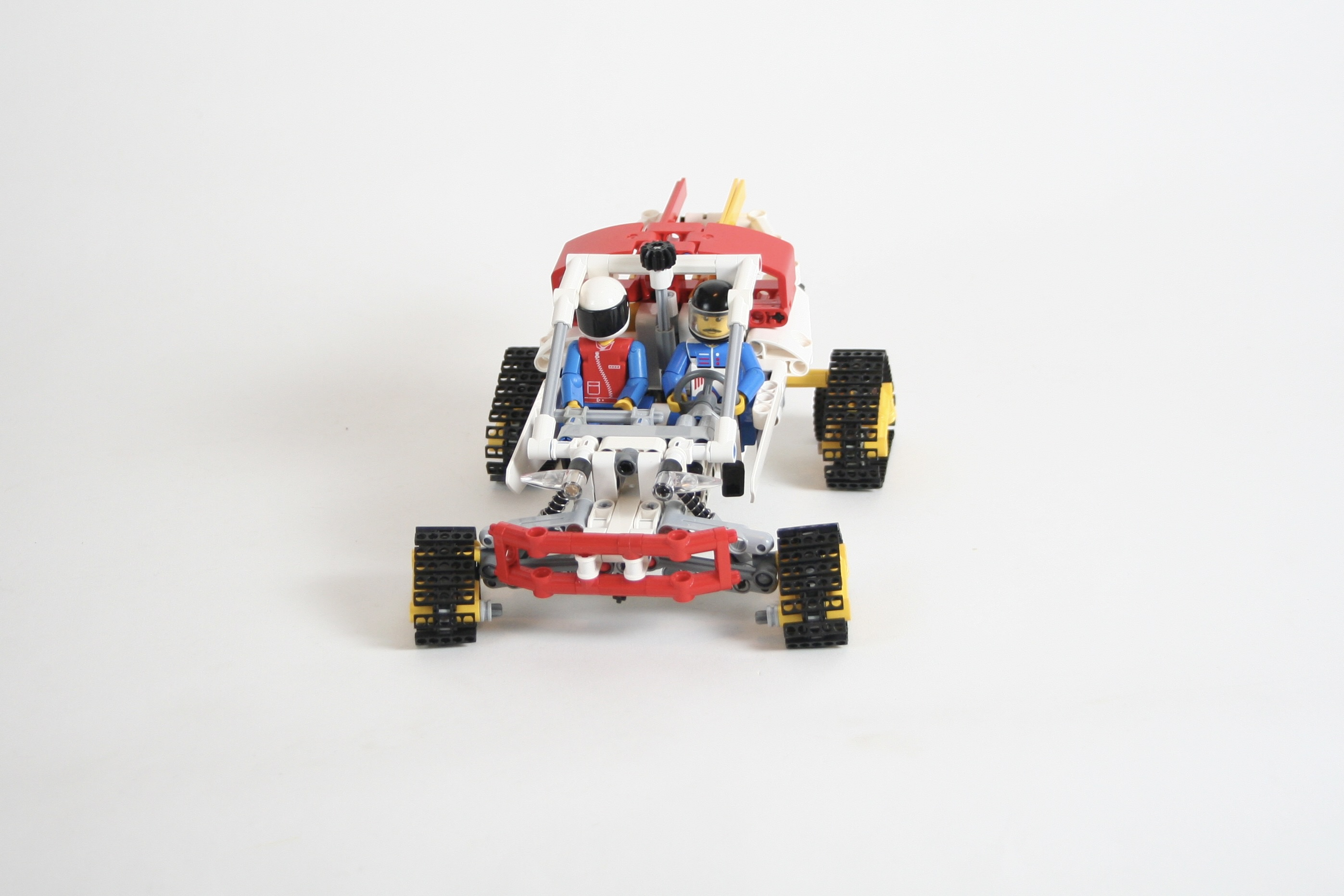
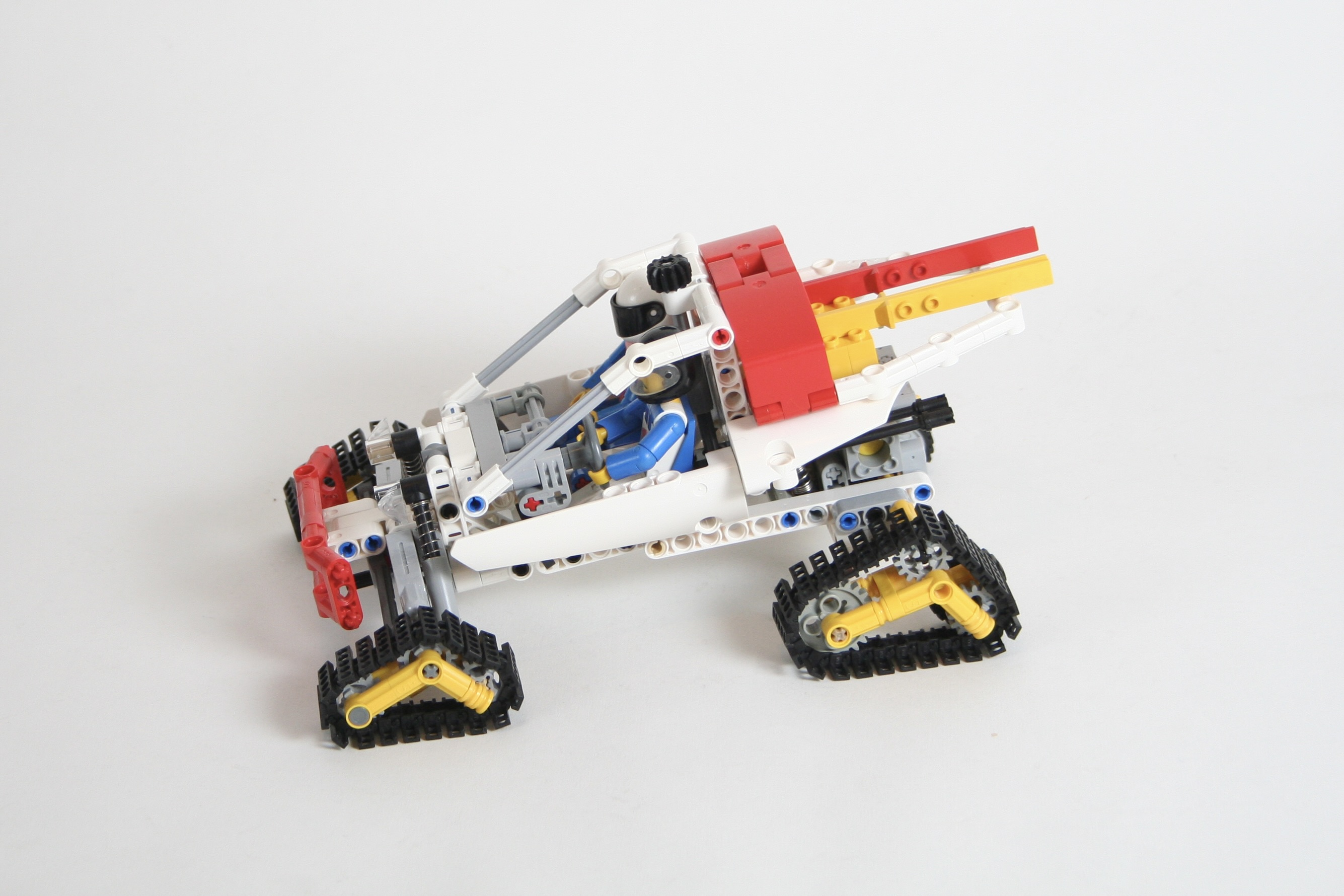
The theme called for either an orange build, or a build that matches the colors of the original arctic theme technic had during the late 80’s. I, of course, decided to use the 80’s theme because this would allow me to use my seldom used Technic figures, and their skis. Also, the build would have to use tracks, and I felt this was a requirement for a snow vehicle. I was inspired by some side-by-side vehicles recently, so that was the idea I would move forward with for the build.

I designed the front suspension first to get an idea of the front track, and then each of the four track units. This gave me a rough size of the vehicle. Then a little engine and rear suspension unit was developed.

I then added the two seats and Technic figures. I have used these seats and figures before, and every time I do, I am reminded about how different the old studs and pins technic system is from the newer liftarm based system. There is no strong, simple, and compact way to add a Technic figure seat into a liftarm body. After some work, I was able to come up with something that would work. Then I was able to finalize a body around these features.

The design was simple, and nothing too fancy. The steering could have been a little better, and the tracks were not quite as smooth as I wanted, but it looked good enough, and allowed me to participate in another contest, which is always fun. Feel free to give the build a try for yourself.

Happy building.

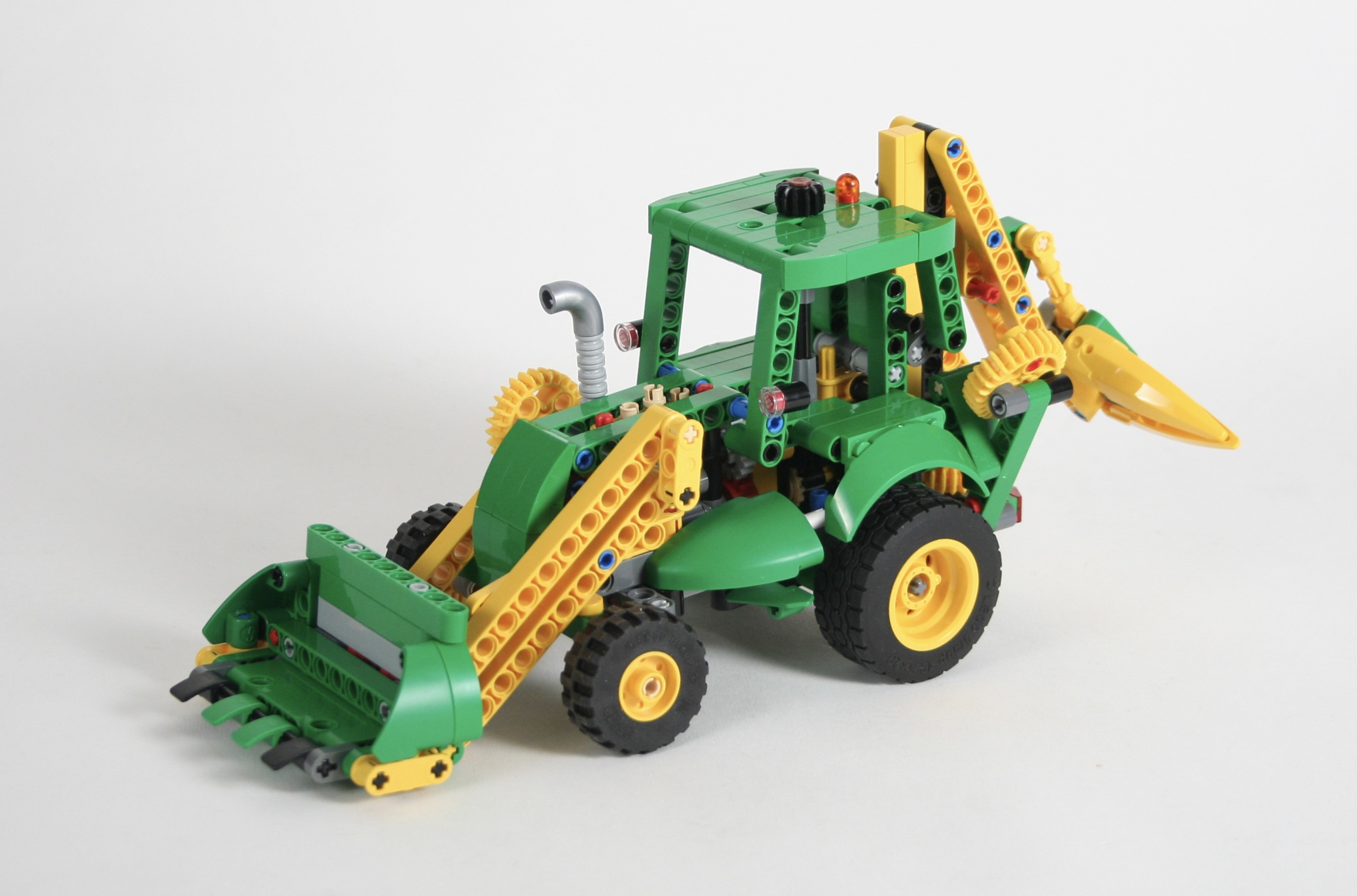
LEGO 42168 Backhoe


I have been bitten by the Alternative Build bug.

Instructions may be found at Rebrickable.com.

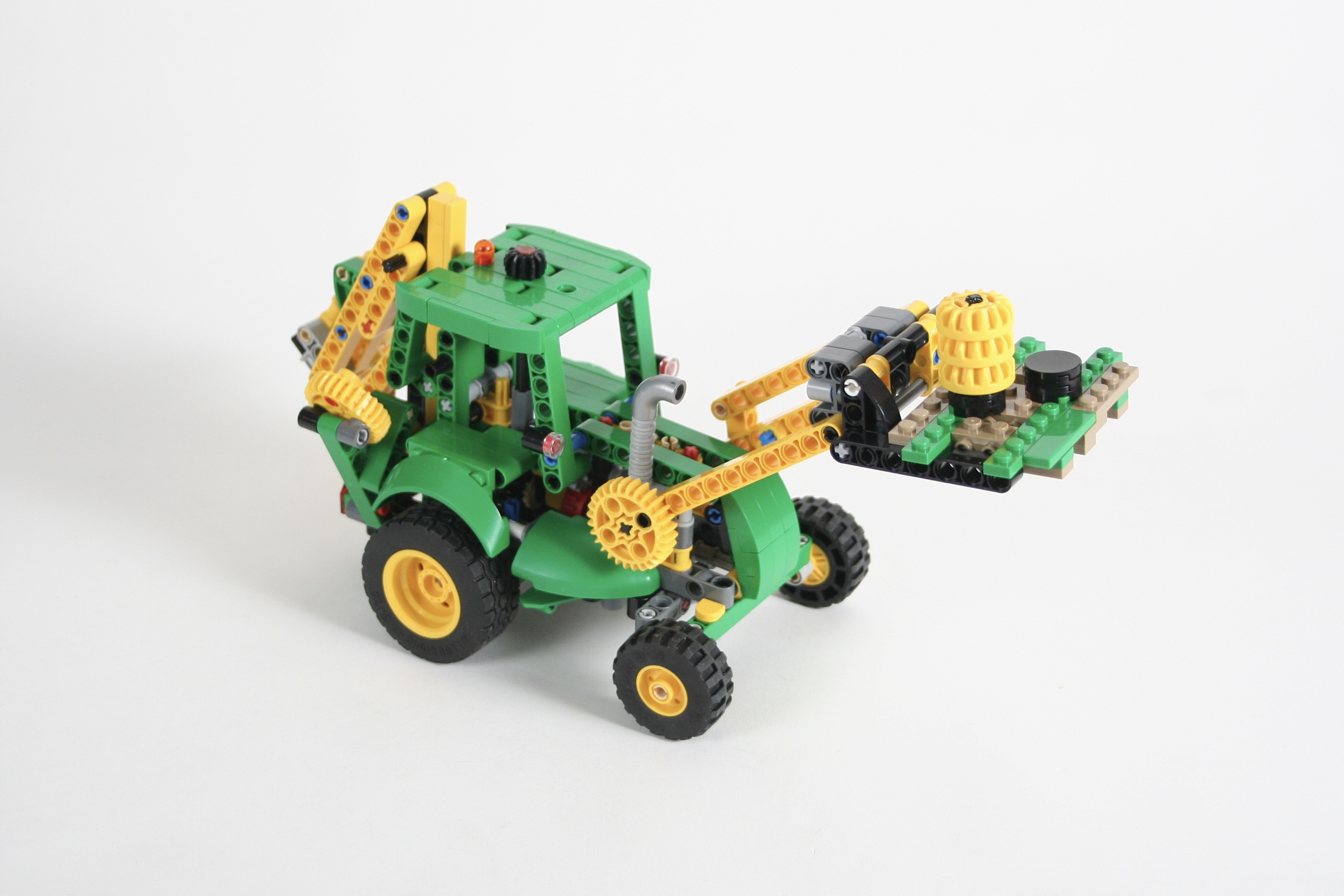
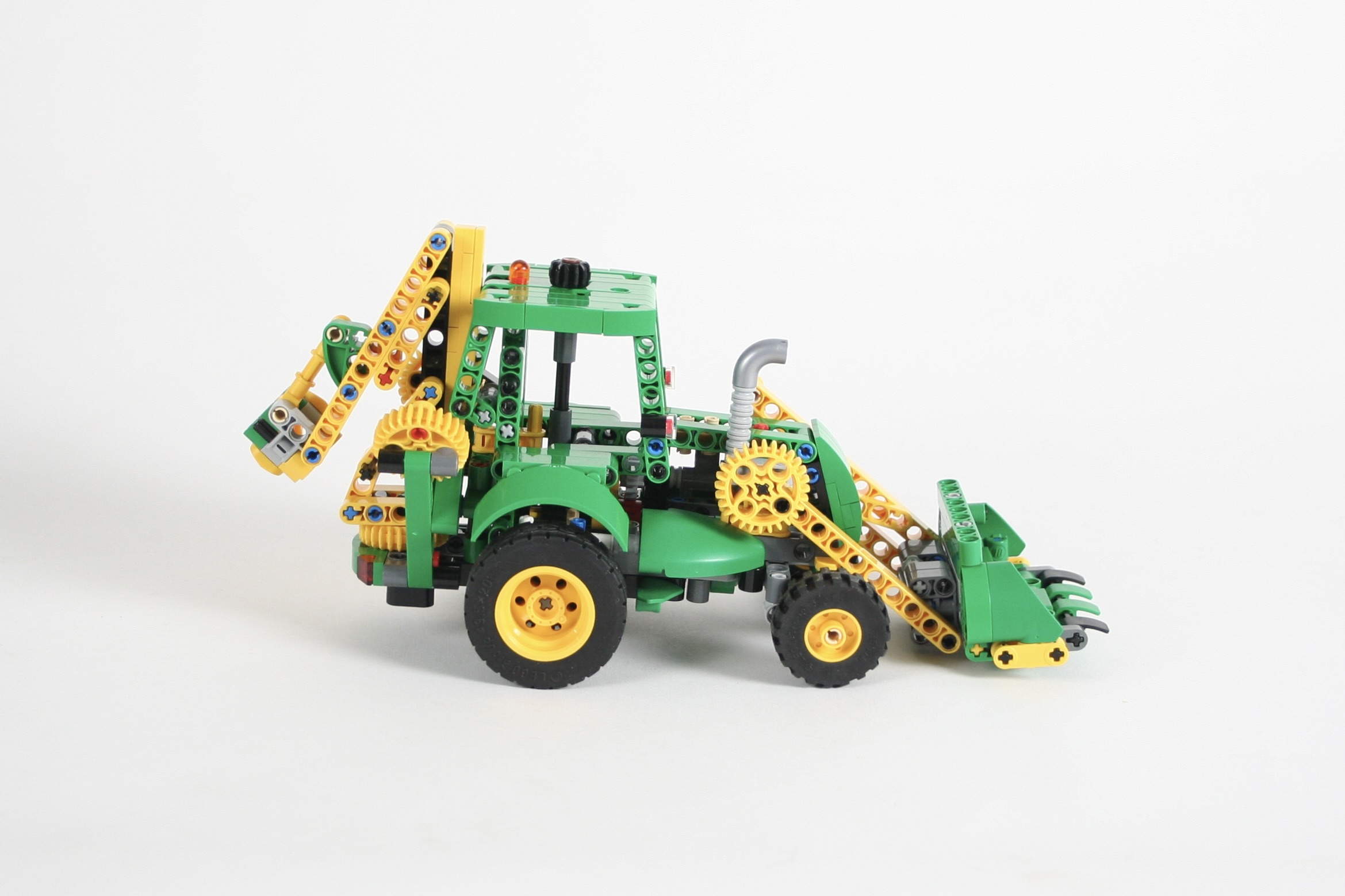
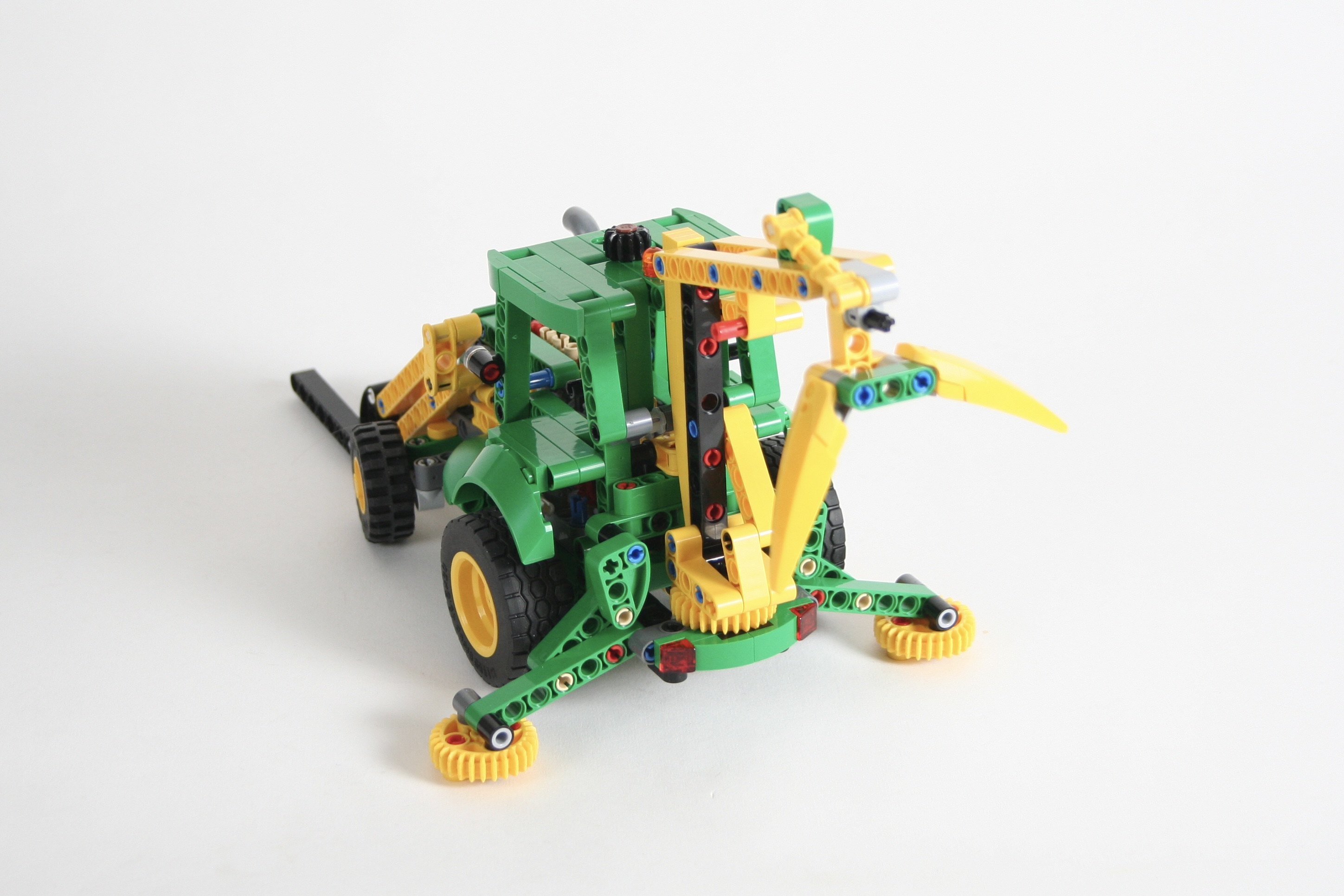
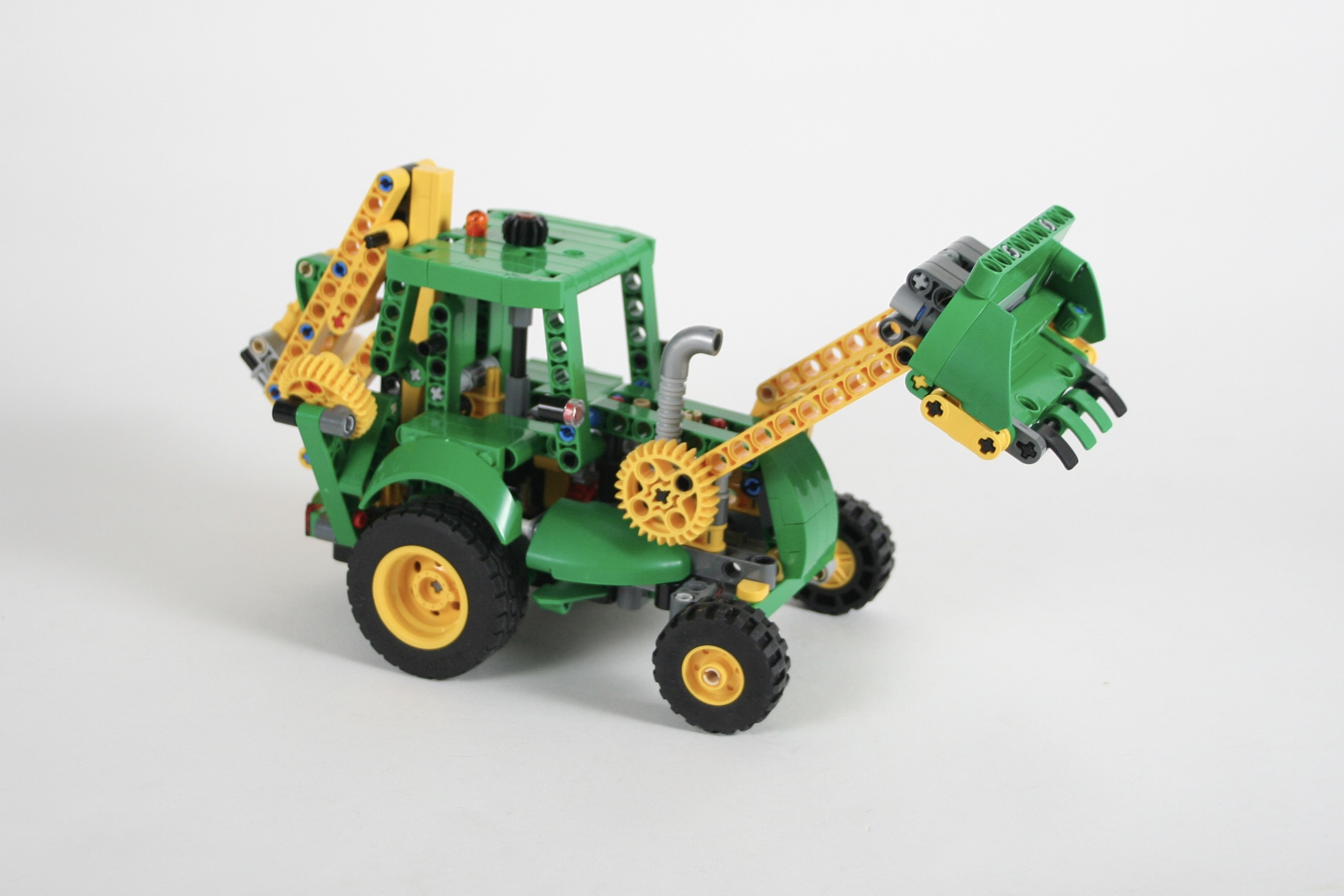
A couple of years ago I decided that it was time to learn how to make an alternative build. I recognize how more people are looking for ideas to turn a set they have purchased into another build. Well, since I enjoy building other design, I am happy to share these with other people. Plus I like the challenge an alternative build poses: a limited amount of parts to make a MOC. LEGO set 42168 is a cute little tractor with some fun features, but what I really like about it is the green. It is a small, accessible set, and has some fun parts, that can be used to build something else.

Since the set comes with two different size wheels, I decided a little backhoe would be a good idea. Plus, with the amount of yellow parts, I could use them on the rear arm and front loader. As I do with all of my builds, I started with draft including all the functions I wanted the final build to have. Quickly I had a draft with working steering and a little fake I3 engine. The I worked on how the front loader would work, and the rear arm mechanism.

As I worked on the rear arm, I was not pleased with any of the bucket designs I came up with, so I instead designed a couple of attachments that fit the tractor a little better. A little drill and a claw are included in the build. The rear arm moves in a number of ways, and the tractor also has two stabilizing arms to keep the tractor from tipping over. I used a similar approach for the front loader as well. A bucket option is included, but I find the design a little clunky looking. It includes a set of forks as well which I like a little better. A little pallet to load is included. Both the lift and tilt are manually operated, and the lift includes a lockout level so the arm may hold up a heavy load.

I like to think I am getting better at alternative builds, but I do not think this is my best one. I find the design a little rough, even though the functions work well. I hope that some other builders find some enjoyment in this design, and I’ll keep working on more ideas to make available in the future.

Until then, happy building.

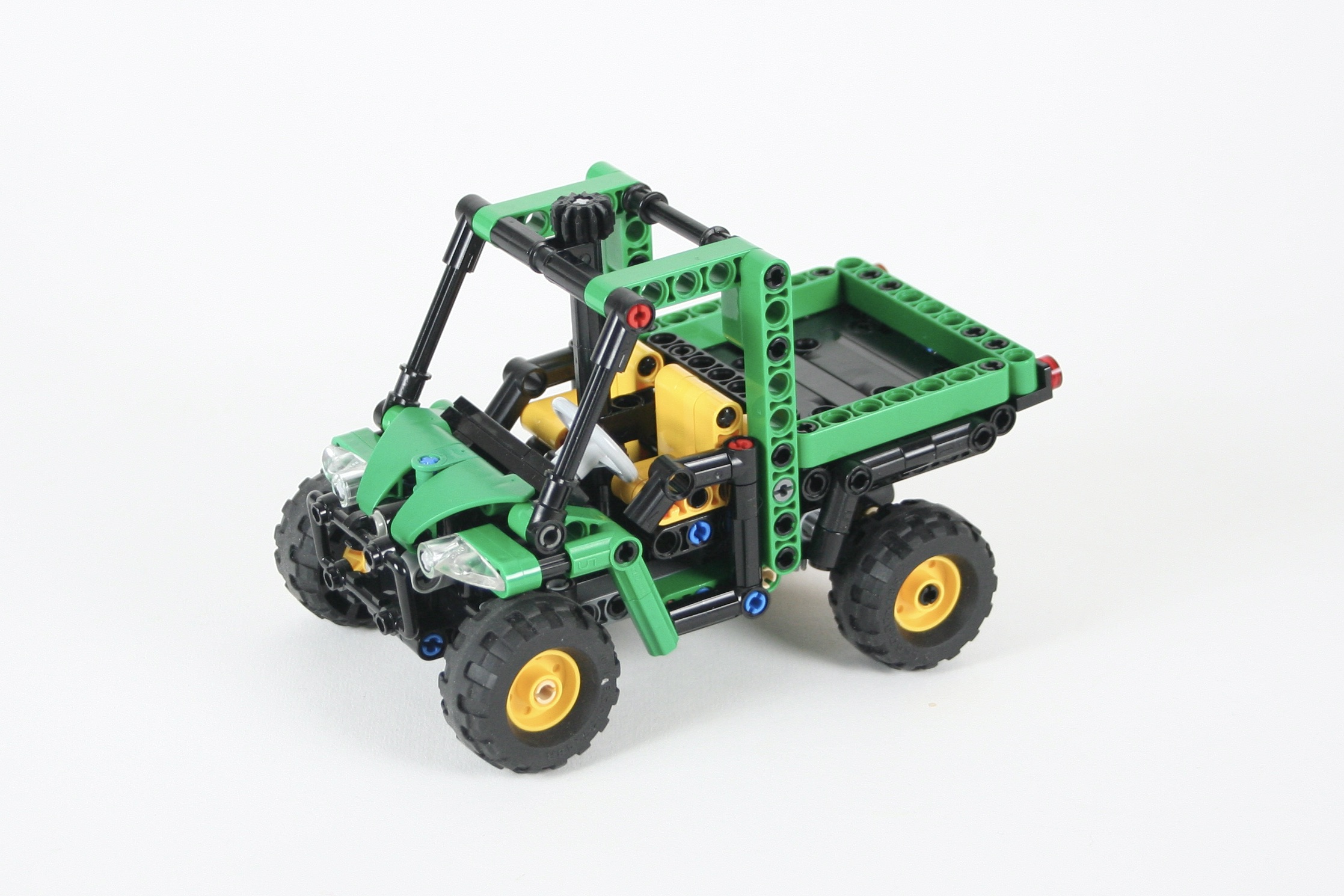
John Deere Gator


Another little helper for the Thirdwigg Farm.

Instructions may be found at rebrickable.com.

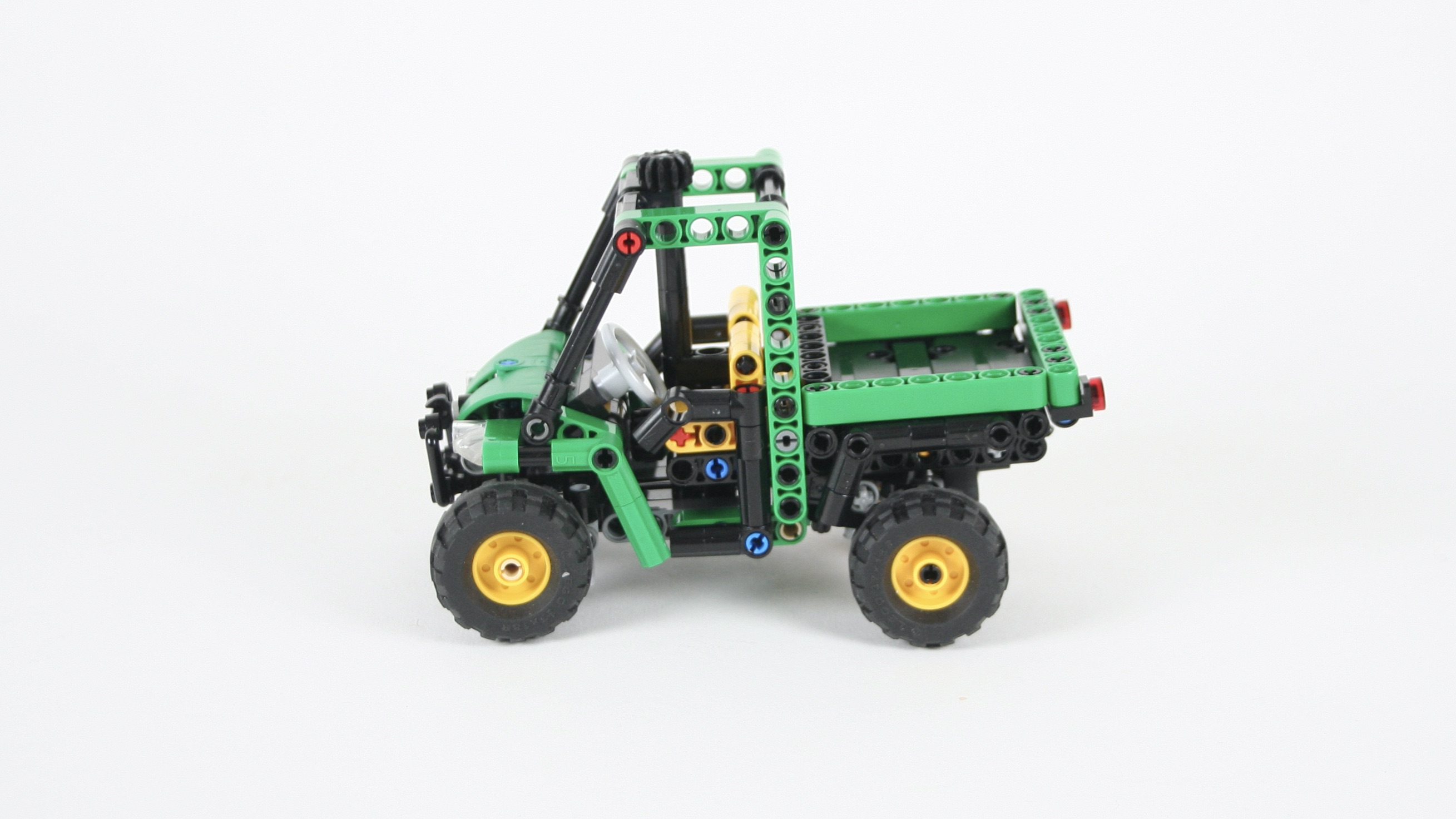
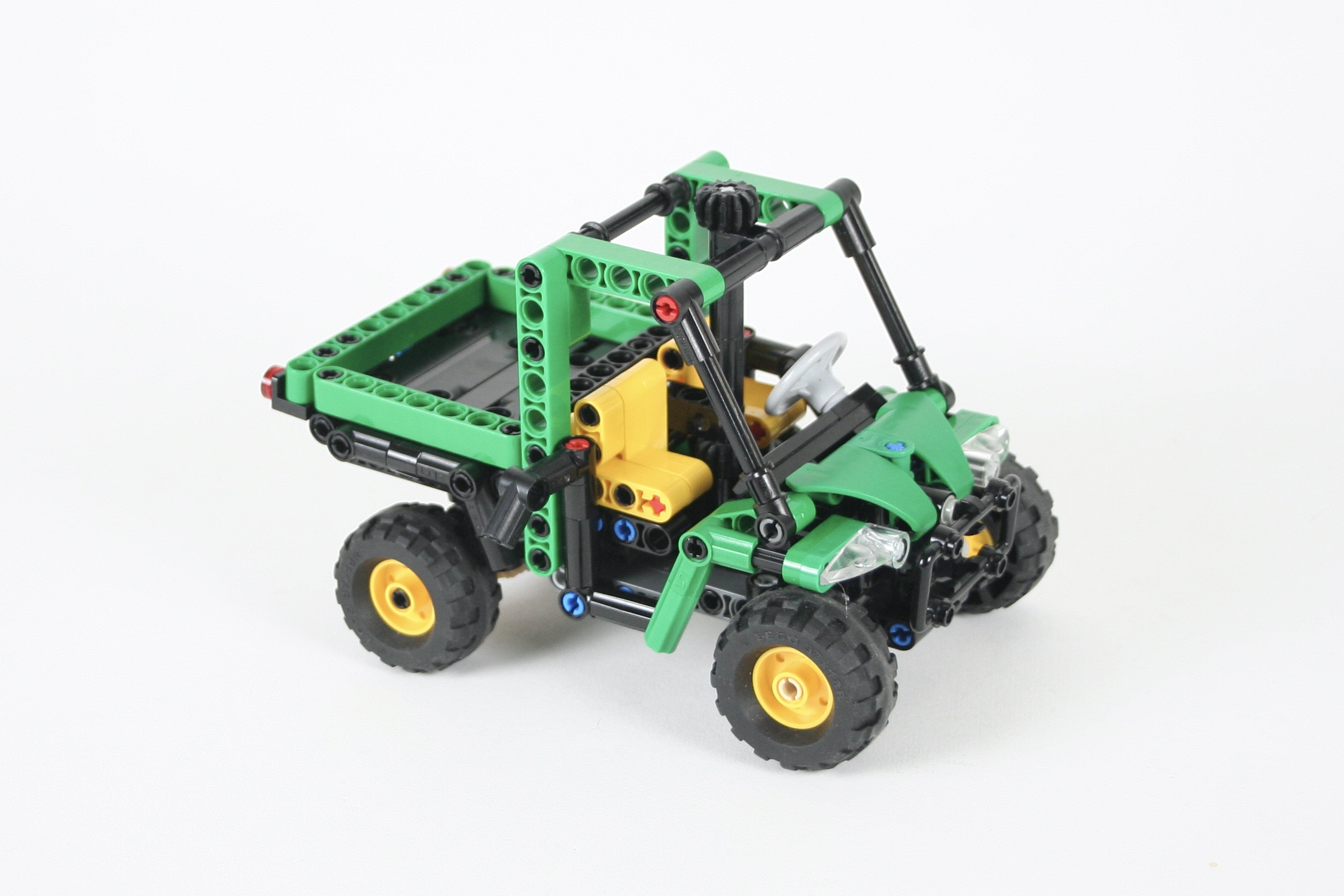
I get ideas from all over the place, and recently I saw a little John Deere Gator at a local park, and decided that was just what the Thirdwigg Farm needed running around and moving supplies. Plus, with each passing year, the addition of new green parts, makes additional John Deere builds possible.

As I alway do, I started determining the size tires needed for the scale. I settled on the 37mm balloon tires, but this presented a problem right away. These tires, need a 18mm hub, but this wheel does not come in yellow with an axle hole. After some tinkering, I found a little solution. I would use the yellow wheels with a pin hole, and mount the wheels on a Technic Pin with Bush Stop. Not only would the bush stop be able to connect to an axle and transmit power to a fake engine, the friction connection of the pin would allow for slight slippage between the axle and each wheel to function as a differential. Quickly I was then able to add in a little one cylinder engine, and a simple suspension on the rear axle.

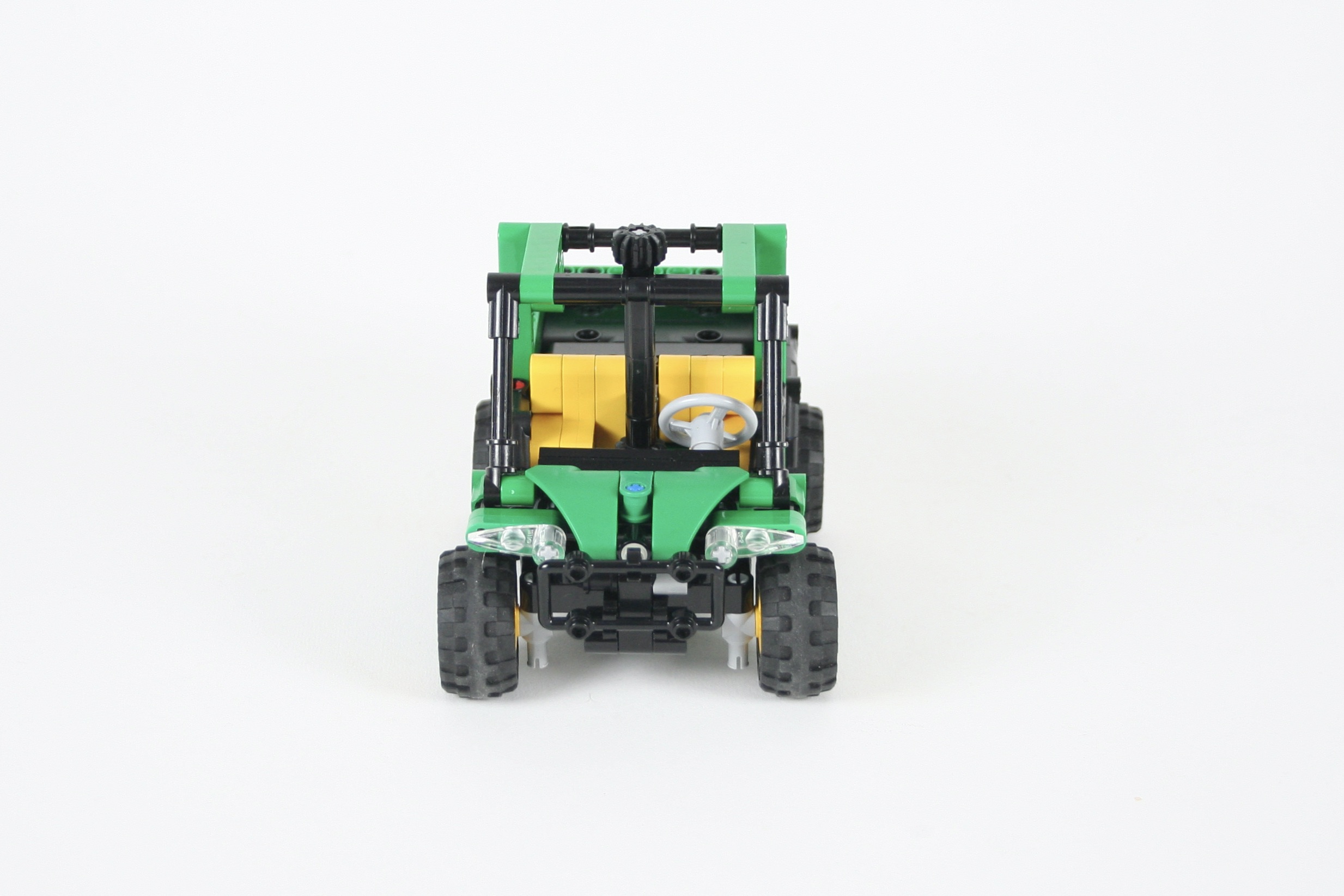
The front was a little easier. A simple steering rack is design, covered by the hood and a little grill guard. The HOG is mounted on the top of the roll cage, and bisects the two front seats. I took some time to get the wheel fenders to look the way I wanted while still allowing for tire clearance as they turned, but I was able to make it work by using a half stud offset.

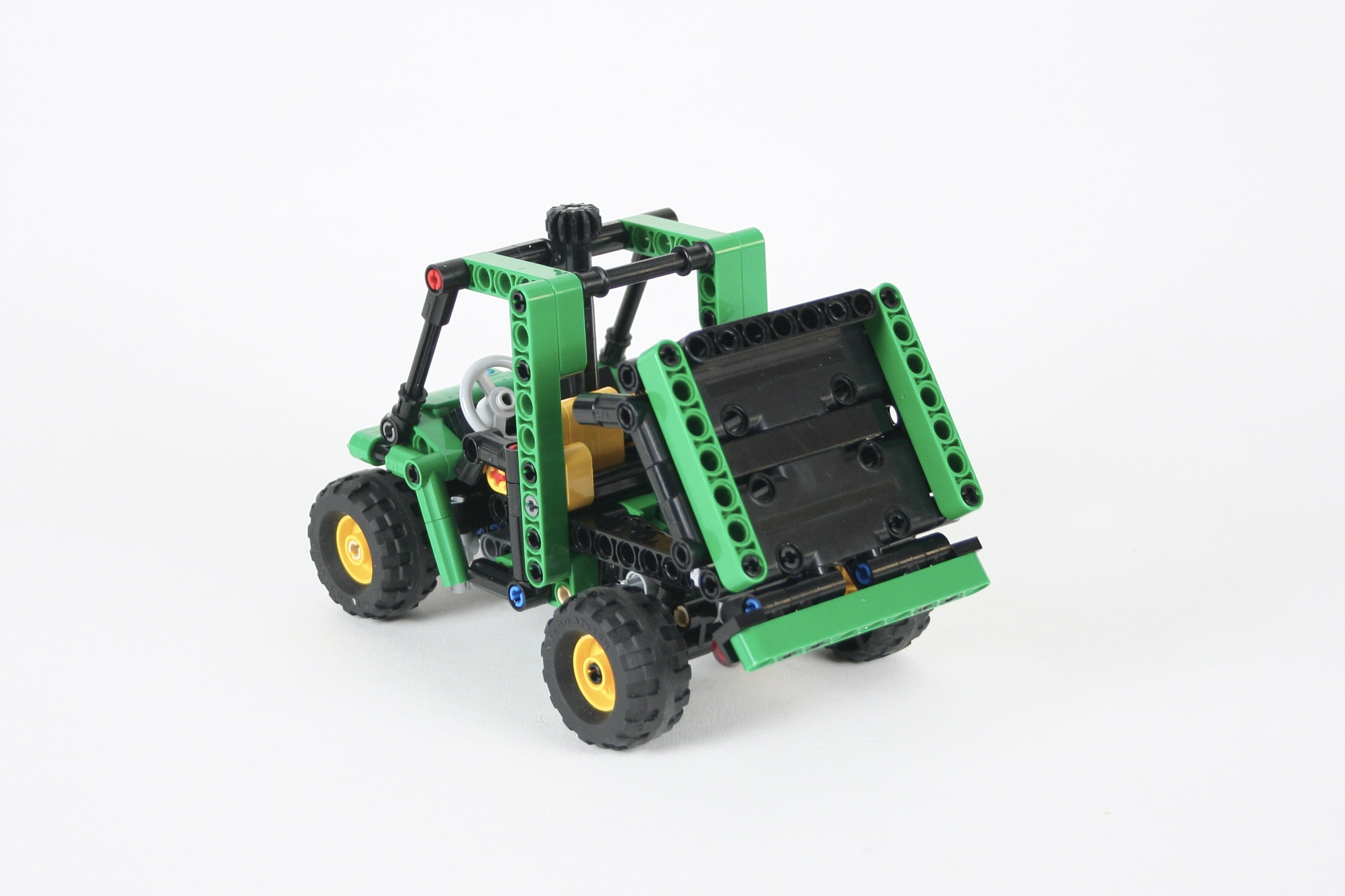
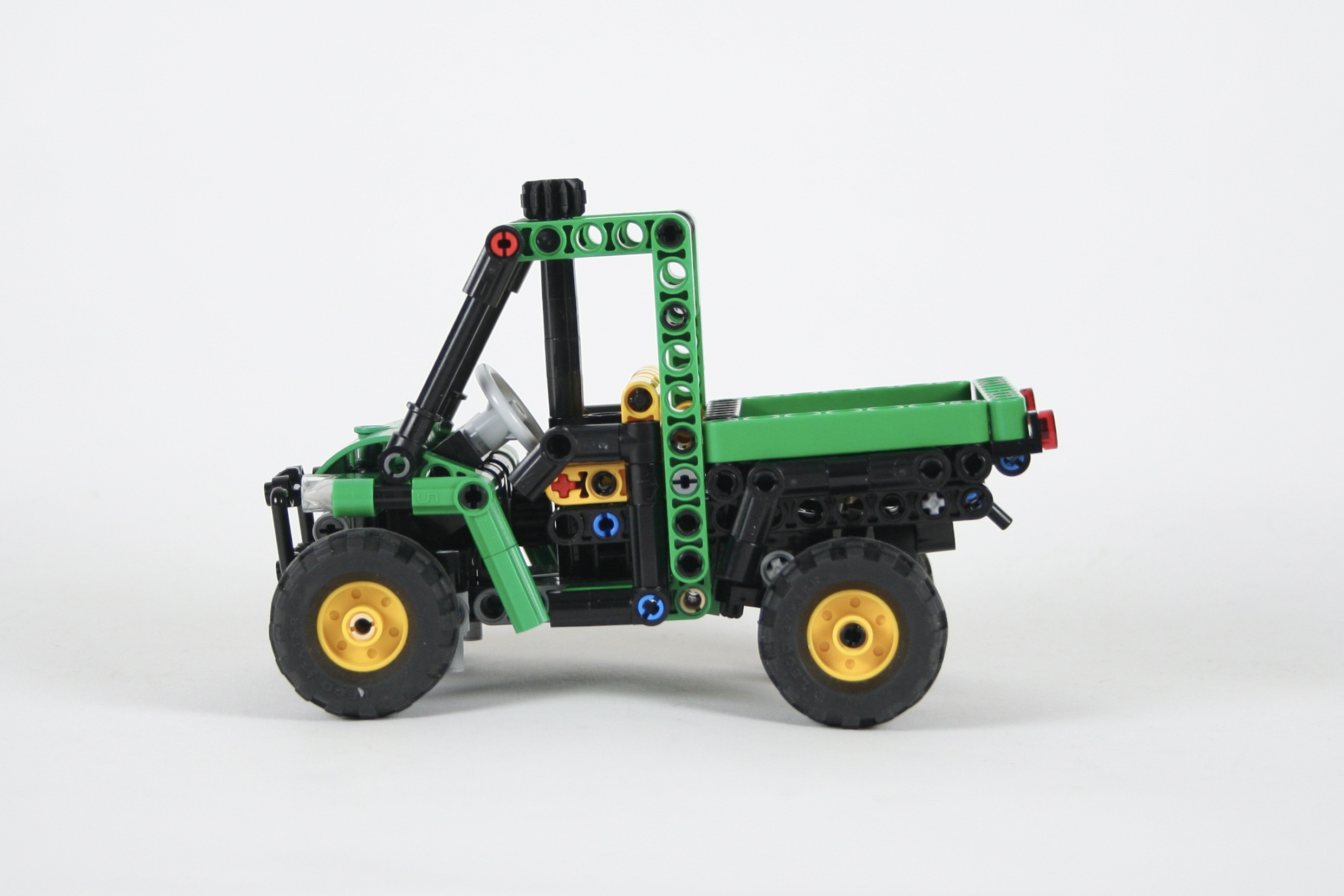
Finally, I added simple opening doors, and a tilting rear bed. Both are simple in their design, but allow for additional play features. I’m especially proud of using Part 85940 as a stop so the rear bed does not overtip.

Big MOCs get all the glory, but it’s the smaller ones that I like and I’m most proud of. Anyone can add suspension to a car that is 31 studs wide, but figuring out how to stuff suspension, a differential, and an engine in 20 cubic studs, its what keeps me building. This little MOC was a great project, and I am so happy with all the functions I was able to include. I hope you enjoyed it too.

Happy building.

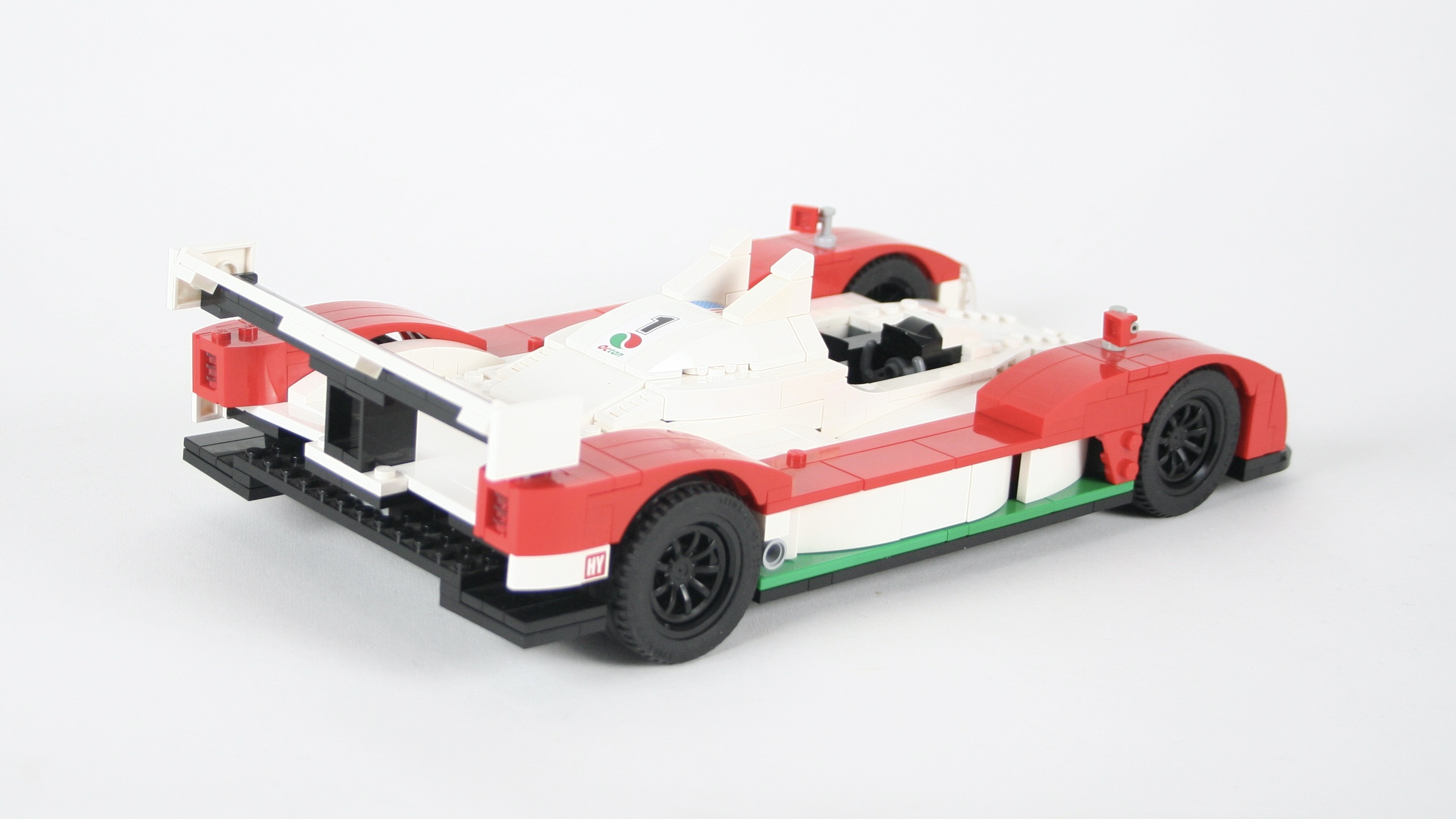
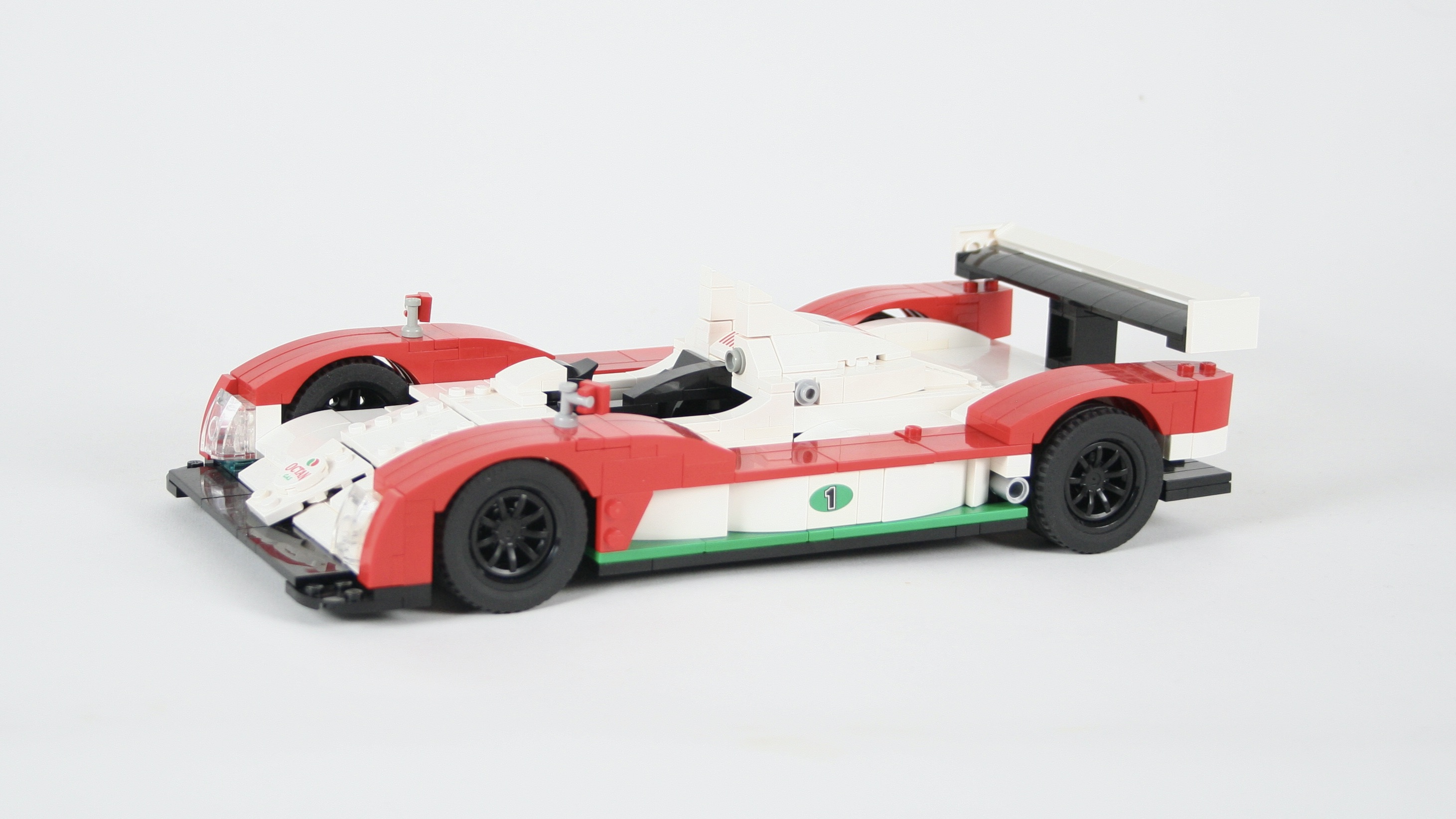
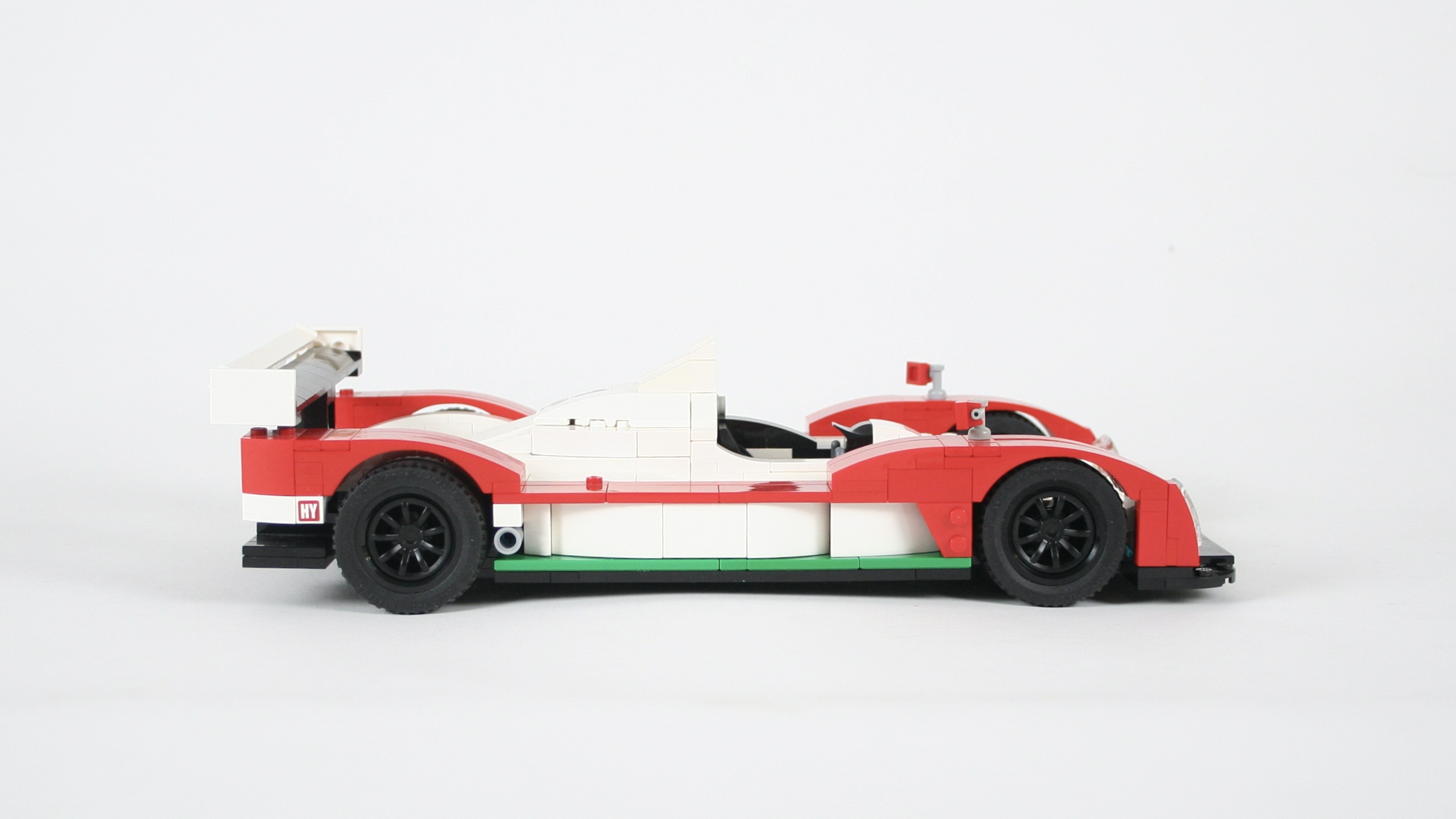
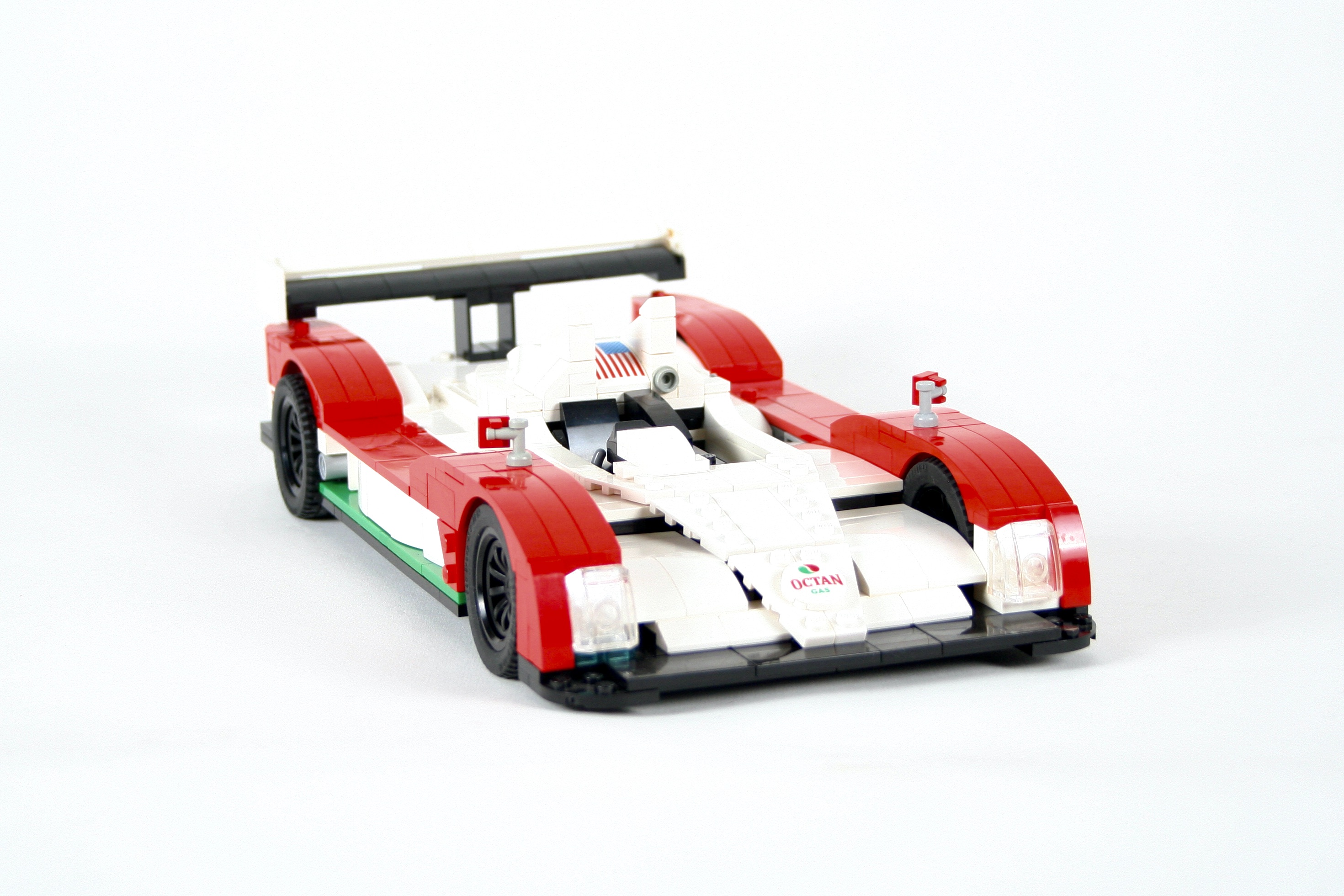
OCTAN LMP


My favorite type of race car with my favorite livery.

Free instructions may be found at Rebrickable.com.

During COVID I had a little home office that was set up right next to all of my system bricks. I keep my Technic parts in a different place, so I could not get too distracted while I worked. But with this little parts so close, I did find myself tinkering with some of these system parts while I was on countless video meetings. As time went on I started to piece together some ideas that would work well for a full LMP car.

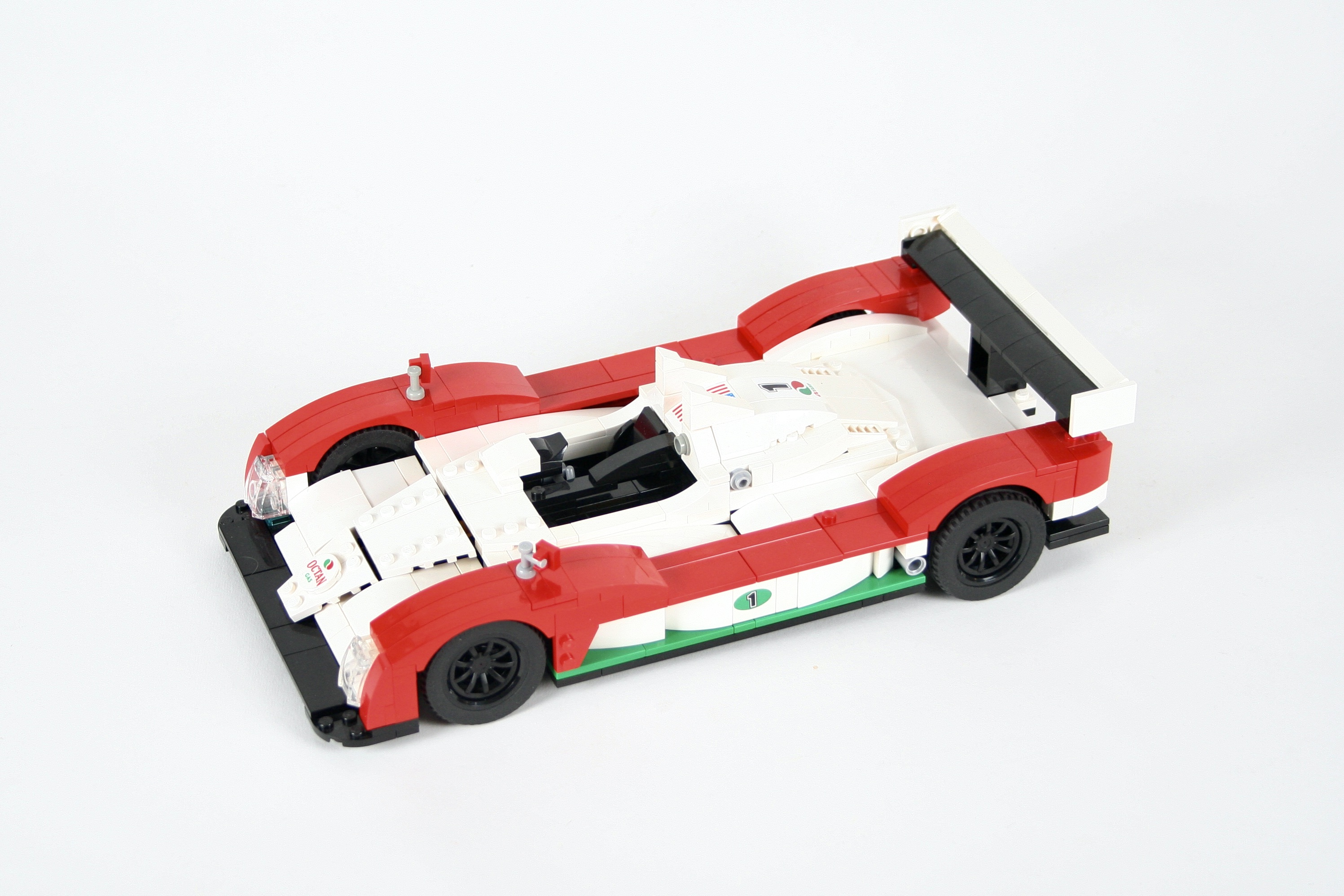
The LMP cars from the mid-90s to about 2008 were some of my favorite race cars. I love the look of the open cockpit, the long, aerodynamic bodywork, and the high rear wing of this generation of race cars. Though I do find this type of car difficult to build in LEGO. The cars are so low, and the wheel fenders are so slim. Both make it tricky to replicate in LEGO.

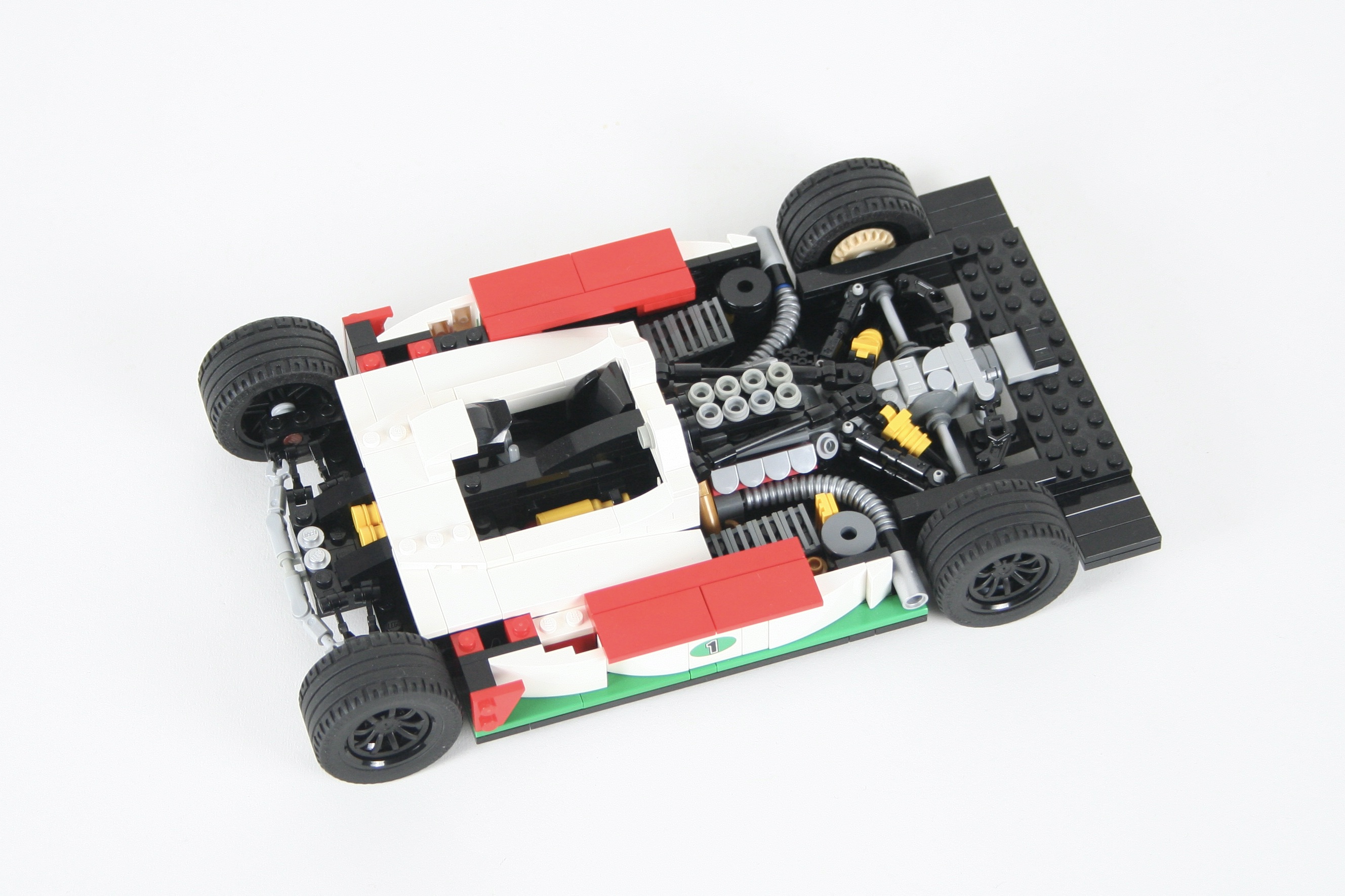
But after all this tinkering, I had some ideas that stared to work on their own. So I spend a couple of evening tying it all together. The bodywork guided the rest of the car. Once the engine cover and side pods were finalized, I started adding in the interior: engine, suspension, cooling parts. Which each added detail, I had to make sure the bodywork would continue to fit. The rear engine cover comes off in one part, and the front bodywork comes off as well, though not in one piece.

This car had no functions, but I was pleased with how I looked. I love the white, green, and red of OCTAN racing, even if this car could use a little less red. But all and all, the bodywork looks the part, and glancing at the car you know who the main sponsor is. I will keep this little build in my office for some time, and maybe I’ll try another little LMP car…

Happy building.

Mini 8063


Another build that harkens to an older set, and this time for a contest.

Free instructions may be found at Rebrickable.com.

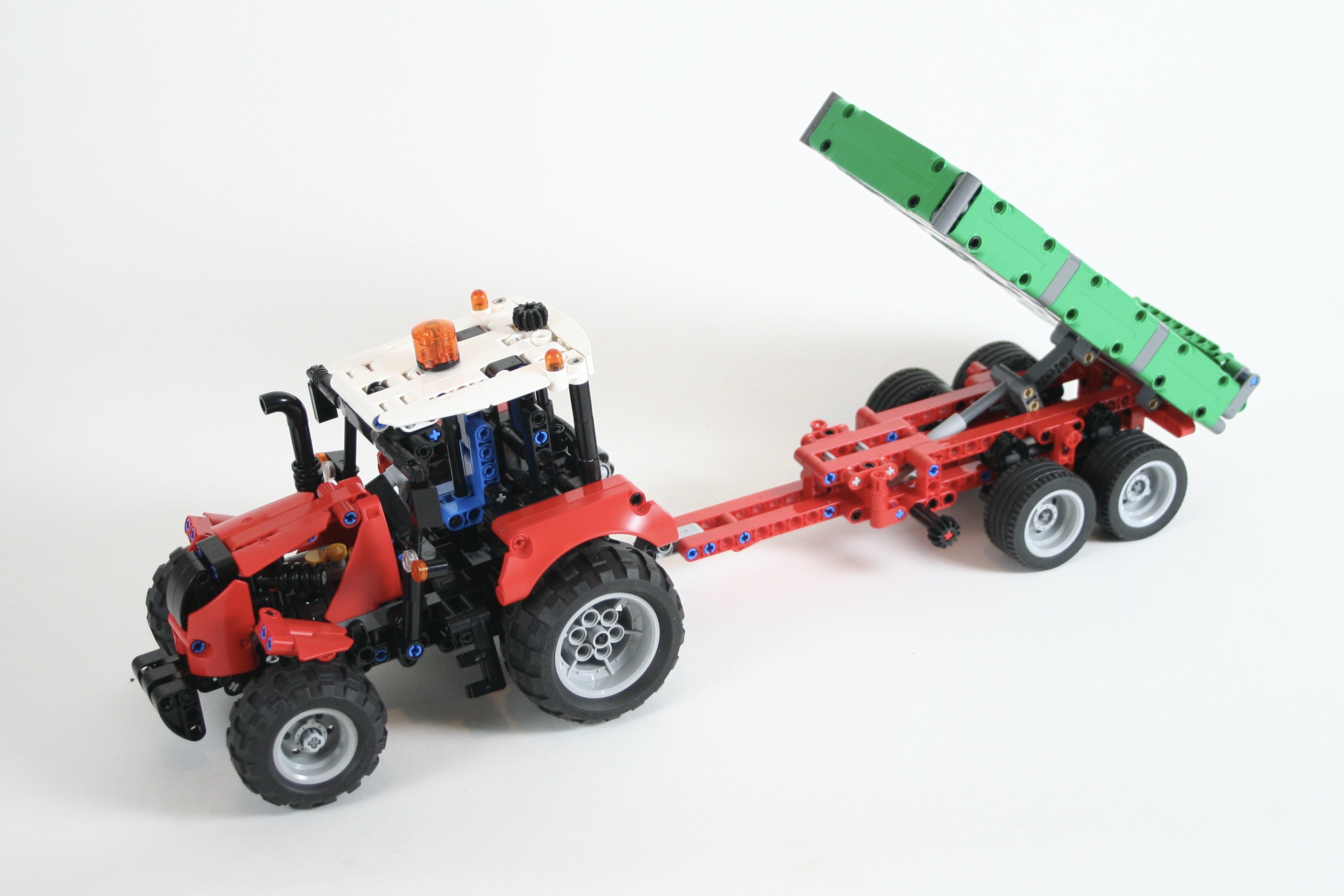
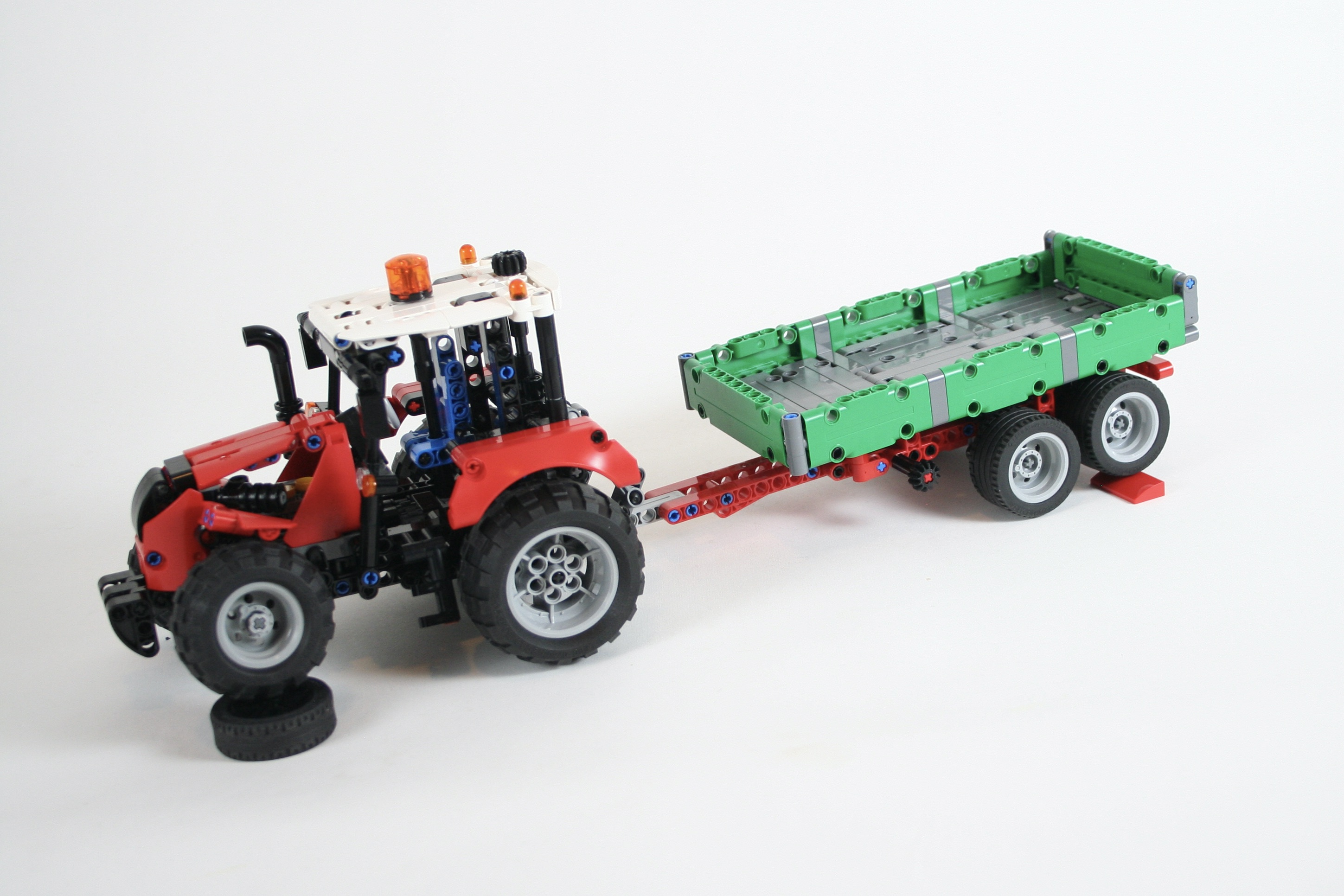
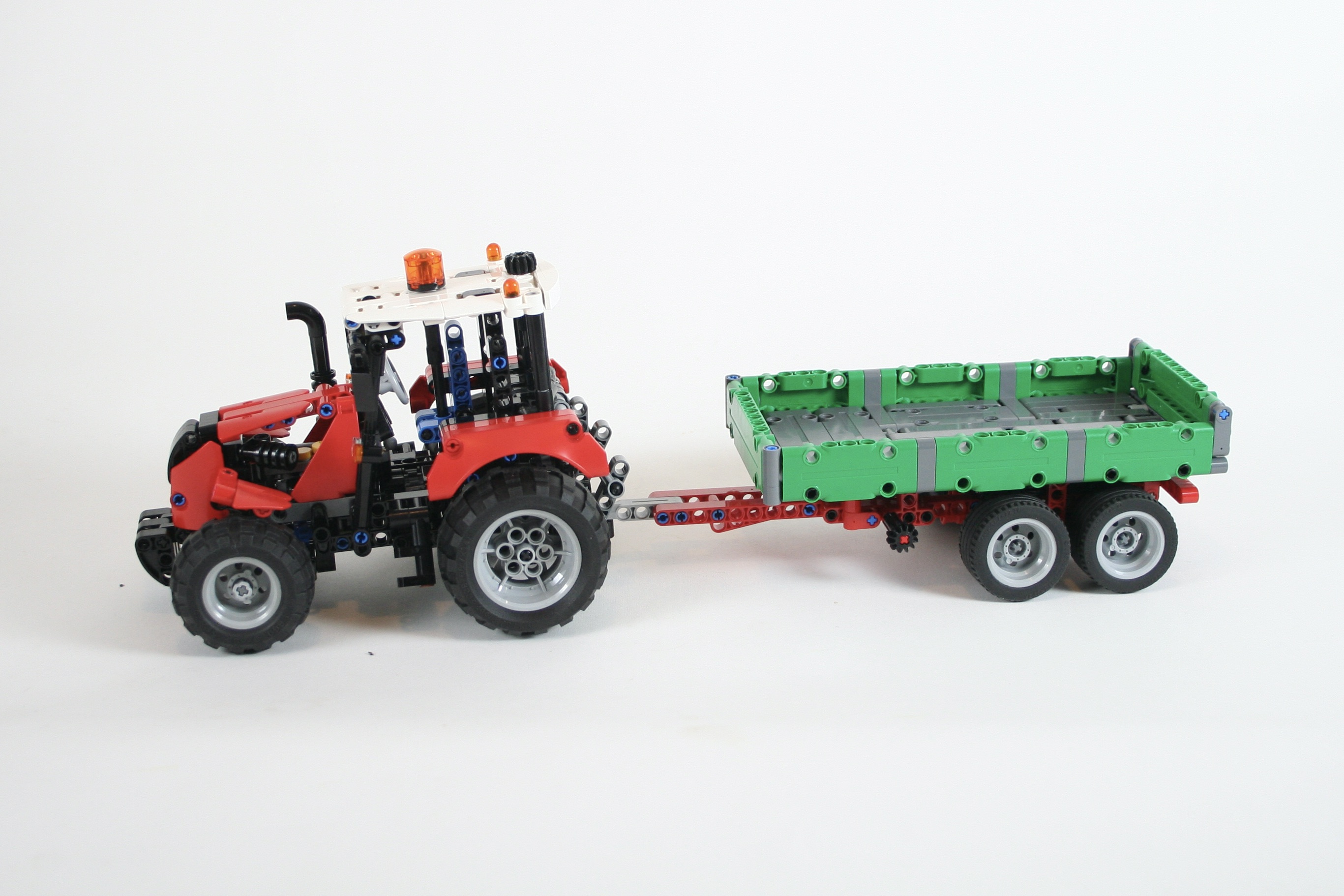
I participate in a number of Technic build contests at Eurobricks.com, the TC25 contest was another one that I was excited to join. This contest asked you to rebuild a Technic set, but smaller. After selecting a couple of sets for my shortlist to explore, I went though each to determine what I had parts for, what interesting features I could keep or add, and what I would be motivated to finish. Through this process, I decided on LEGO set 8063 from 2009. After numerous tractors for the Thirdwigg Farm, I decided I would be well suited to update this tractor.

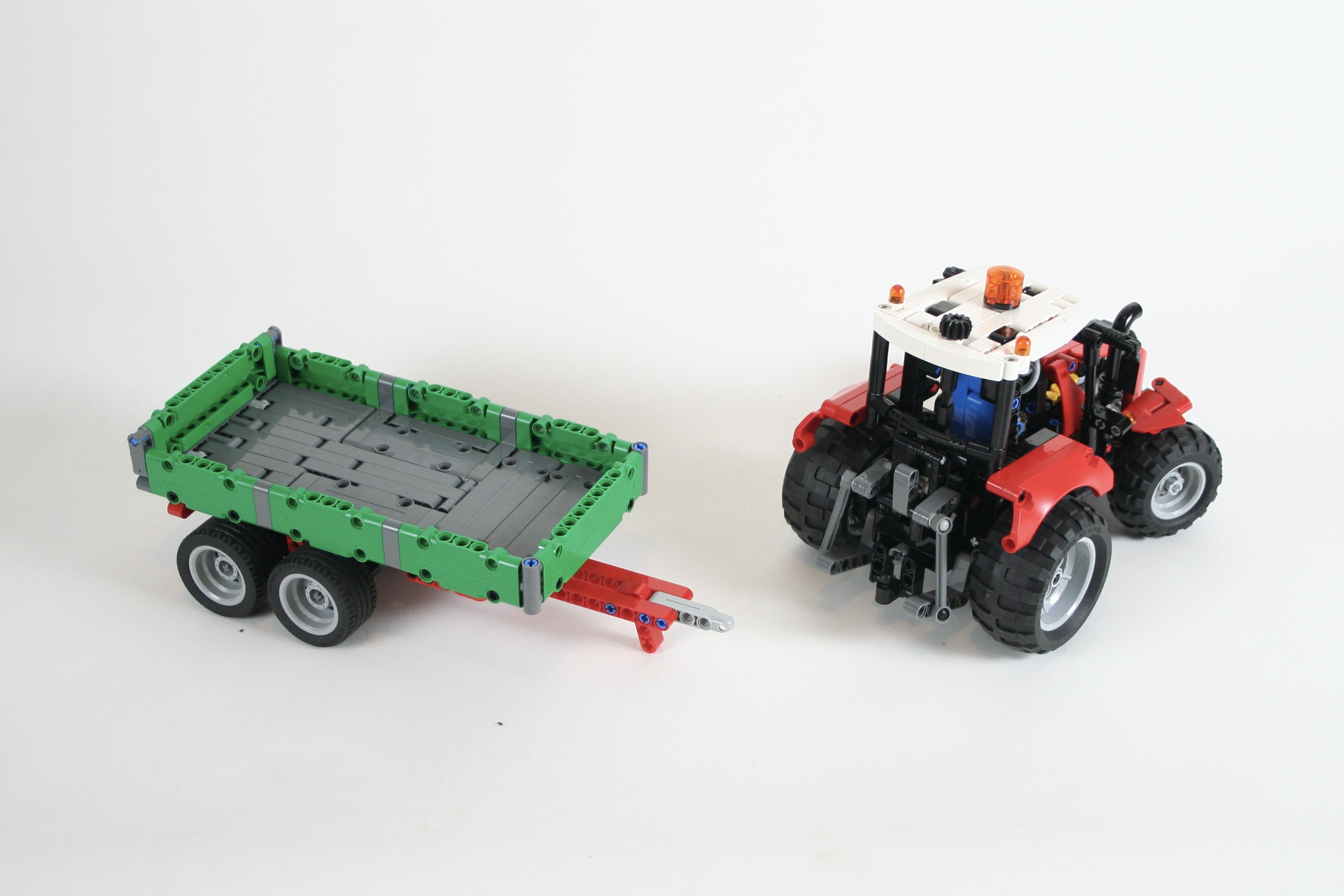
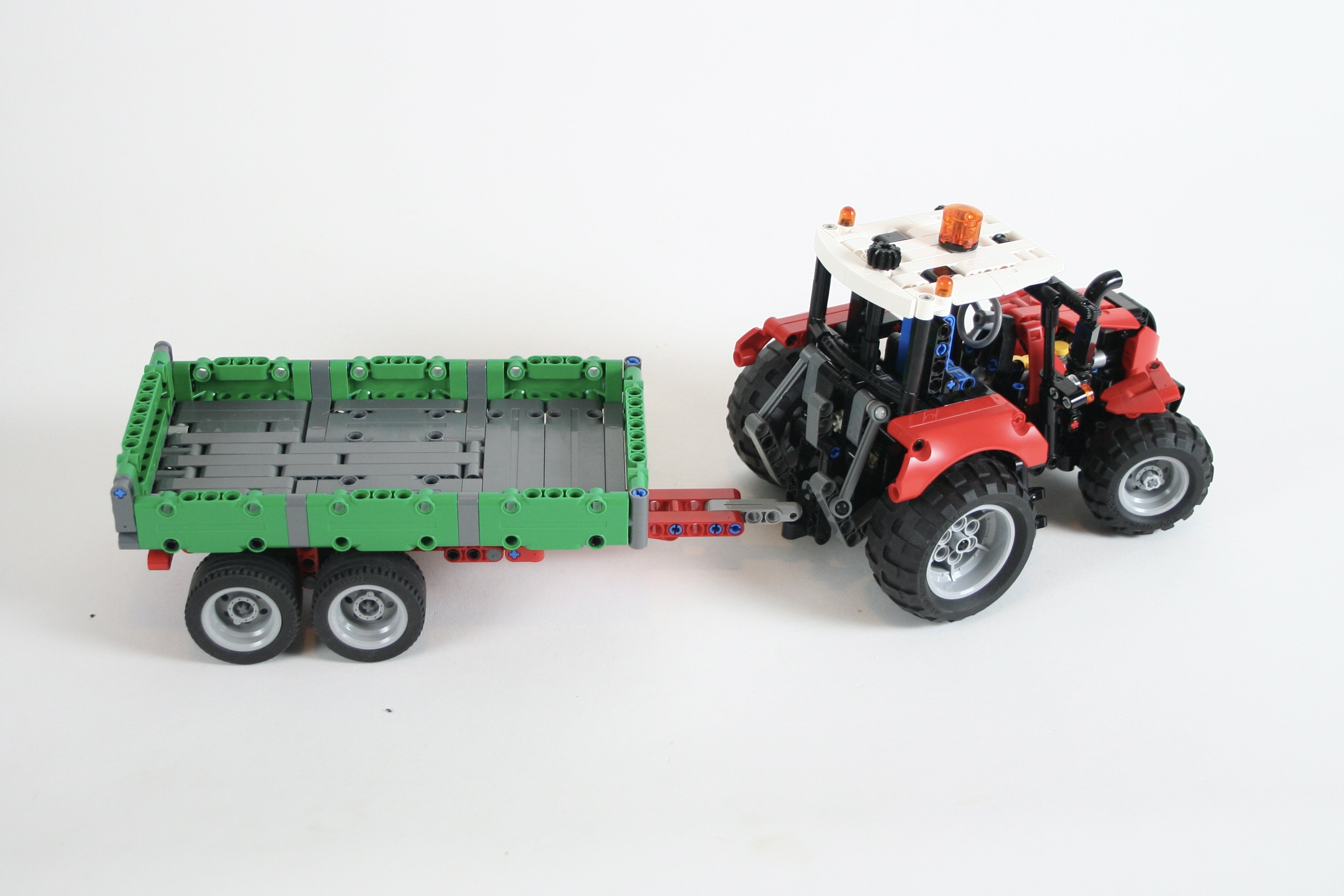
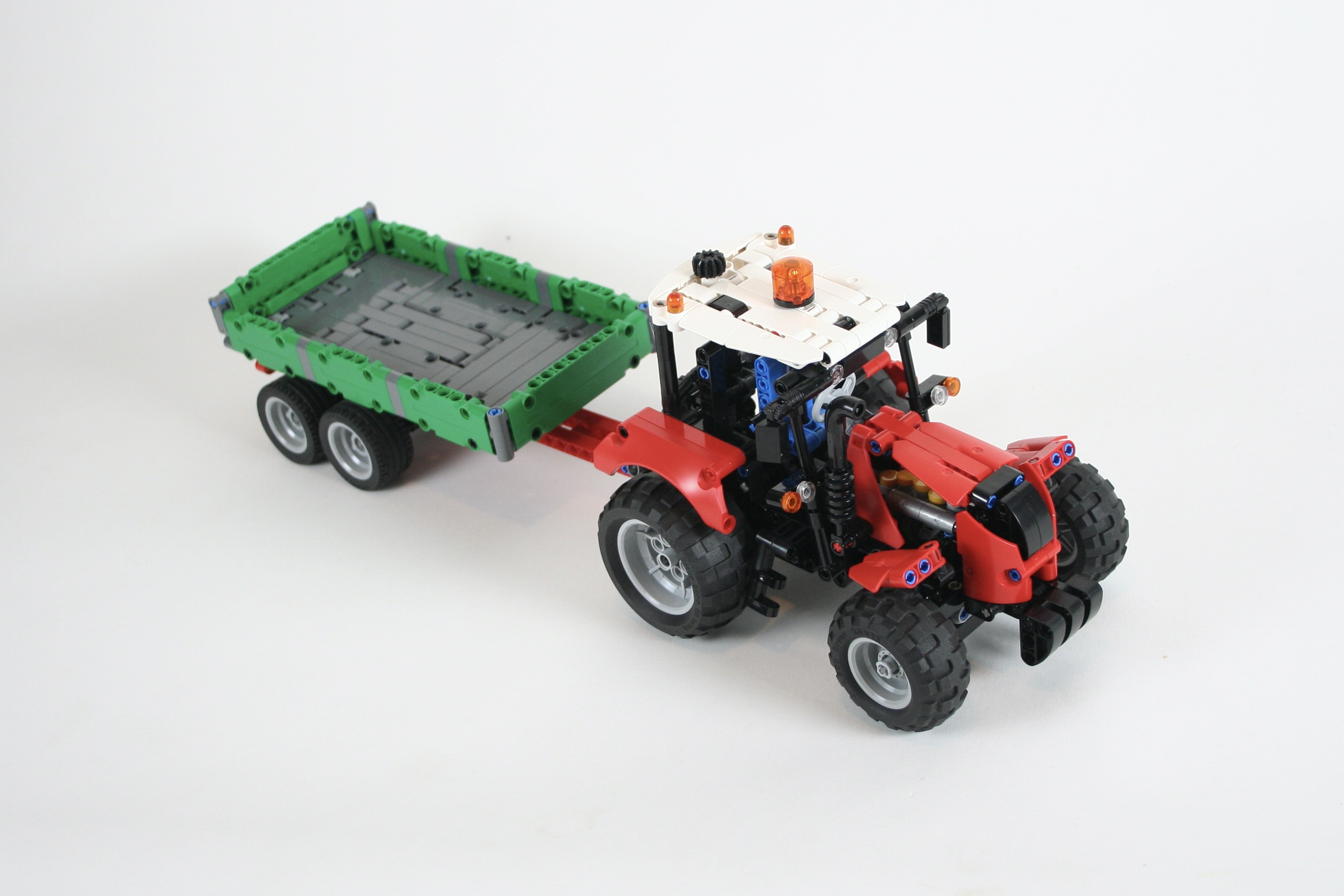
I stared with the trailer, and added suspension for the rear axles. The tipping of the bed uses a linkage so the little mini linear actuator can use its full movement to tip the bed. The control for the tipper is on the left of the hitch. A simple rear tailgate and trailer hitch support is included as well.

The tractor is similar to my other designs in that there is steering, an engine, and a rear PTO. But this tractor also included front suspension as 8063 does. To make this work, I used small 1/2 pins with a yellow round tile on the top for pistons, and ran the steering axle below the engine. The front axle is mounted on a pivot to allow for the pendular suspension. Steering is controlled by a HOG on the cabin roof. A rear PTO was added, and a three point hitch using the Thirdwigg Farm standard.

I always love building tractors, and this scale is my favorite. I would have rather used the newer tractor tires for this MOC, but it did not match the feel of 8063, so the balloon tires were used instead. All the functions worked well, and it was nice to include all the functions of the original 8063 as well. And the red and green compliment each other so well on this build. I hope you enjoyed another little tractor until I build another one.

Happy Building.