Synthe Combine


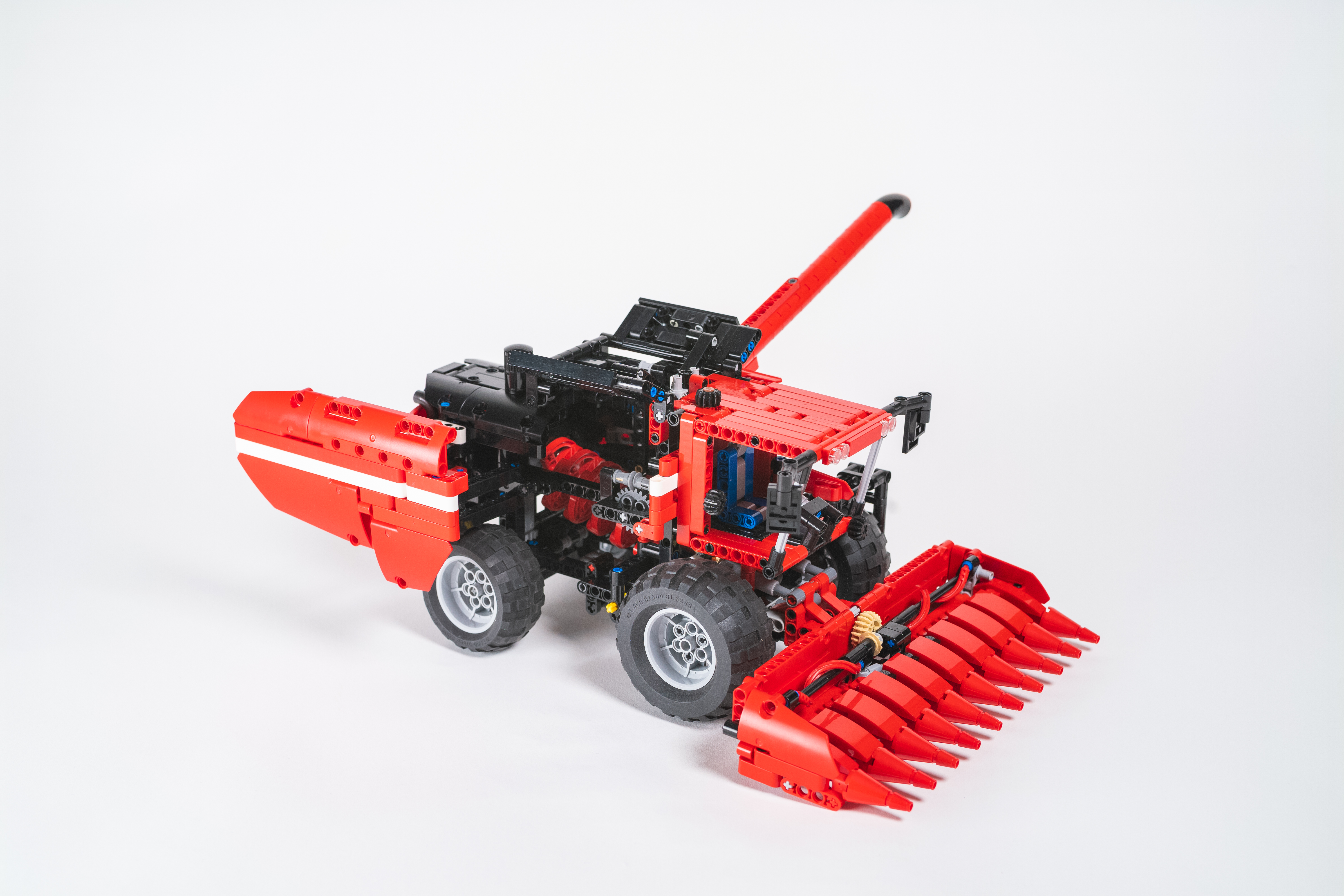
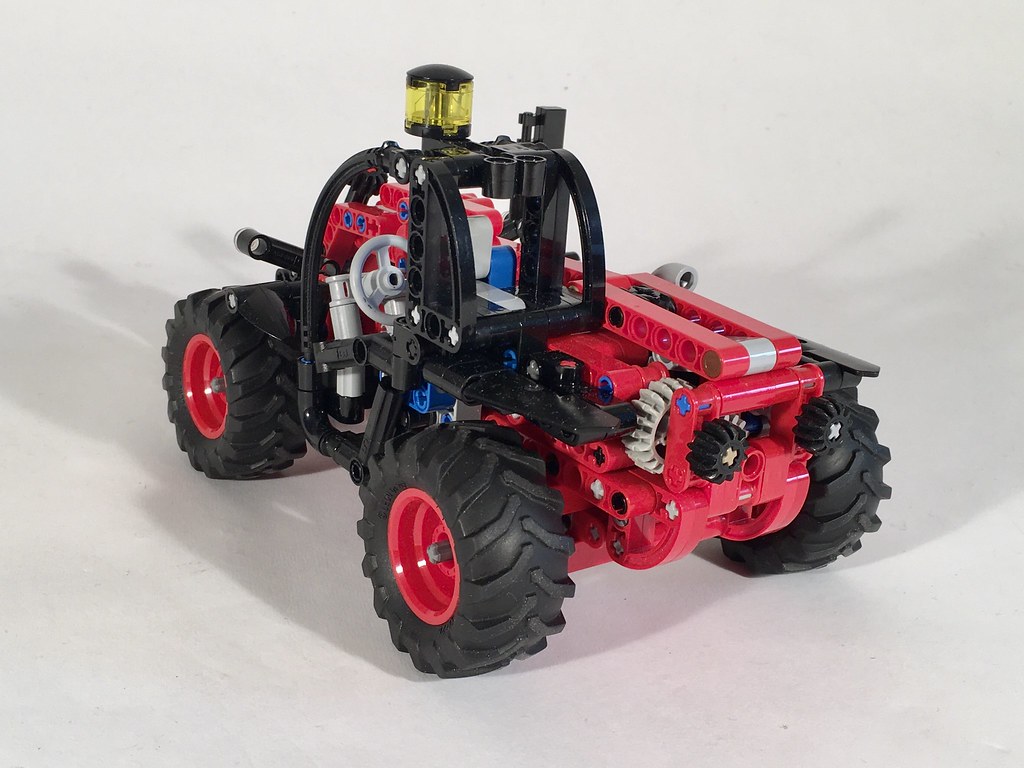
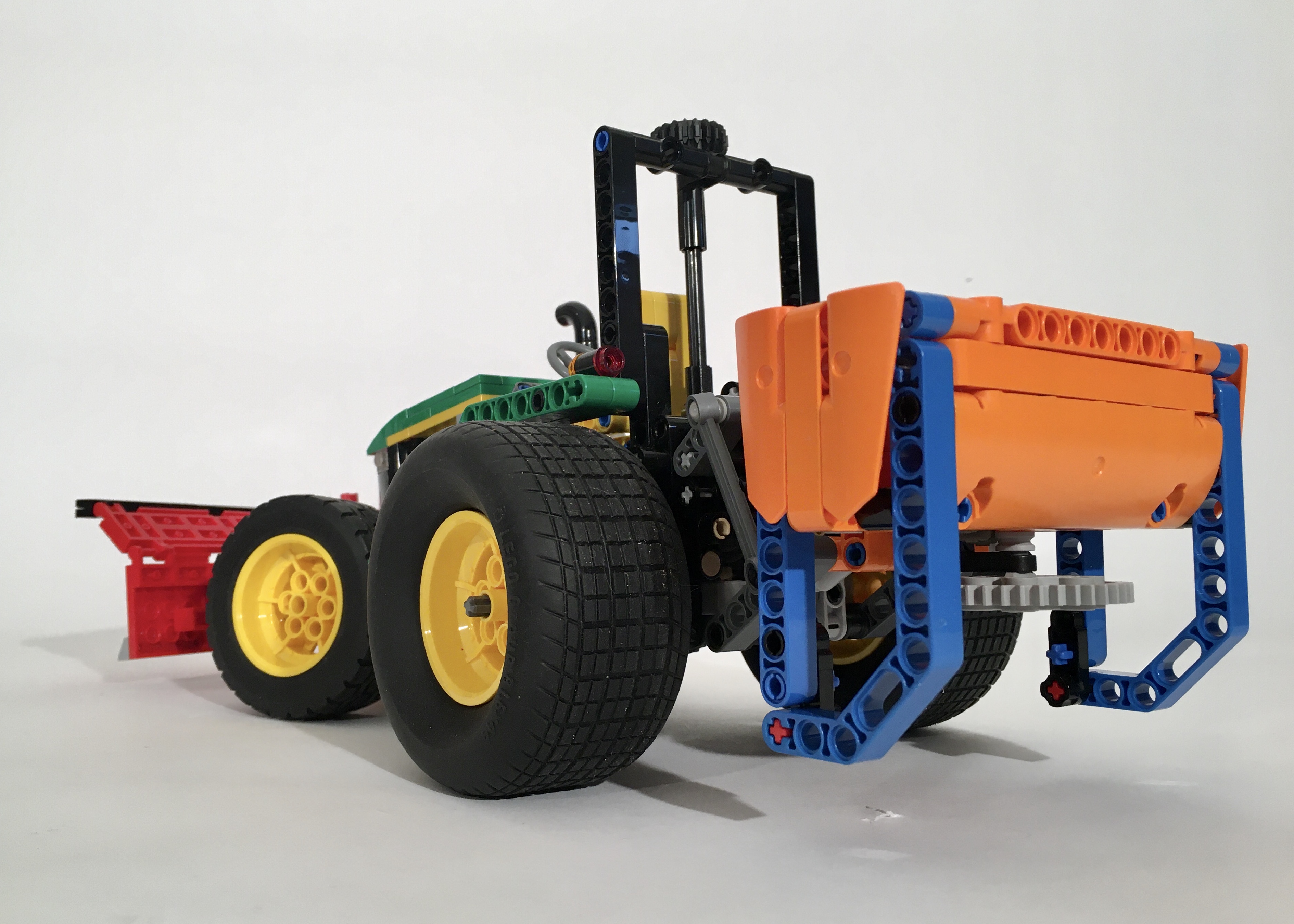
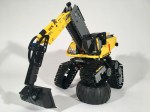
It was time to build a combine harvester for the Thirdwigg farm.

You may find instructions for this model at Rebrickable.com.

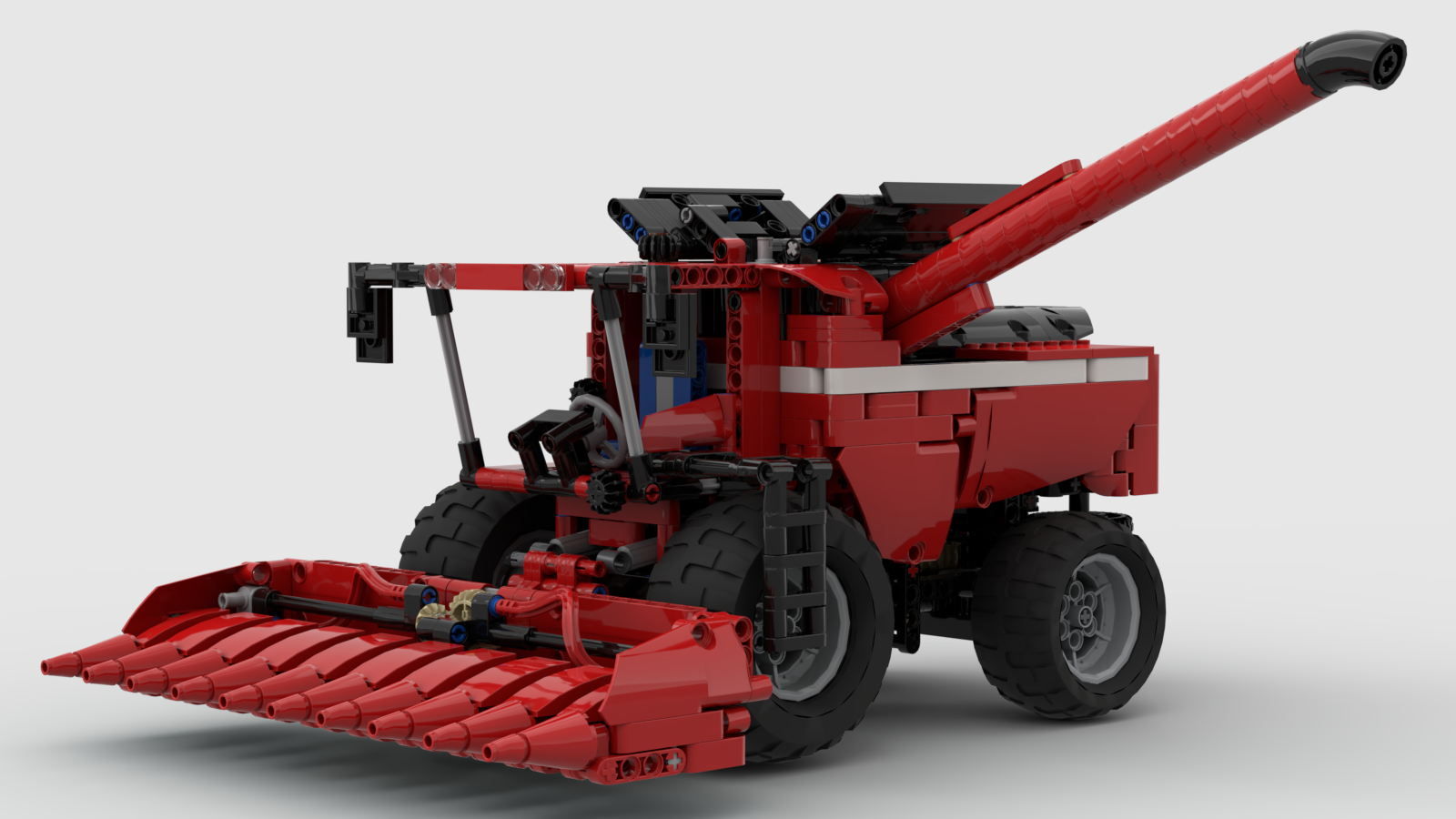
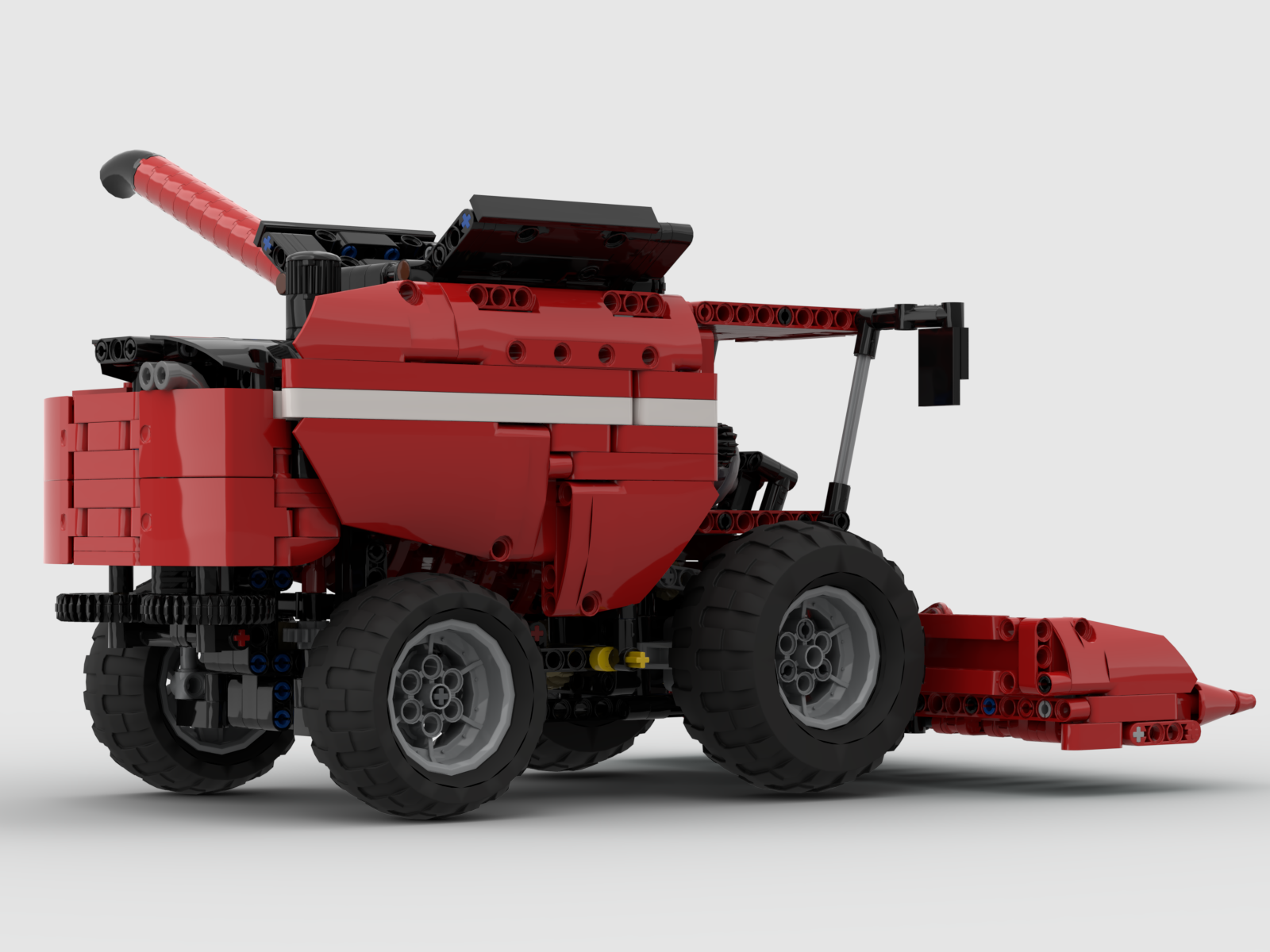
I was putting off building a combine for a while because they are pretty complicated. It took me a while before I felt like I understood enough about them to translate them to a LEGO MOC. After some time learning about them, I was ready to begin something. The scale was set based on the Atmos Tractor, so then it was a matter of deciding how many features I could add into the model. The models started with the thrashing mechnism, and then everthing fit in around it. I settled on a rotating thresher rather than a set of shuffling screens. In the center of the combine is a rotating auger that separates the grain from the staukes. As the auger spins it move the crop rearward separating the grain as it travels rearward. In the MOC, the auger is connected to the front wheels as the combine moves. Under the auger is a reciprocating screen that further separates the grain. Likewise this is also connected to the front wheels. At the rear of the auger are two spreaders that spread the chaft out the back of the combine.

Also connected to the front wheels is a takeoff that operates one of two cutting heads. The cutting head uses two augers on each side to move the corn to the center so it may be driven into the combine. A cutting edge is right behind the cones, and its movement is driven by a link below the combine, so it may cut back and forth. The full corn head is removable, and can be easily replace with a grain head. Each head is mounted on a moveable mounting plate, which can be moved up and down for harvesting and transportation.

In addition to the harvesting functions, the combine also has an opening right side so you may see the internal functions of the tractor. Here you may also see the mechanism that opens the top hopper. Additionally, the grain extractor on the left of the combine can be extended. Steering for the rear axle is operated by the air intake on the rear of the body.

This MOC took more time than usual for me, and there were a couple of times that I thought about scrapping the build, but I am happy I stuck with it. In addition to having another vehicle to populate the Thirdwigg Farm, the functions of the Combine were fun to implement in this build. Each worked well, and were fun to play with. The interchangeable head was an addition that changed the look of the combine depending on my mood, and each functioned well.

I guess it’s time to plan another tractor. Until then, happy building!
Unimog U400/U430


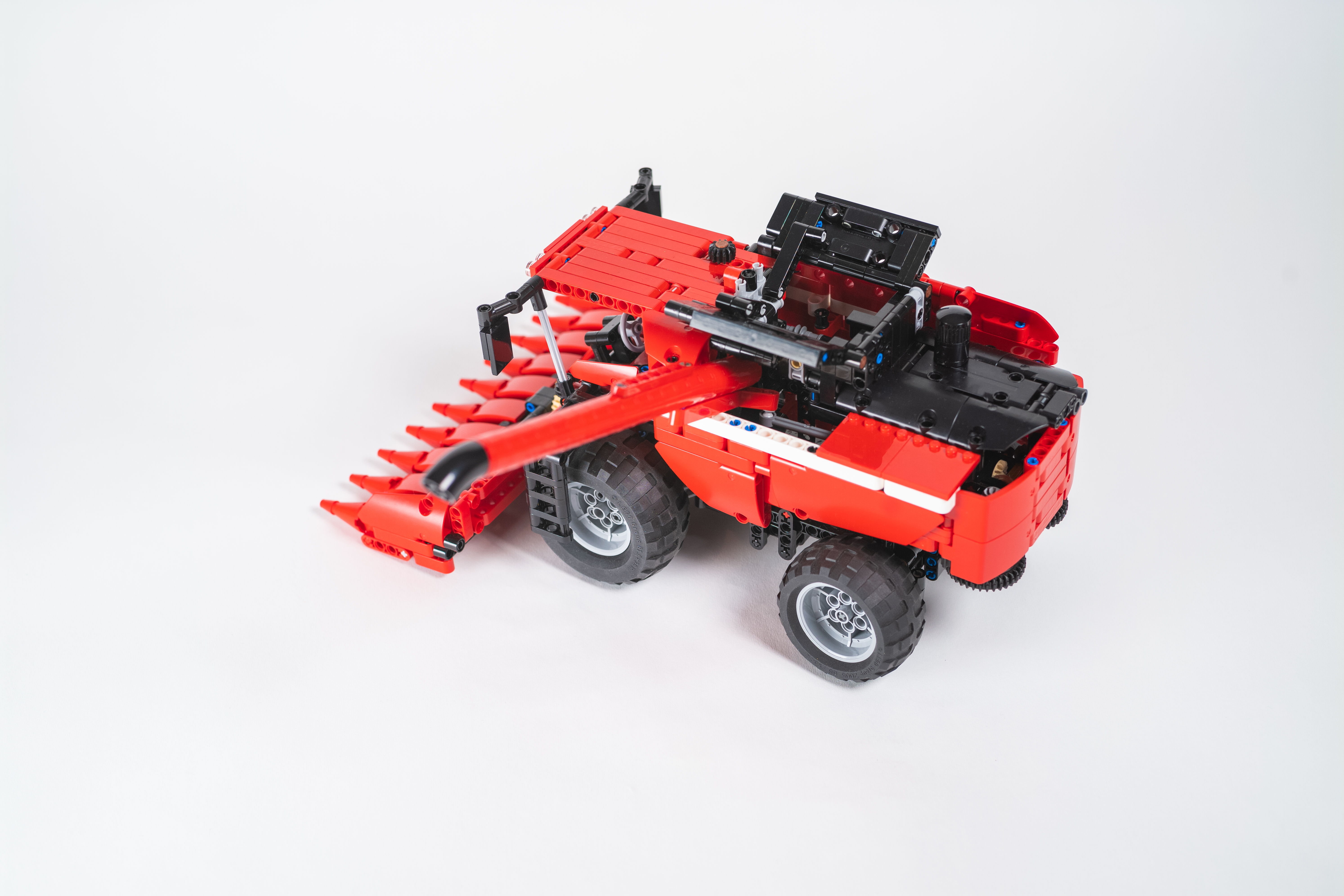
I frequently build another Unimog after it has been a couple of months since the last one, so here is another TWO!

You may find building instructions for both the U400 and the U430.

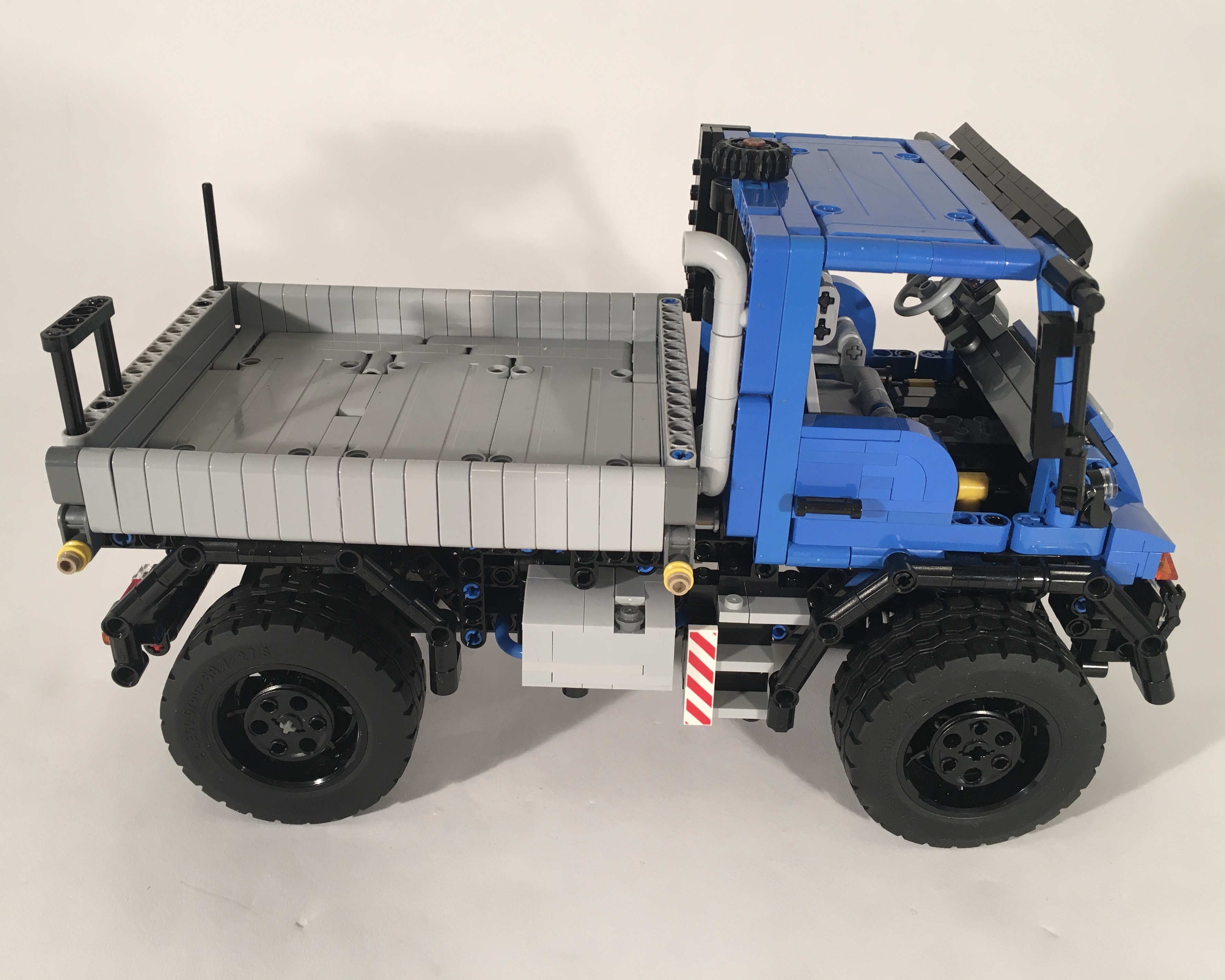
I generally find myself building a Unimog about every year, and this year, I built three. Kindof. Early in 2021, I built a Short Wheelbase U500 in blue, and I loved it. So, I wanted to see if I could take the build a little further. I’m partial to the U500, but the U400 seems to be a little more popular, and the current U430 was another challenge I wanted to try.

Instructions available for both.

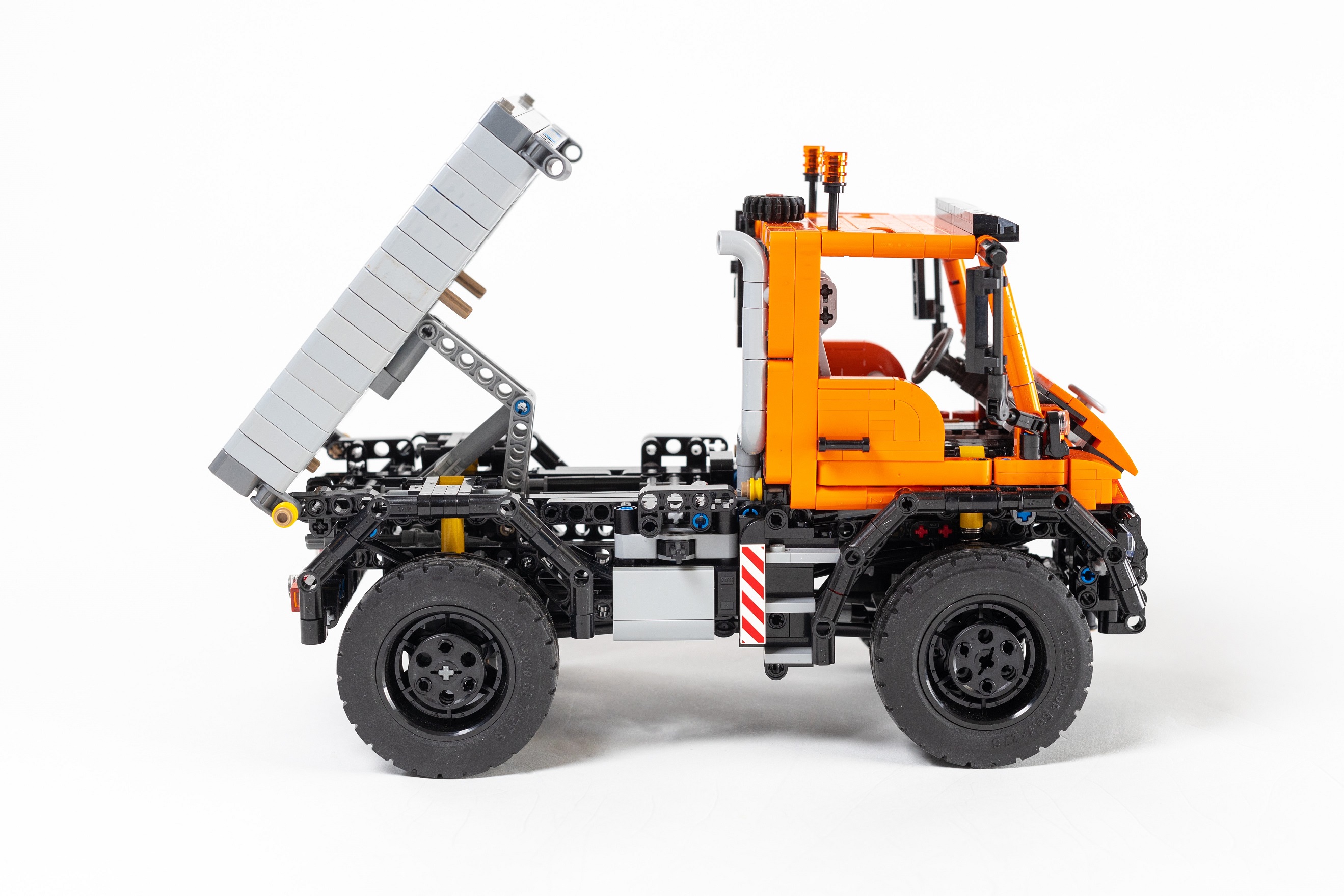
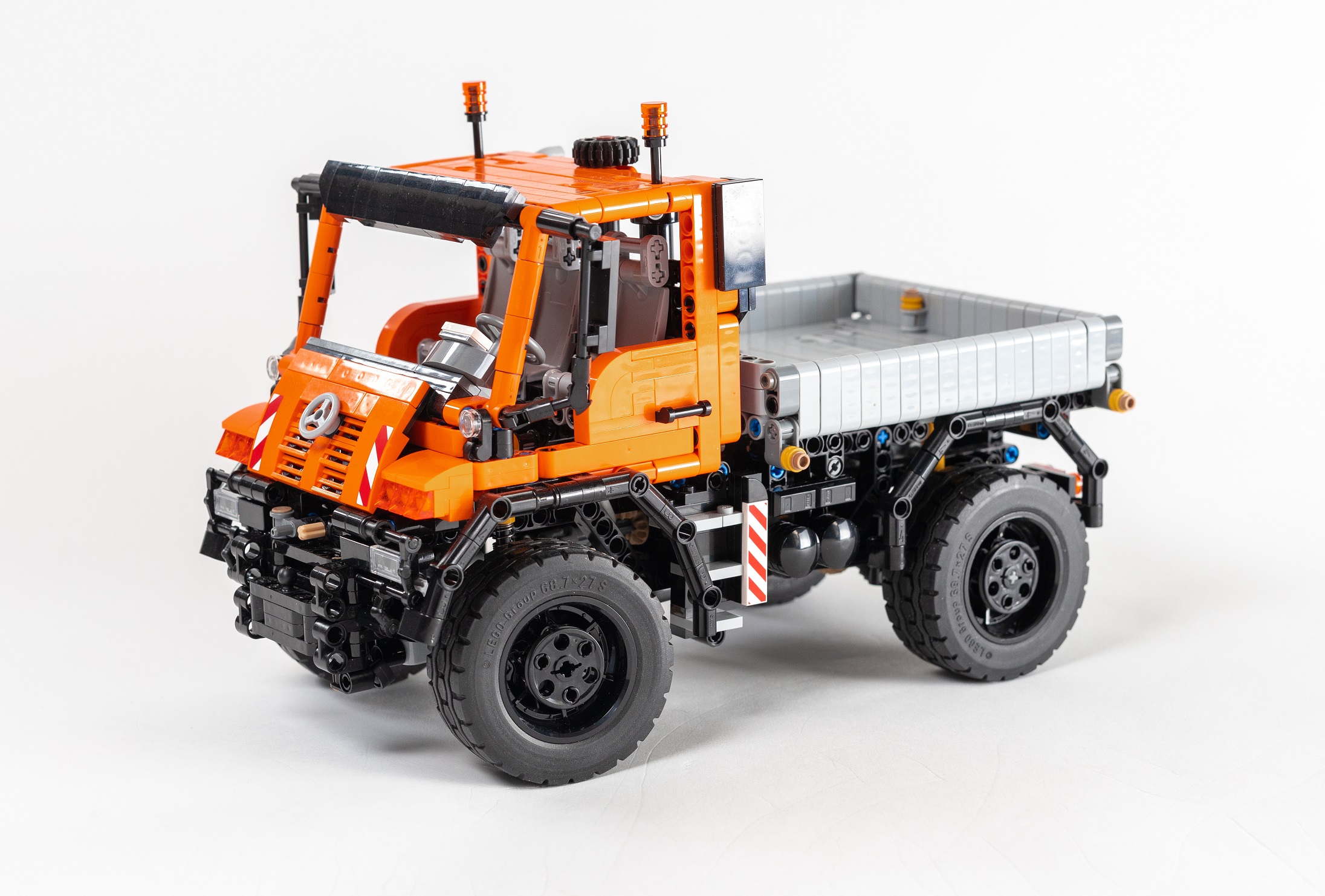
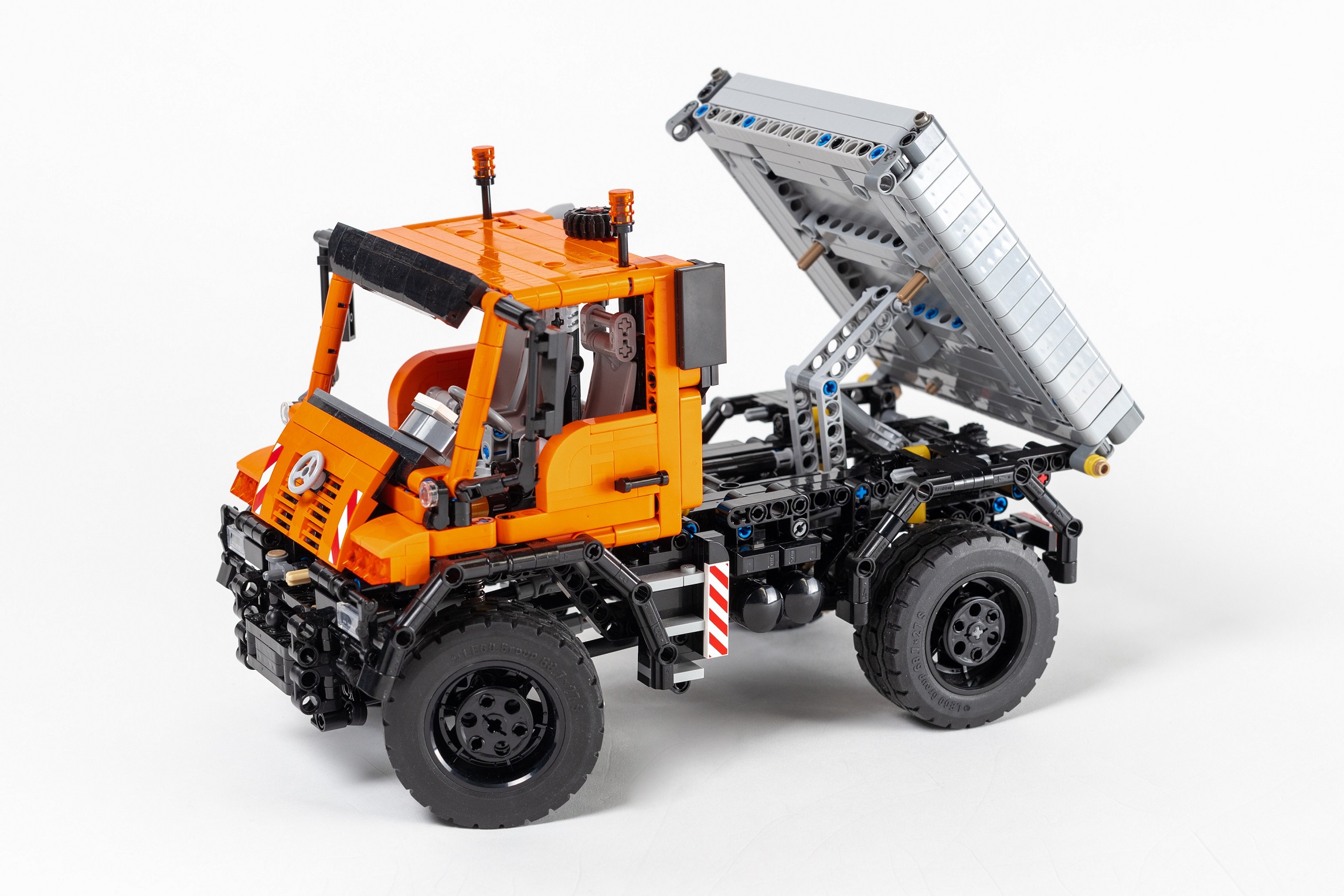
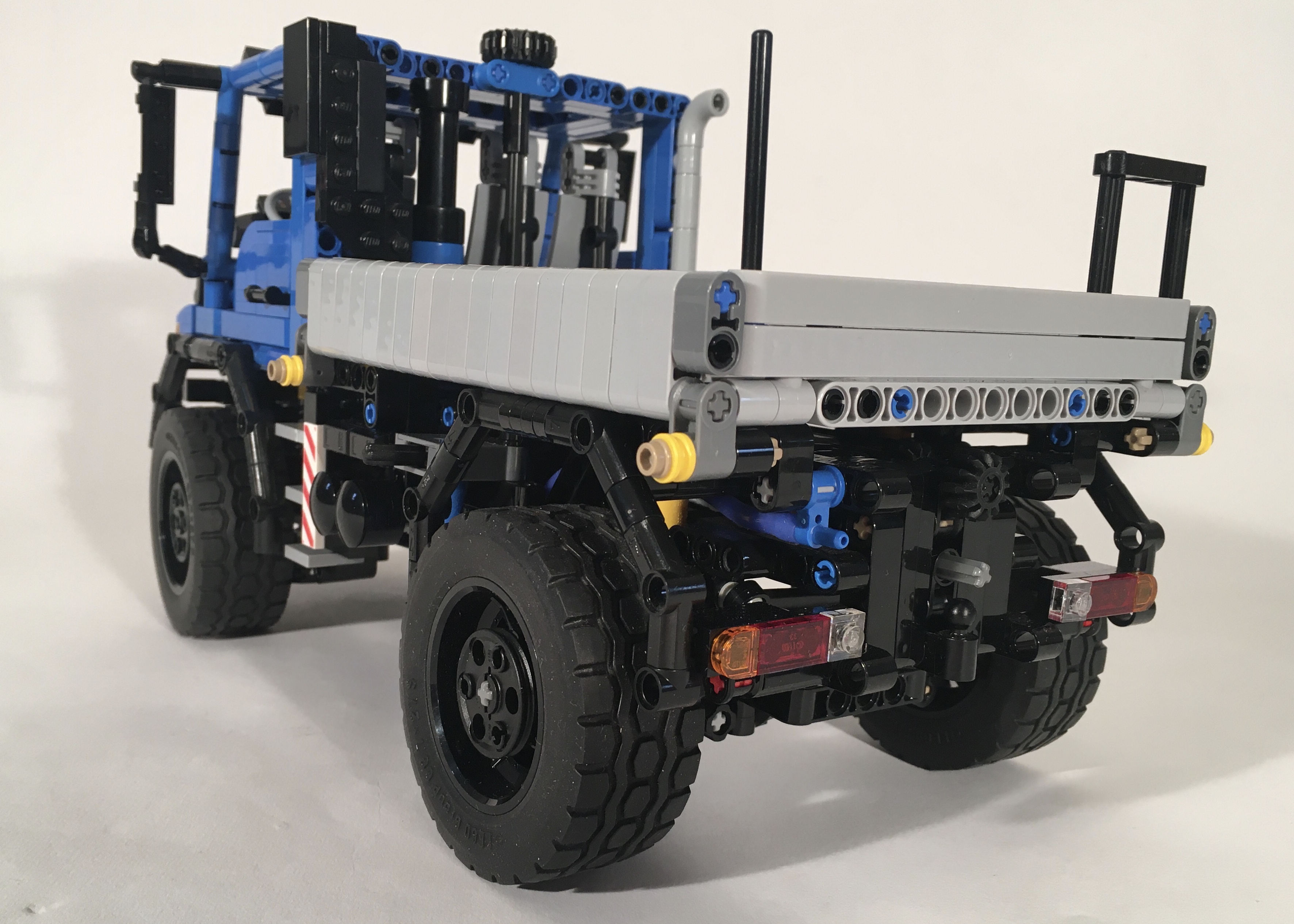
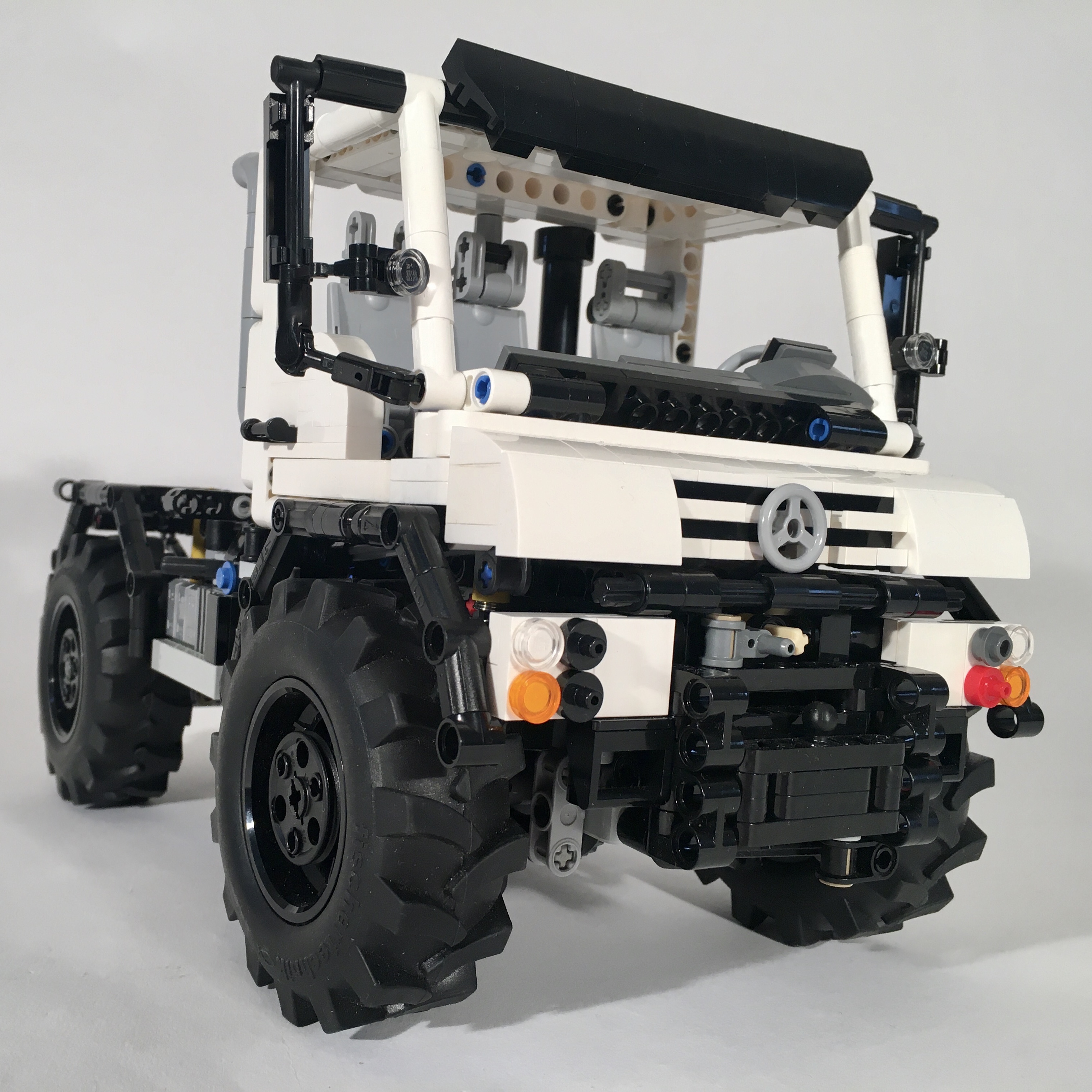
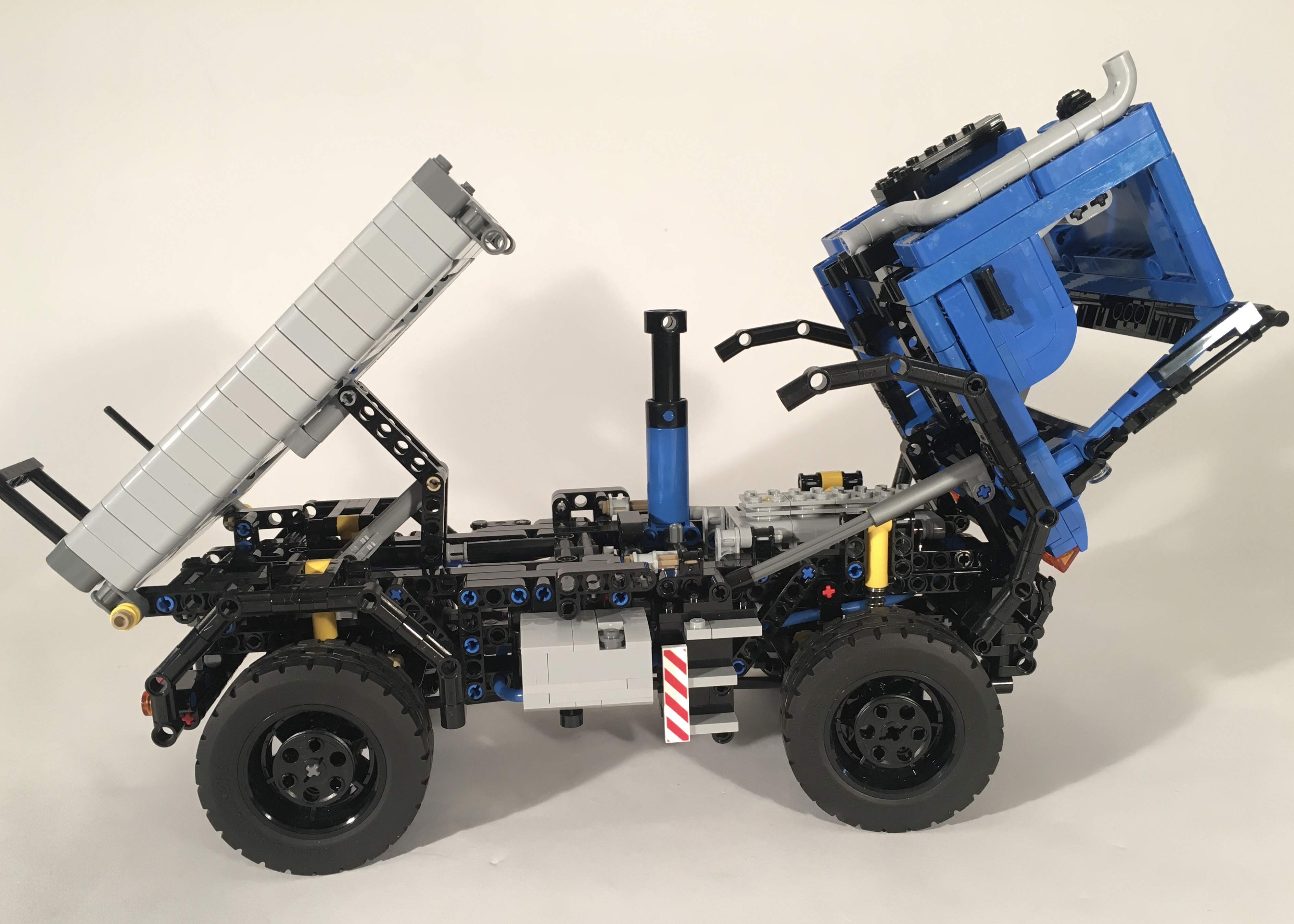
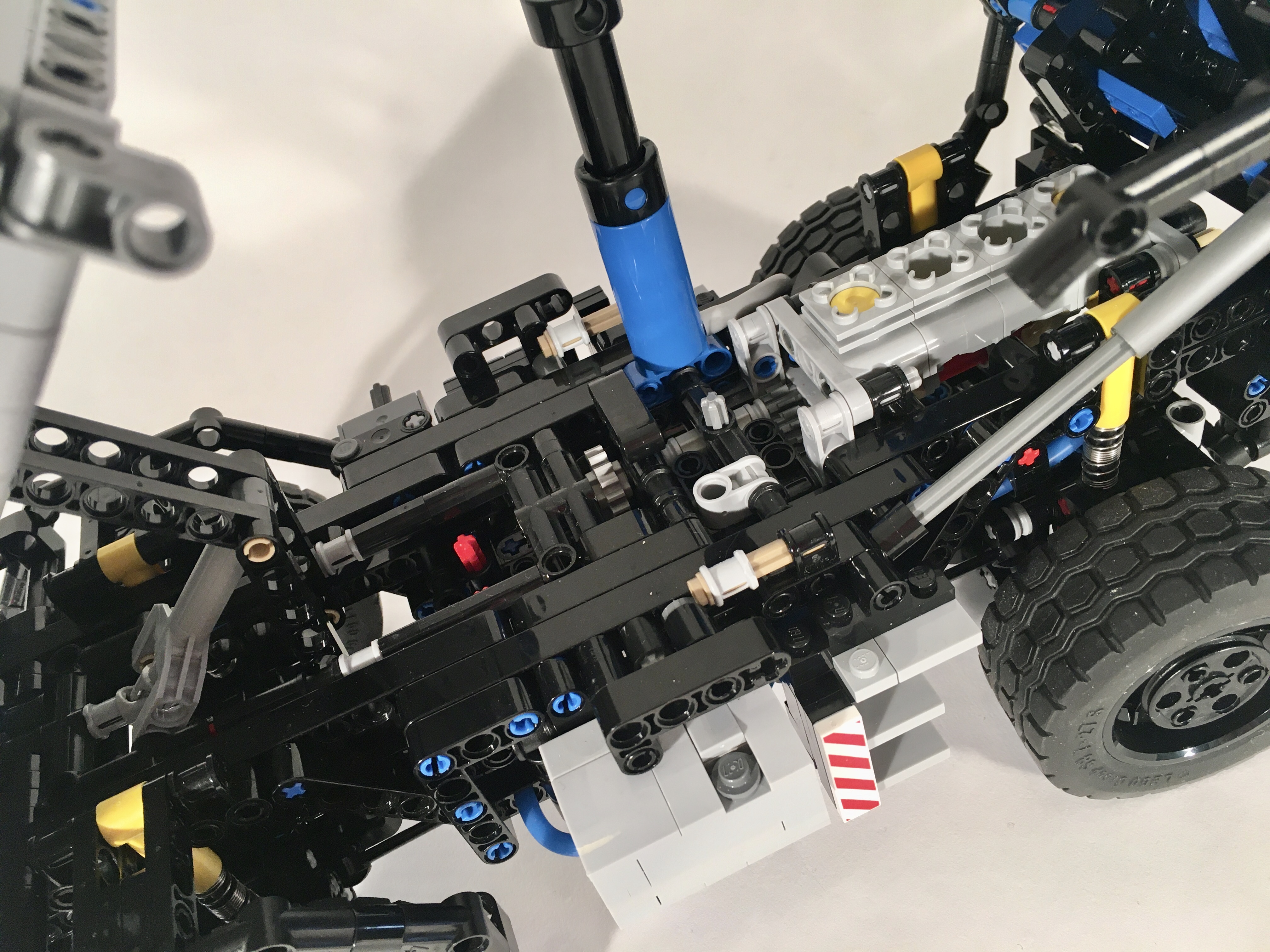
The chassis for both is a modification of the U500. The wheelbase is 2 studs shorter, so I removed the winch and the PTO on/off switch, and modified the bed tipping mechanism. The rest is the same, including the front and rear PTO, the four wheel drive, and the I4 engine. Both the U400 and the U430 have a manual pneumatic pump with a front/rear switch for attachments.

The tipping bed is the same for both, and can tip in three directions. The three sides drop as well. And the cab for both is generally the same, with a slight change to the front to address the styling differences for both. You can see the similarities between both in the videos below.

I’m pleased with these MOCs, and how they worked. The U400 is the most beautiful MOC I have made in a long time. It currently adorns my desk at work, and will continue to do so for some time. While I wish both would have portal axles, the stability of the drivetrain, and the flawless reliability is worth tradeoff. The U430 looks great as well, especially with the tires, the orange is my favorite. Hopefully I am able to make some attachments for the front and rear. Stay tuned.

Until then, happy building!
8854 Update


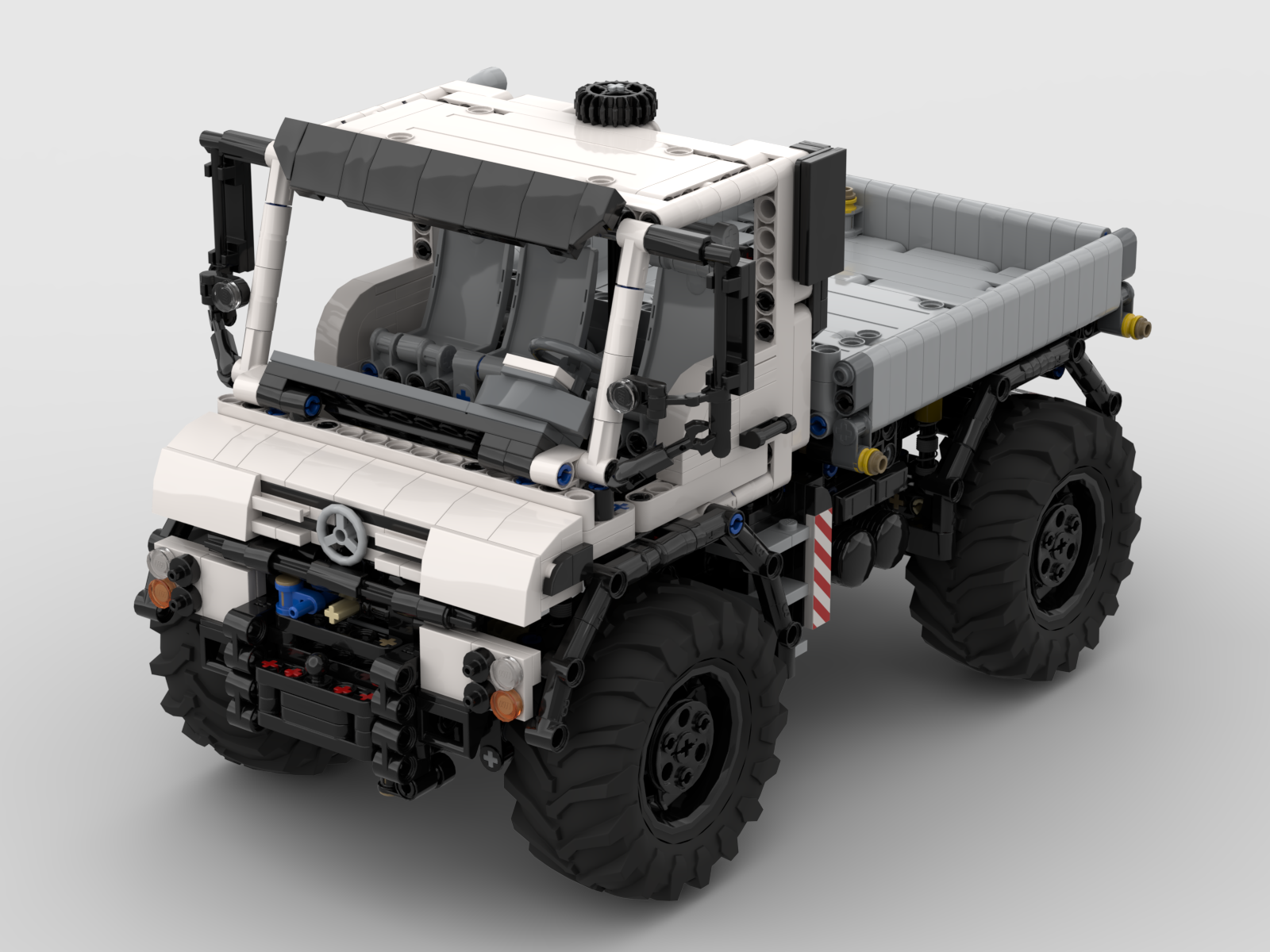
Winner, Winner, Chicken dinner is what we say in my house!

Free instructions are available at Rebrickable.com.

LEGO 8854 Update

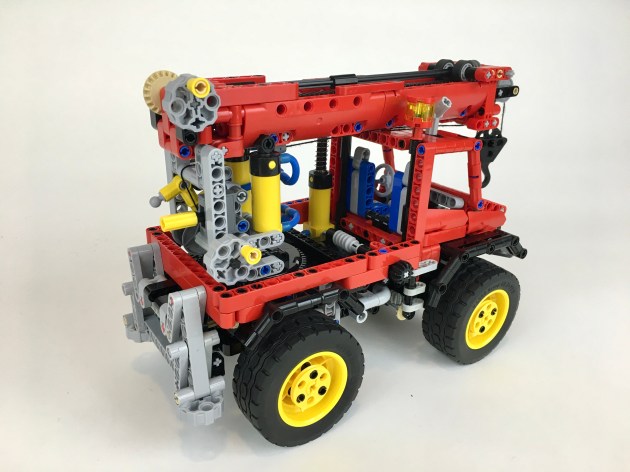
I often participate in online LEGO contests, and most of them are on Eurobricks.com. In the summer of 2021, Eurobricks announced TC20, Technic Studless Recreation. I participate in many, but not all, of the contests that Eurobricks offers. The requirement was to pick an old studded set, and recreated it in studless Technic. I couldn’t sit this contest out, as it checked all the right boxes for me. Entries would be smaller to stay in scale, the builds would be feature packed, and it they would have a deep nostalgic connection. I was in.

Choosing a set to recreate took some time. I started with a list of 32 sets, and started to whittle it down from there. Quickly I removed some of the sets for various reasons: interest, size, not right now, too sacred (8880). I ended with a top three of 6357, 8855, and 8854. 6357 would be interesting to me, but after doing 8640 a couple months back it could wait. 8855 had some opportunity. It is a classic set, and instantly identifiable. I built a little mock-up, and let it sit for a couple of days. I didn’t come back to it.

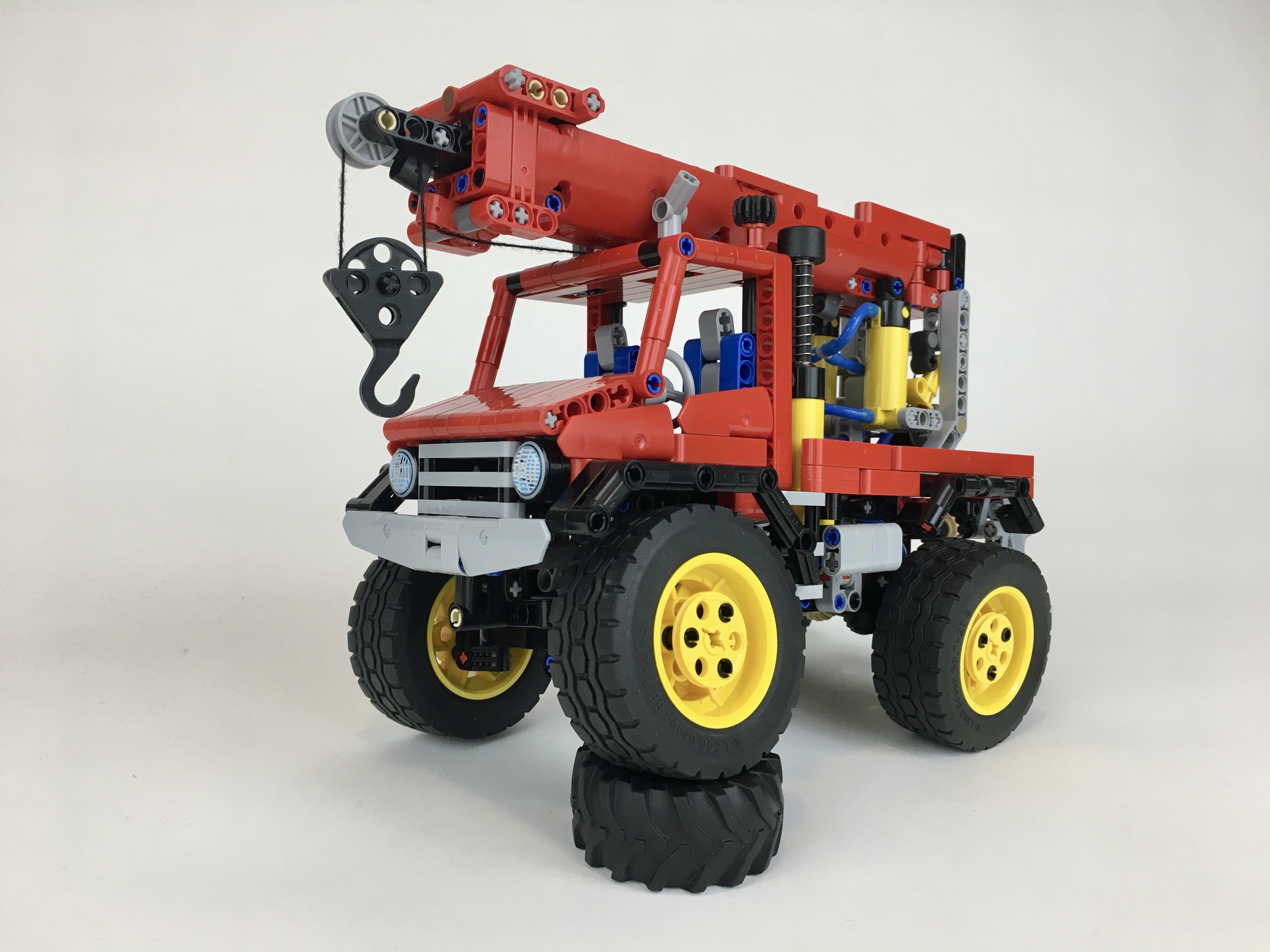
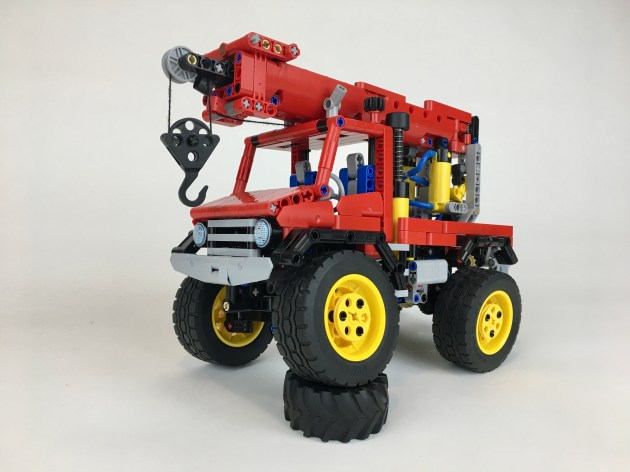
I am not sure why I did not settle on 8854 right away. I love building Unimogs, and when I do updates I like to add some features. 8854 was missing suspension and an engine, so everything was right for me to recreate this iconic set. I had made my decision and I started posting my progress. First, I had to decide the scale. I made the decision to use the newish Batmobile tires in the build, which make the tires a little larger than the original 8854. I added a stud to the wheelbase to compensate, but otherwise the scale would remain the same.

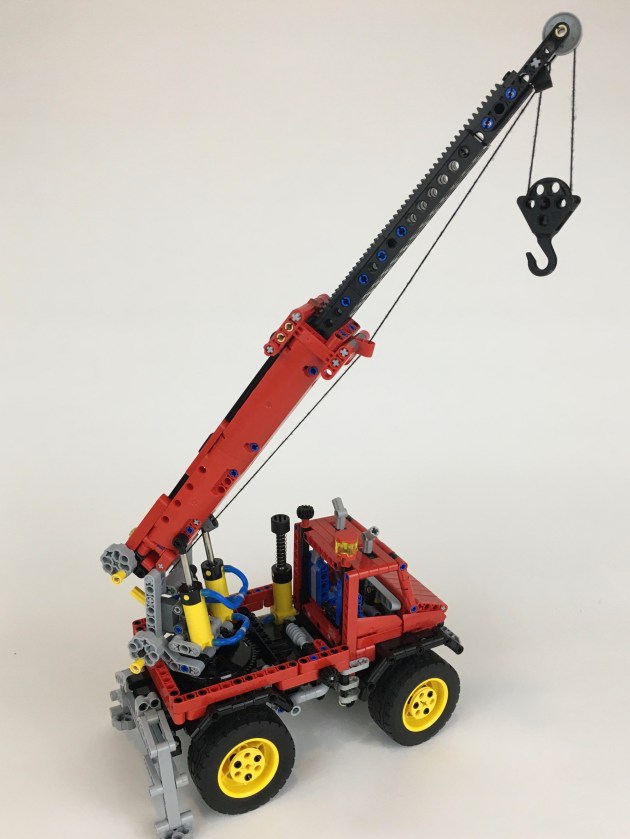
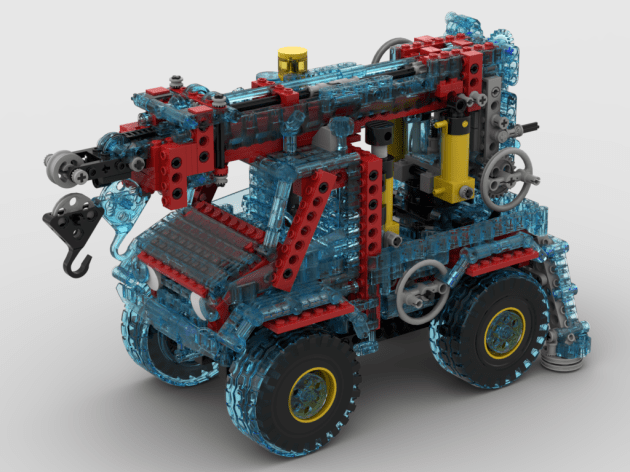
Next, I had to figure out how to add all the features I would want, while keeping all the original features. HOG for the steering would remain on the top right side of the cab, naturally as a beacon. I then added a control gear for the outriggers on the top left side of the cab. The rotation of the crane would be on the right of the truck driven by a worm gear, and all other crane controls would be on the crane itself.

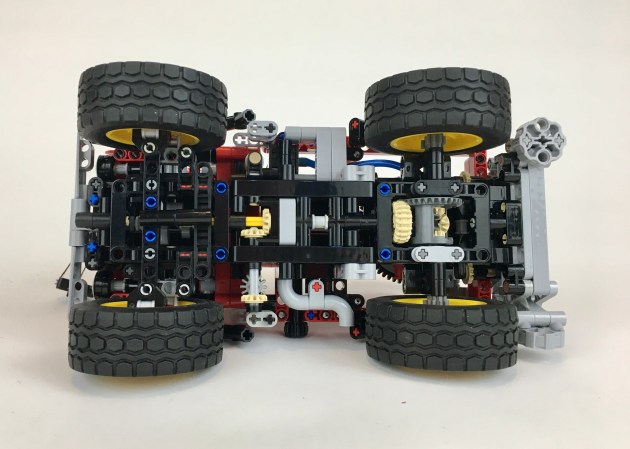
Fitting in the suspension and engine was a little tricky. Adding the engine was simple enough. There is a differential on the rear axle with portal axle. The driveshaft goes forward to drive a I4 mini engine. Suspension is a dual pendular axle setup: both axles pivot side to side. The front and rear axles are linked together so that when one axle pivots right, the other axle pivots left. It is a simple design that functions well.

LEGO 8854 Engine

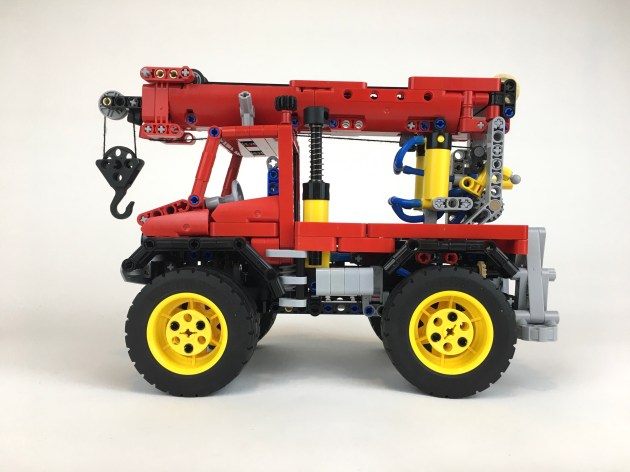
Designing the crane was the easiest part. Panels form the base of the arm, and a simple extending boom as created using studded technic beams and some rack gears. A worm gear extends the boom.

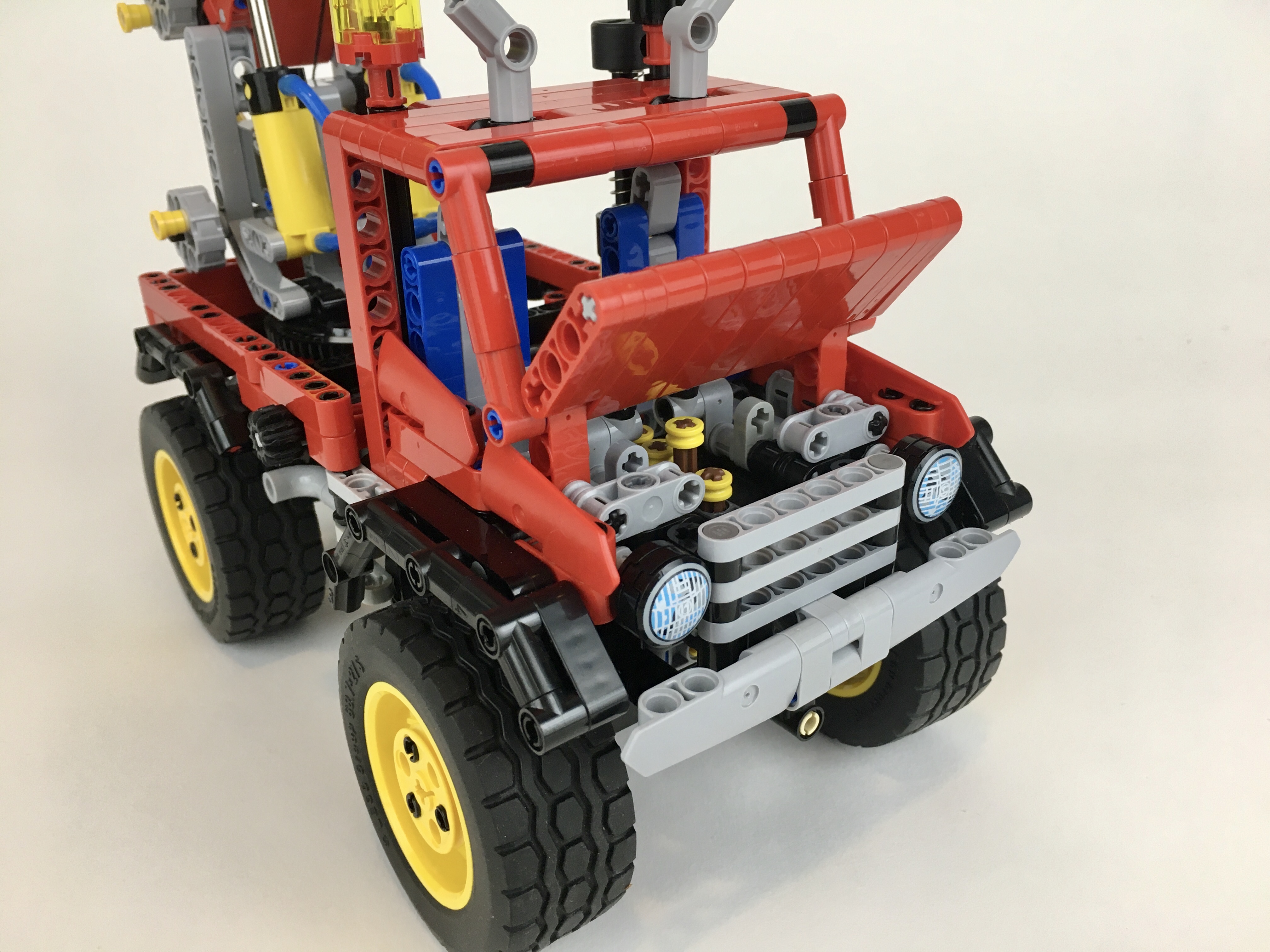
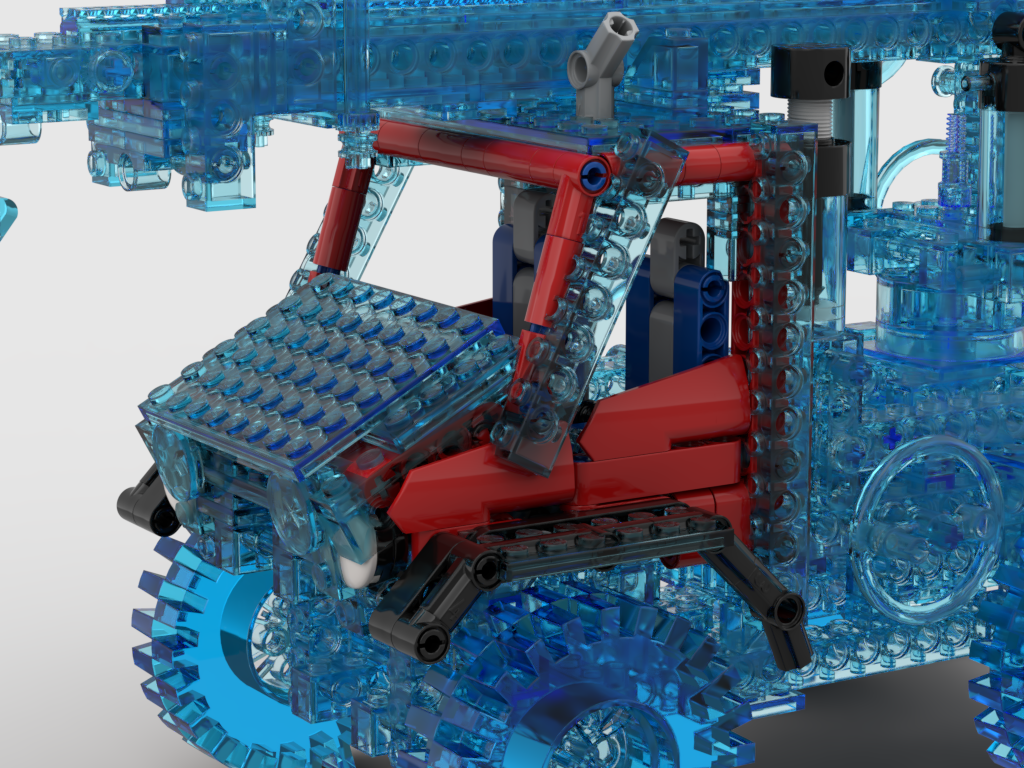
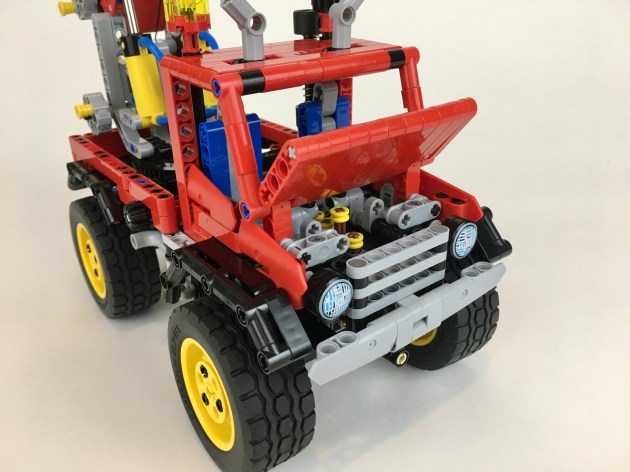
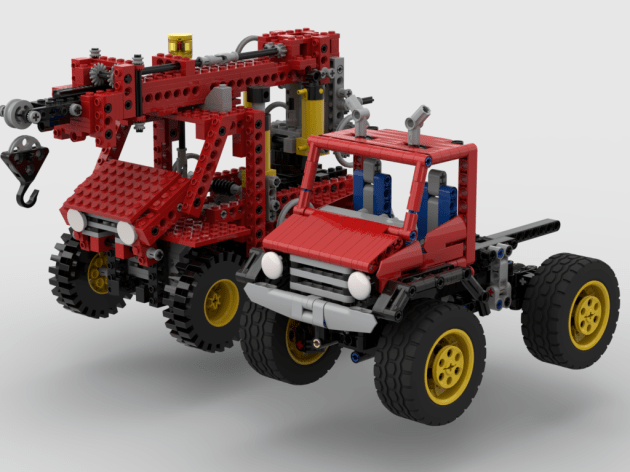
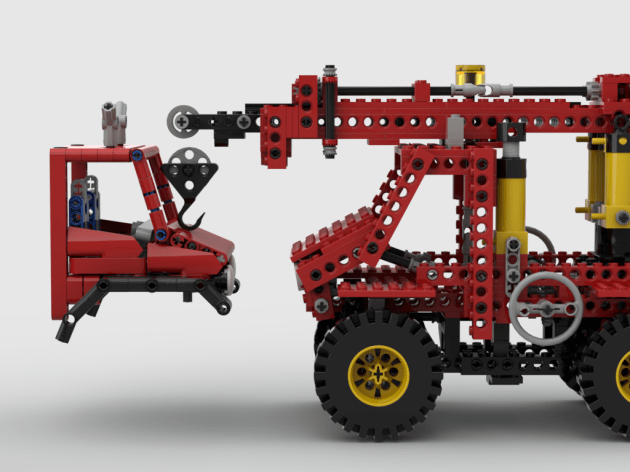
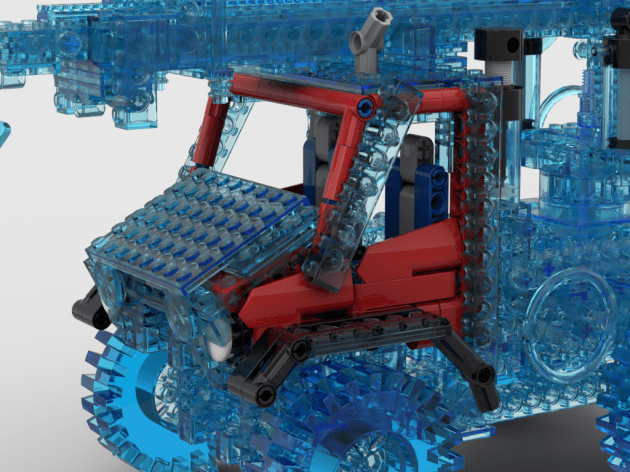
The cab is where I had some trouble. 8854 has a funny shaped cab to my eyes. First, it is very narrow. Second, the hood slopes very steeply. Third, the windshield is not very steep, more car shaped than truck shaped. I rebuilt 8854 in Bricklink Studio to help me compare the two designs over each other. I found this to be a helpful step, and allowed for some good feedback from other Eurobrick members. I ended up making the hood a little more flat and slightly shorter. The roof was made a little longer, which made the windshield a little more steep. Then added the fenders that wrap around the wheels a little better, and headlights and a grill that referenced the original grill. I was pleased with the final design. Oh, and I added seats, opening doors, and a dashboard.

Being able to compare the two versions side by side helped me feel comfortable with how the build was going. Most of the time I use Studio when the build is complete, as do not like to tinker in Studio. However, being able to see changes in real time, was immensely helpful. I could ask was the new version staying true to the original? If not, what was the specific part that was making it feel/look off? Being able to overlay both versions on top of each other was helpful, and a step I will do again in the future.

Cab Comparison Overlay

It turns out the design was good enough for a first place! I was thrilled that through both a voting and jury stage, this update was picked over 46 other designs. In addition to that affirmation, I was pleased with how the MOC turned out as well. The functions all worked well, and the control of each was simple and effective. I only wish the suspension was little more stable, but this was only noticeable when the crane was fully extended. I’ll use the suspension again in other MOC soon. If you love 8854 as much as I do, I hope you will give this update a build as well.

Happy Building.

Compact Telehandler


Sometimes I plan out a build, and other times, a build just kind of happens. This was the latter.

You may find free instructions for this MOC at Rebrickable.com.

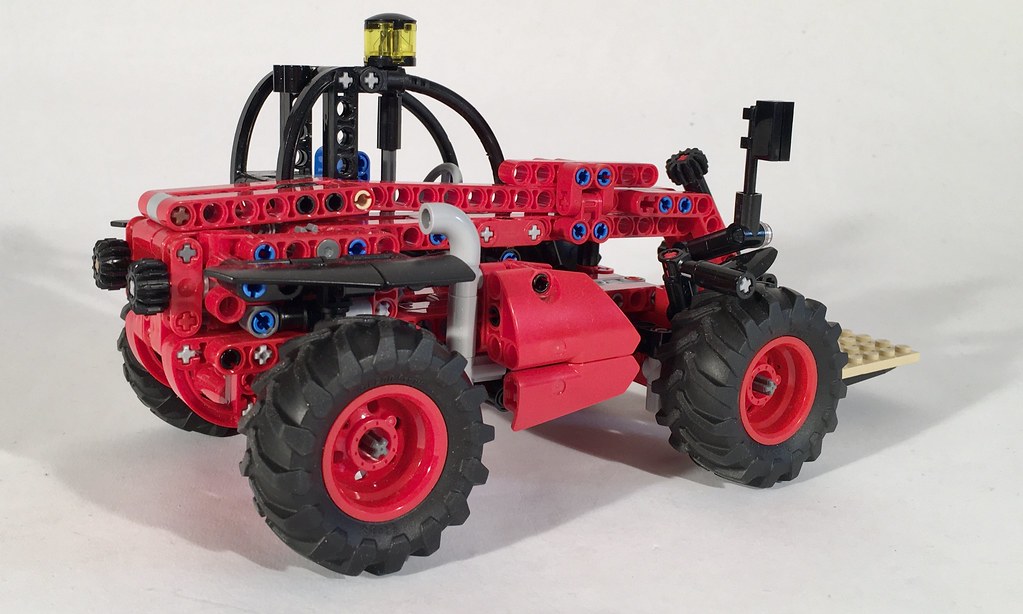
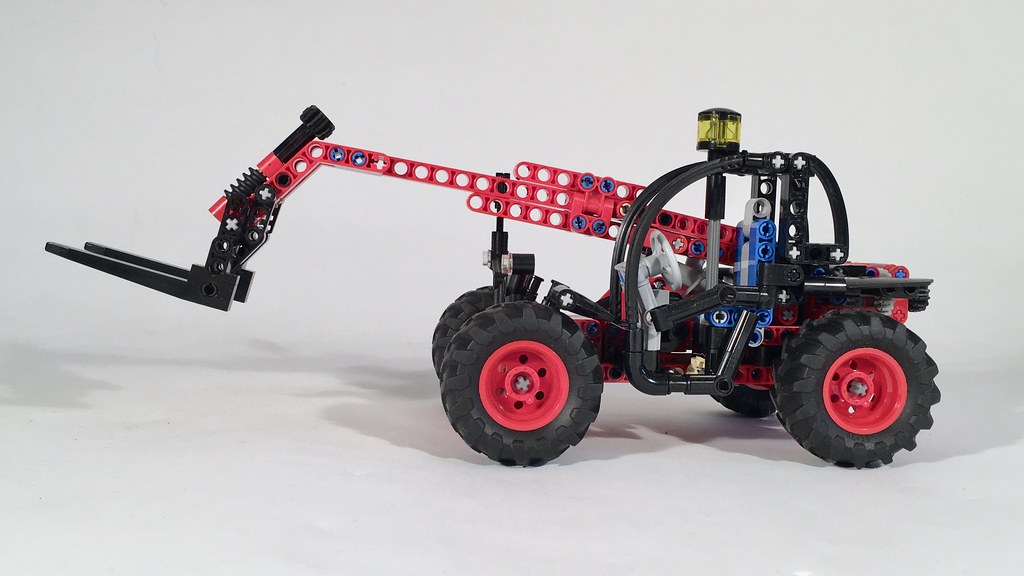
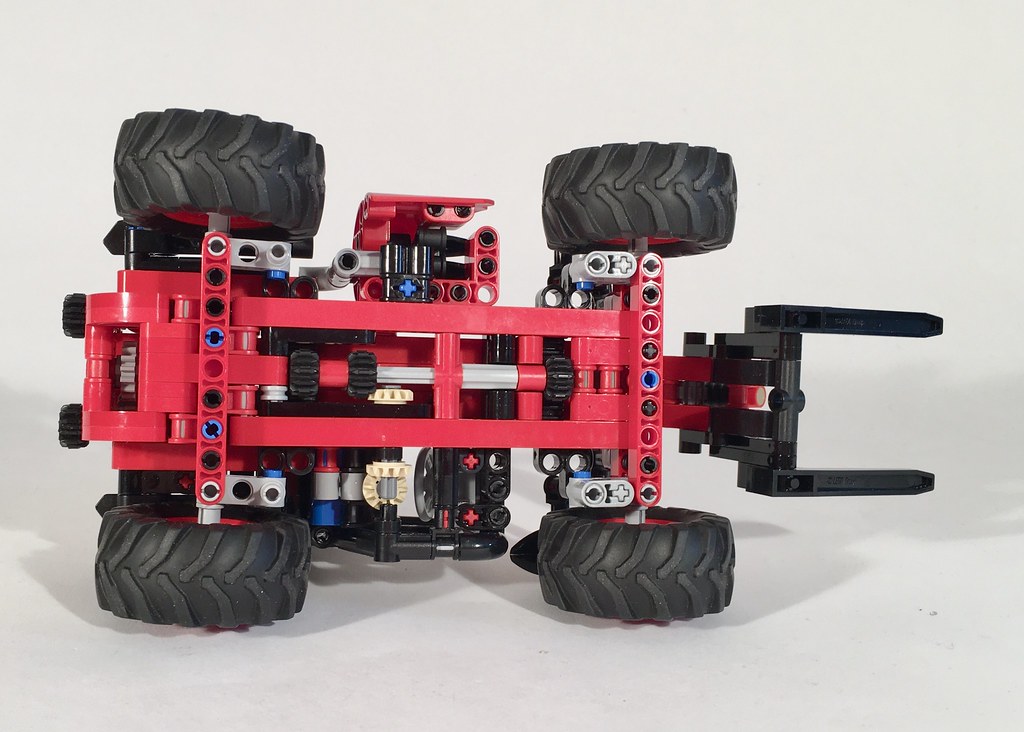
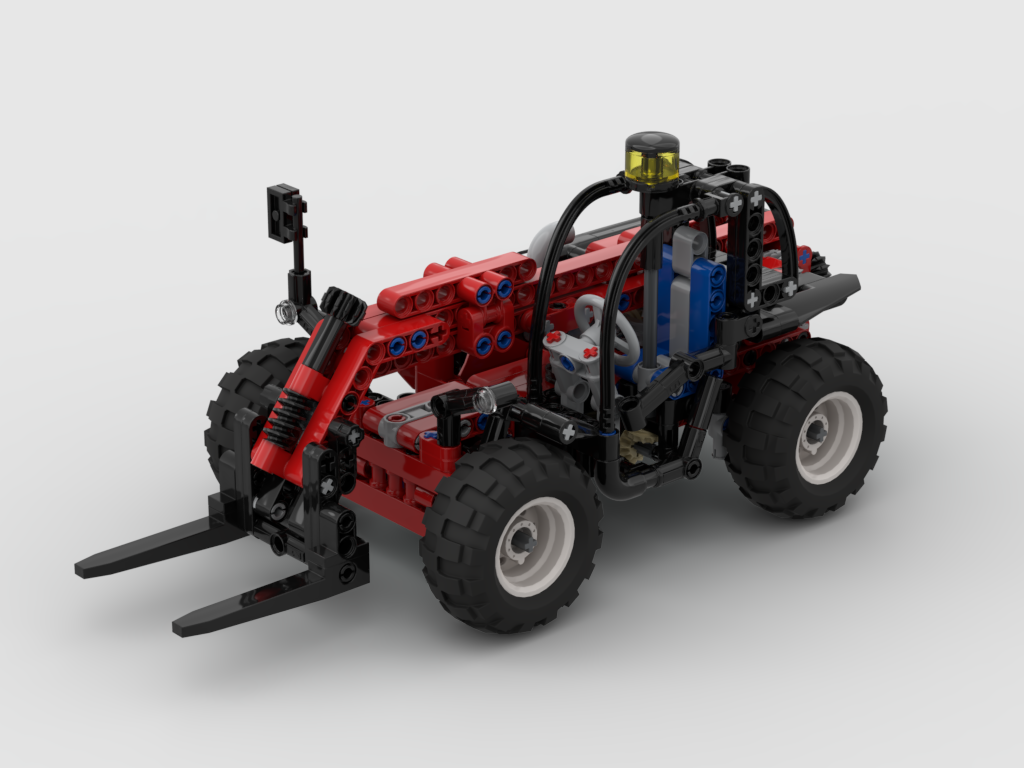
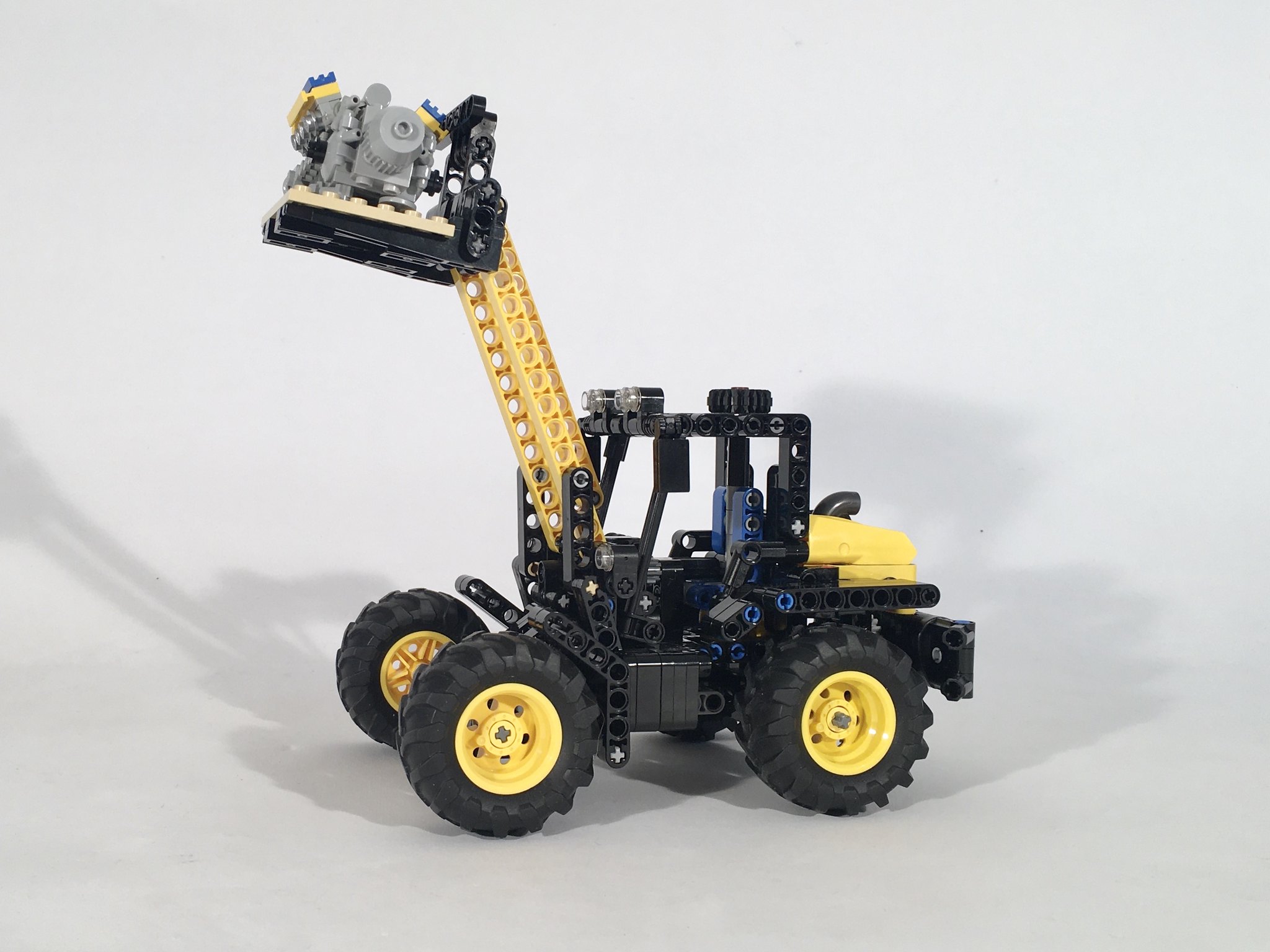
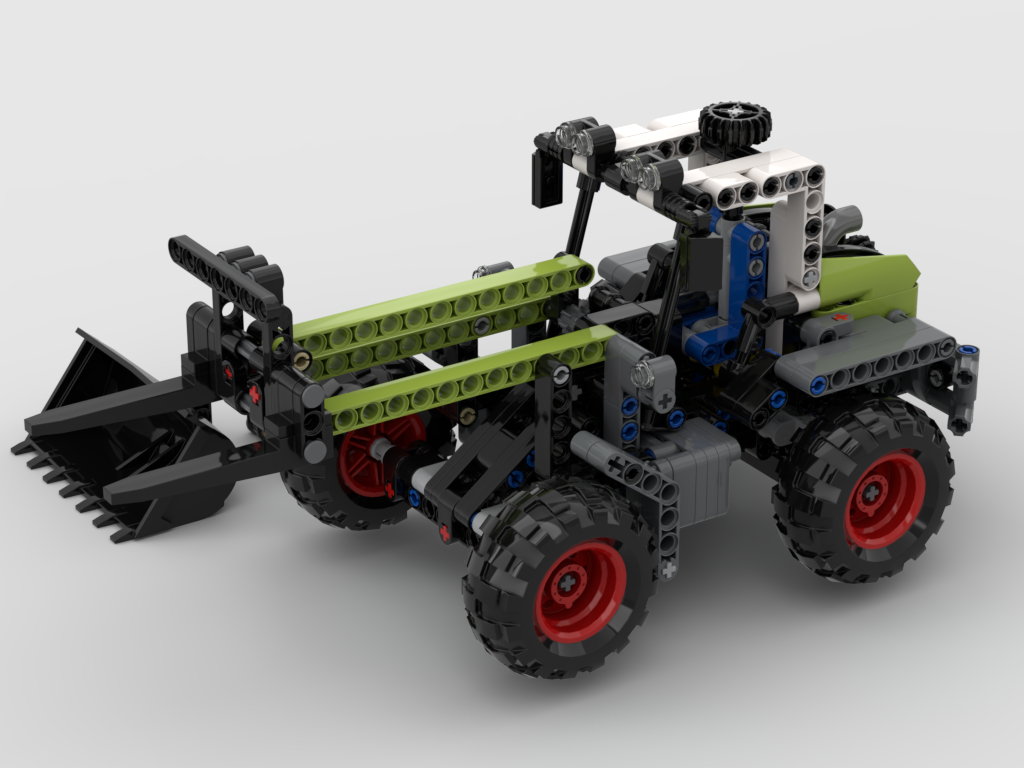
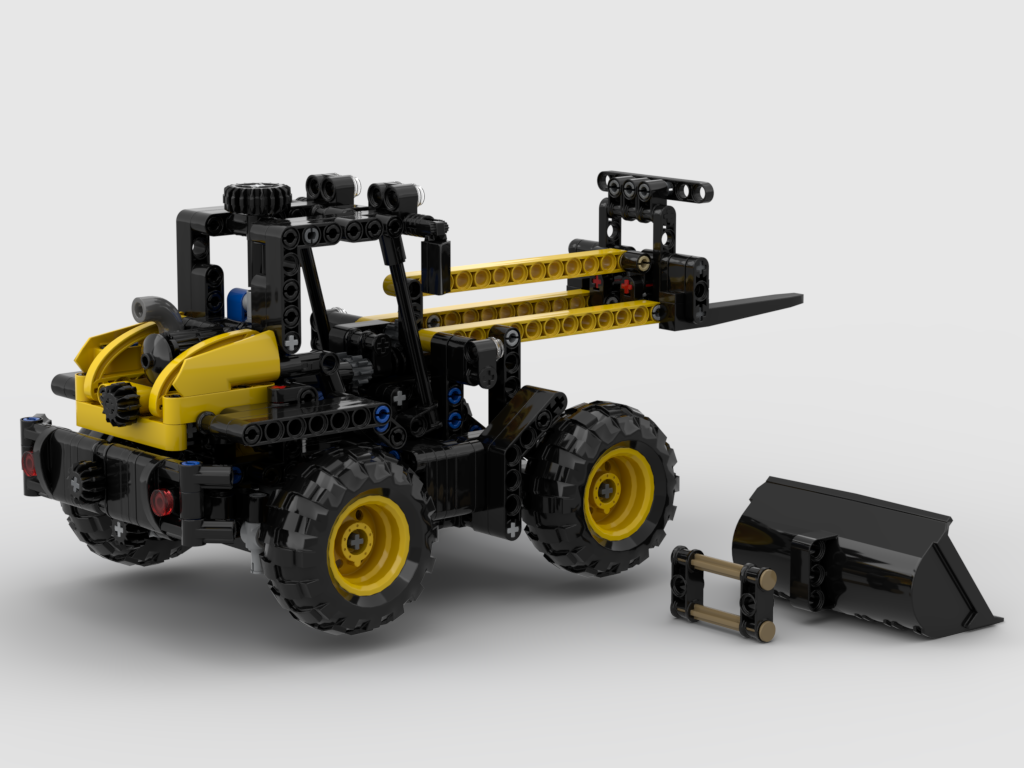
After building the Atmos Tractor, and then a gazillon implements, attachments, and trailers, I started branching out to other machines that could be used at the Thirdwigg Farm. The Compact Loader was a result of this. I was playing with the new LEGO 42122 tires, and quickly came up with a little four wheel steering idea. I added a fork boom, and decided to see where the project would go.

I am quite fond of LEGO 8283, and the rest of the design was influenced by this little set. I tried a couple of boom extension designs, but each looked a little too “overweight” for the little tractor. So I came back to the extension design that was used on 8283. A mini linear actuator is used to lift the boom. Both functions are controlled by two separate gears on the back of the telehandler.

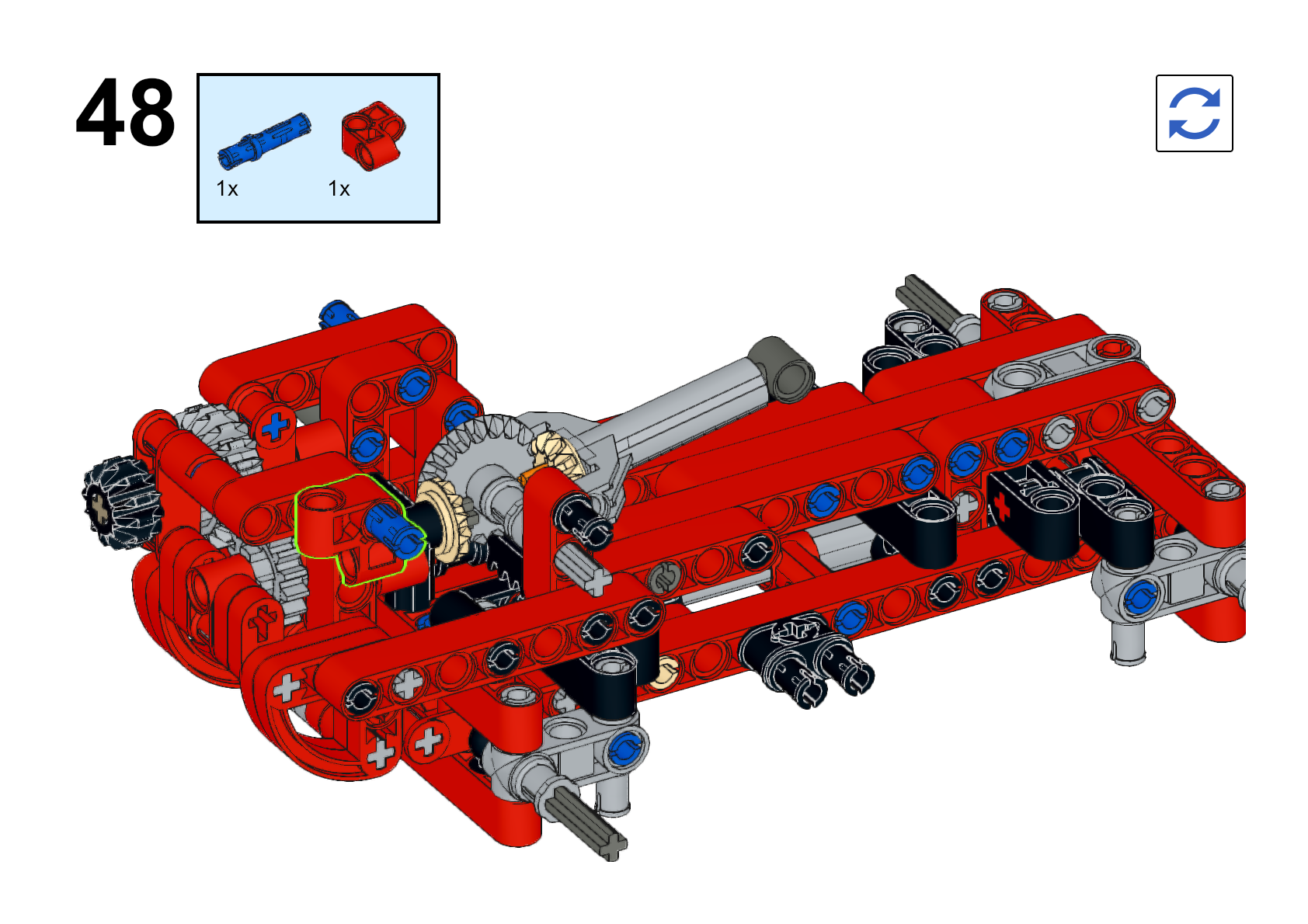
The cab came together pretty quickly, though I had to make sure the new tires had a clear range of motion. I added some lights, and front fenders which brought a little visual weight to the front. I had a tricky time finding rear fenders that I liked, but I eventually found a solution I liked. In my move towards increasing the readability of my instructions, I have published a PDF with step-by-step instructions that list required parts for each step. I hope they are clear for you, and they bring value to your own build.

The Compact Telehandler worked just as I hoped. The steering is great; it’s fun to drive this little tractor around on a small desk. The boom lift works well, and has a great range of motion. The extension works smoothly, though since it is driven by a worm gear, if the extension is in the wrong position while trying to lift the boom, the boom will bind. The fork tilt mechanism is smooth, and is easily accessible in all boom positions. We will see what next build come from just playing with a couple of parts.

Happy building.

Compact Loader


It was time for me to learn how to do Bricklink Studio, and my Atmos Tractor needed a friend to load all of the trailers.

Free instructions can be found at Rebrickable.com.

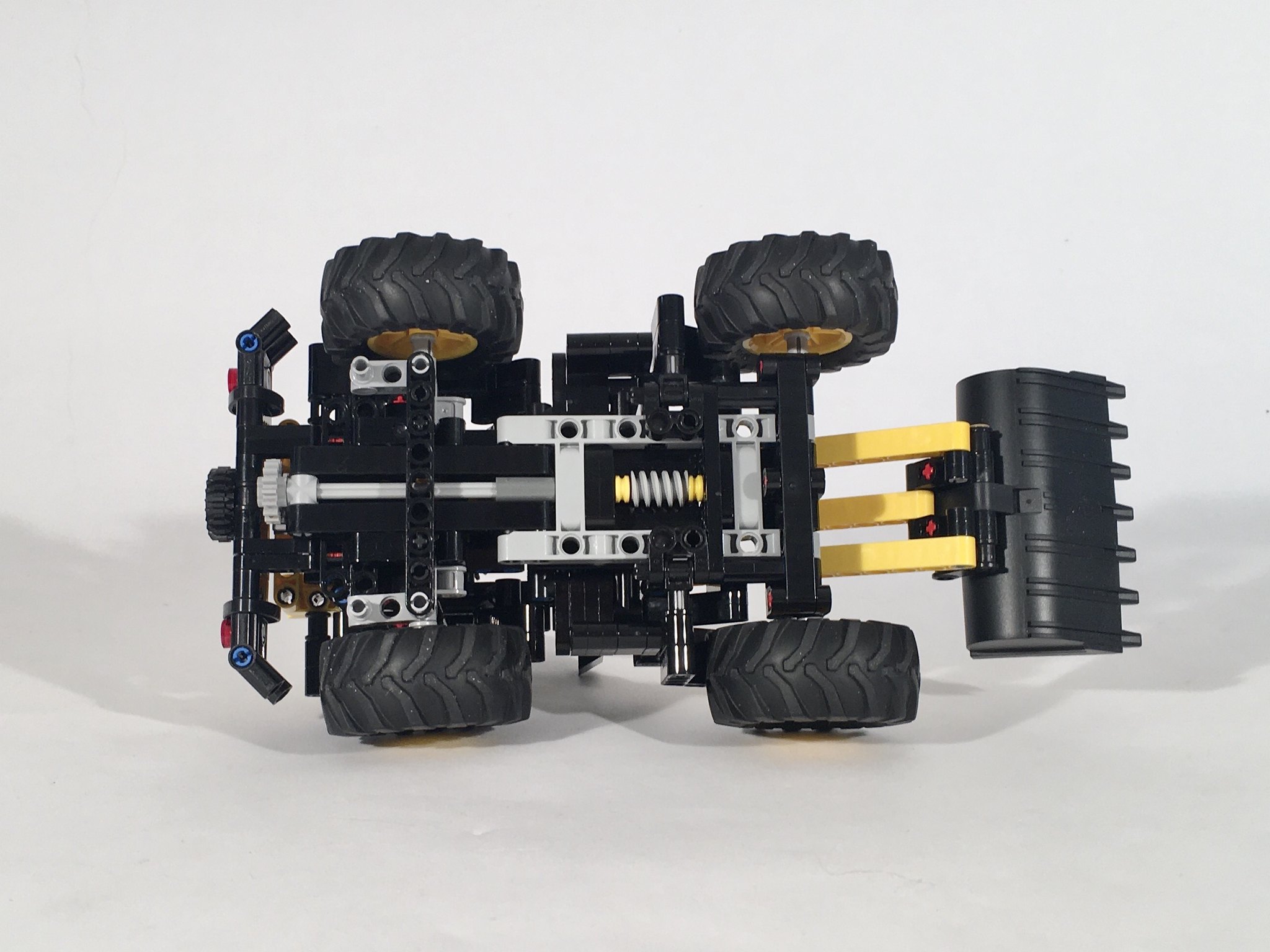
This small loader came together rather quickly. I decided to use rear wheel steering rather than articulation as this would keep the mechanics of the bucket/fork simple. Additionally, I wanted to use the new tires from LEGO 42122, and they take up a little more room while turning. Finally, I wanted to allow the tractor to switch easily from forks and a bucket, so this simple feature was the second part to figure out.

The next part of the build required a little more trial and error. End Loaders are tricky in that they have a wide range of motion, and have to fit within a little given space due to the front wheels, cab, and ground. It become clear that at this scale, a mini linear actuator was not going to work. So I used a worm gear and 24z gear with a small linkage to the boom. This gave a wide range of motion, including a very high lift height. The motion was controlled by a 20z gear at the rear of the loader.

The bucket/fork tilt was a little more tricky. A 8z gear and worm gear control the movement. I add this mechanism in many of my builds because it works well for many needs; and it is small. In this build, I needed to redesign the frame for this mechanism as the standard build would not allow for the bucket and fork to fully tilt at ground level. But with a little modification, I was able to get it to work. At the high end, the bucket tilt can bind, which is not great. The tilt stays consistent as the boom lifts, which was a requirement for me as the fork was going to be a center part of the build. Control for the tilt is at the rear of the tractor. Pulling two axles allows for quick change between the bucket and the forks.

Finally, I built this MOC with the singular focus of developing my skills with Bricklink Studio; with the goal of improving the instructions that I make available. I have made photo sequencing instructions for years, but with the 800 pound gorilla that is Rebrickable.com, more and more people are contacting me directly saying some form of “I am confused when I try to build ______.” So, after trying a couple of 100-200 part builds, I launched into this Compact Loader, and built the file in Studio. Studio takes a little time to get used to, but it is slick. And the instructions that are generated are very slick.

But it does take time. Many of my instructions have been free, and I continue to value this for many reasons, but I’ll be reevaluating this the deeper I get into this transition. Either way, enjoy the many MOCs of mine that you can build for free.

I am pleased with how this MOC turned out, and what it taught me about building in Bricklink Studio has been valuable. The model fits my design language, and functions as I expect my models to function. And now, you can clearly figure out how to build it as well. I hope you will enjoy the build as well.

Happy building!
Unimog U500 (405.201)


Every couple of years I build another Unimog; they tend to be a favorite subject.

Instructions may be found here.

Unimog U500 (405.201)

Right after the LEGO Batmobile 76139 was released, I saw the front tires, and immediately planned this Unimog. The tires were perfect for a U500. I stared working on a draft before I had acquired the tires. I wanted the build to be in the theme of my Unimog 437 in that it was about 1:18 in scale, and had modular cabins and bed options. But I wanted to take this idea to the next level so that front and rear attachments could be added, as well as trailers. Many of my builds as of late are more system focused, in that a main build supports lots of other attachments, trailers, and versions of the same build. With this one, standard attachment points on the front, rear, bed, cab, and hitches allow for a variety of versions and attachments to be added quickly. I’ll make more of these soon.

Rear Hitch, Attachment point, PTO, and PPTO

I quickly set up a front and rear suspension using what was learned on the 437. The MOC has front and rear live axle suspension, four wheel drive, and front steering. A I4 engine is placed under the cab, over the front axle. Unlike the 437, I added a front and rear PTO. The rear PTO has an on/off switch. A center PTO is present as well for attachments that go in place of the rear bed. Finally, I added a Pneumatic pump behind the cabin to run pneumatics on the front or rear of the truck. A value determines if the preasure goes to the front or rear.

U500 Chassis

I added a three way tipper bed on the rear of the chassis, and created a way for the cab to be tilted. Both can be released by pulling a couple of axles out to allow for the tipping. The cab has seating for three, and both doors open. Finally, I added a front winch that is released and wound up using the fake air tanks on the left of the truck.

In the coming months I will make some attachments and trailers for this truck and for a U400/430 version that use the chassis of the U500 with some adjustments.

2016 Unimog U430

The truck turned out how I wanted it too, and had the features work the way as intended. The suspension is a little hard, but that supports various attachments well. This tipper bed and winch are a little addictive to play with. I did not spend much time making attachments for this truck, but I hope to do so soon. Until the next build or Unimog, Happy Building.

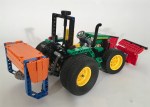
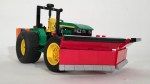
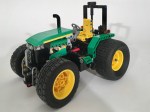
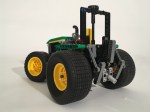
John Deere 5115


Sometimes you just do not want to shovel your own snow. Why not get a machine to do it for you?

The full gallery may be found on Flickr.com.

01

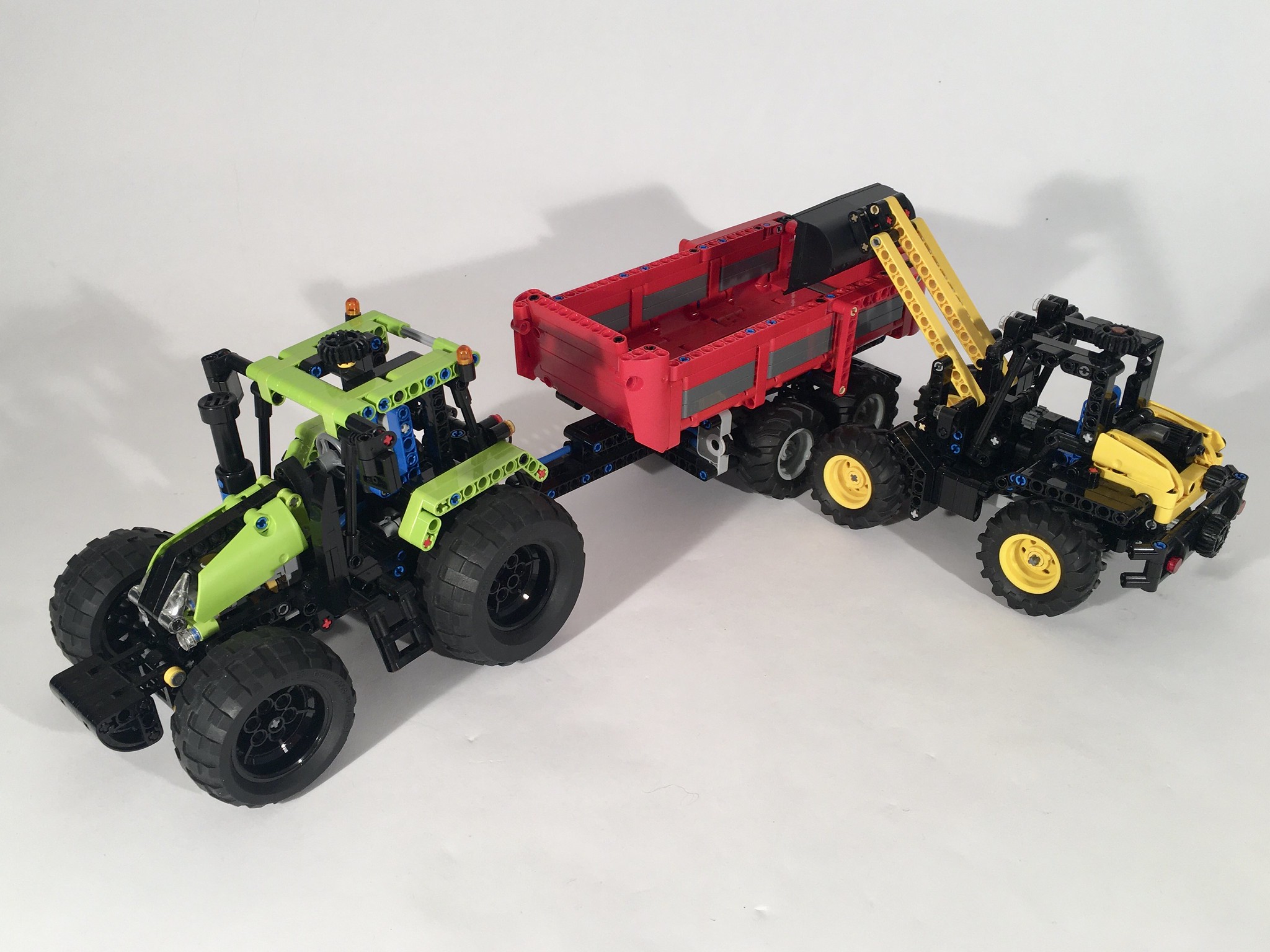
I have enjoyed building a number of tractors over the years, and I think it is mostly because I enjoy building all the implements. This little Deere is no exception. When I was making instructions for the Claas Atos, I found some inspiration from this picture. I wondered, “could I turn this into another tractor?” Yes, yes I could. So I was off on another mid-power tractor.

04

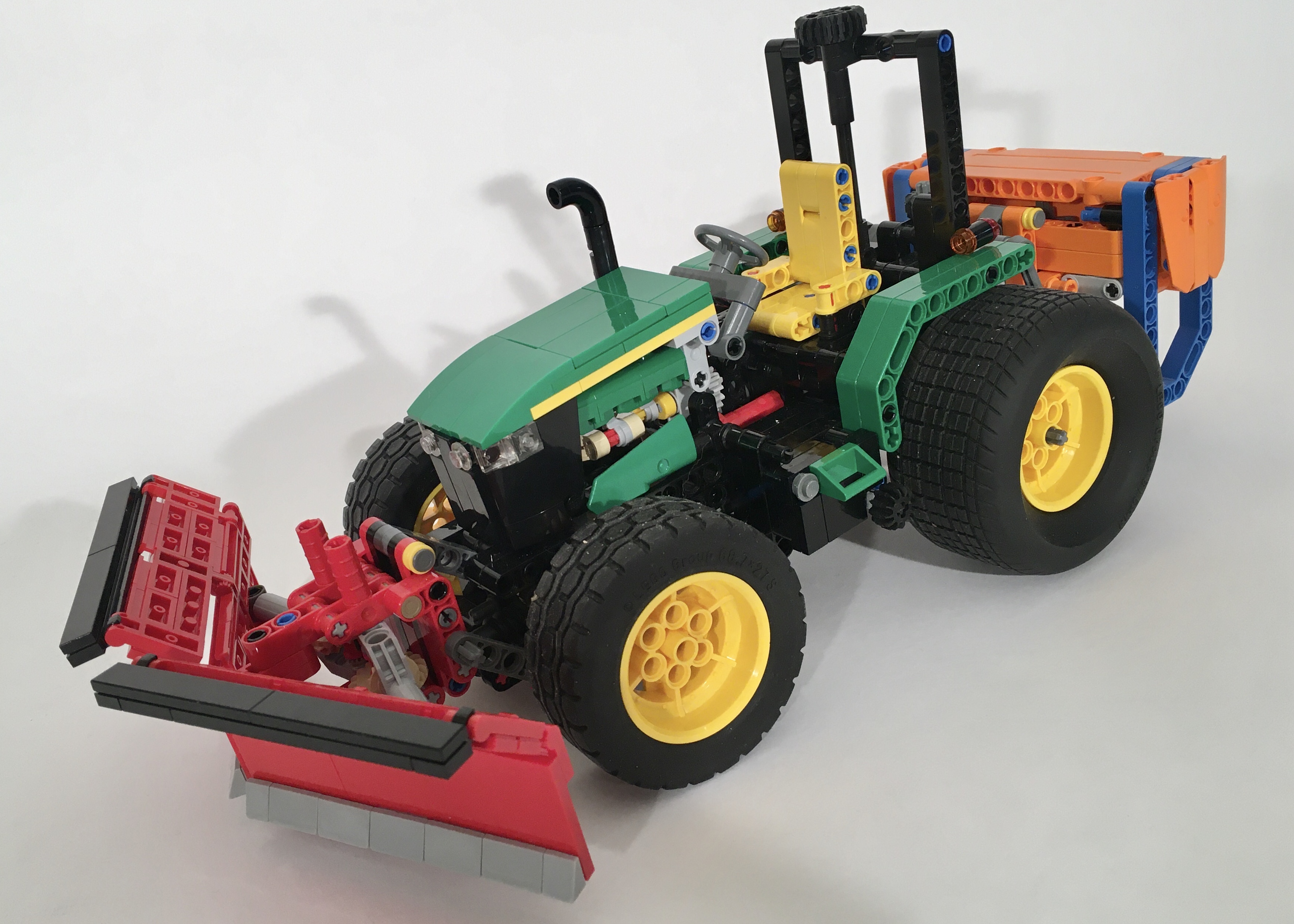
I decided on the John Deere 5115, which is a mid-power, open cab row tractor. I used the chassis of the Atos, so the tractor retained the drive, steering, front and rear PTO, and the front and rear three point hitch. I added a green fake engine, a new hood, and some new wheels and tires (Batmobile!). So it was a simple modification of a simple previous build.

I added a variable V-Plow on the front from M_Longer, and a simple spreader on the rear powered by the PTO.

The MOC worked just as well as the Atos, which it should. But the Deere looked a little better. The hood looked more complete, and the proportions looked a little better. Plus the color of the green and yellow always looks sharp.

Happy building.

Iveco Skip Loader


I have done a lot of small scale trucks, and it was time for me to do something bigger. 2 studs bigger to be precise.

Full gallery is here.

01

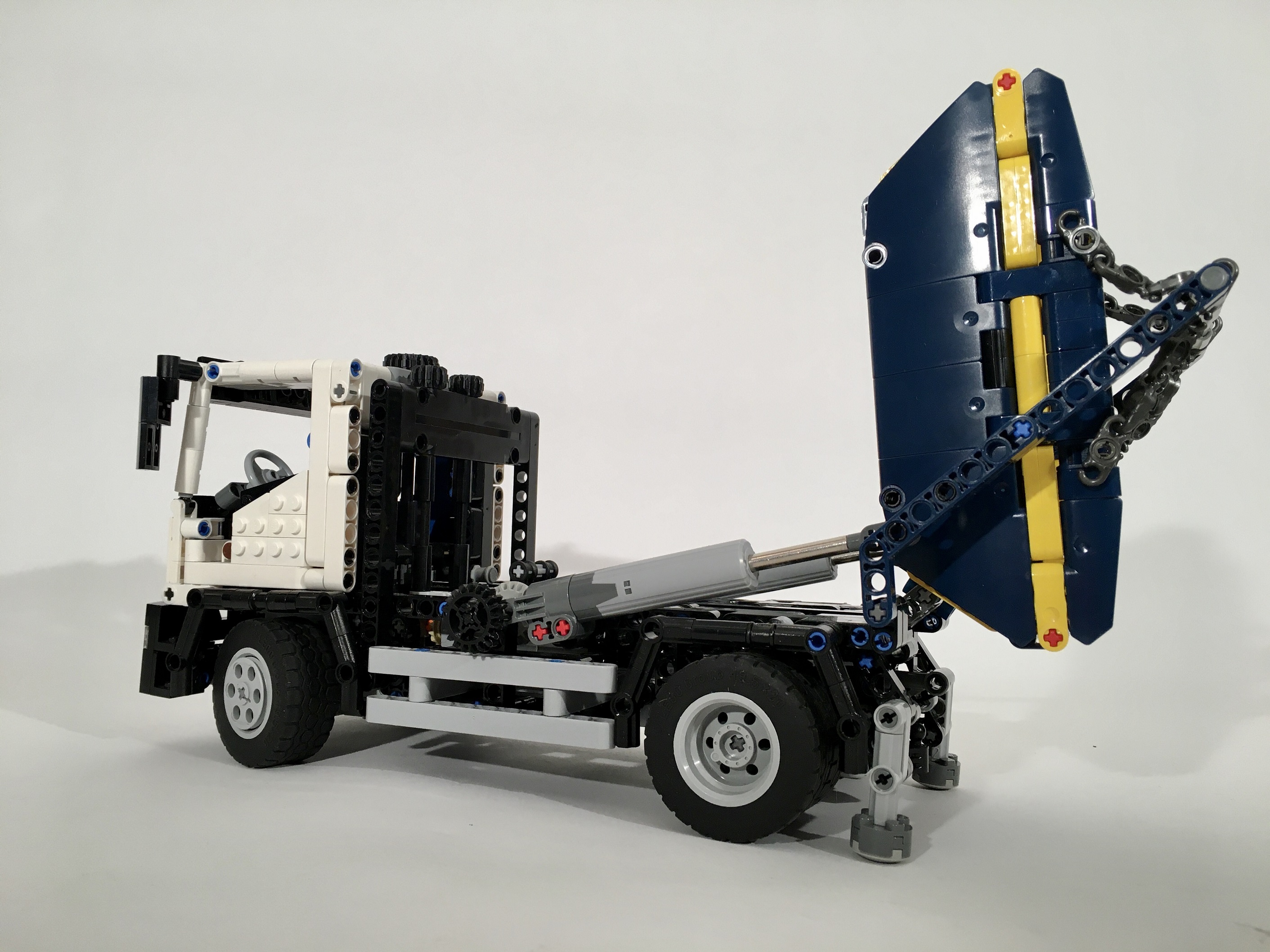
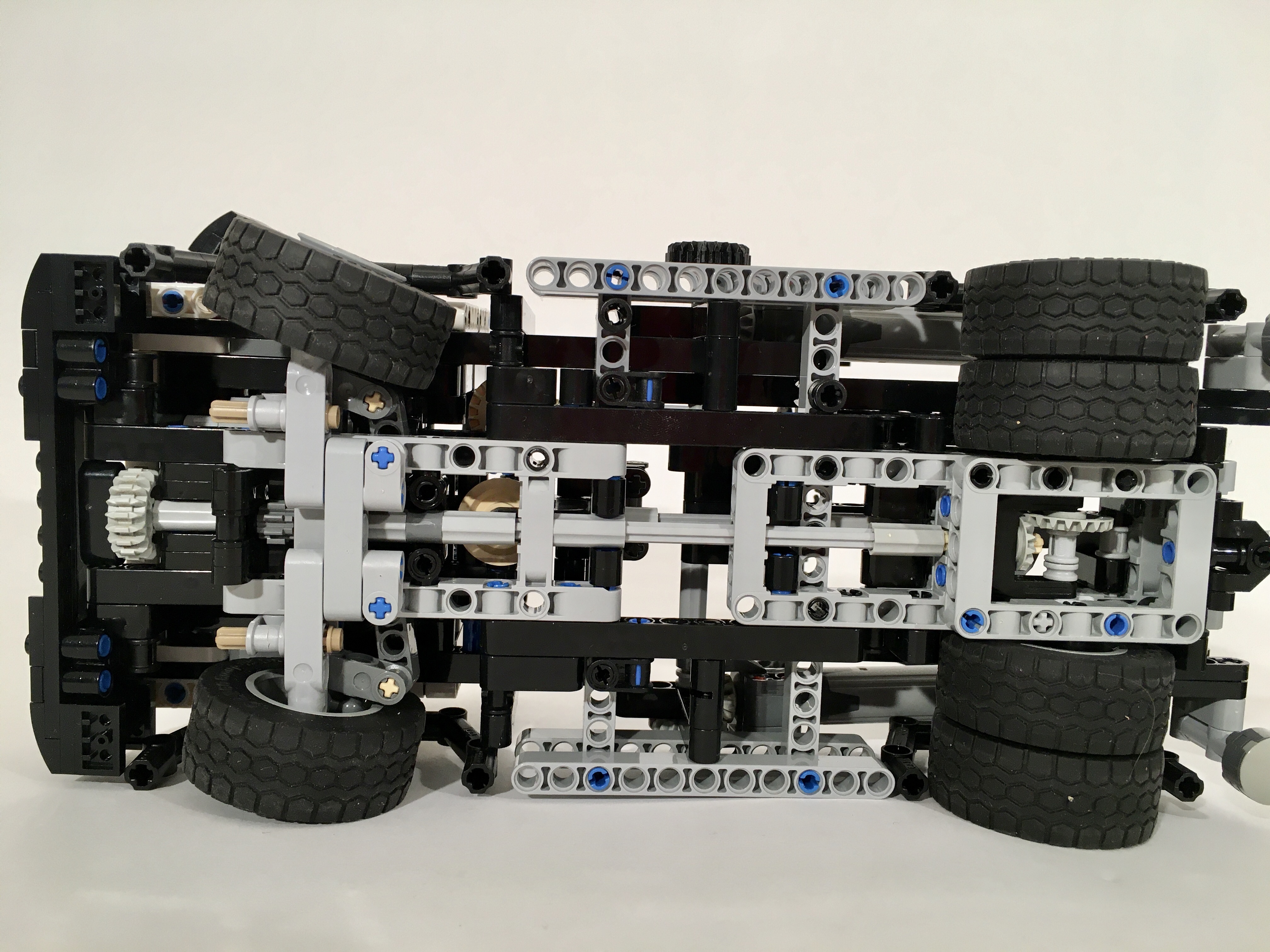
This project stared as a desire to make another small truck. I have used the 43.2mm tire in my trucks a lot, and I have used the 49.5mm tire only once. I was ready for the newer size again, so I found a nice little truck to model, and I was off. I very much like the shape of the 49.5mm tire, but it presents some challenges to scale. I works much better as a 15 stud wide size, and trucks often have a dual tires on the drive axle. This leaves only 5 studs of width to work with for the chassis and driveline. While a differential will fit within this space, keeping the axle connected to the differential does not happen when driving the finished truck. So I have a 8l axle with stop connected to a bevel gear on one side, and a 5l axle with stop. The gear then runs to the front of the truck where it connects to a V-4 engine.

fullsizeoutput_190b.jpeg

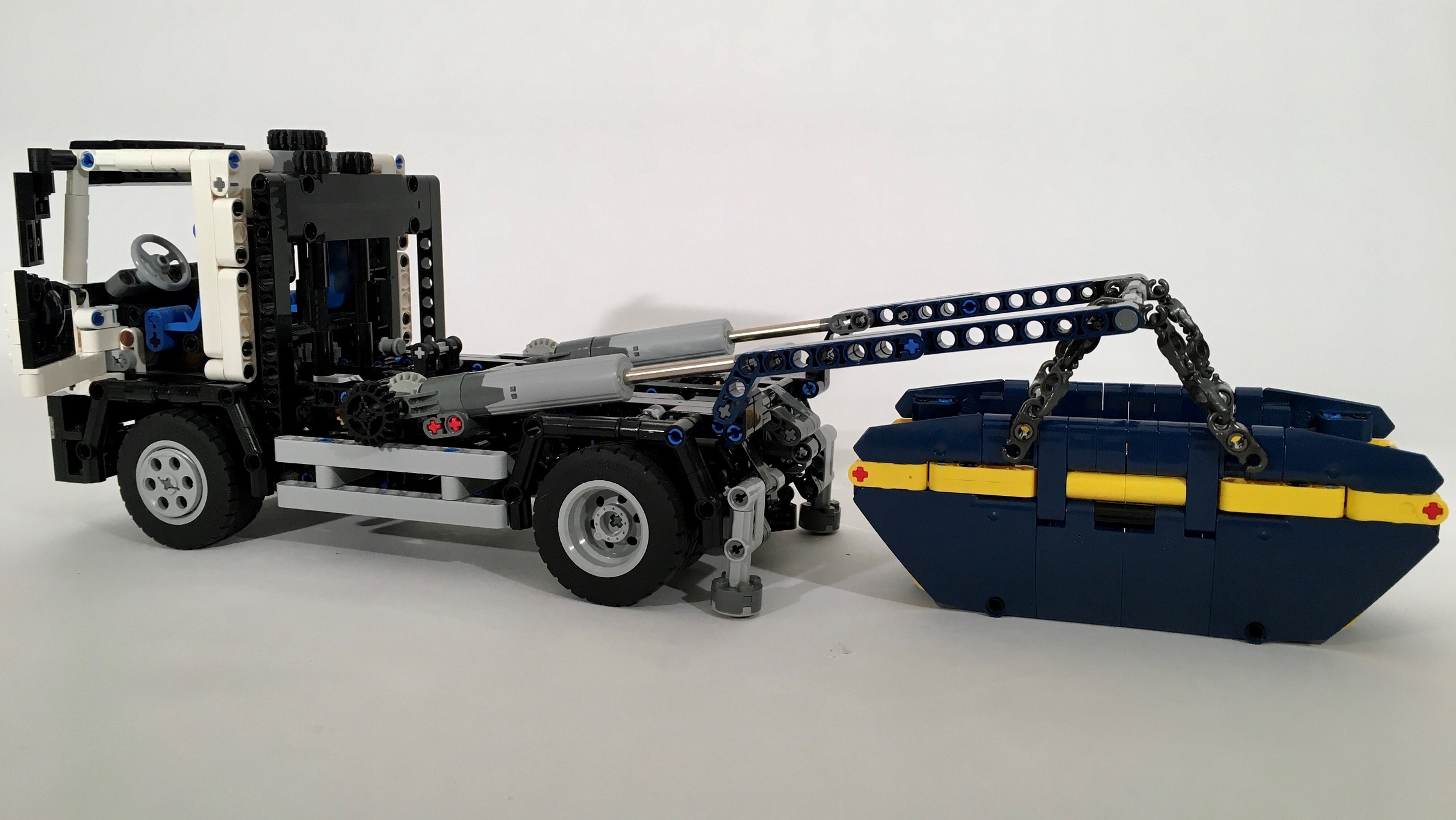
Adding the skip functions were the next challenge. Adding the rear outriggers was not very difficult, but then it was complicated by adding the skip hook. Both are moved by mLA that are mounted far forward in the truck and connected by long liftarms to the back. It took a while to get the geometry of all of this to work together in conjunction with the lifting arms, but in the end it all worked well. The lifting actuators are moved by a gear on the side, and the other two functions are moved by two gears on the top of the cab protector.

11

Working on the cab came next, and I used a mix of system and technic bricks. I made sure the cab could tilt, and there is a locking mechanism. The steering HOG is on the top of the cabin, and connects when the cab is down.

Finally, I added a little trailer. I added a simple function to lock the skip in place. The trailer can be towed by the truck, and when it is time to add a skip the hitch goes under the truck so it can get close enough to drop the skip.

The truck ended up doing everything I wanted. The tip and lift functions work well, and the trailer was a fun little addition. The colors work well for this truck, and the cab turned out as well. Maybe I will need to do another MOC in this scale.

Happy Building.


John Deere 6130R


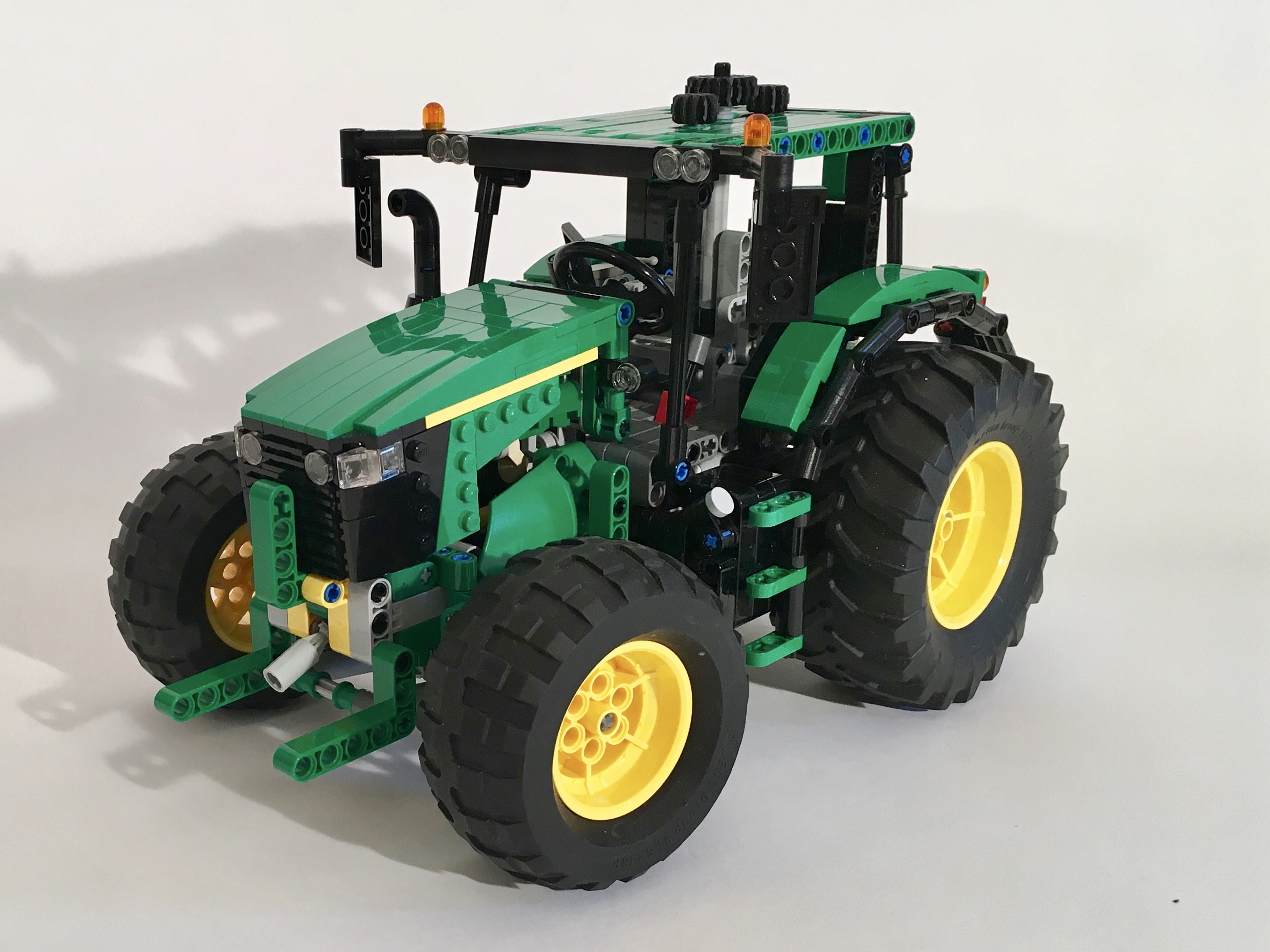
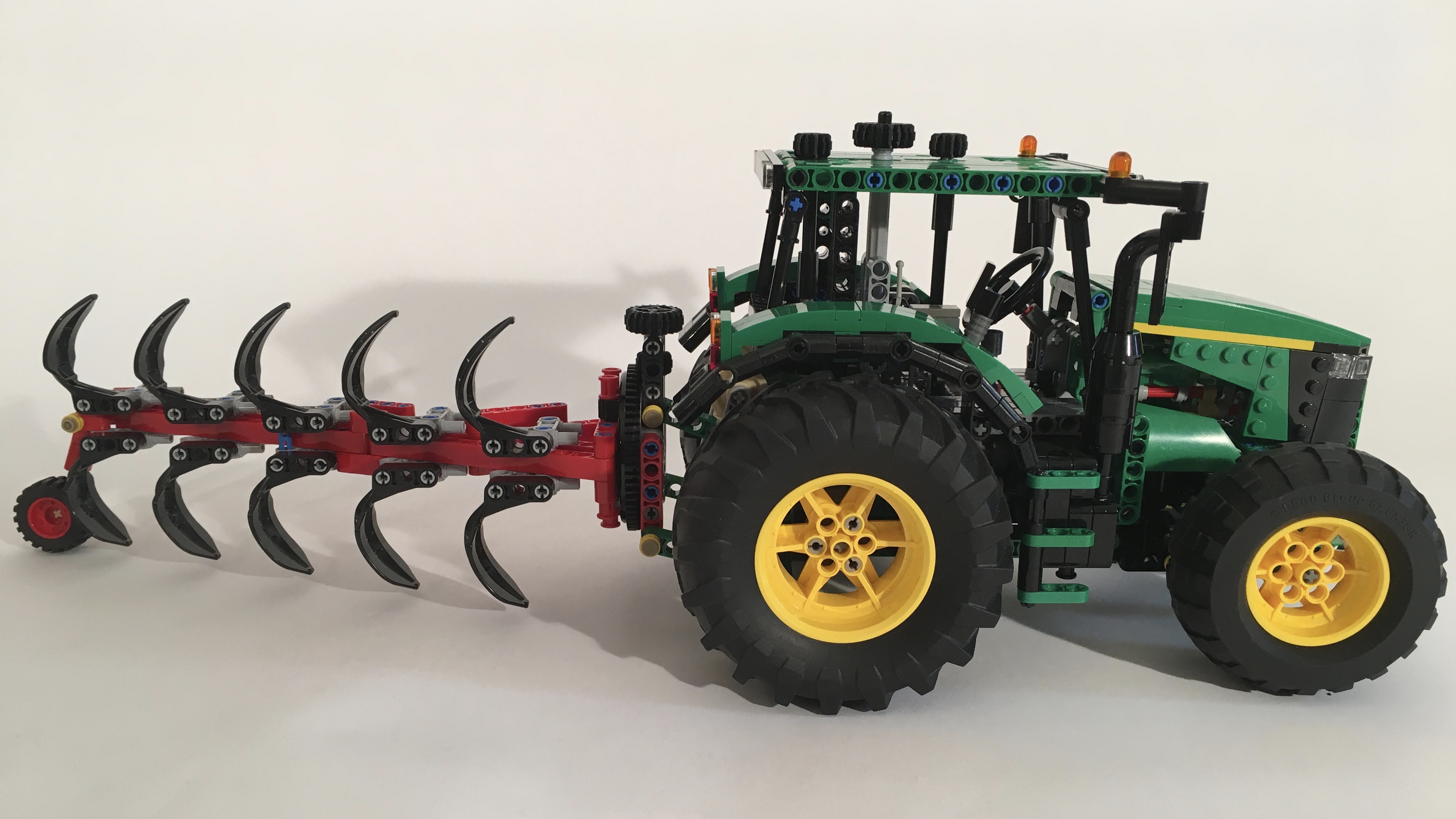
I am into a little bit of a tractor phase lately, so here is a model of the John Deere 6130R row tractor.

The full gallery including instructions may be found here.

fullsizeoutput_1640.jpeg

After the completion of my 9393 MOD, and the Claas Atos, I wanted to expand on what could be done in the tractor theme, and I wanted to use the newish large technic tires that first came from 42054. I set out to set the scale and list some of the features I wanted.  I decided on a John Deere tractor, because green looks sharp in LEGO, and the hubs I would need were available in yellow.

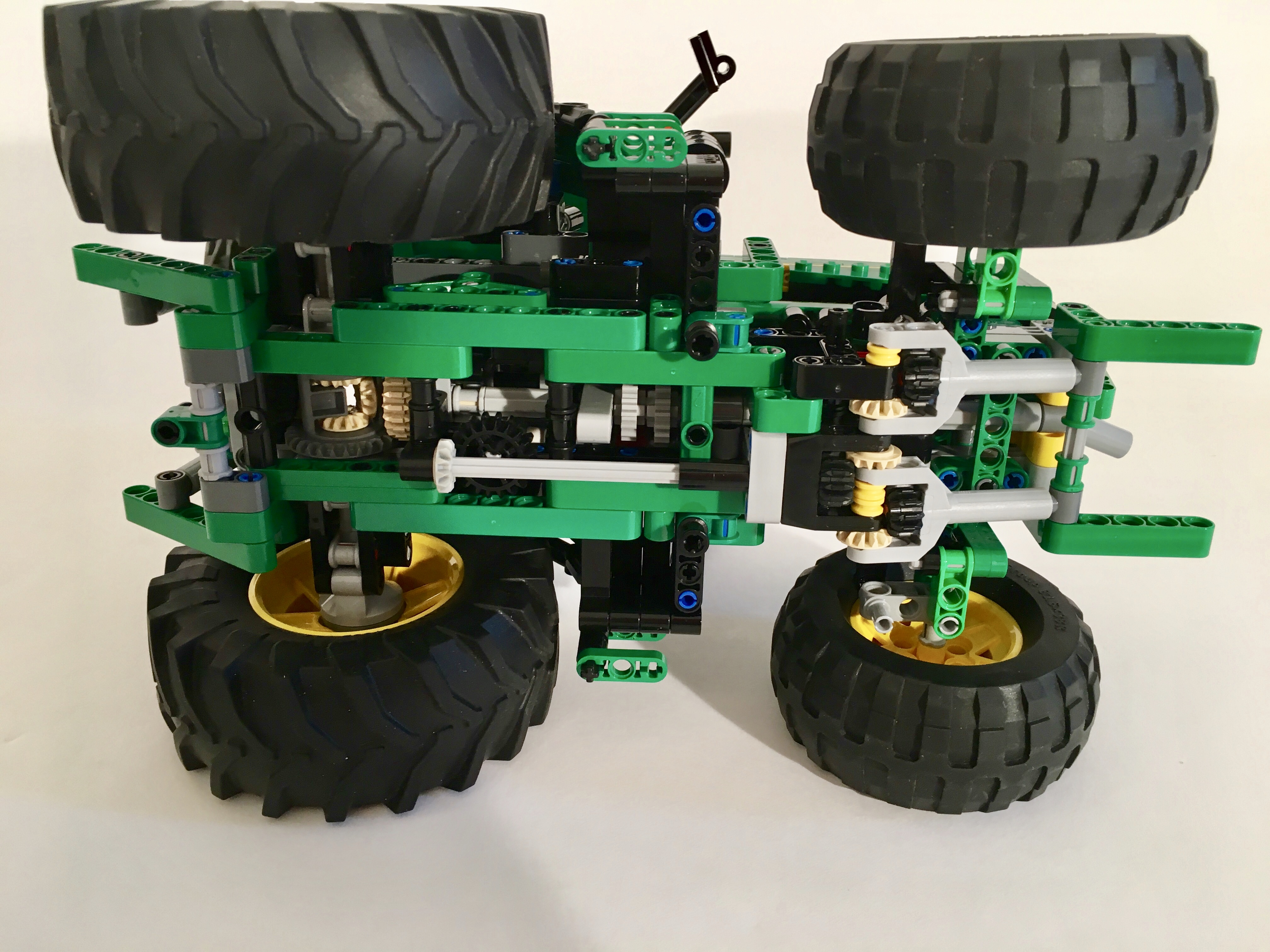
I first started with the driveline which is simply a differential between the rear tires, and a  couple of gears to the I4 engine (green of course). The steering was the second feature added, and runs from the HOG on the roof, goes through one bevel setup to the rack under the from engine.

fullsizeoutput_1649

The tractor also has a front and rear PTO, with dual on/off switches, and front and rear drawbars. These features were a little tricky to add. The PTO on the rear is connected to the driveline on the right by a changeover catch, and routes rearward over the rear axle. The PTO on the from is connected to the driveline on the left, and routes under the steering axle to the front. Both drawbars can be raised and lowered by a HOG on the roof ahead and behind the steering HOG. Both use two mLAs to raise and lower the drawbar, and both can hold enough weight to tip over the tractor.

fullsizeoutput_164d

Working on the body work took some time. After trying a couple of technic options for the front hood, and rear fenders, I settled on an option that uses mostly system bricks. I was pleased how it turned out as it does not subtract from the look of the tractor too much. The hood can open to see the engine.

The tractor worked well, and all the features functioned as they should. I will continue to design implements, and test them out as long as the tractor stays built.

Happy building.

Volvo Ibex


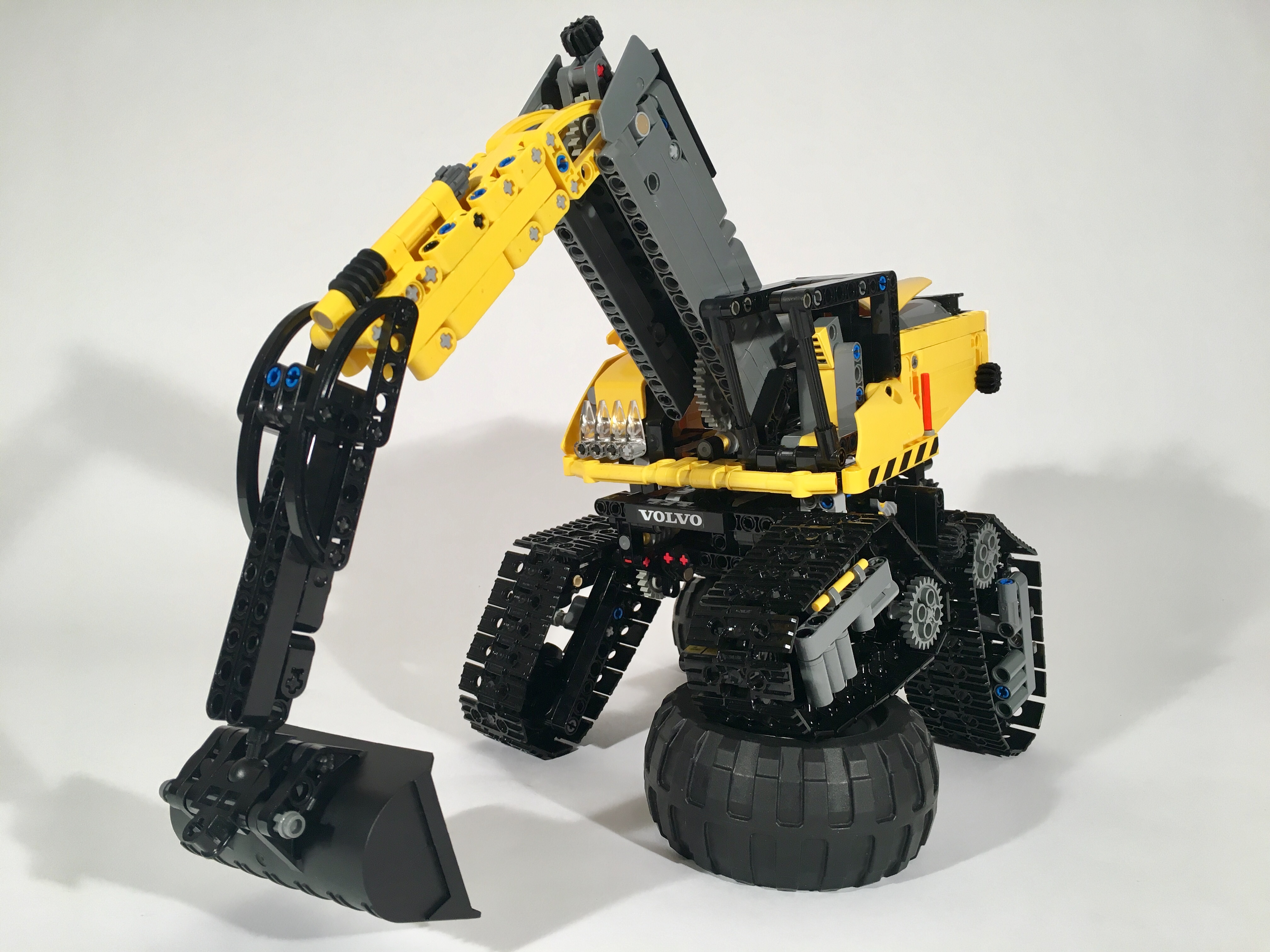
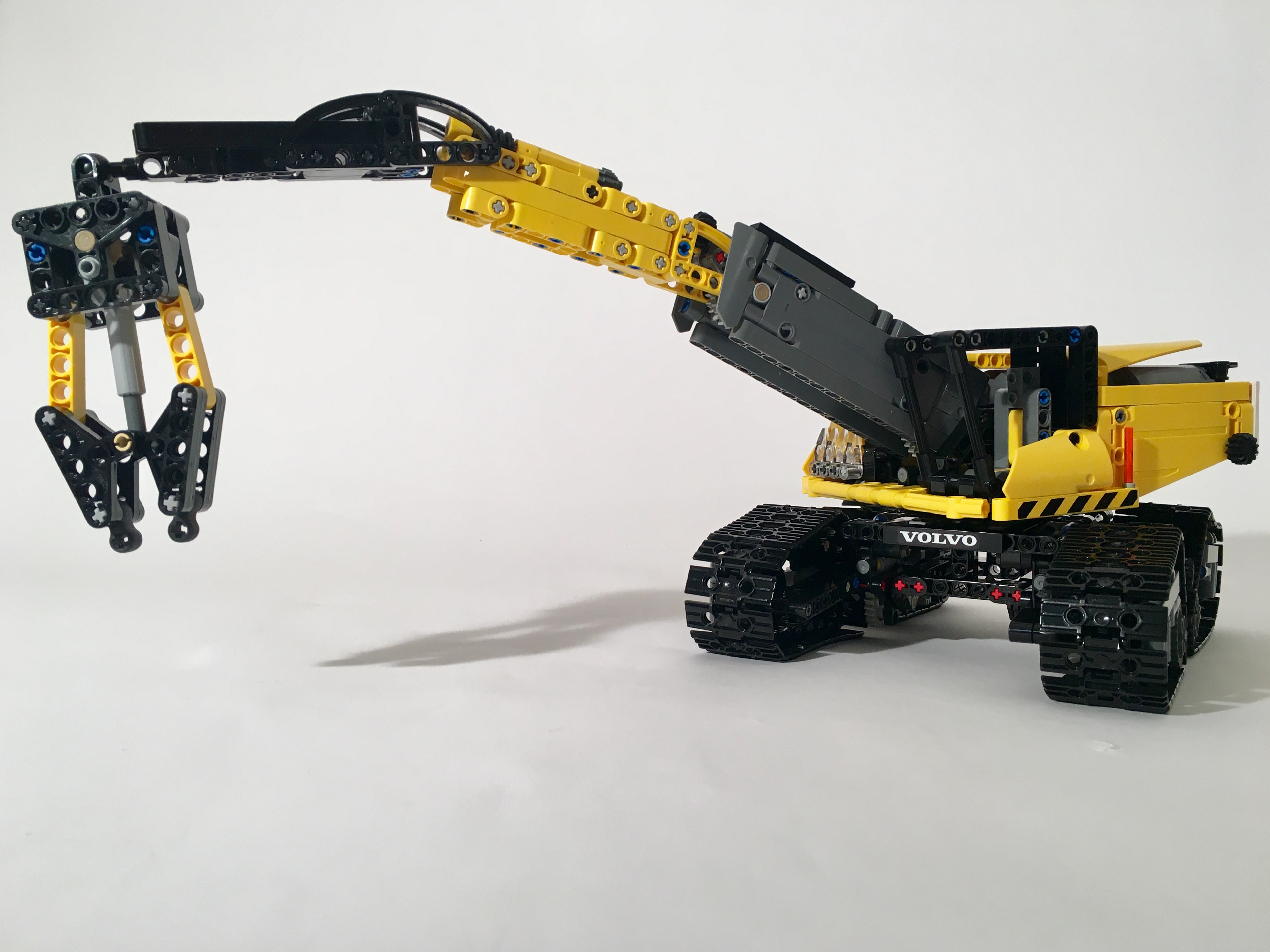
Another contest, another build. LEGO Ideas posted a contest to build your idea of the Volvo construction vehicle of the future using LEGO Technic bricks. This was my entry for the contest, which did not win, but was a design I was happy to complete.

fullsizeoutput_129b

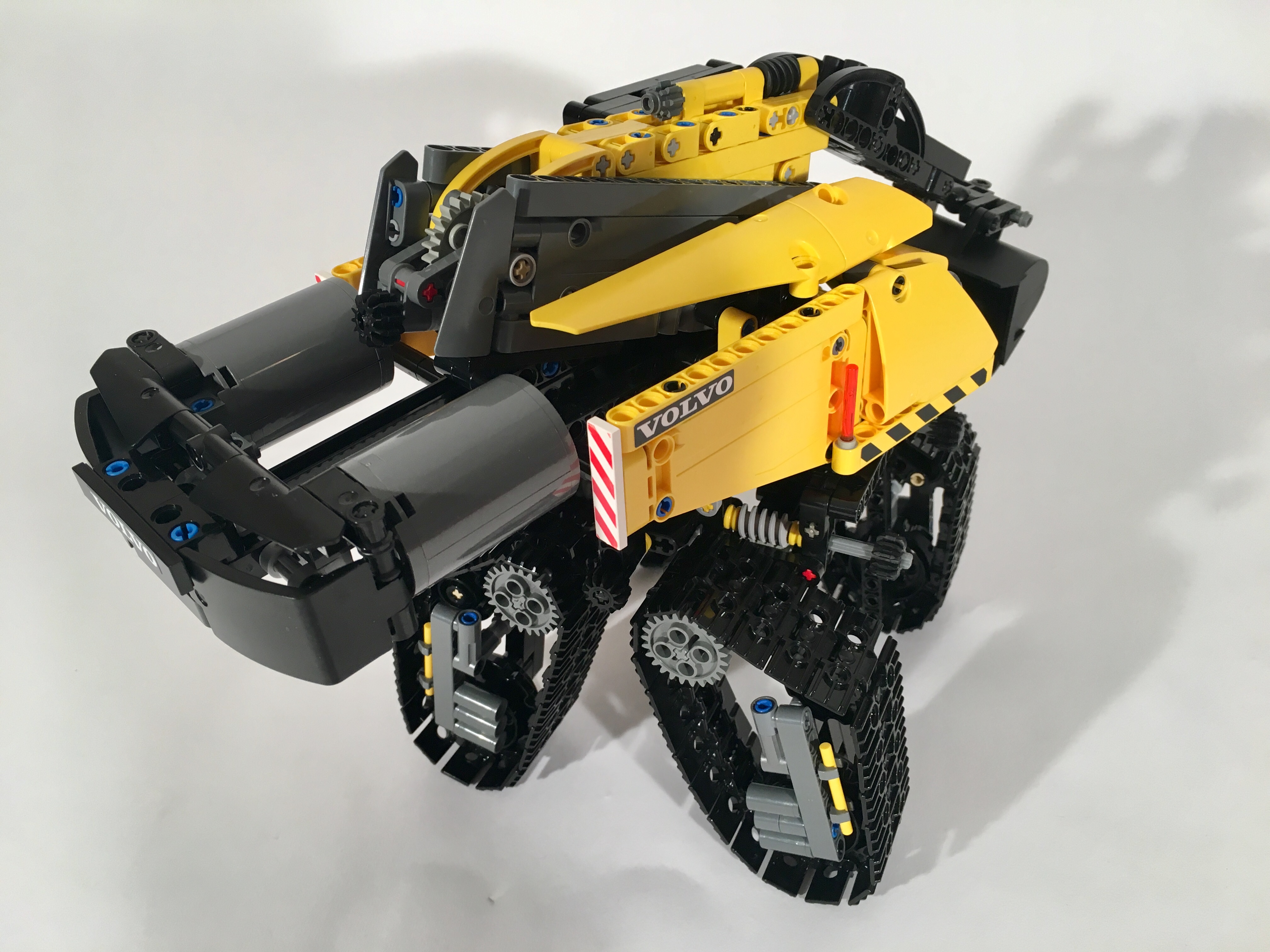
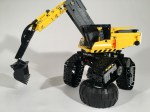
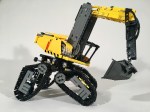
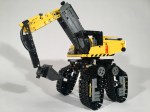
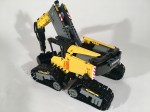
The design was inspired by the Volvo Sfinx and the Hyundai HFex Concept as I was interested in trying the various tracks, and a foldable boom. I started with the track sections, with four idetntical modules. Each are connected to the center turntable with a worm gear assembly for individual track movement. The system is enough to hold the full MOC, but not overly strong.

fullsizeoutput_1290

Next came the superstructure. I created a conventional cab on the left, and added some fuel cells on the back. These cells can slide out the back of the superstructure to be easily replaced. Next came the boom. I wanted a three section boom that would fold, and extend in a variety of directions. Each of the three pivots is operated by a worm gear mechanism. The best manage the length of the boom, the main boom used a worm and 48z gear, the second used a worm and 24z gear, and the final boom used a worm and 8z gear. I added a ball join at the end of the boom to allow for multiple attachments.

fullsizeoutput_128e

The entry did not win the contest, but I was happy with the result. It was creative, and functioned well. I like the way it looked, and was happy with the track setup.

Happy building.