LEGO 42168 Backhoe


I have been bitten by the Alternative Build bug.

Instructions may be found at Rebrickable.com.

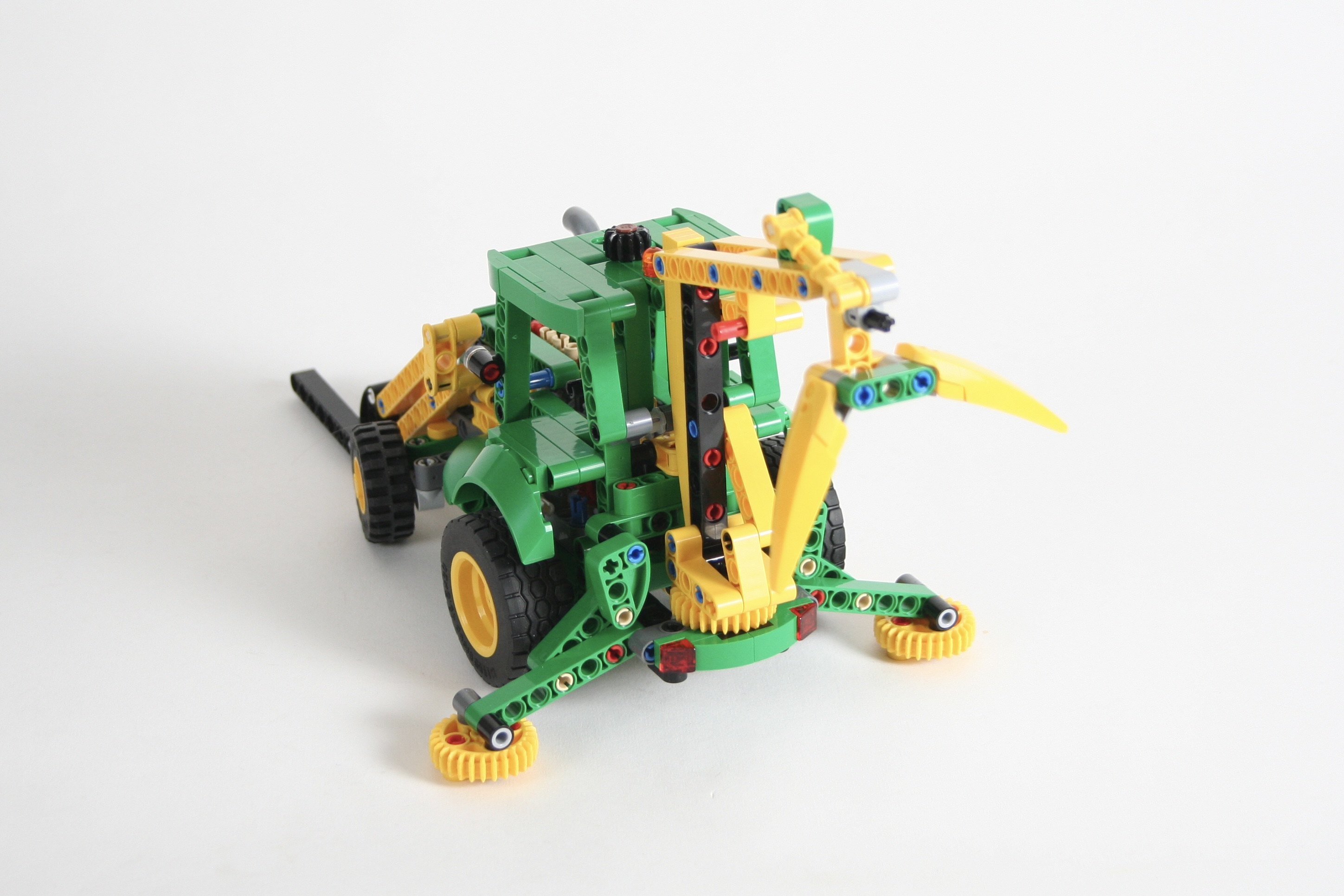
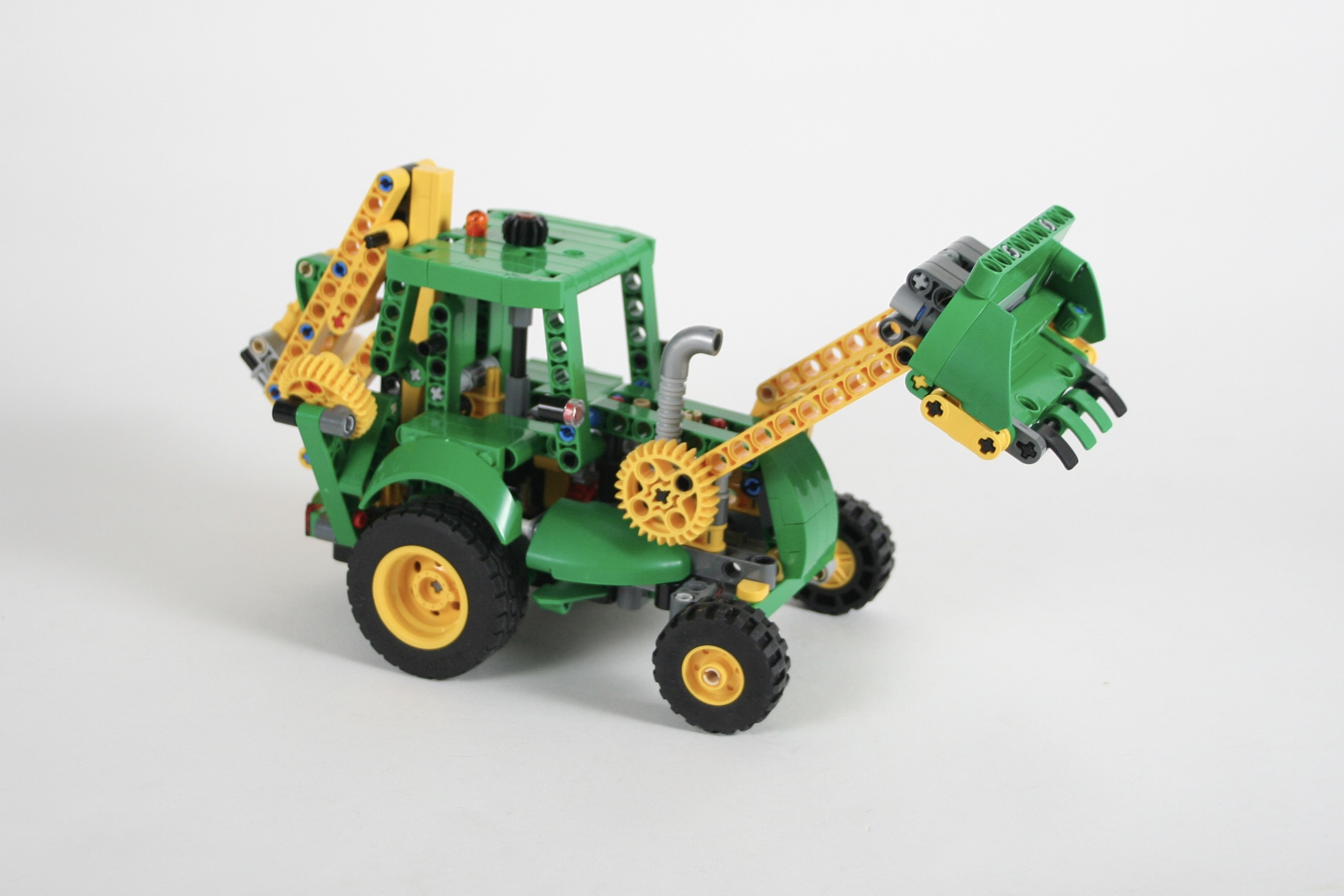
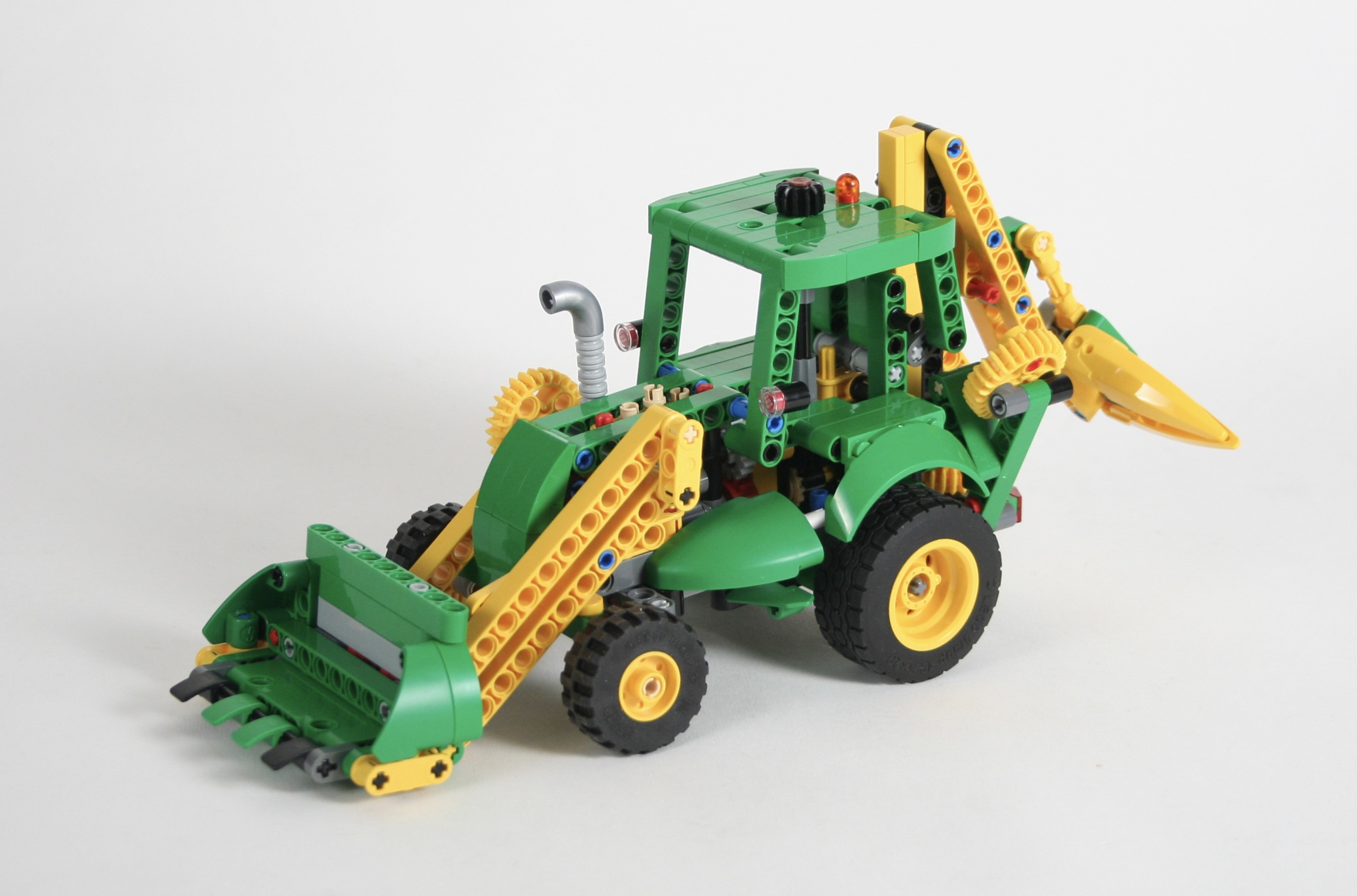
A couple of years ago I decided that it was time to learn how to make an alternative build. I recognize how more people are looking for ideas to turn a set they have purchased into another build. Well, since I enjoy building other design, I am happy to share these with other people. Plus I like the challenge an alternative build poses: a limited amount of parts to make a MOC. LEGO set 42168 is a cute little tractor with some fun features, but what I really like about it is the green. It is a small, accessible set, and has some fun parts, that can be used to build something else.
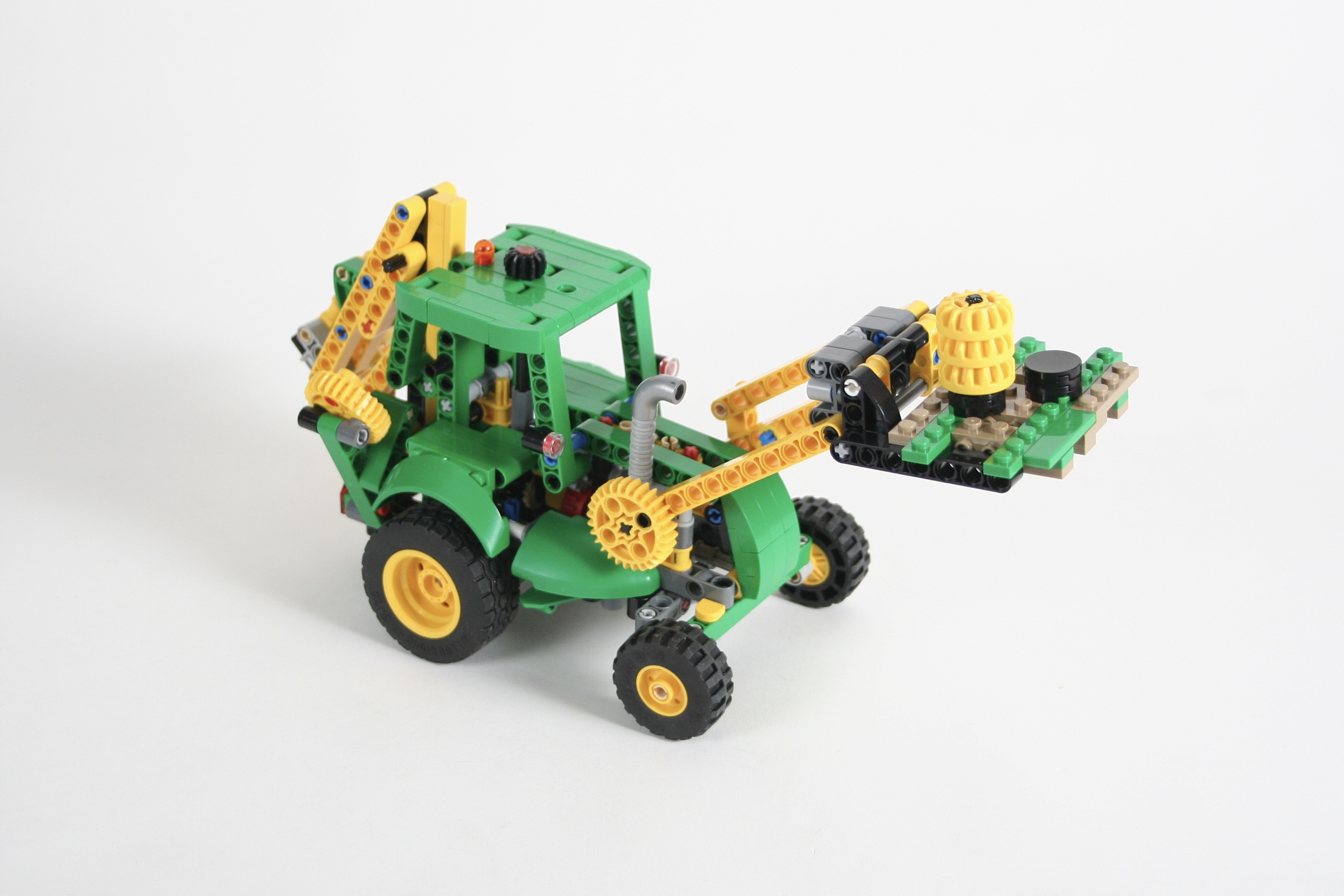
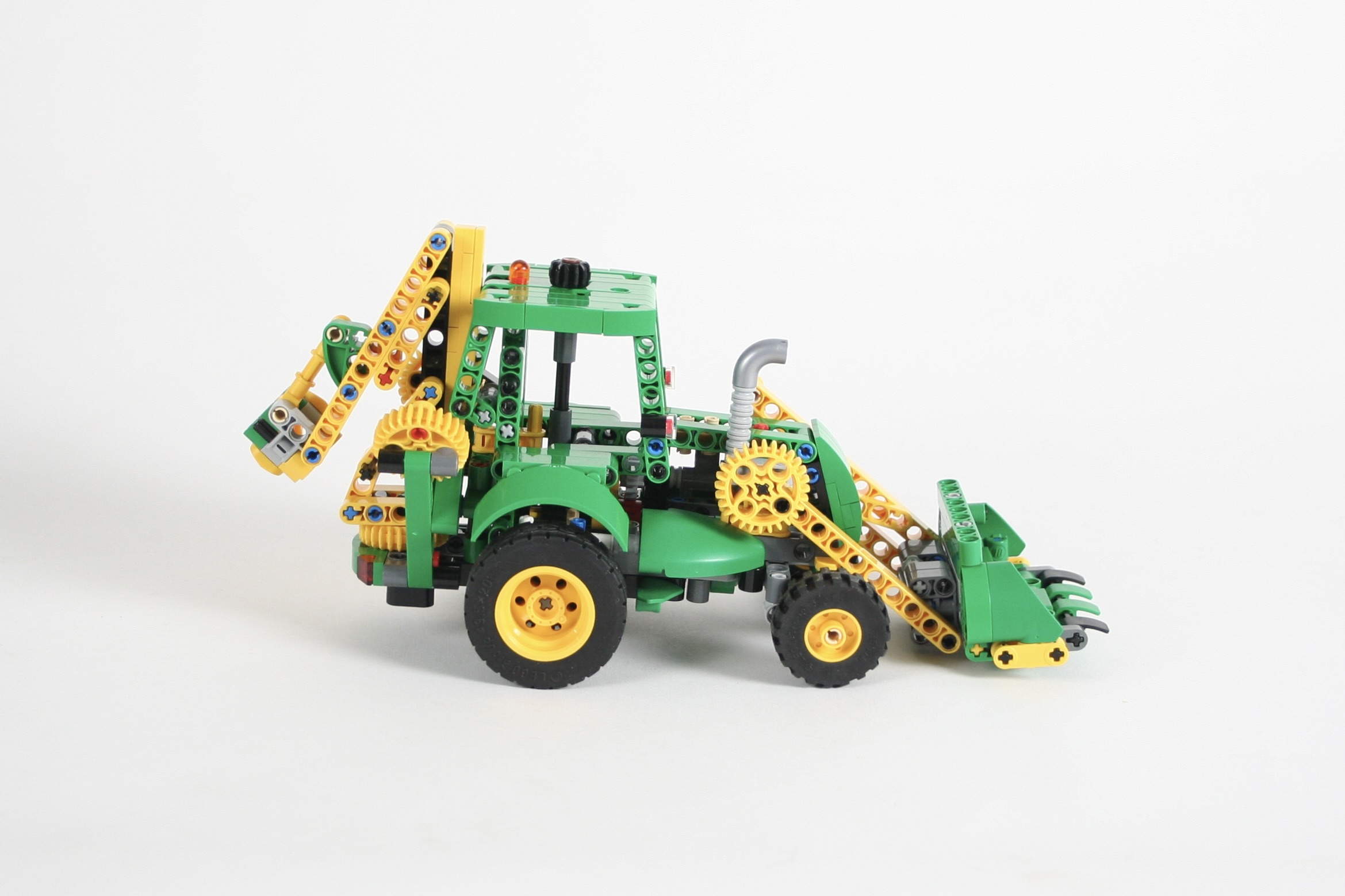
Since the set comes with two different size wheels, I decided a little backhoe would be a good idea. Plus, with the amount of yellow parts, I could use them on the rear arm and front loader. As I do with all of my builds, I started with draft including all the functions I wanted the final build to have. Quickly I had a draft with working steering and a little fake I3 engine. The I worked on how the front loader would work, and the rear arm mechanism.

As I worked on the rear arm, I was not pleased with any of the bucket designs I came up with, so I instead designed a couple of attachments that fit the tractor a little better. A little drill and a claw are included in the build. The rear arm moves in a number of ways, and the tractor also has two stabilizing arms to keep the tractor from tipping over. I used a similar approach for the front loader as well. A bucket option is included, but I find the design a little clunky looking. It includes a set of forks as well which I like a little better. A little pallet to load is included. Both the lift and tilt are manually operated, and the lift includes a lockout level so the arm may hold up a heavy load.

I like to think I am getting better at alternative builds, but I do not think this is my best one. I find the design a little rough, even though the functions work well. I hope that some other builders find some enjoyment in this design, and I’ll keep working on more ideas to make available in the future.

Until then, happy building.
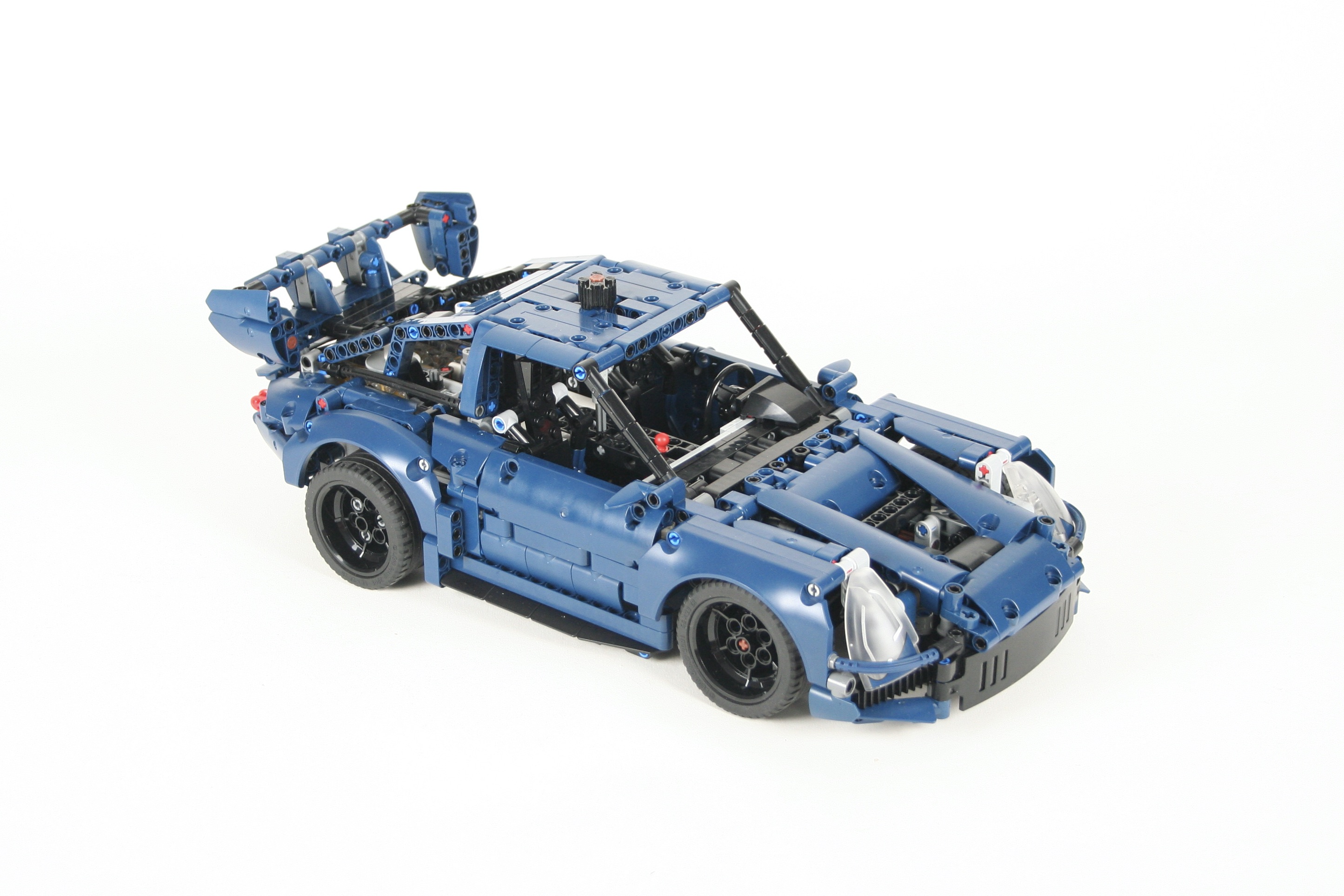
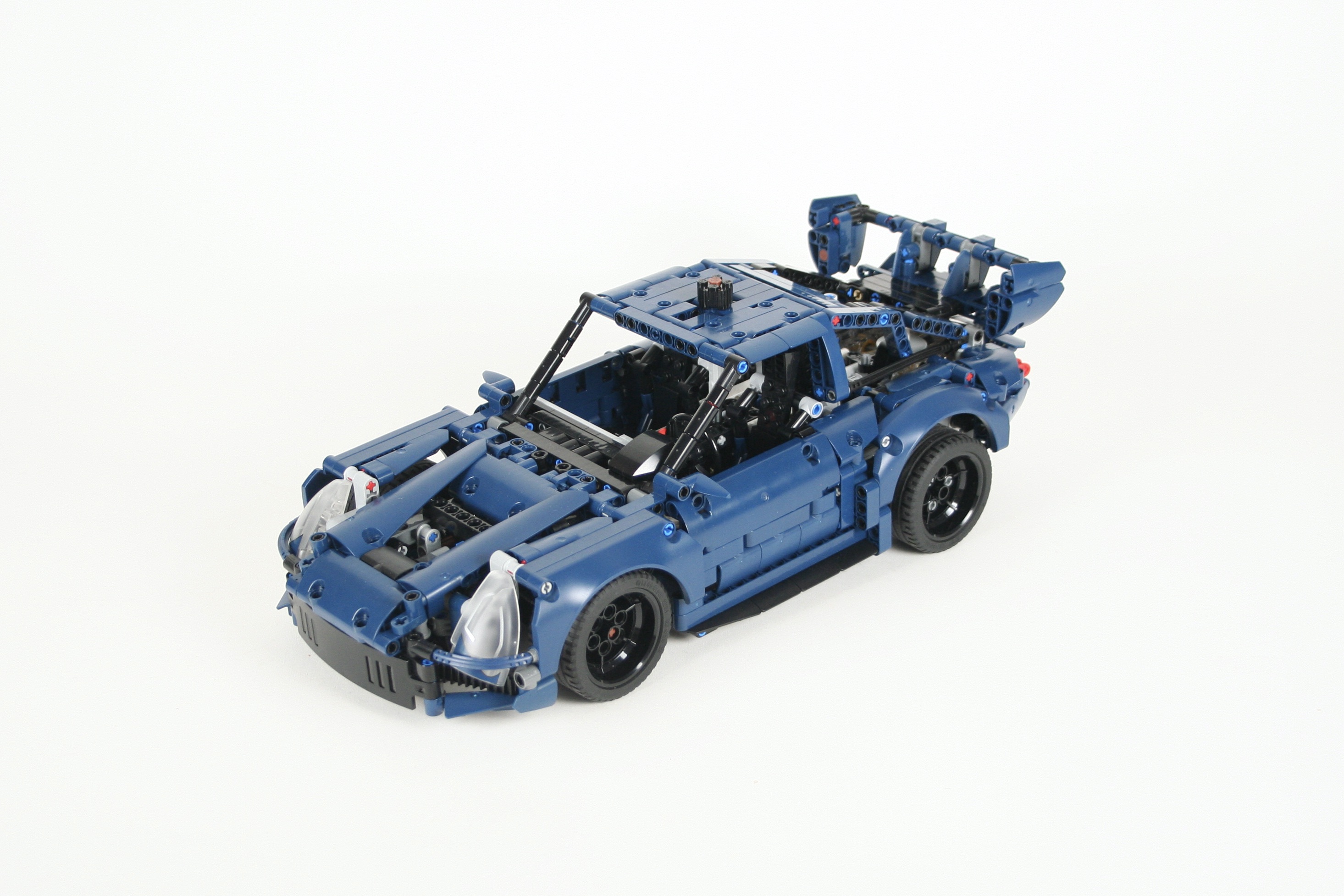
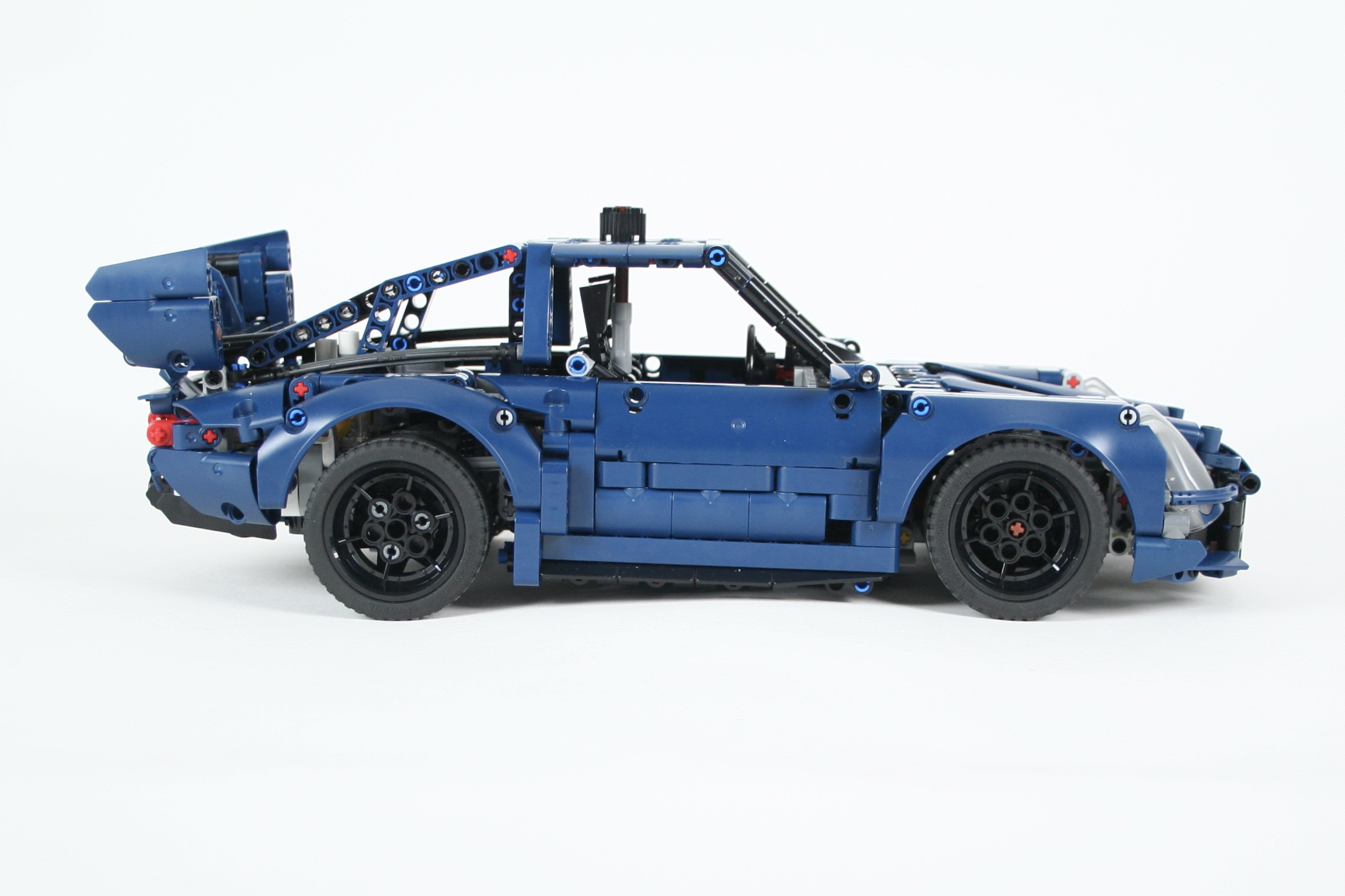
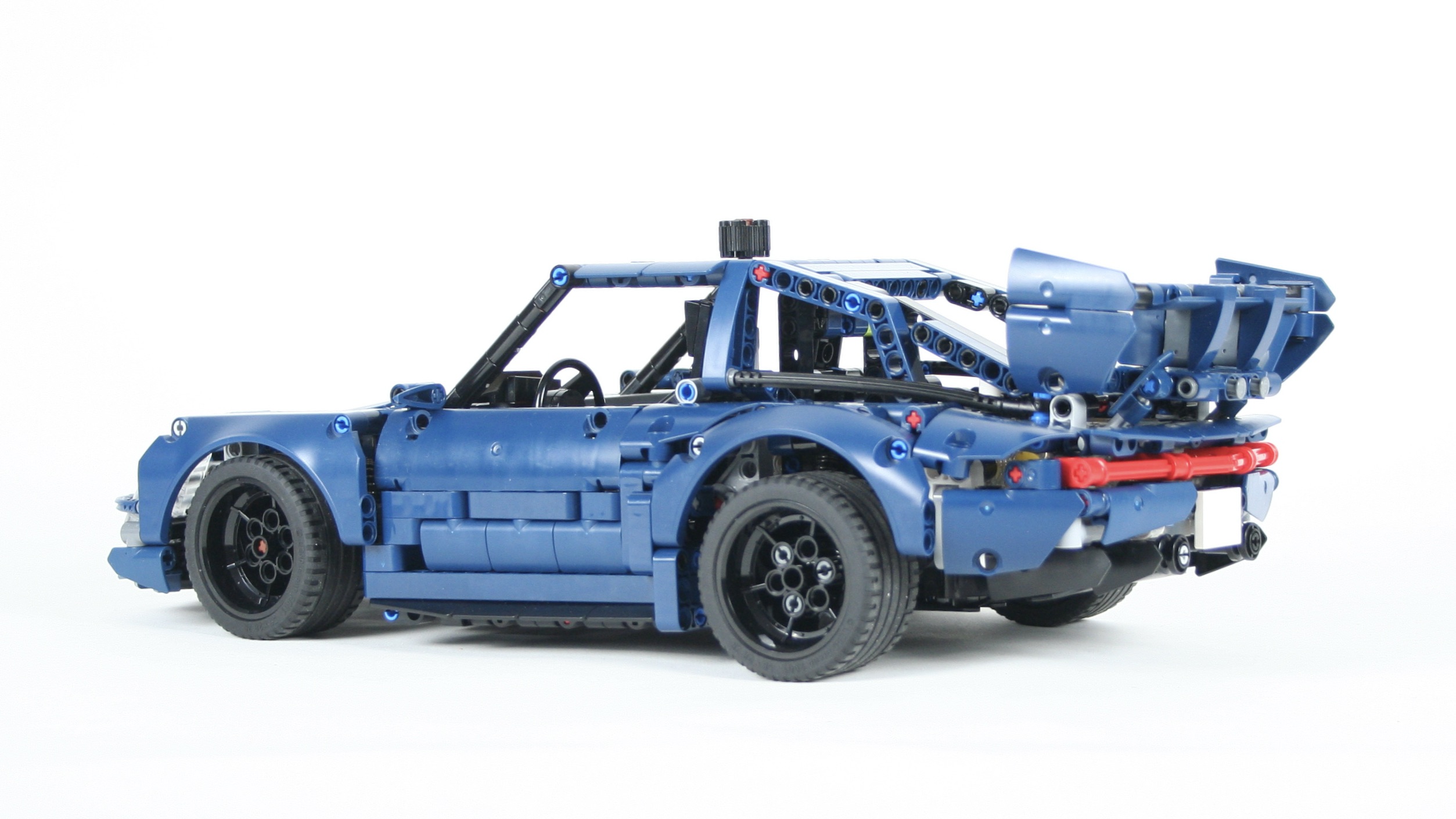
42154 Porsche 911


Like so many other builders, I have found joy in building alternative models.

You may find instruction at Rebrickable.com.

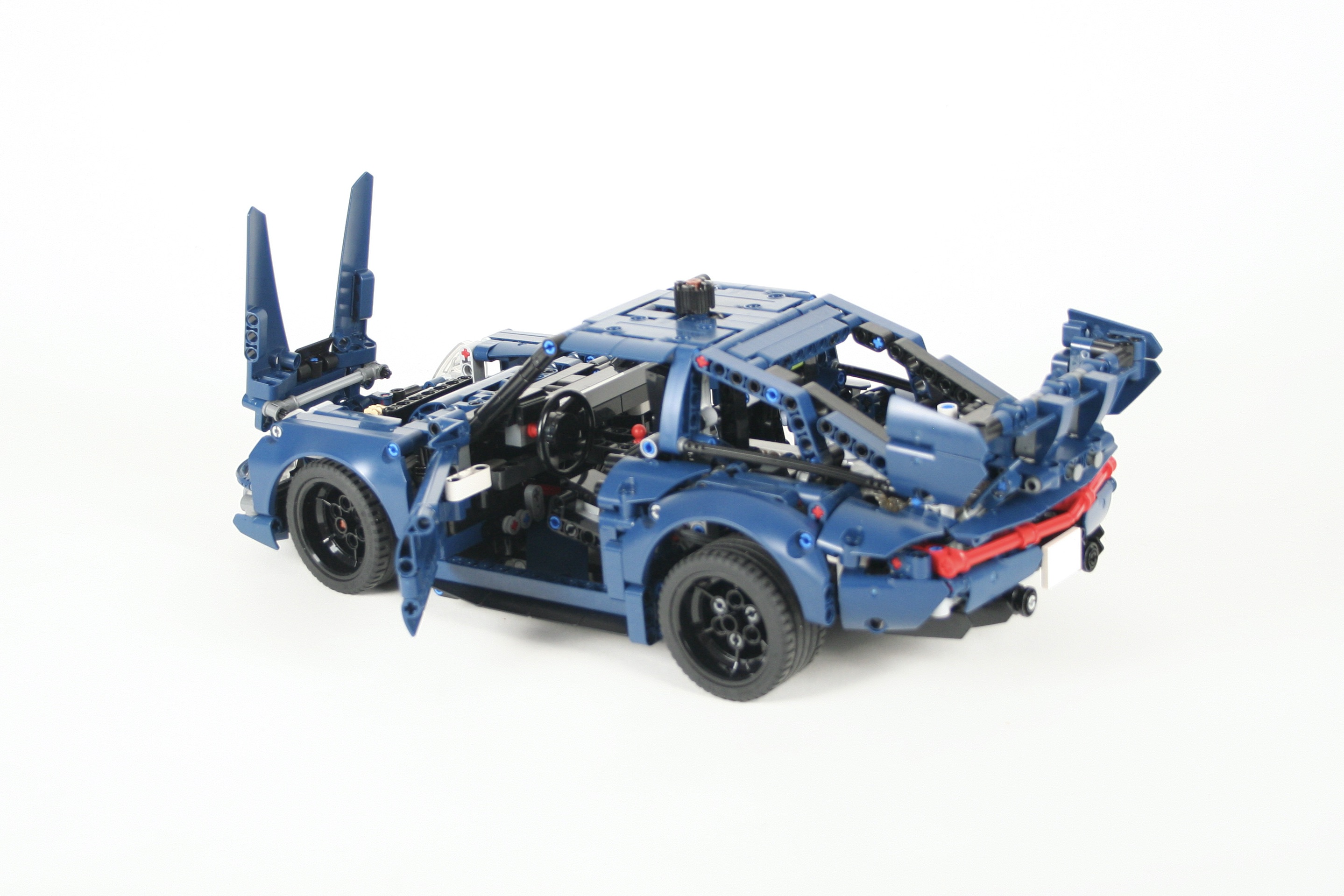
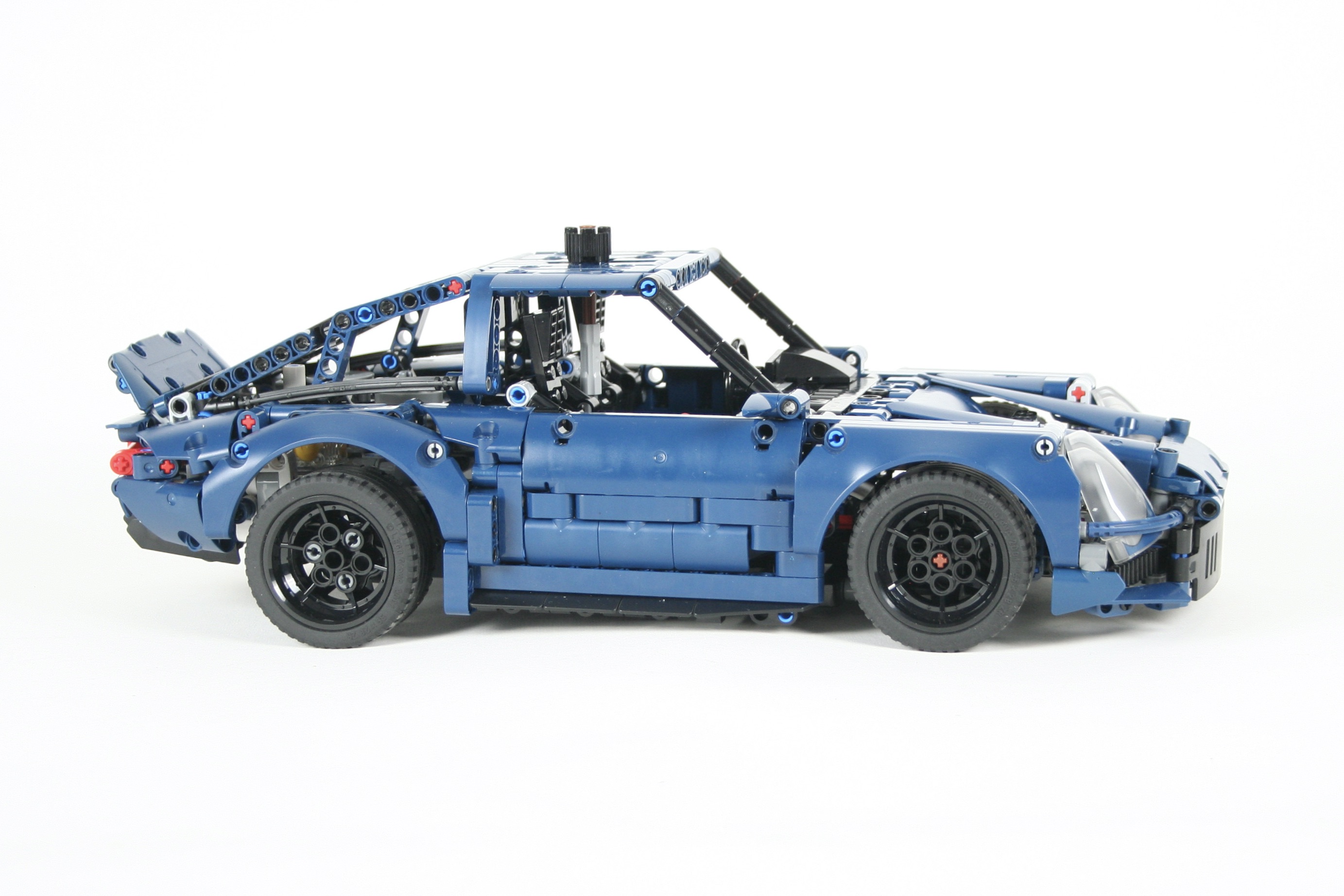
The alternative build is becoming a popular theme in the current LEGO culture, and LEGO Technic is no different. Many people buy a set or two, and look for ideas what to make with the sets they have purchased. Rebrickable has made this even easier. Certainly I would like to share some of my creativity with them, but I also like the challenge of trying to design a creation with a limited amount of parts. I have built a couple of alternative builds now, so I wanted to try something a little bigger. LEGO set 42154 is a good size, has a lot of fun parts, and has a beautiful dark blue color. I love any Porsche, so I stared with a 911.

When I do an alternative build, I start with the big parts first: namely where do the panels go. For 42154 this meant I started with the fenders, the door panels, and the transparent panels. After a quick draft, I knew I would be able to get the general shape of the 911 right.

Then I worked on the interior. The car would keep a four wheel independent suspension setup with steering at the front. A flat 6 engine was mounted at the rear with drive connected through a differential between the rear wheels. I was able to keep the HOG steering link on top of the roof. Two seats are include, but no jump seats.

It took some time working on all the remaining parts. 42154 does not have many liftarms, so I had to design and redesign what parts are used where a couple of times. At the end, I had a lot of parts leftover, so I was able to make two rear end designs: a rear wing, and a little duckbill spoiler (my favorite 911 look). Both are easily interchangeable.

I was pleased to have finished another alternative build. They are hard for me to complete, but a good exercise in working with constraints. I like the way this one turned out, as I like the stance and the proportions of the design. The size is right for my desk, and the dark blue looks great in LEGO. Plus any 911 is a good 911 in my mind.

Until next time, happy building.
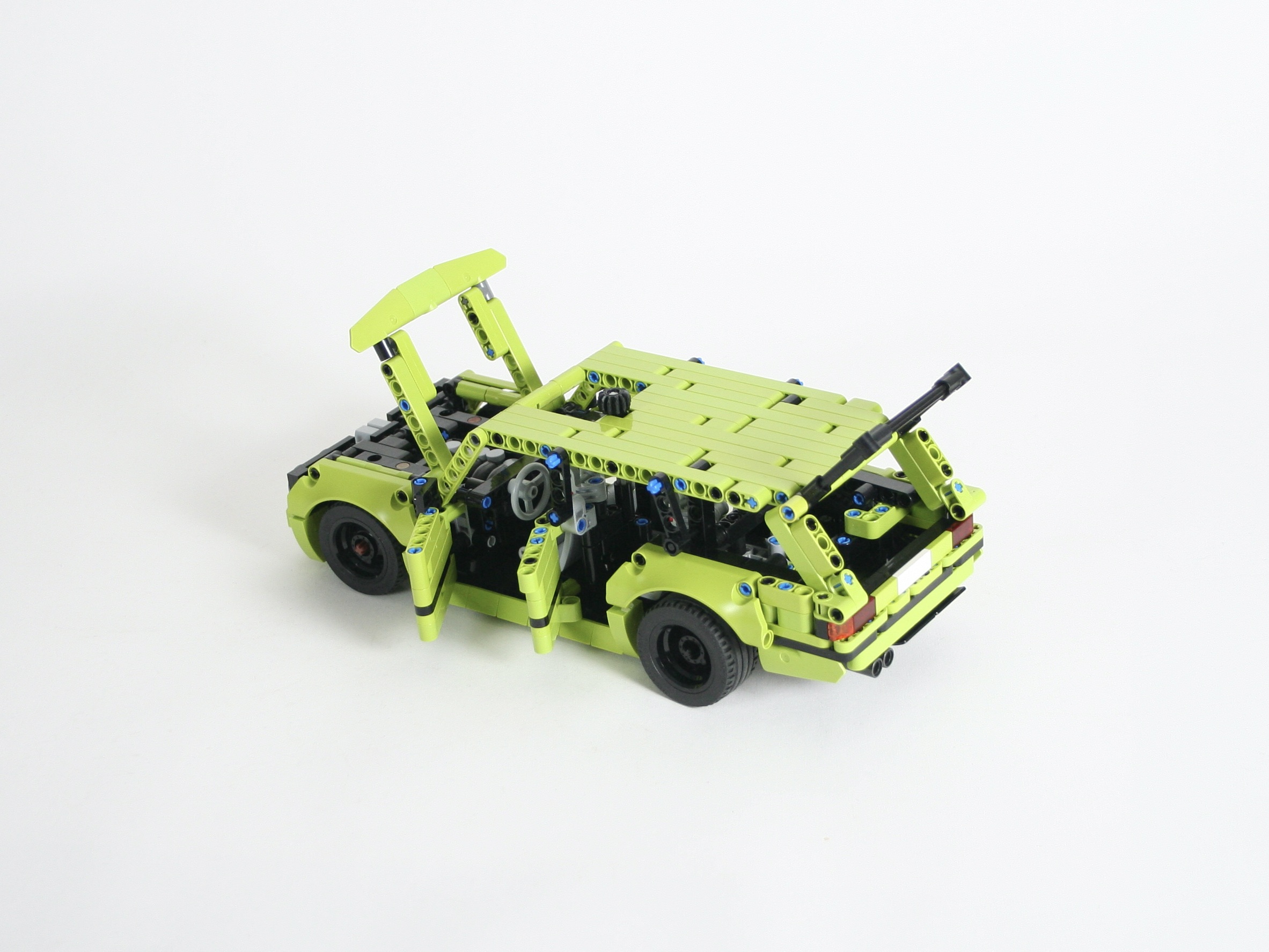
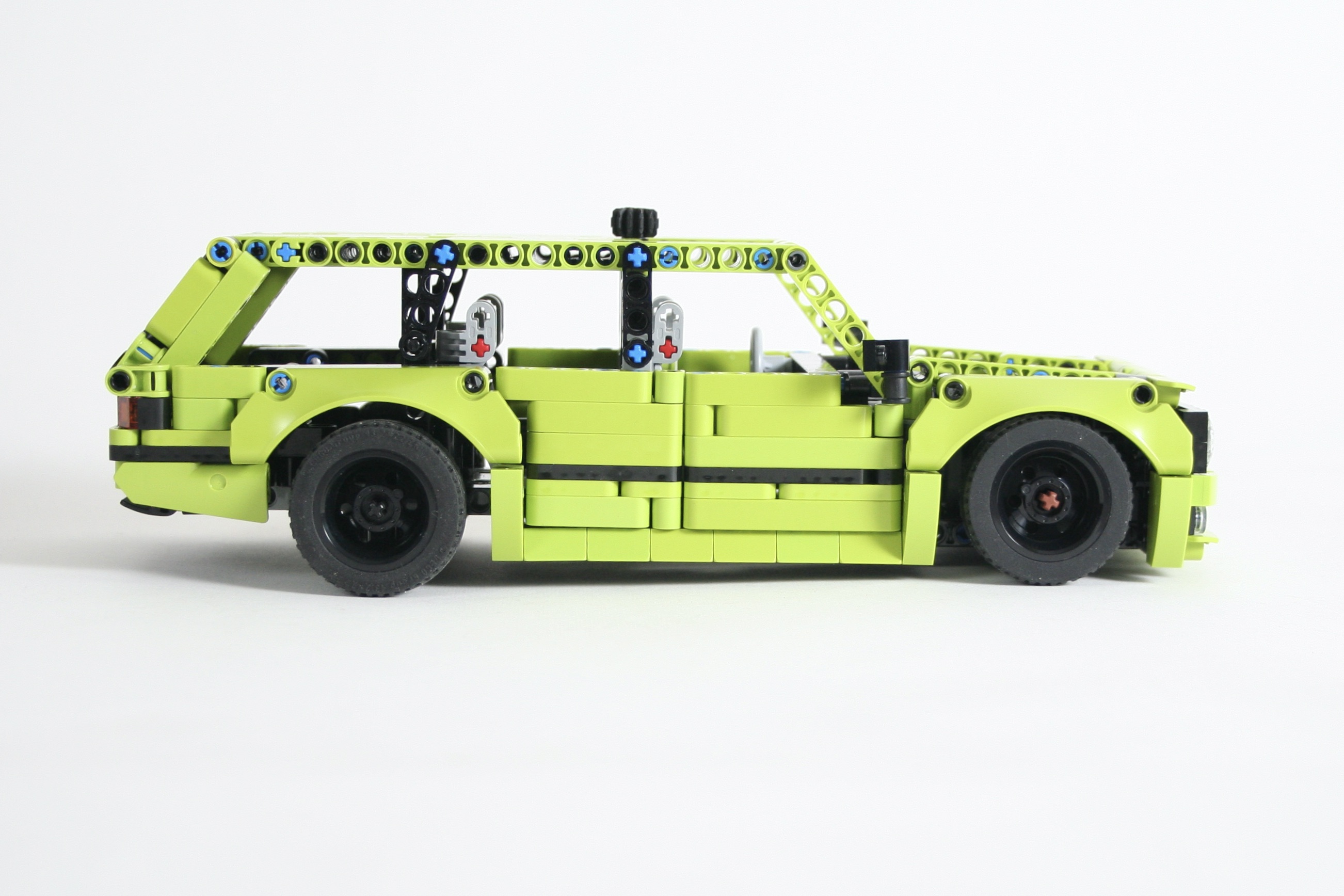
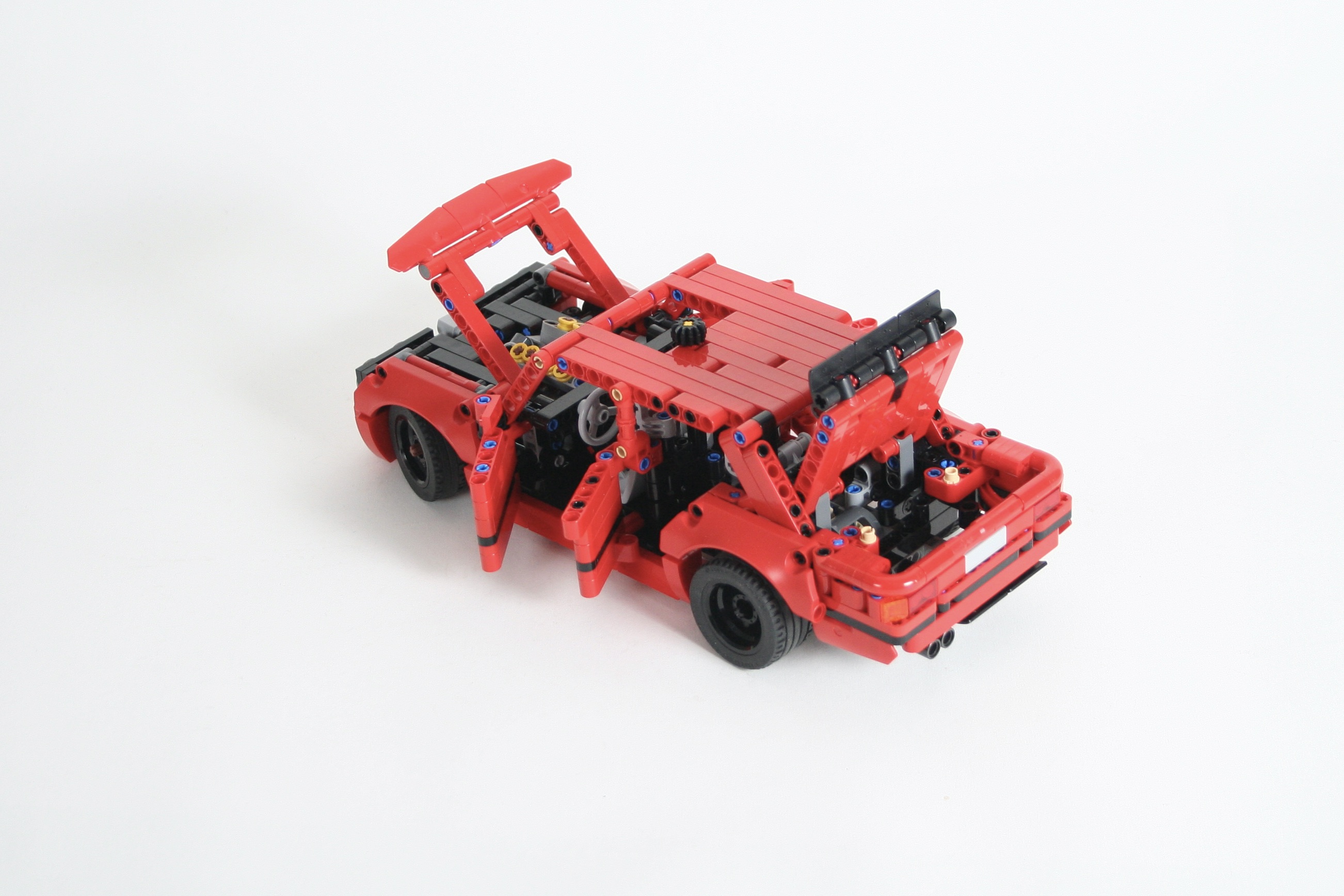
BMW E30


Who doesn’t like a BWM sedan?

Instructions are available for free at Rebrickable.com.

I go through stages of inspiration like so many other builders, and sometimes when I idea is working, you just need to follow where it leads. I had the idea to do a little 15 module wide sedan, and after a simple little draft looked like a boxy, old sedan, I decided to embrace that direction. From there I determined, with a little bit of effort, I could turn this little sedan into a trio of MOCs.

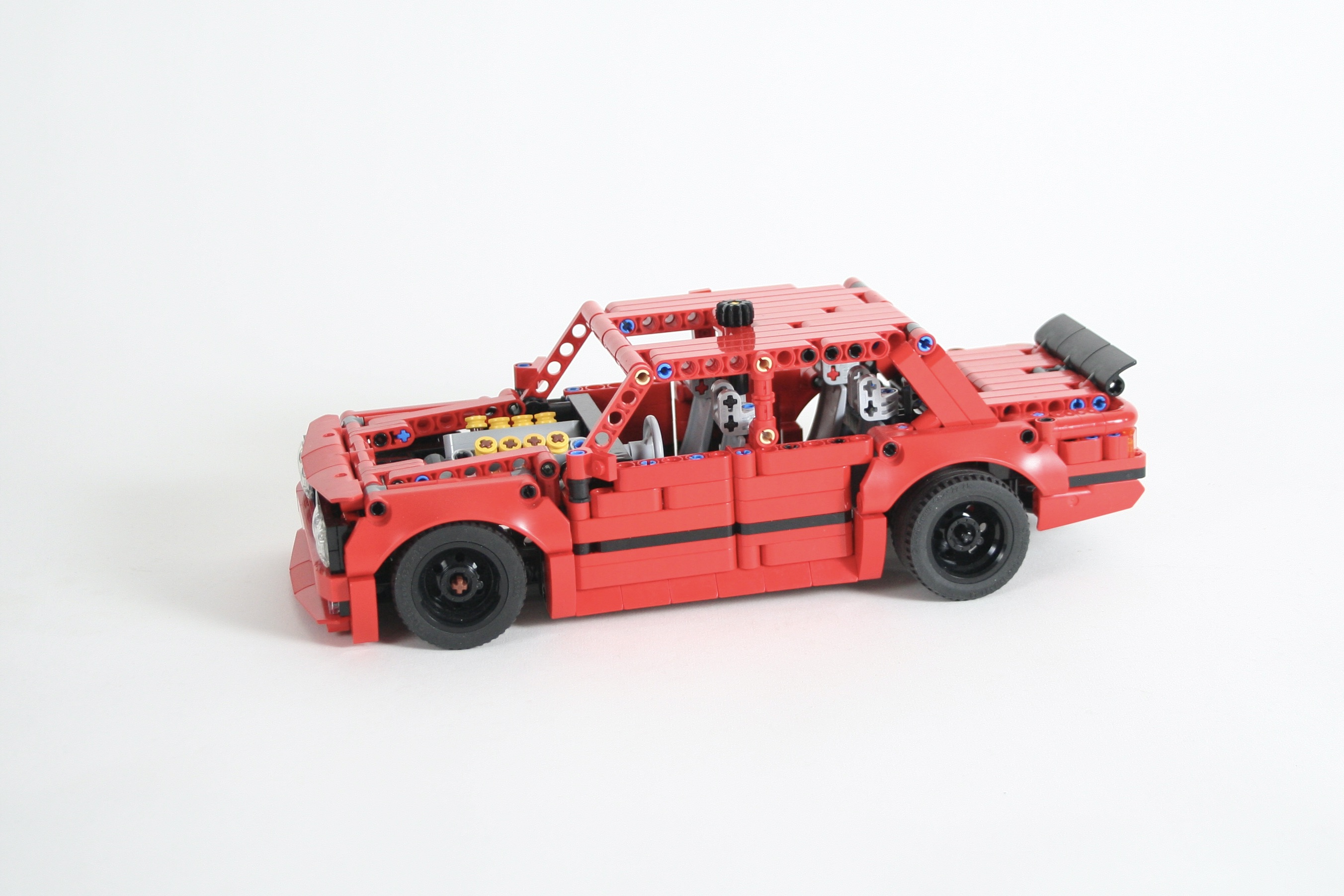
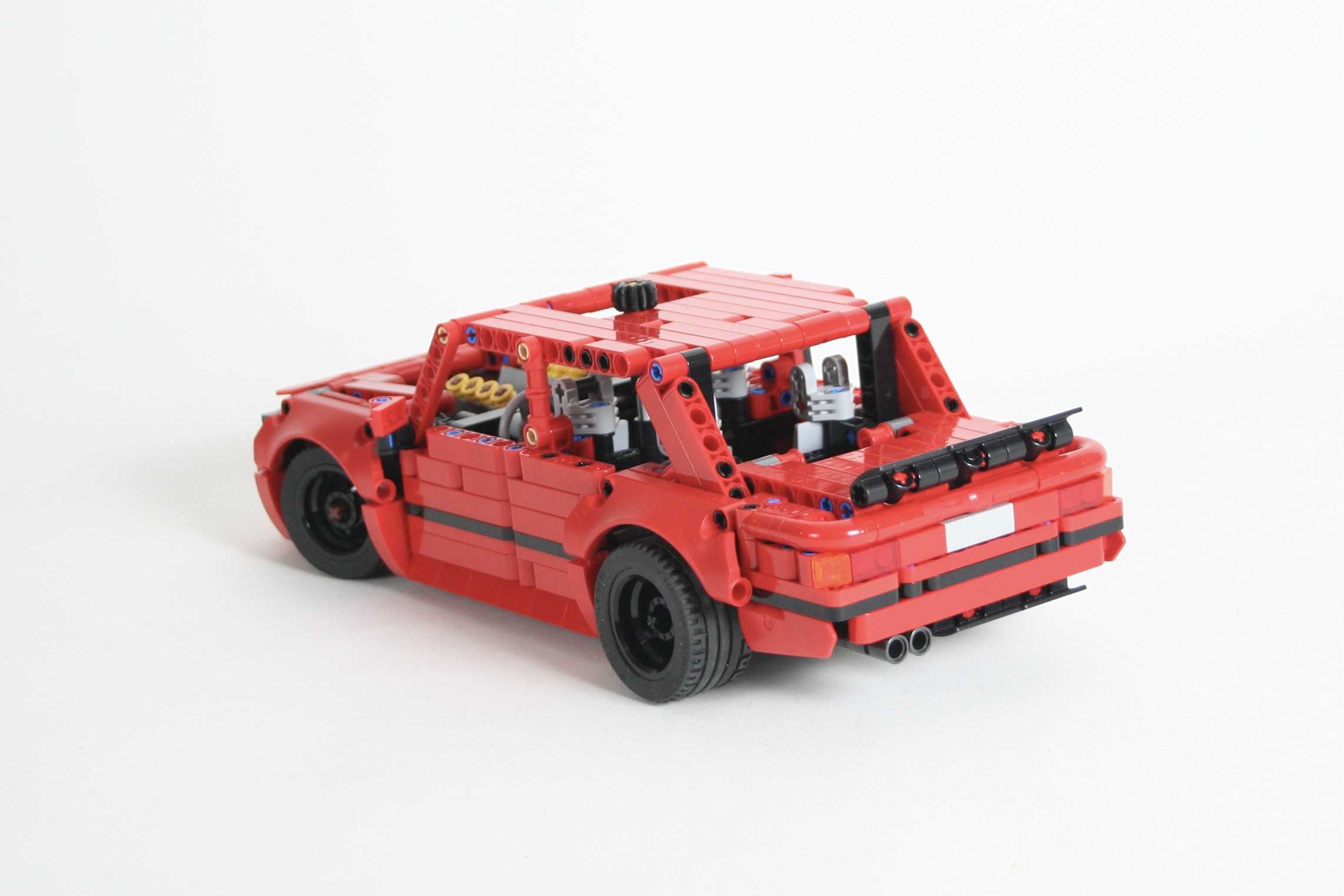
Like many a car enthusiast, I have a soft spot for BMW sports sedans of the past. The E30 translates to LEGO well as that generation 3 Series is a little bit boxy, and has some great fender flairs. I started with a sedan in Red, and the project expanded quickly. As suggested by LEGO set 42138 Shelbey GT500 Mustang, I was convinced that every 15 wide car going forward should have a half stud front axle drop to give the car a little forward leaning stance. I was able to develop a steering system that would work well for this, which would also give space for an engine. I used the standard axle based V-8 for the sedan, and gave it a spoiler that was just a little too big.

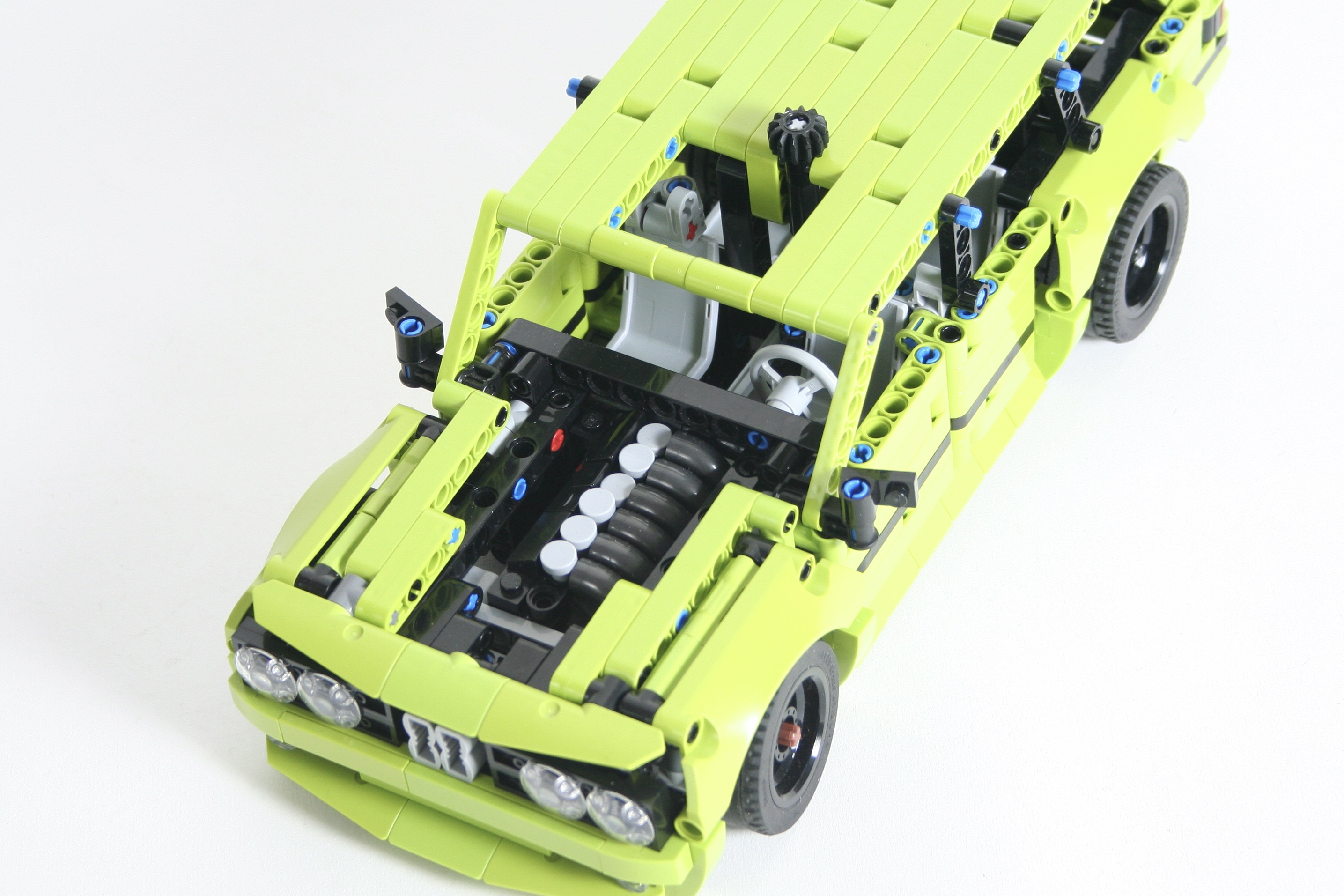
I loved the car so much, I couldn’t stop! I started making a lime version, and then I saw a Touring in my neighborhood, and decided this version would be a wagon. In lime! Then with a little more tinkering, I was able to change the V-8 for a Straight 6, like all perfect cars have. (Don’t tell your friends, but only 5 of the 6 pistons move) The chassis of the sedan and the wagon are the same.

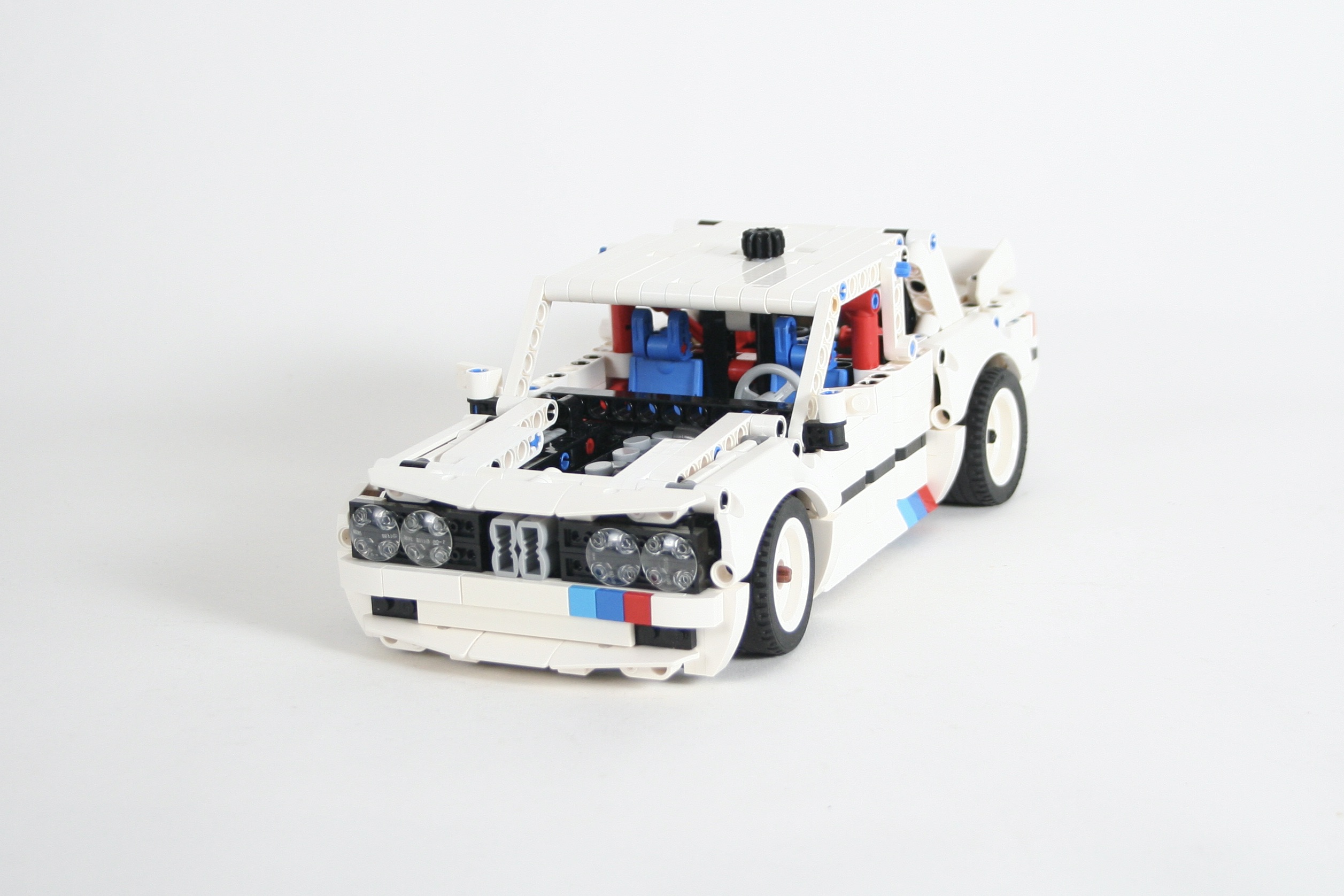
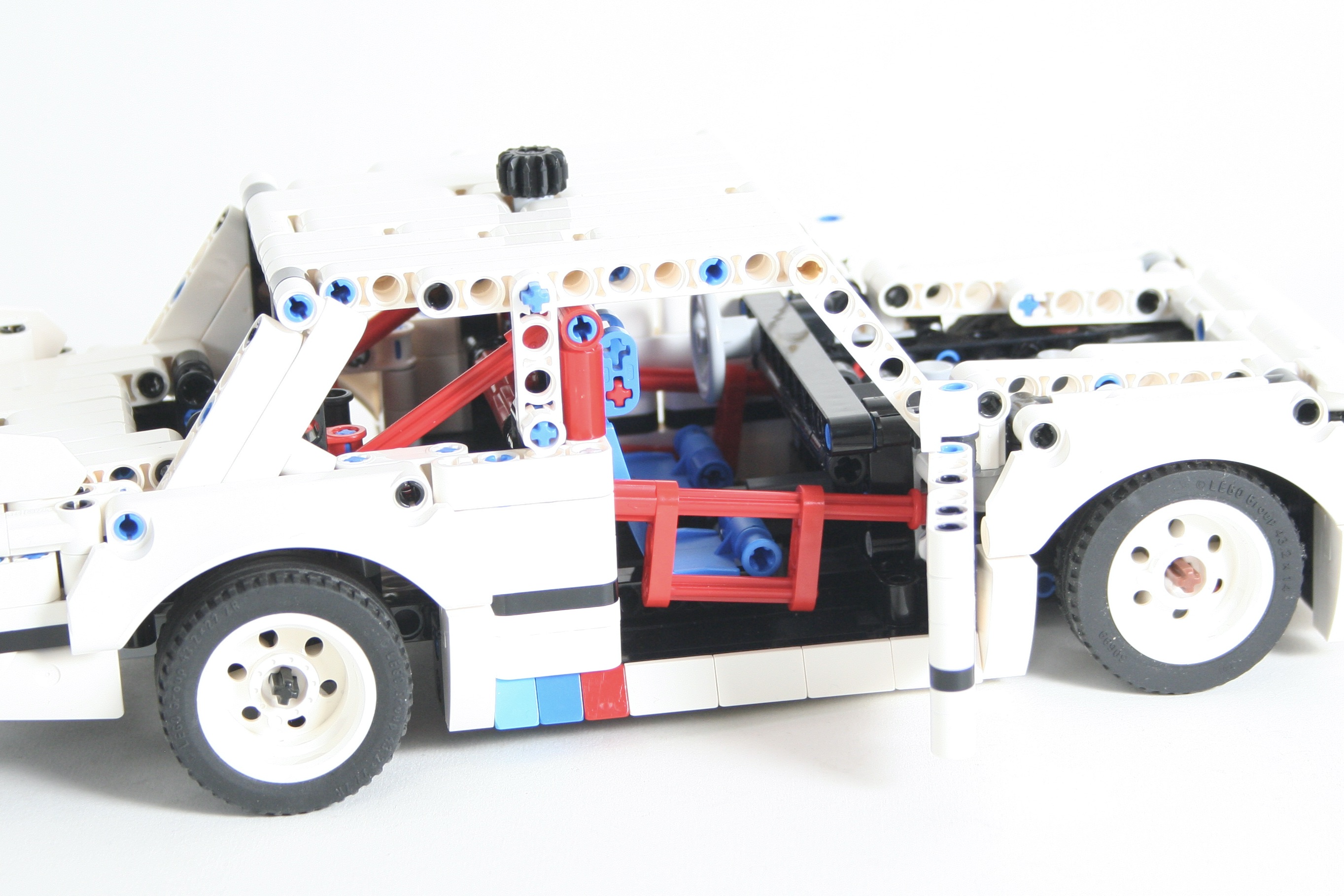
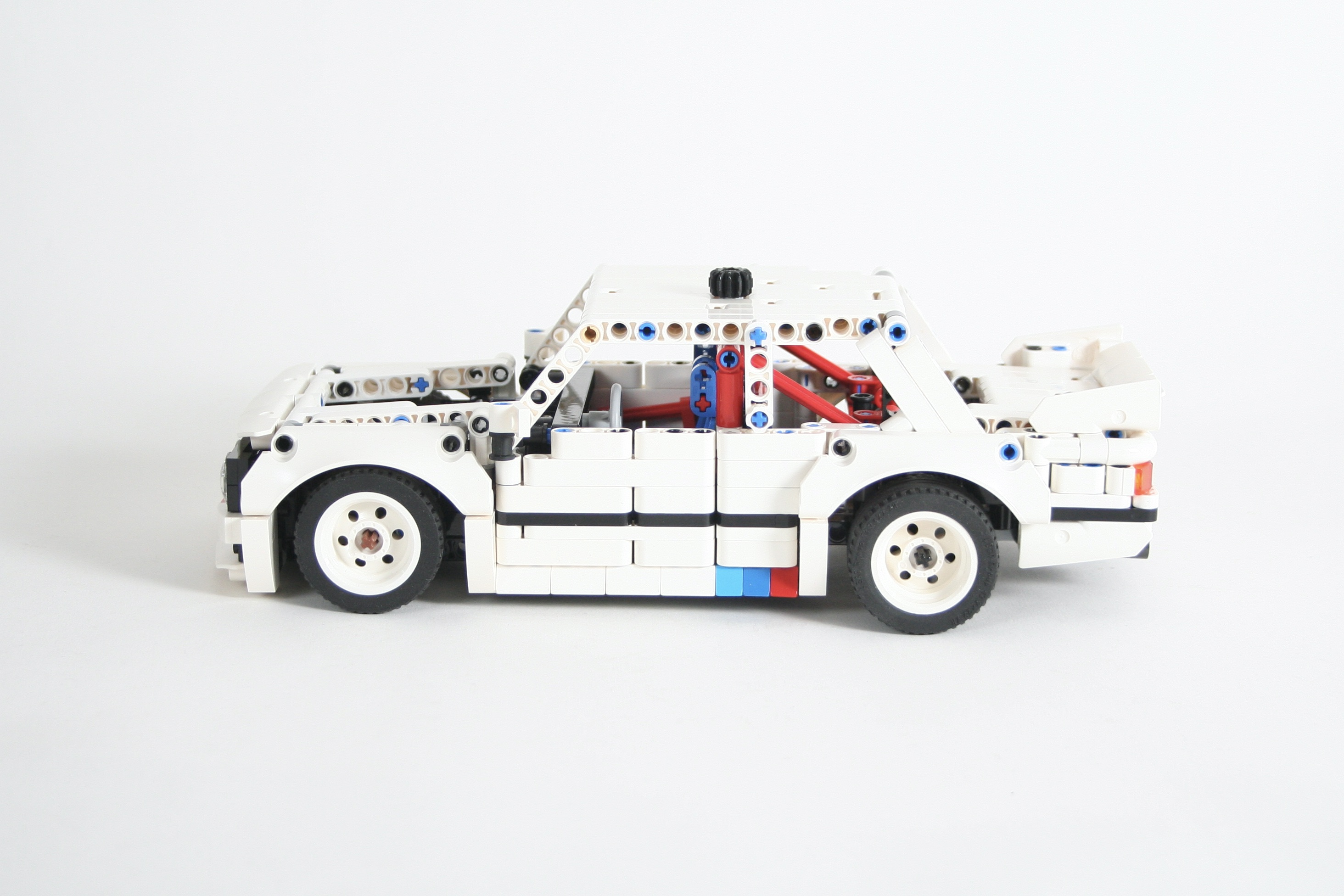
Finally, as BMW Motorsports has an iconic livery, I decided a racing version would be complete the group. This car is mostly the same, but the wheelbase is 1 module shorter, and features the I6 engine. And BWM racing colors. I added a little roll cage, and white wheels and took out a door.

This build is a fan favorite. When I presented these at a local show, many people came up and wanted to talk about the BWMs. They are simple, playable, highly robust, and visually interesting. I loved this build, and will be doing more cars at this scale. They are a lot of fun. Until next time,

Happy Building!

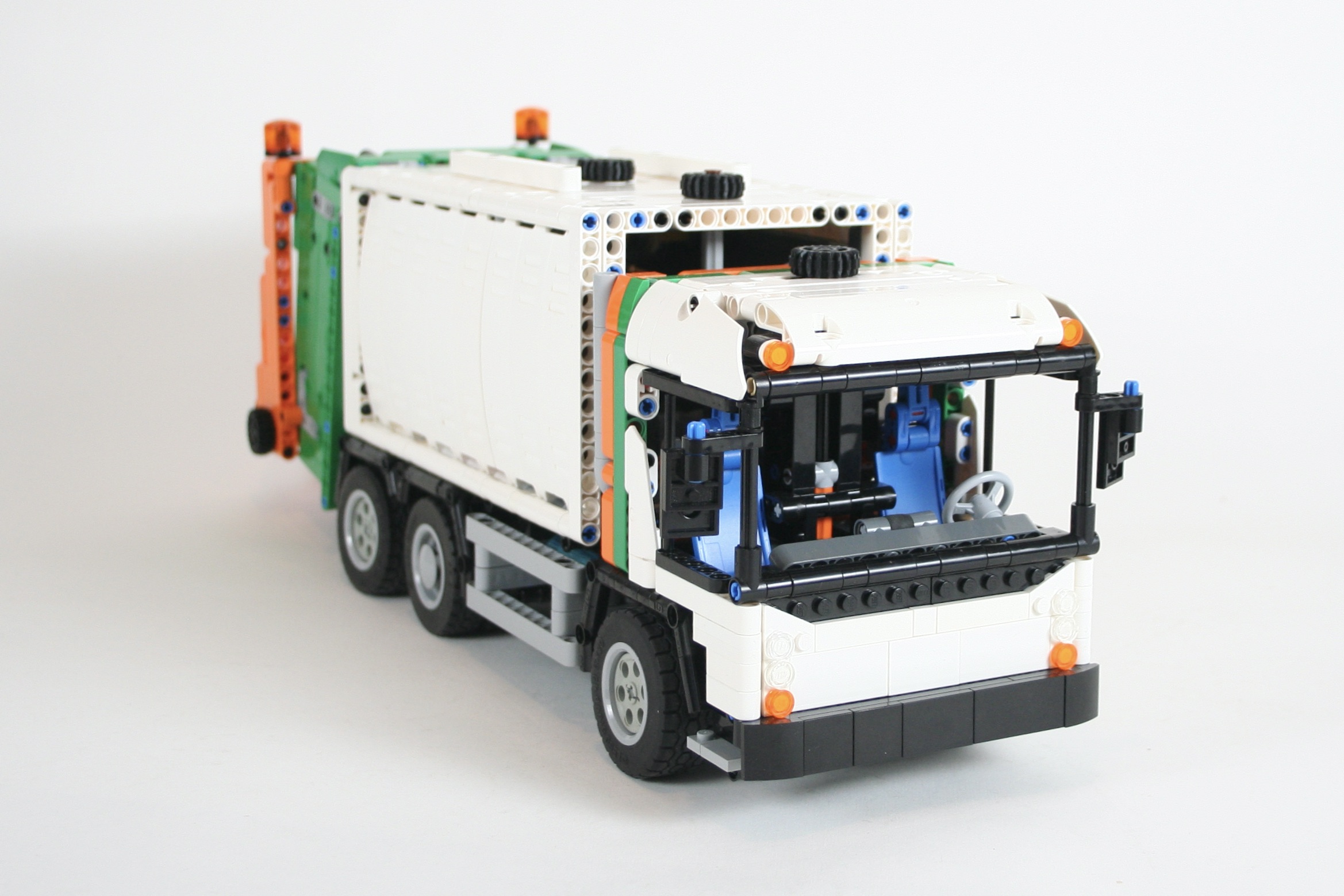
Hybrid Garbage Truck


I had on my goals to complete another Garbage Truck for while. Now it is finally completed.

Instructions are available at Rebrickable.com.

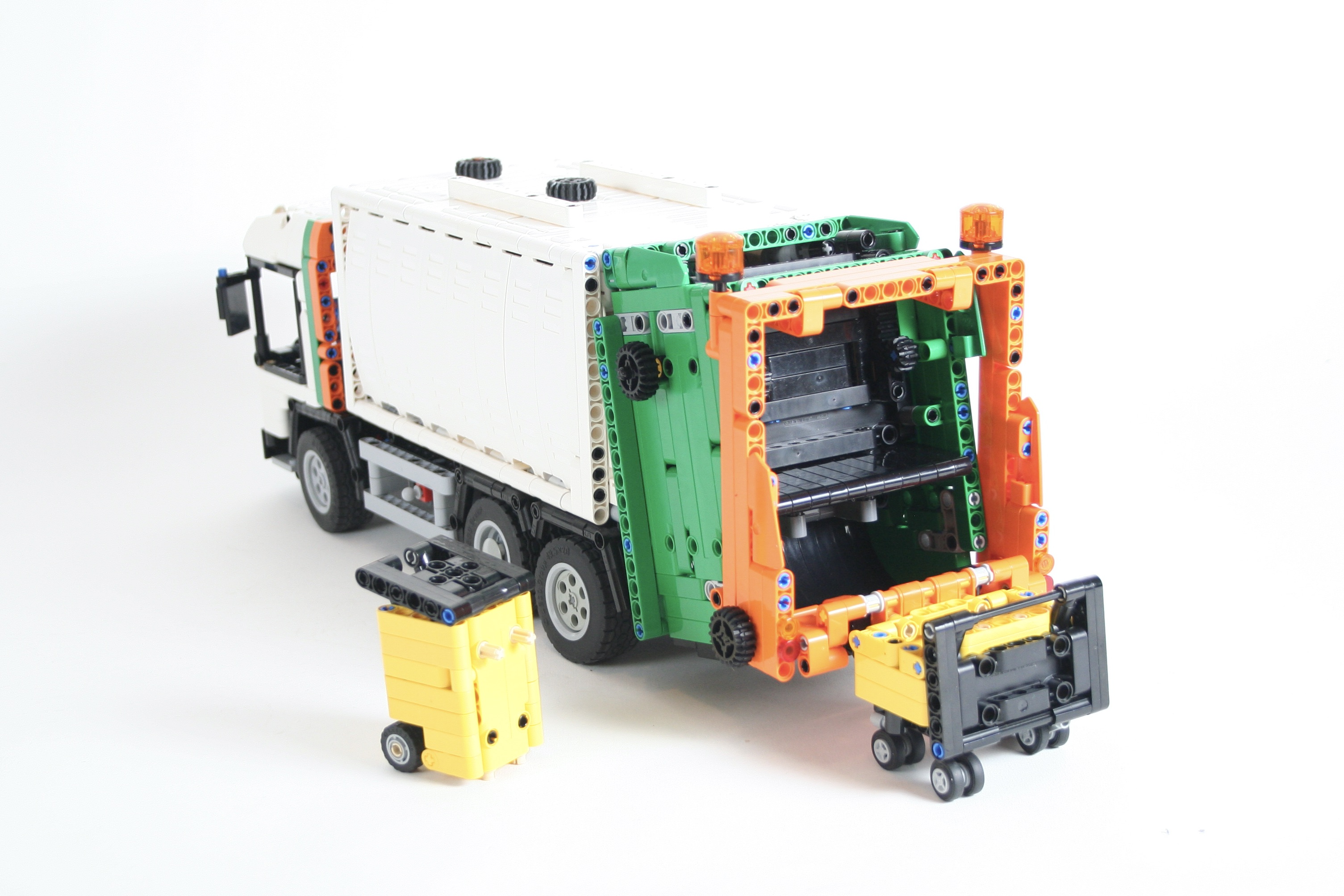
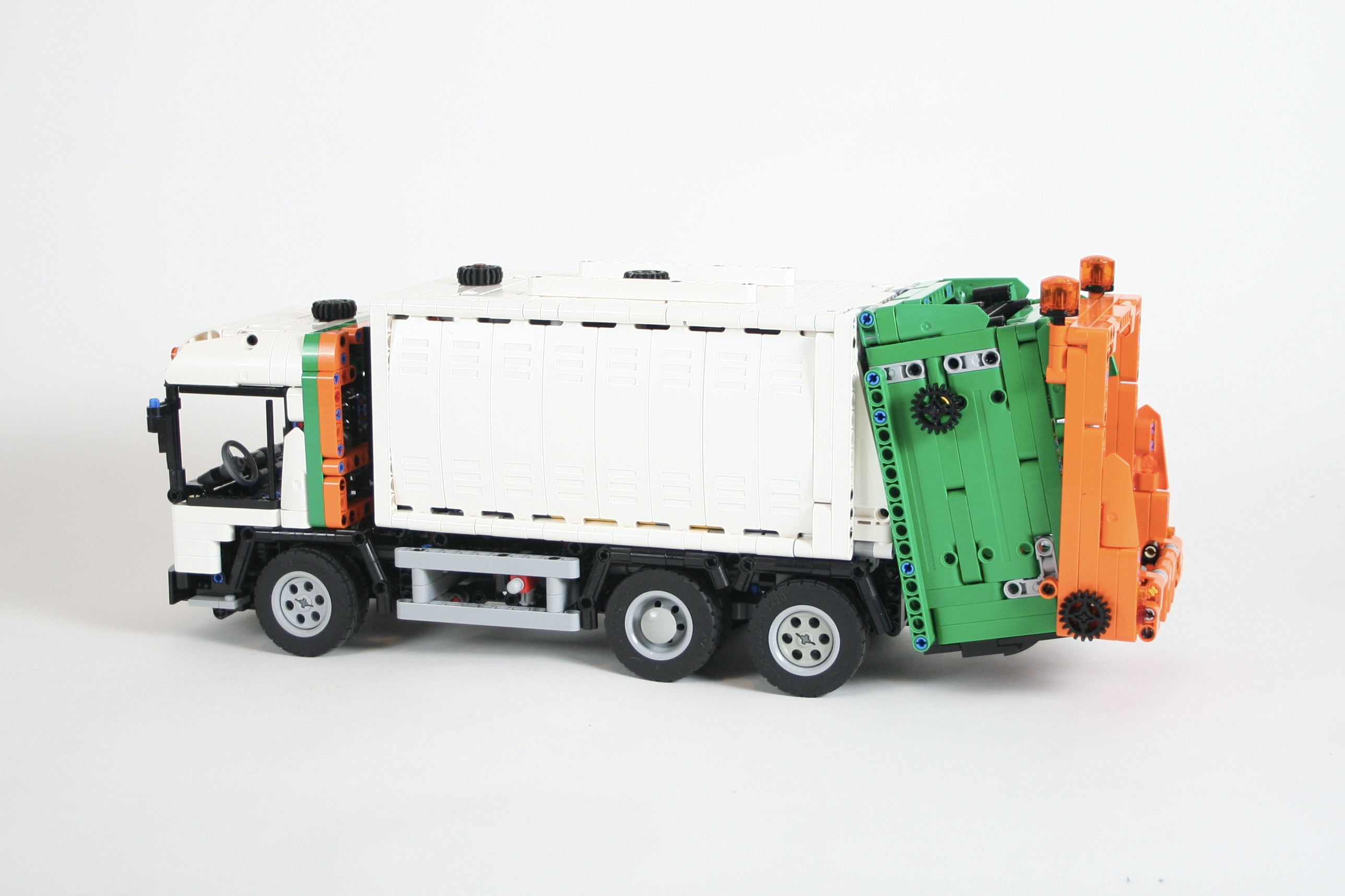
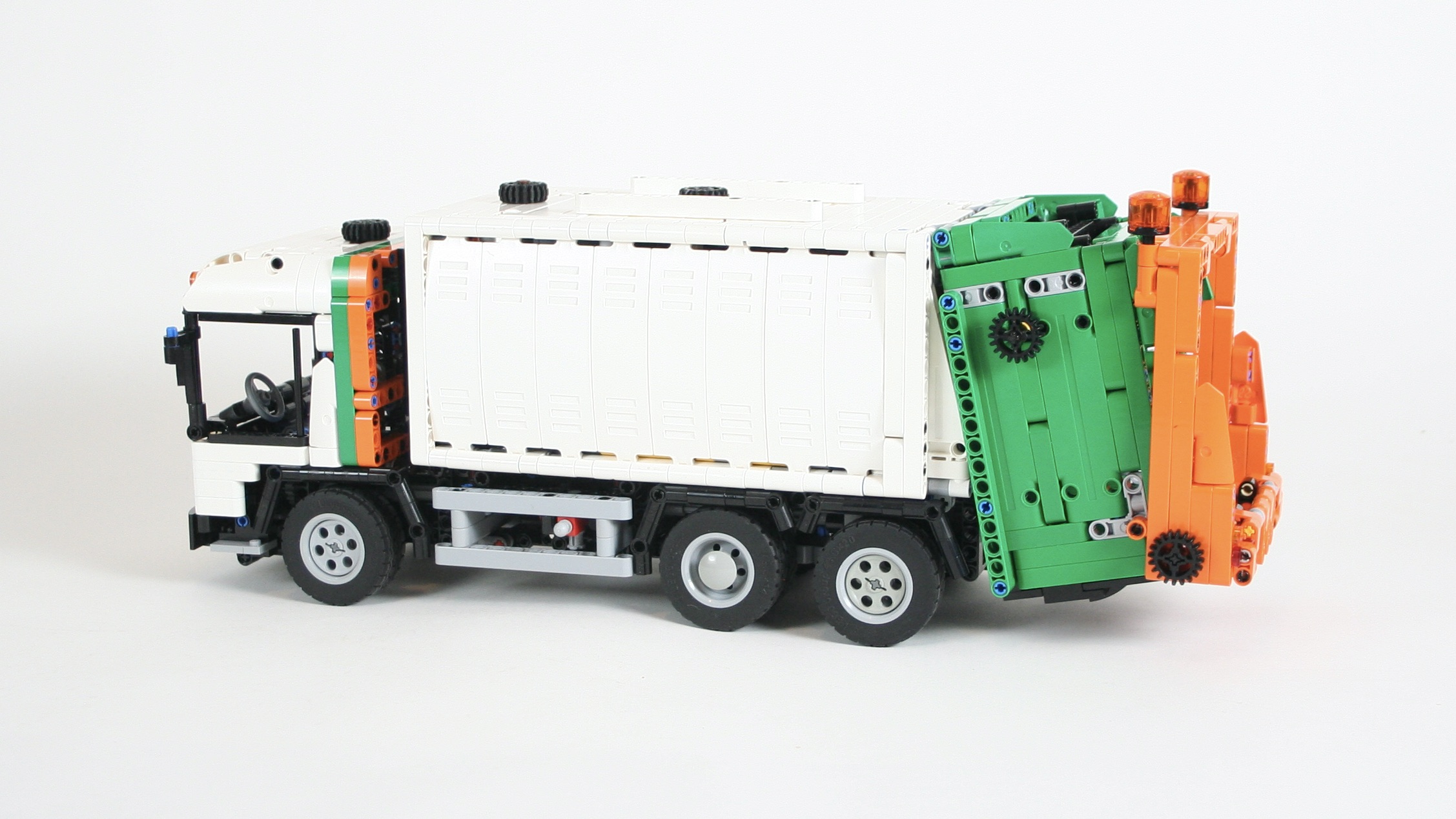
I like trucks, and I like building them. Garbage trucks are the most interested to me. Not only do they look interesting to my eyes, but mechanically they have a lot going on inside of them. Naturally, recreating this out of LEGO fits well with the type of building I enjoy. When I started on this project, I settled on a couple of standards. First, it would be 1:21 scale, second, it would be manually functioned, and finally, it would be a rear loader.

I worked on this model differently than I normally do. Generally I design a crude frame, and place all the mechanical aspects on this frame, and slowly build out the rest of model until it is done. On the garbage truck, I worked on three sections on the build in tandem: the chassis, the body, and the compactor.

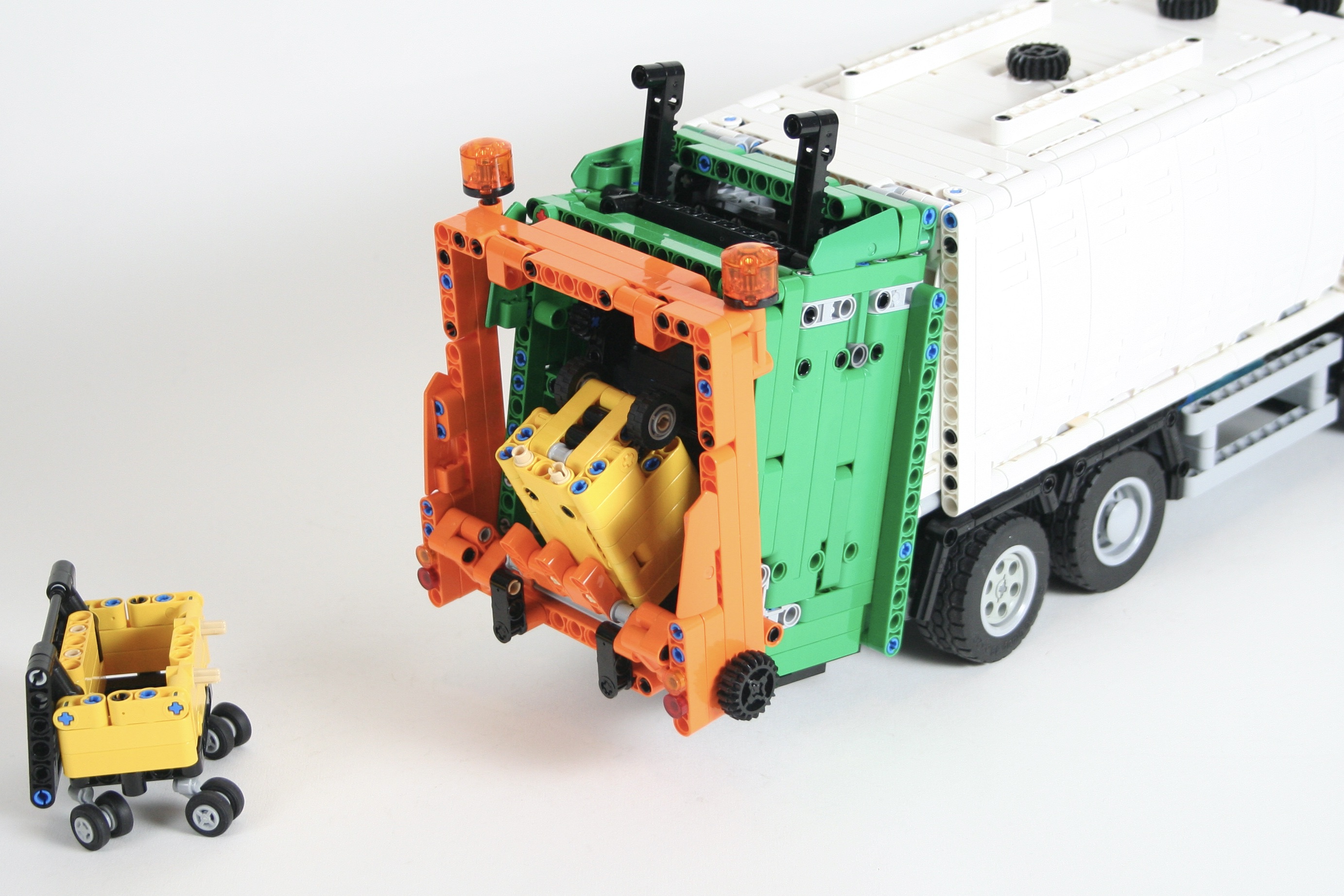
The compactor started first, and was the hardest to get right. I settled on a function that is controlled by one gear on the left of the truck. The gear moves the compactor door mount, and an interval resistance gear allows for movement of the compactor plate. The one gear controls the two movements. So when trash is added to the hopper, moving the gear extends the door down, pivots the plate, moves the door up, and then pivots the plate open again.

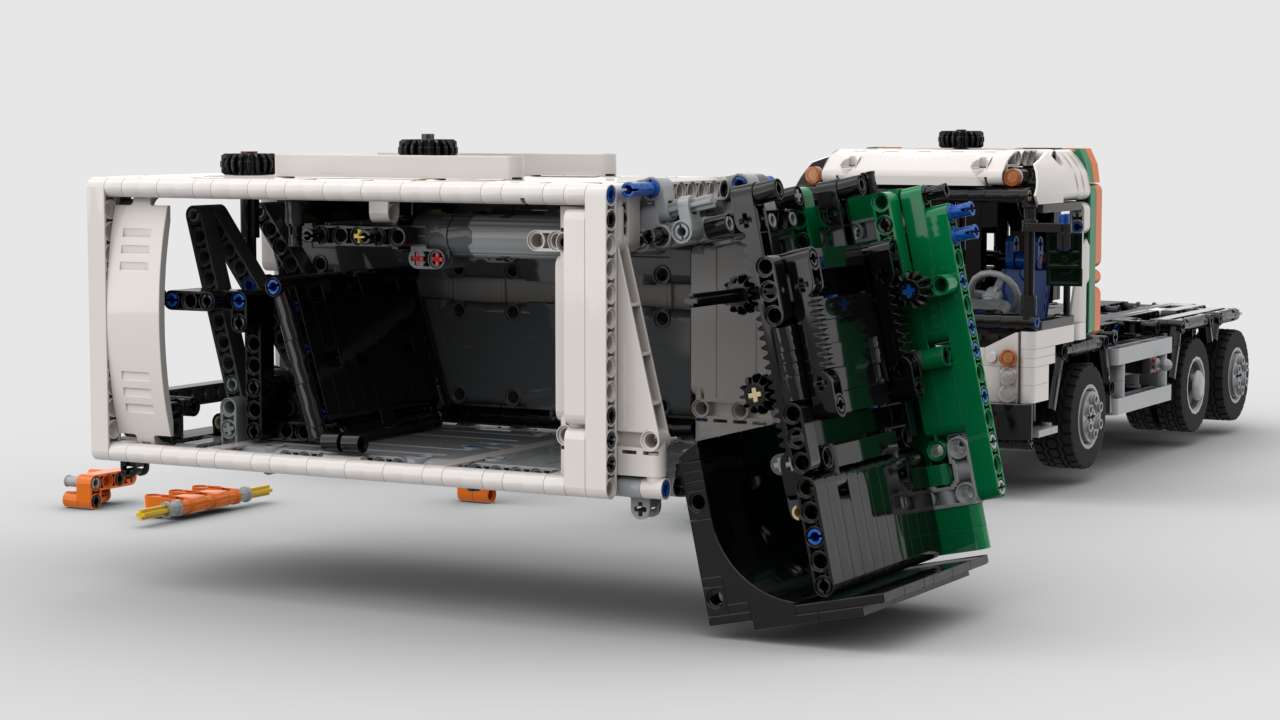
The body was started soon, and would need to work hand in hand with both the compactor and the chassis. The body would house both the extractor plate to push trash out of the truck, and the mechanism to pivot the compactor up to open. These two functions were simple to design, but what took the most time was making sure the body was strong to support the functions and the rear compactor, and to be smooth internally to make sure trash would not get stuck.

The chassis followed a more common building process. I started with the hardpoints like the wheelbase, length and engine placement, and slowly added in all the other parts needed. Right from the beginning I decided on a three axle chassis with axle 1 and axle 3 steering. Axle 2 would be the drive axle. As I built, it was clear there was a lot of extra space in the chassis. I added a little hybrid/EV drive to fill the space. The torque from the drive axle routes through a center differential that splits the torque between a fake electric motor and a fake piston engine. A resistance plate is added to the front of the piston engine so the torque will always start with the electric motor. When the speed increases, the torque will overwhelm the resistance plate and start using the fake piston engine too. It works just like a real hybrid engine. A selector is on the left side of the truck to select EV only where only the electric motors is used, or to select hybrid where both are used.

The truck and body are easily connected by four pins at the corner of the body. The cab tilts to make it easy to work on the engine. Finally, I created two small dumpsters for to hold trash. A small one and a larger one, and each fits with on the rear of the truck.

This ended up being one of my favorite models since the Ionos. The truck looks great, but packs lots of functional elements. The hybrid function works great and will be used again for another project. When I presented it at a show people could not get enough of watching the trash get cycled through the compactor. I always enjoy building a garbage truck, and I look forward to the next one I make.

Happy building.

Mercedes 917


A simple, but iconic truck.

Free instructions may be found at Rebrickable.com.

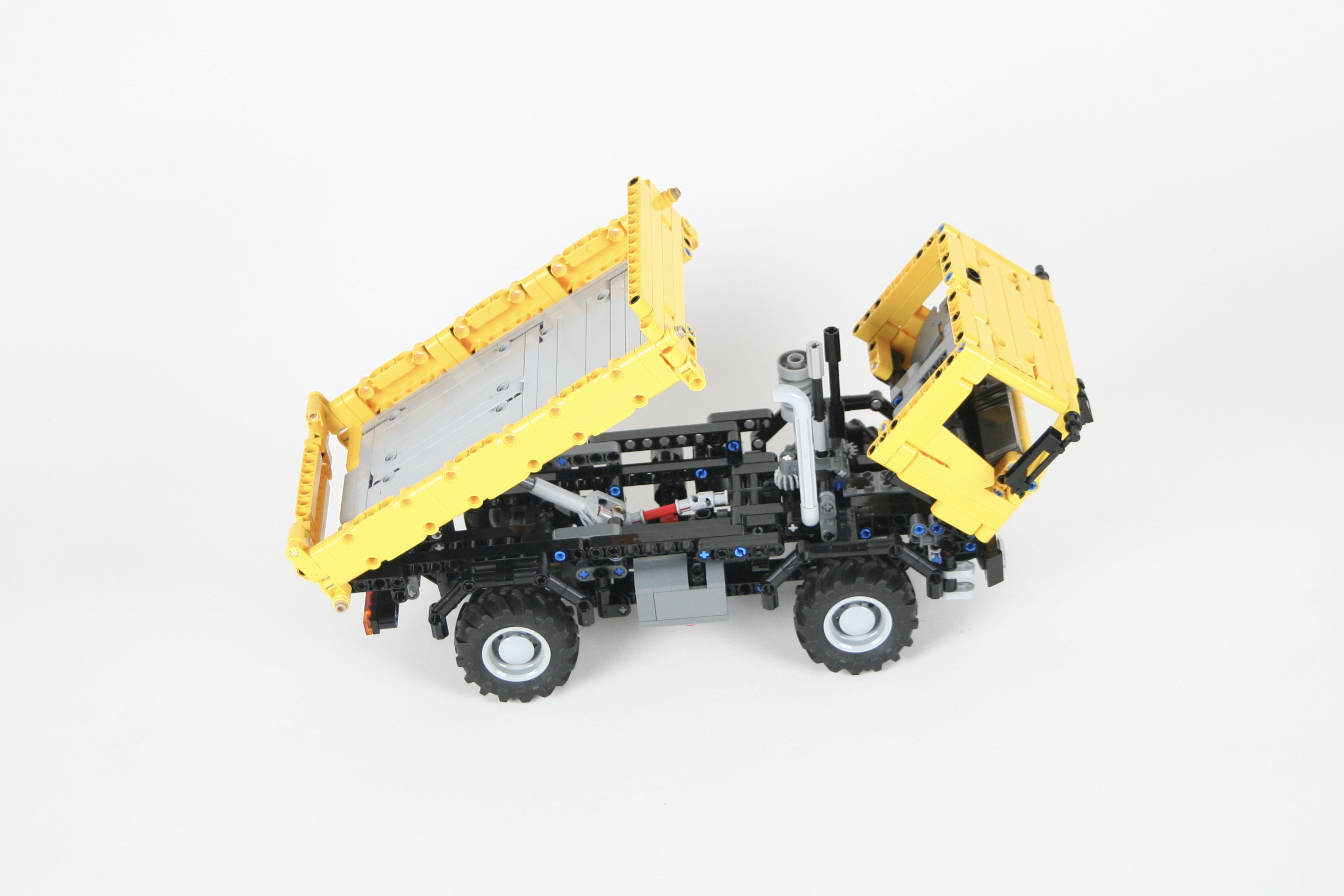
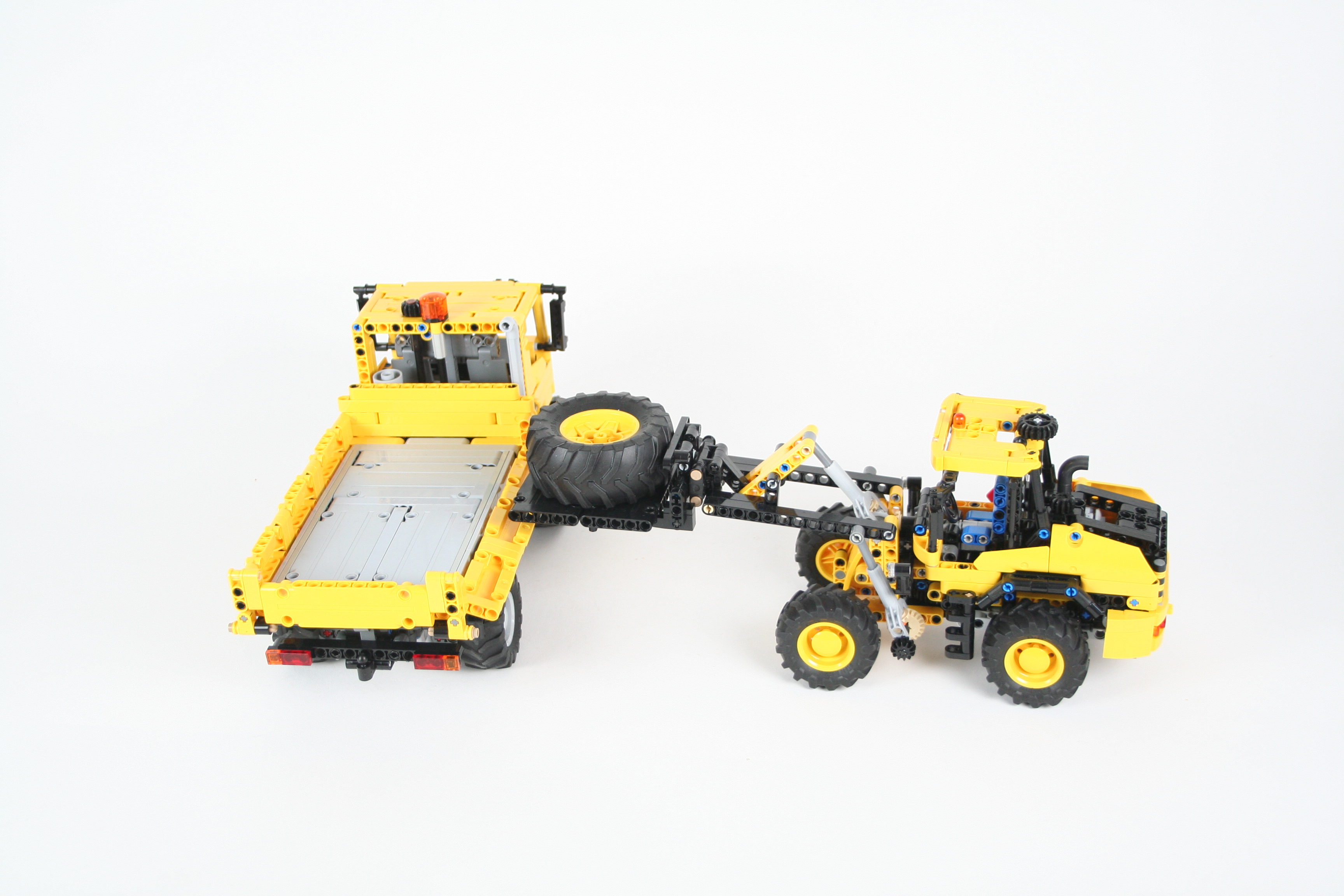
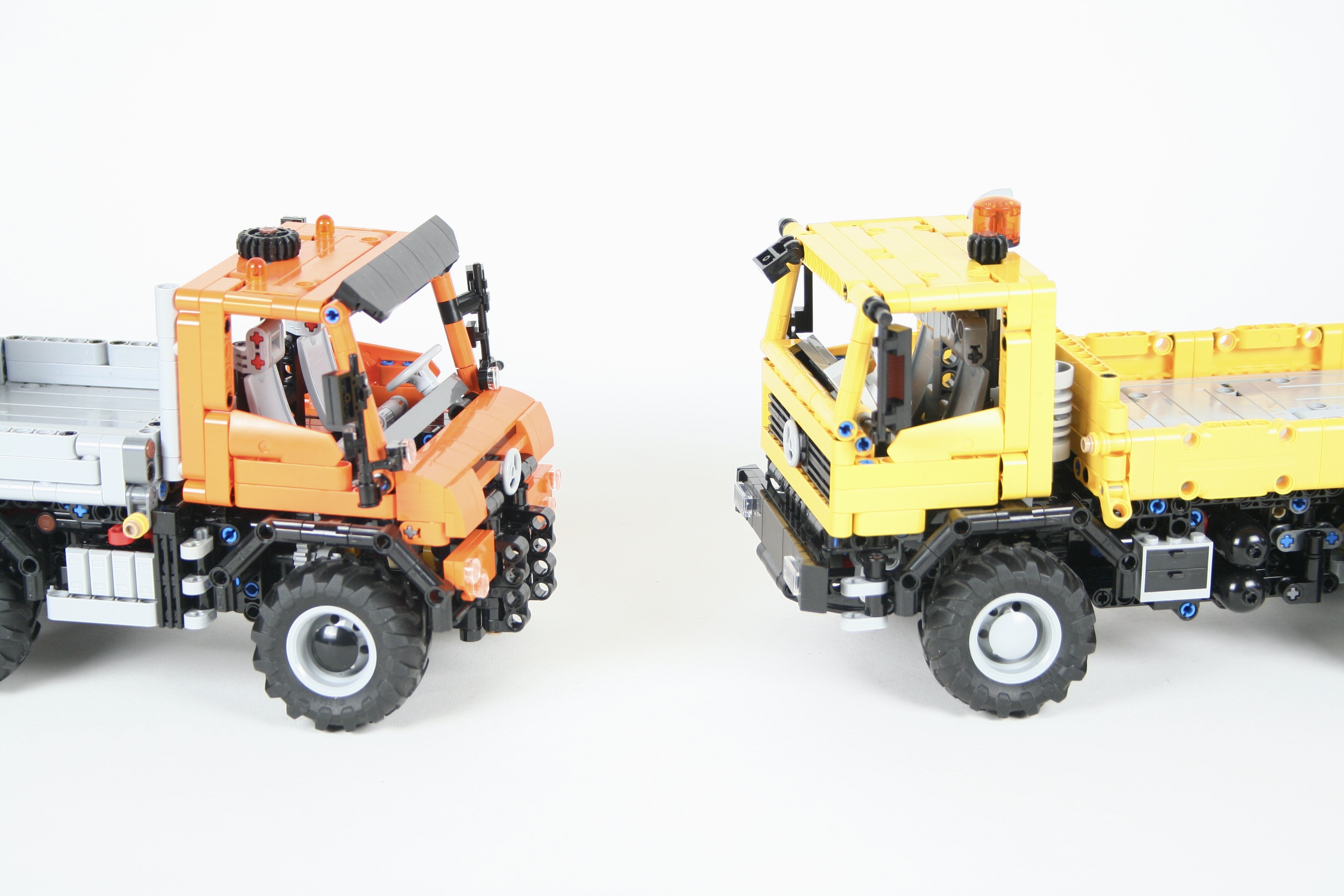
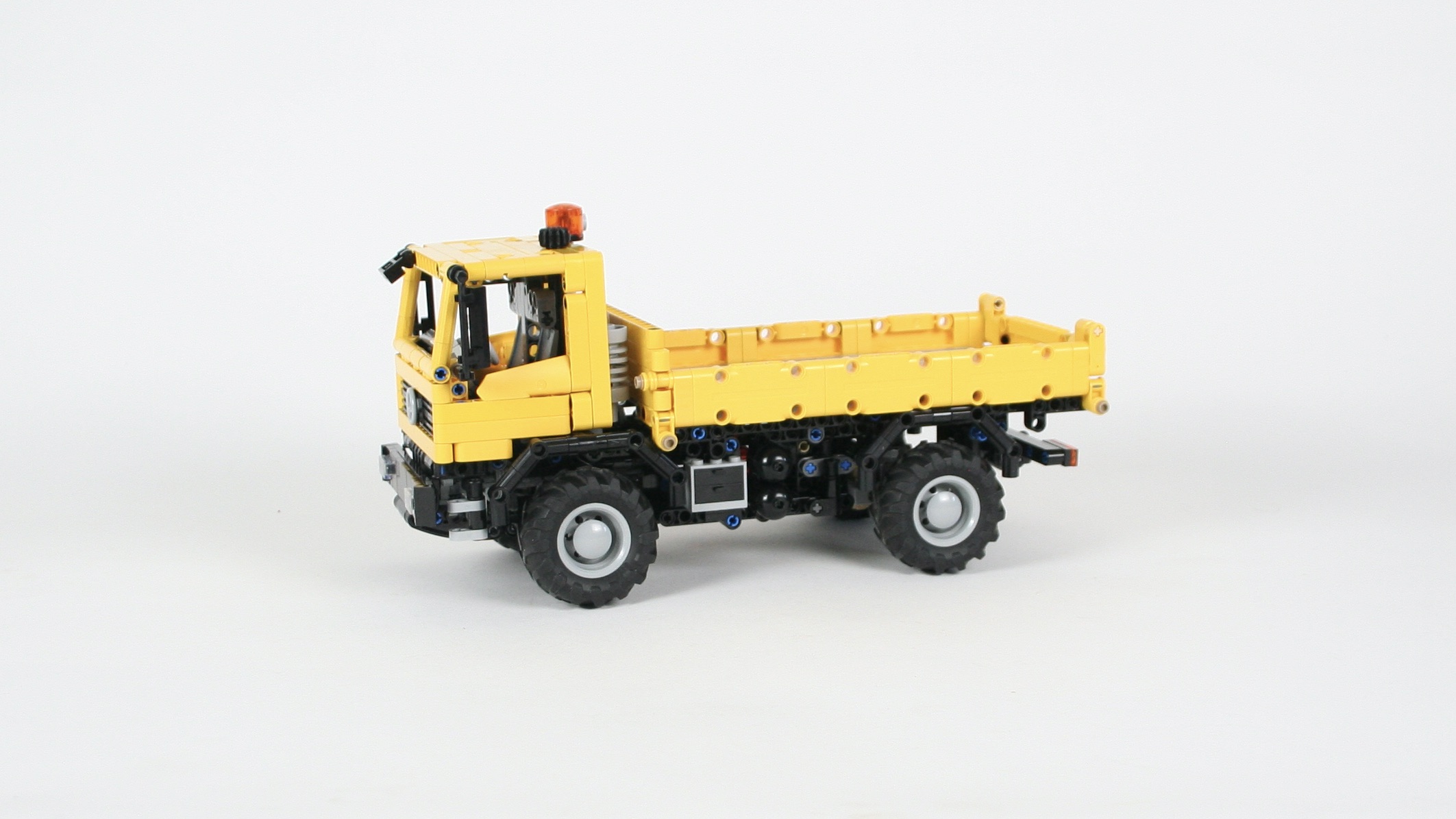
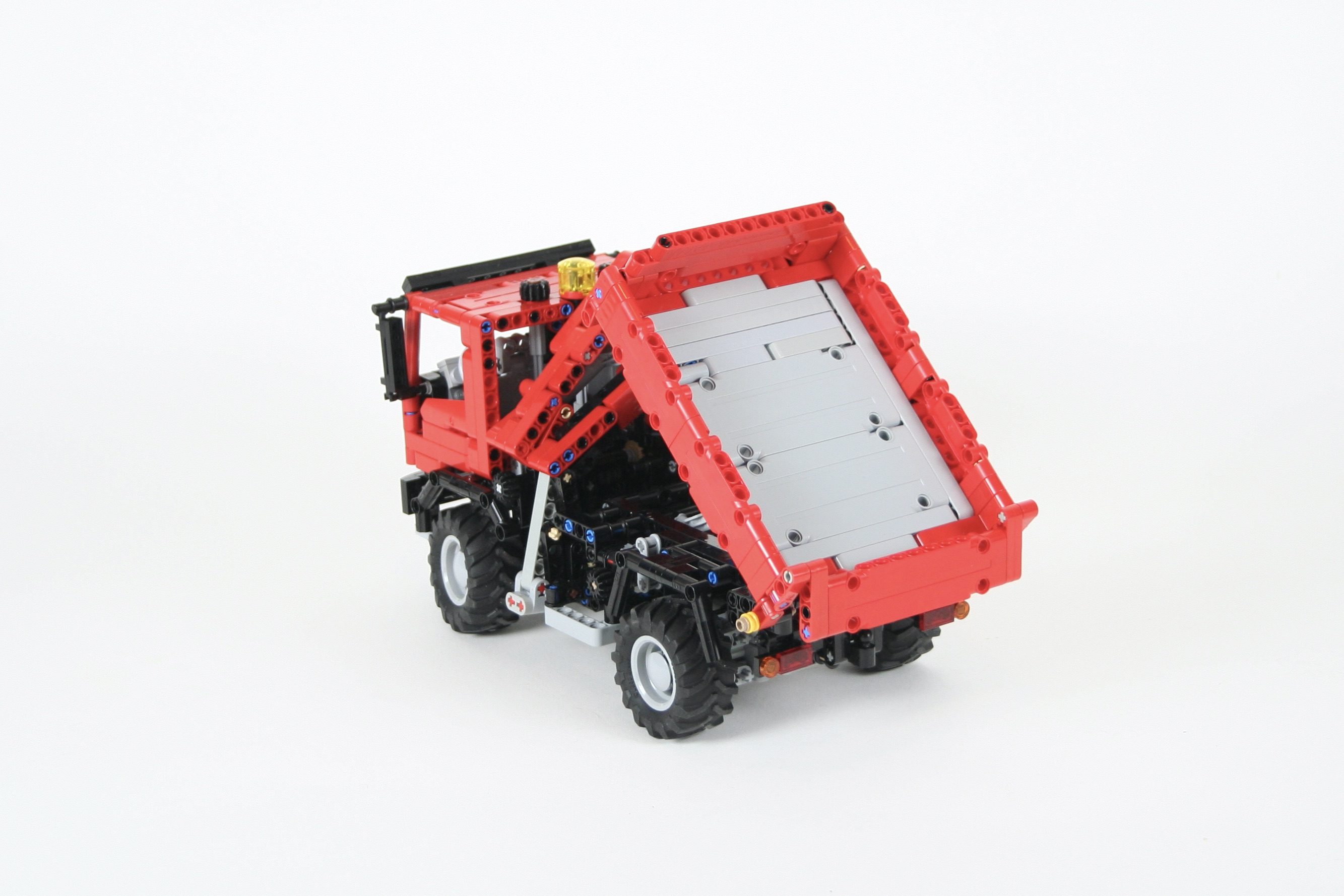
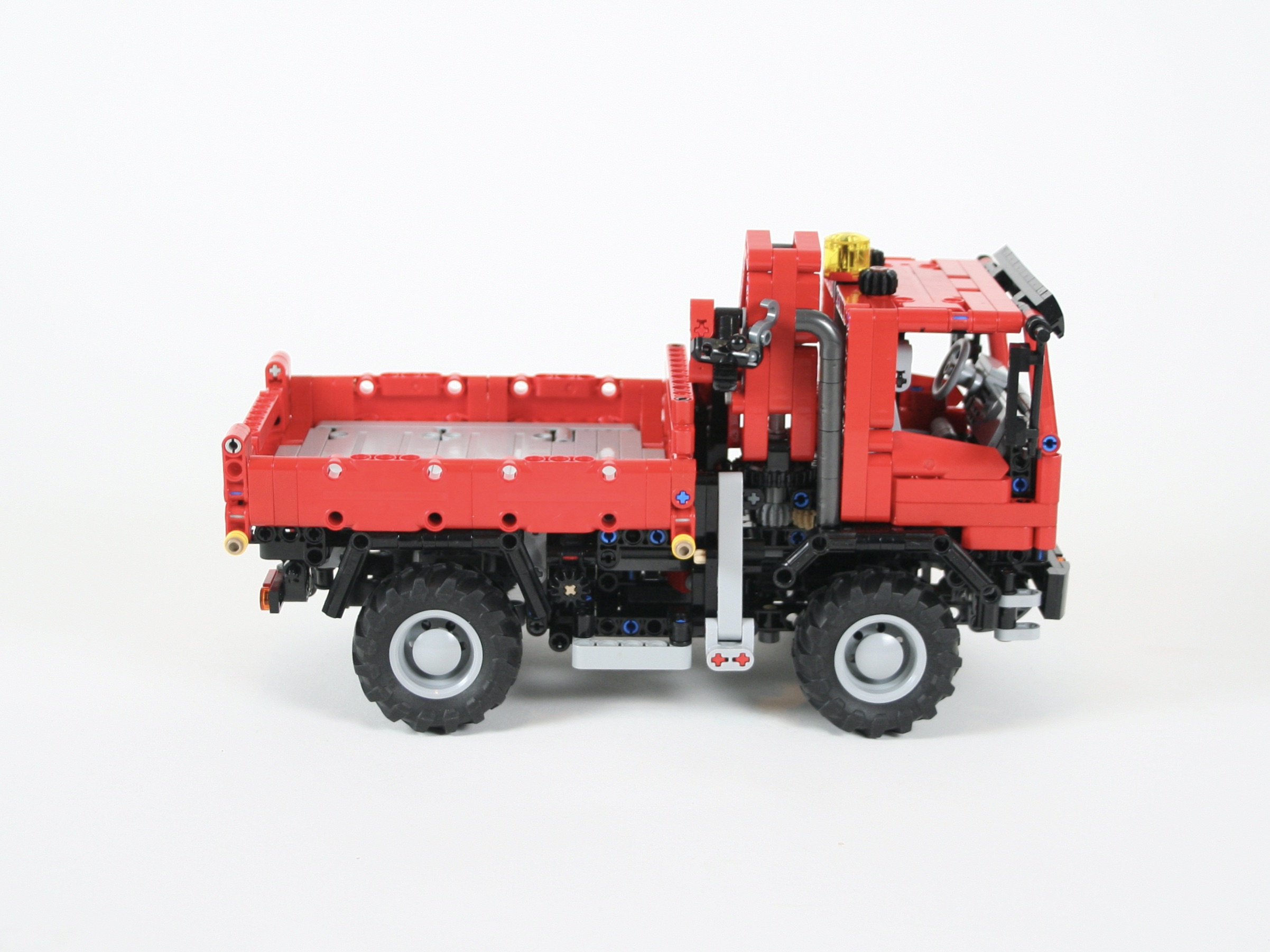
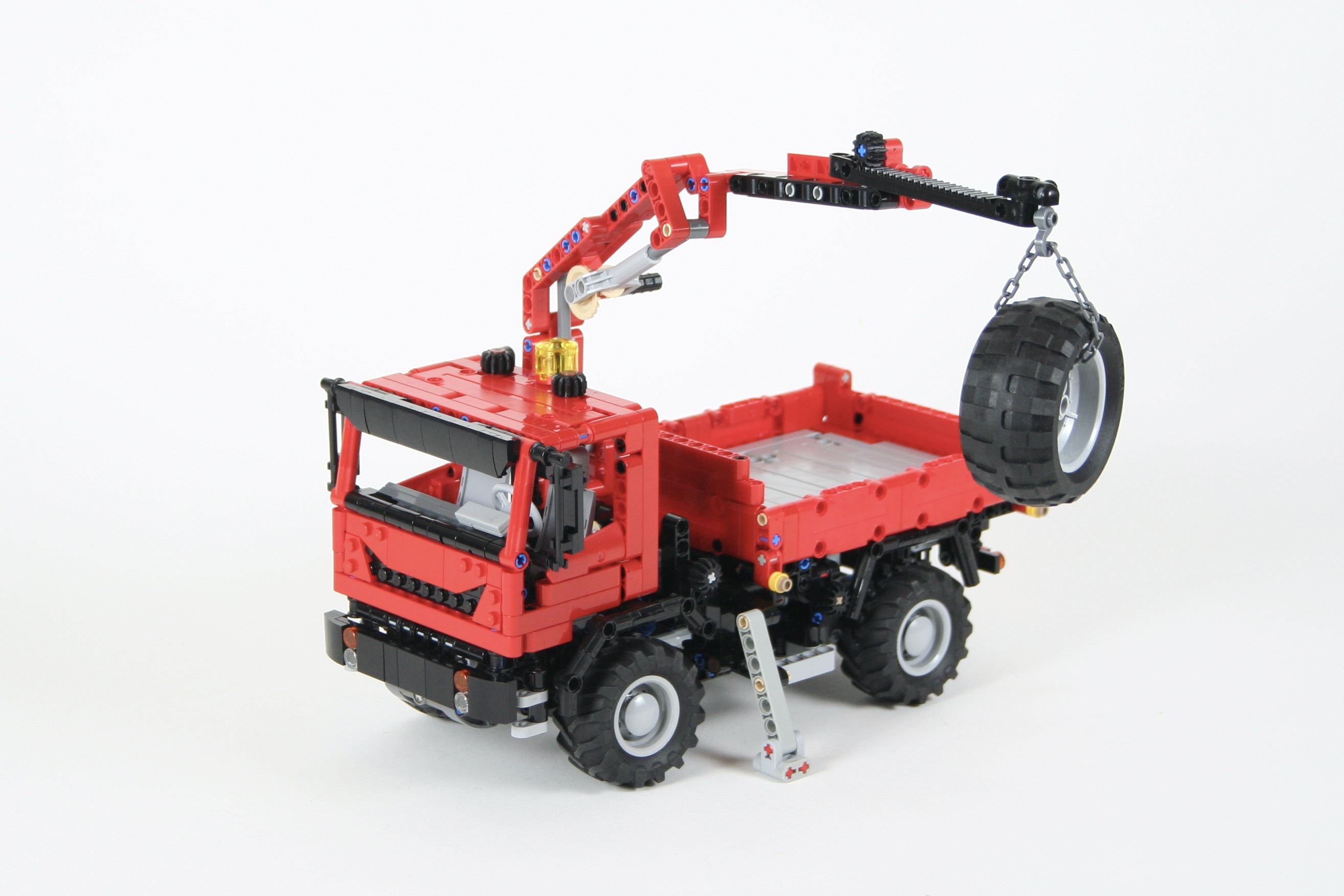
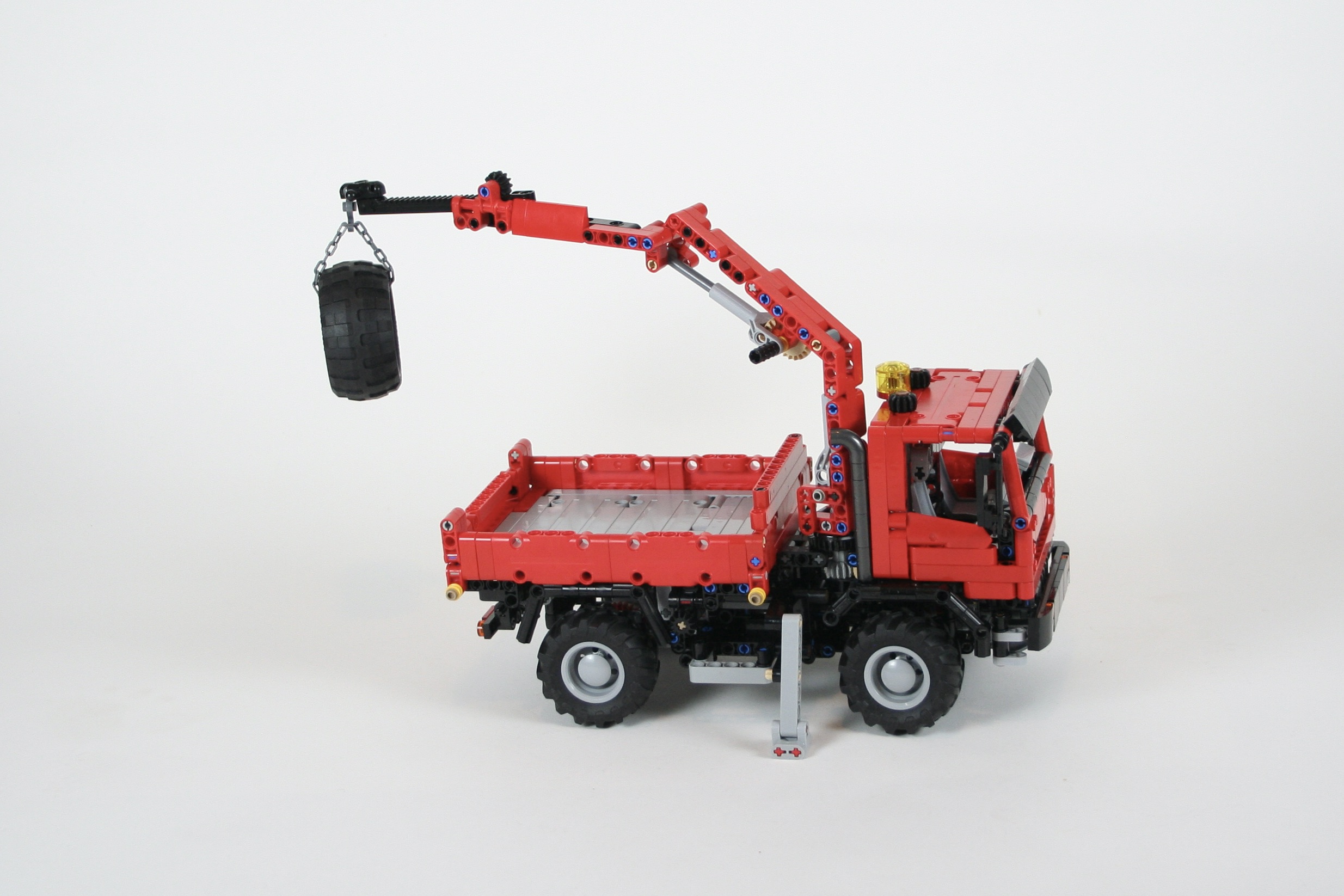
I am beginning to get more efficient in my builds. Many of the axles, drivetrains, and little mechanisms I have designed over the years are finding their ways into other builds. When I completed the Off Road Truck, it was clear there was a lot that could be turned into another build, rather quickly. The Off Road Truck had a great, strong chassis, a little fake engine, a working transmission, and a tipping bed. With a couple of changes it could turn into another truck.

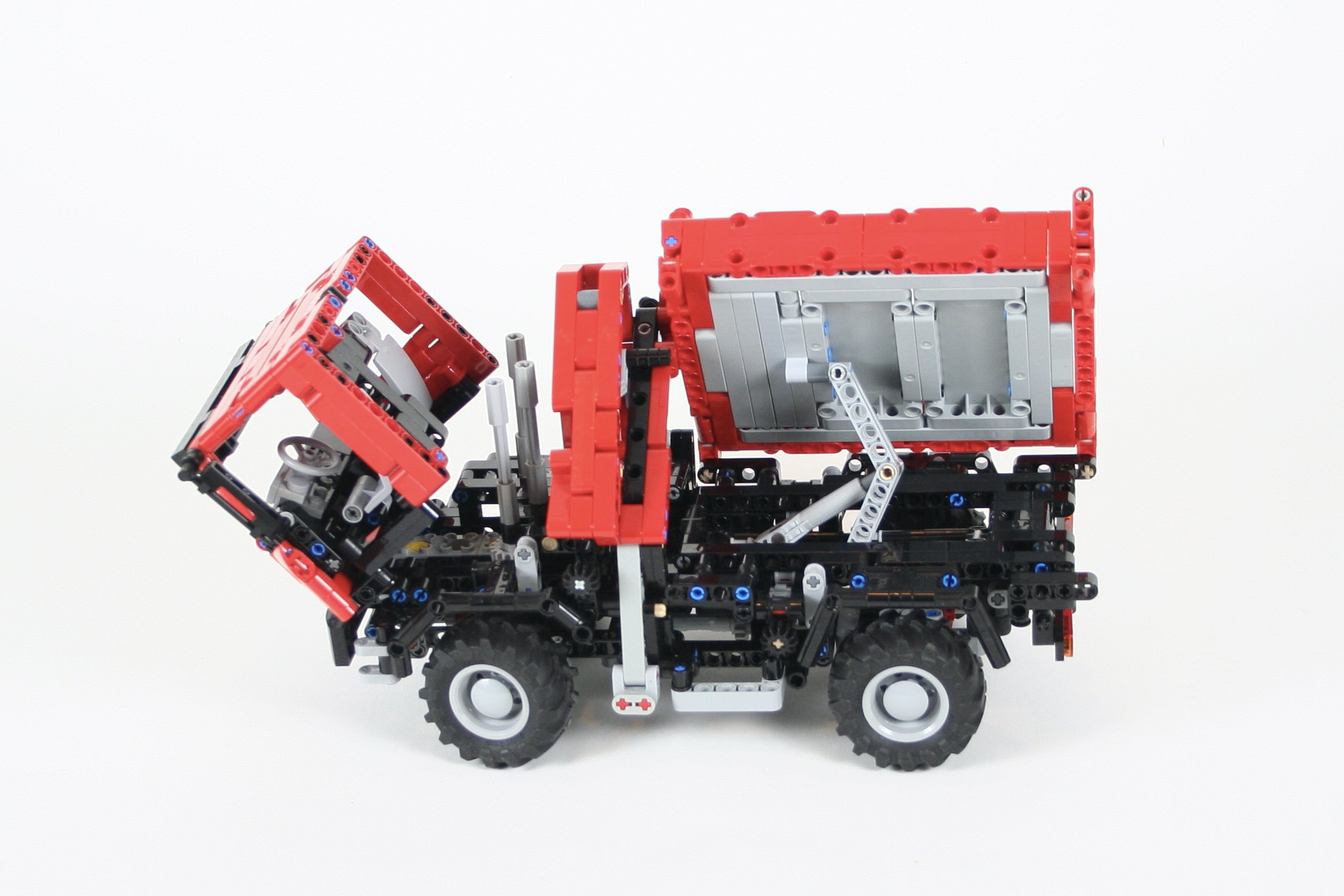
I lengthened the chassis, and removed the crane. I added a longer bed and changed how the tipping function worked. The cab stayed the same for the most part, but I changed the grill to match the look of the Mercedes Benz 917 truck. Since much of the truck is the same as the Off Road Truck, this one still retains the I3 fake engine, the pendular rear suspension, rear wheel drive with two speed transmission, and the tilting cab. Two HOGs are on the roof, one for the steering, and one for the bed tipping function. The bed can tip in all three directions.

Sometimes these type of builds feel a little bit like cheating, as they use much of a previous build. But this little truck was a nice addition to my builds that is fun to play with and is easily built by others people who have a moderate Technic collection.

Happy building.

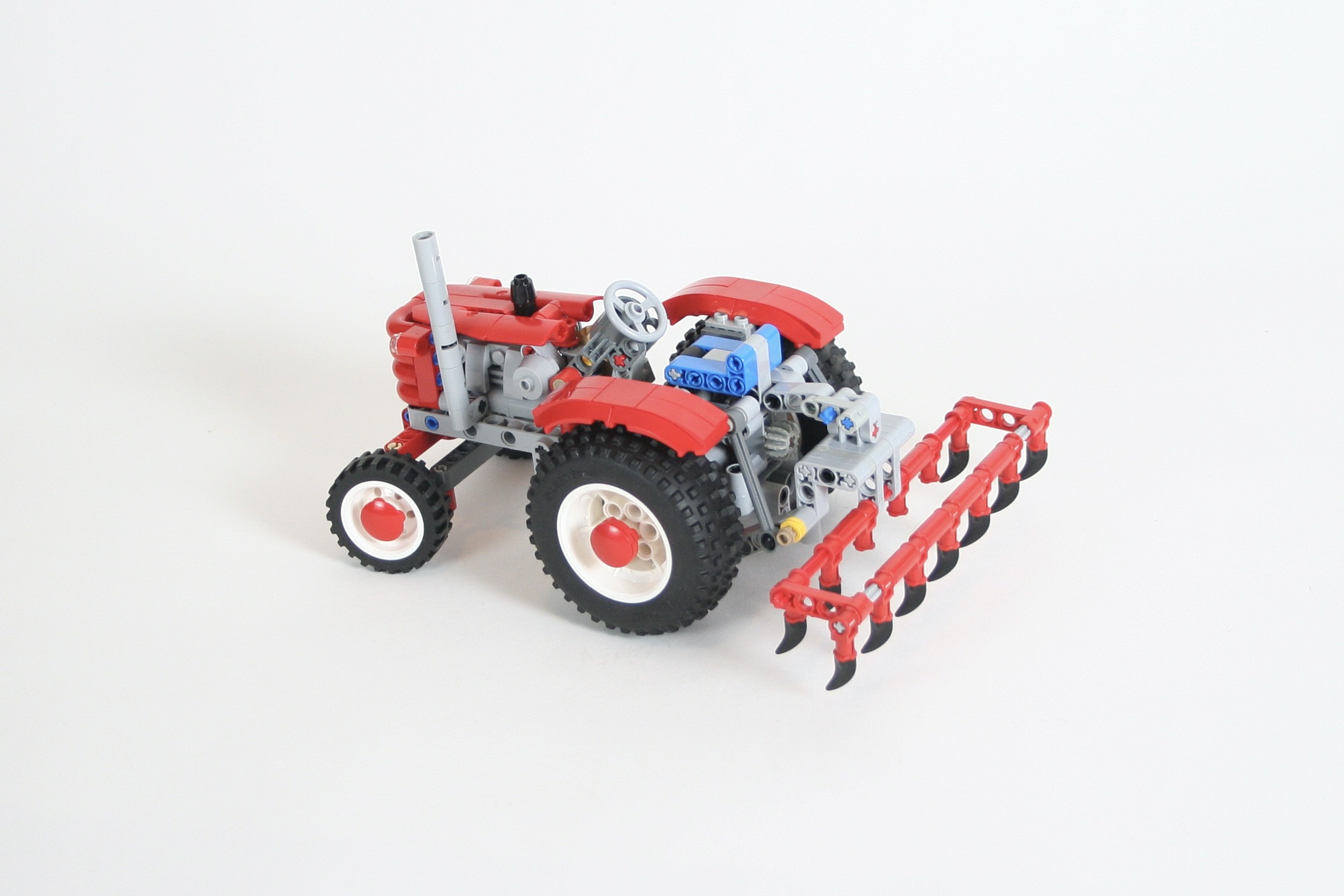
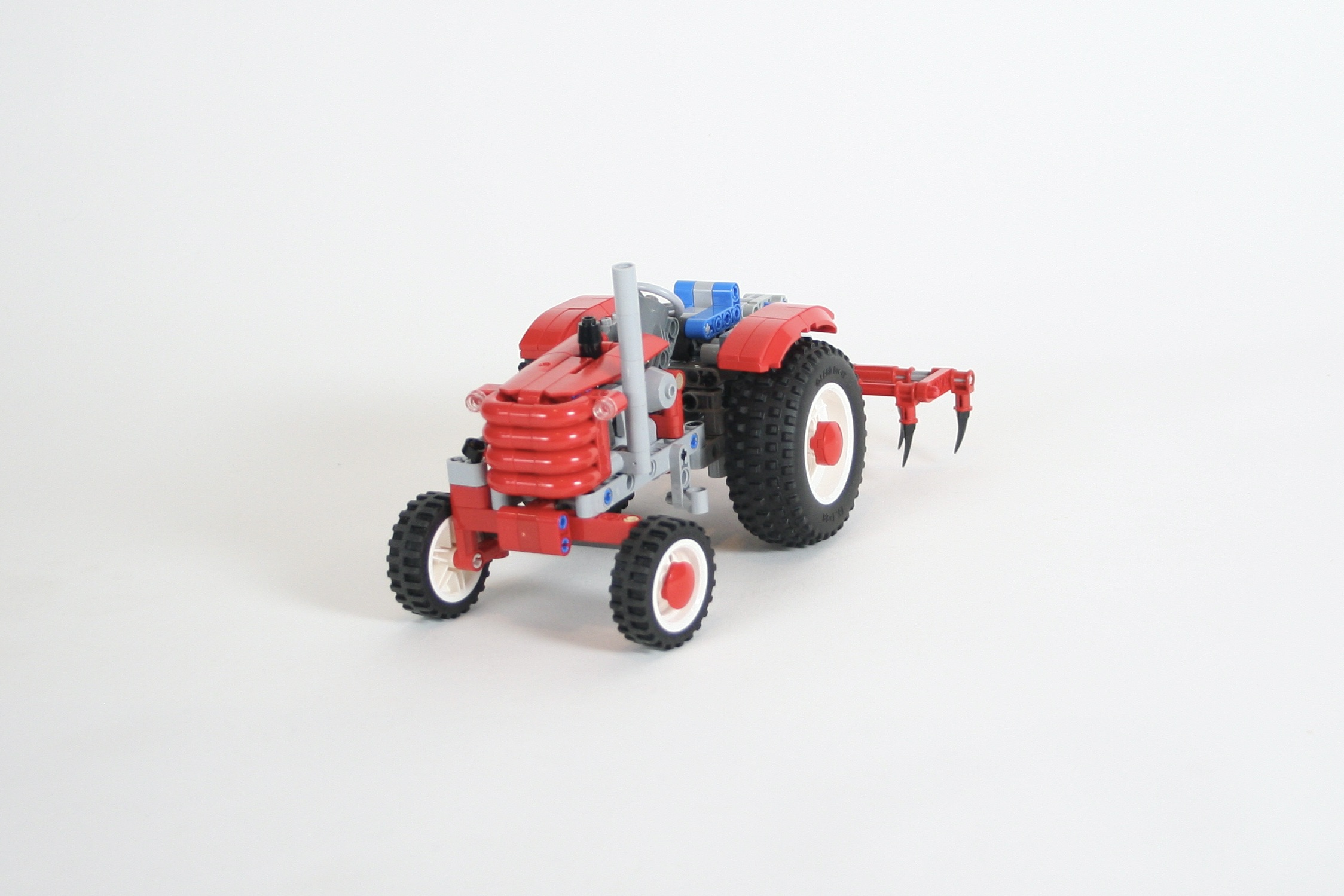
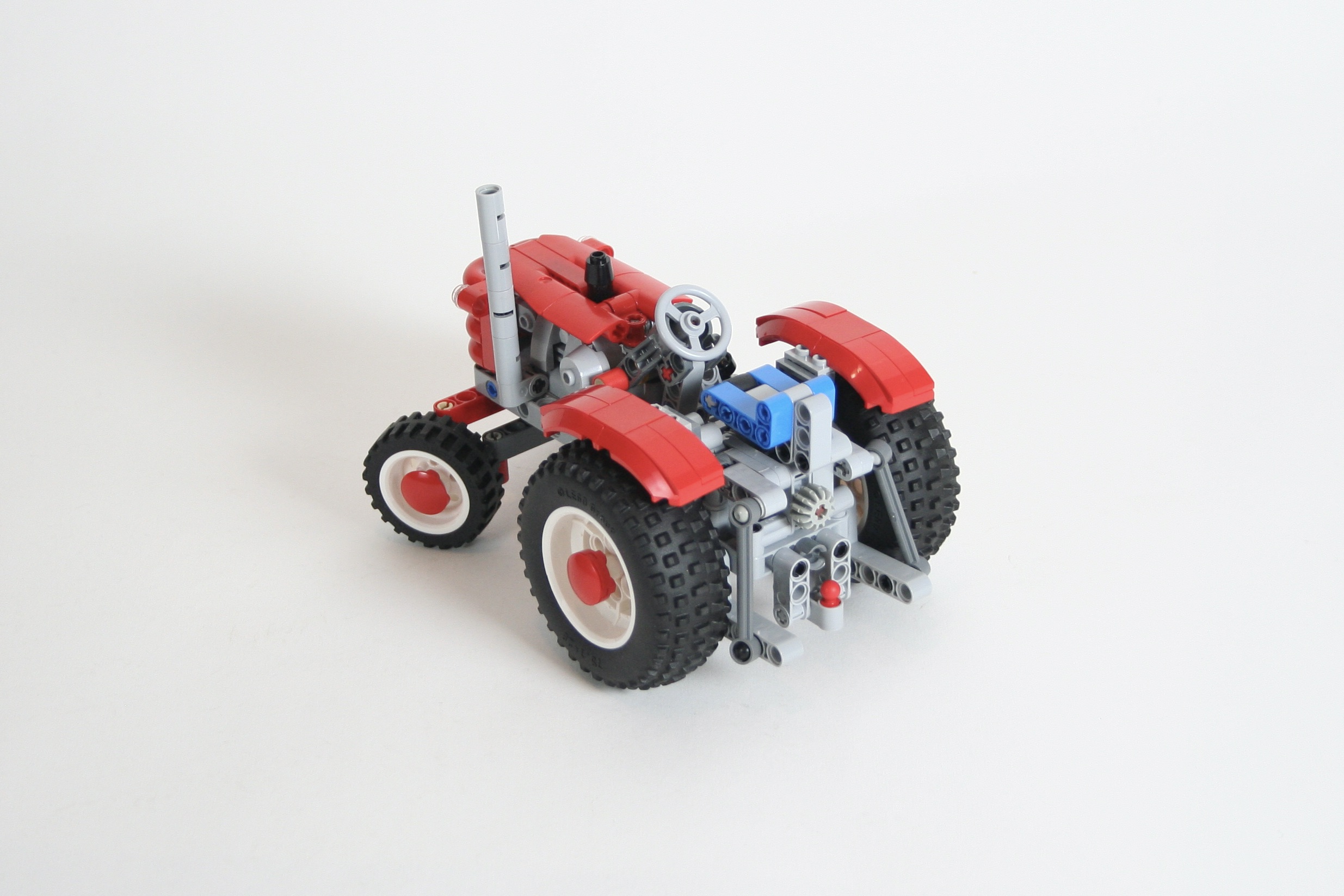
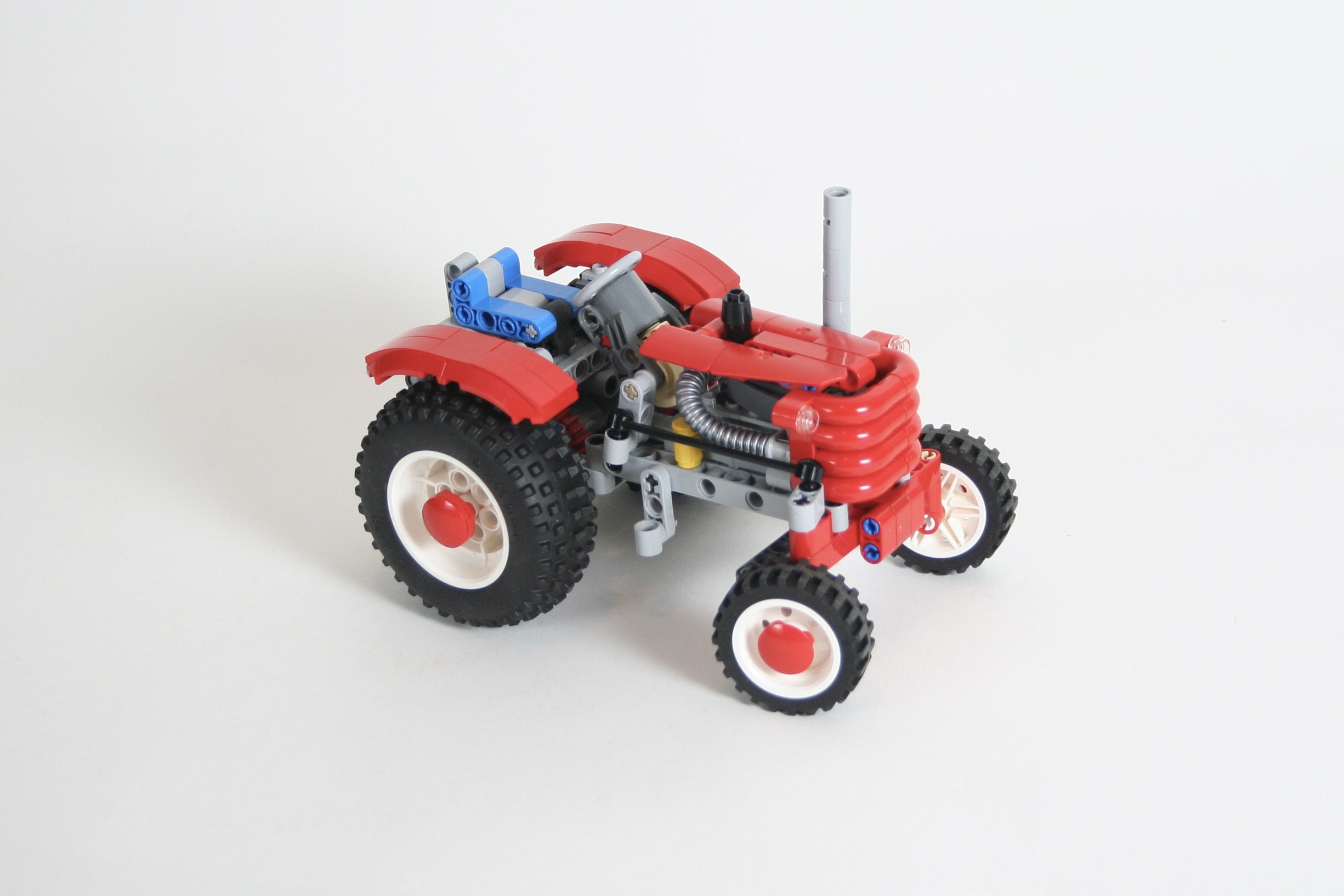
Vintage Tractor


The Thirdwigg Farm now has a lot of builds, and this one was found in the back of an old barn.

Free Instructions may be found at Rebrickable.com

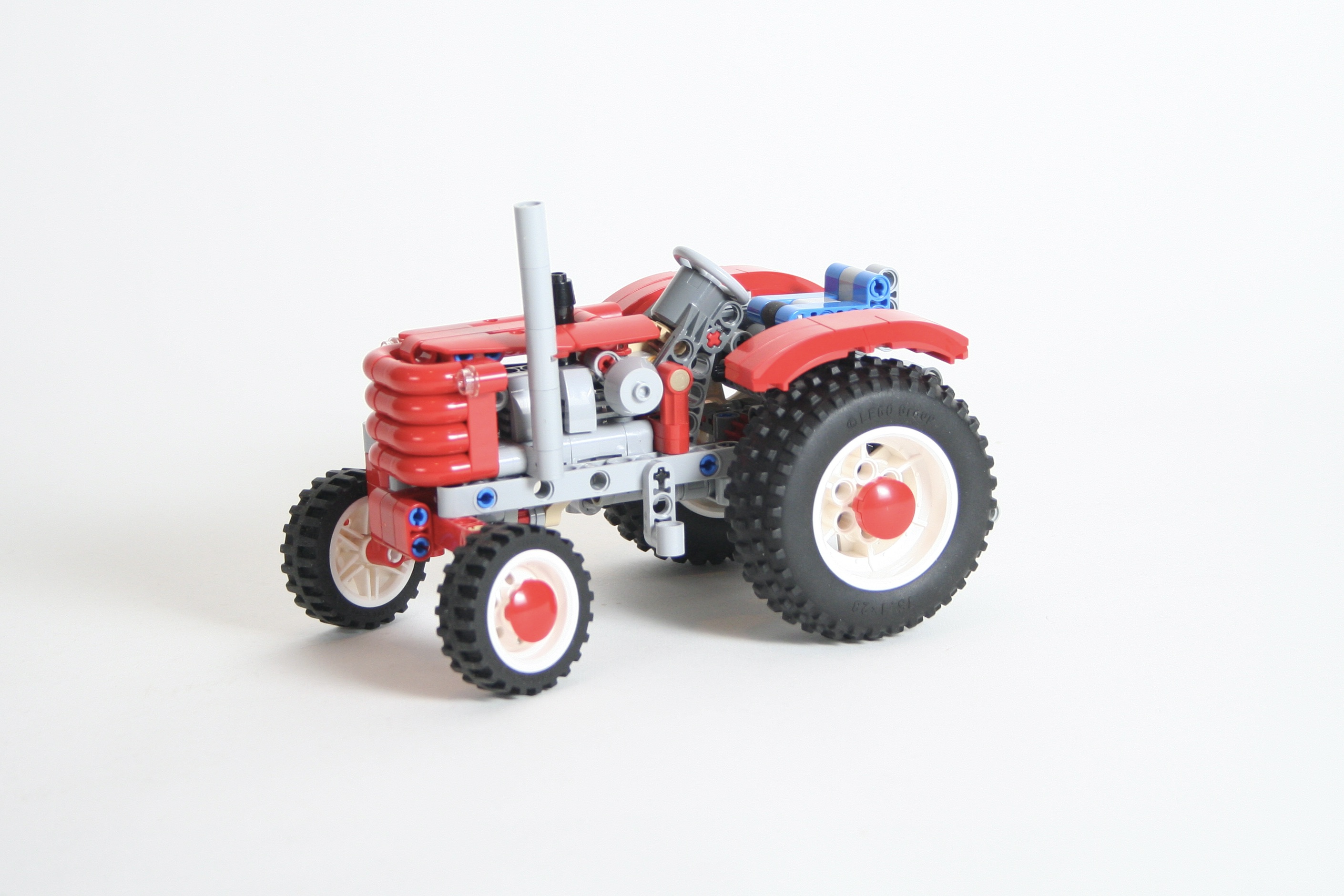
I tend to find new and flashy machines the most interesting, but sometimes something older can excite my creative juices. Someone suggested I build an old tractor, so this is the result. As I planned this build, it became clear that I wanted it to be part of the Thirdwigg Farm scale, so that determined the scale and some of the features right away. The Vintage tractor can be used with all the other Thirdwigg Farm builds.

I worked on the driveline which came together pretty quickly. The two cylinder engine is directly linked to the rear wheels. The steering was a little trickier. I mounted a little steering wheel on a linear actuator block, which moves a steering link to move the front steering rack. It is relatively simple, but coming up with how to make it work and look alright took a little bit of time. The seat is mounted on a pivot that allows for small suspension travel, just like an older tractor.

A little more time was spent on the bodywork. The round macaroni bricks work perfectly for the grill, and the new little panels cover the engine well. The fenders are a little fragile, but look great for the tires used.

This was a fun little build that has been well loved at shows and in my office. It turns out that an old looking tractor is something that generates some interest.

Until the next tractor, happy building.
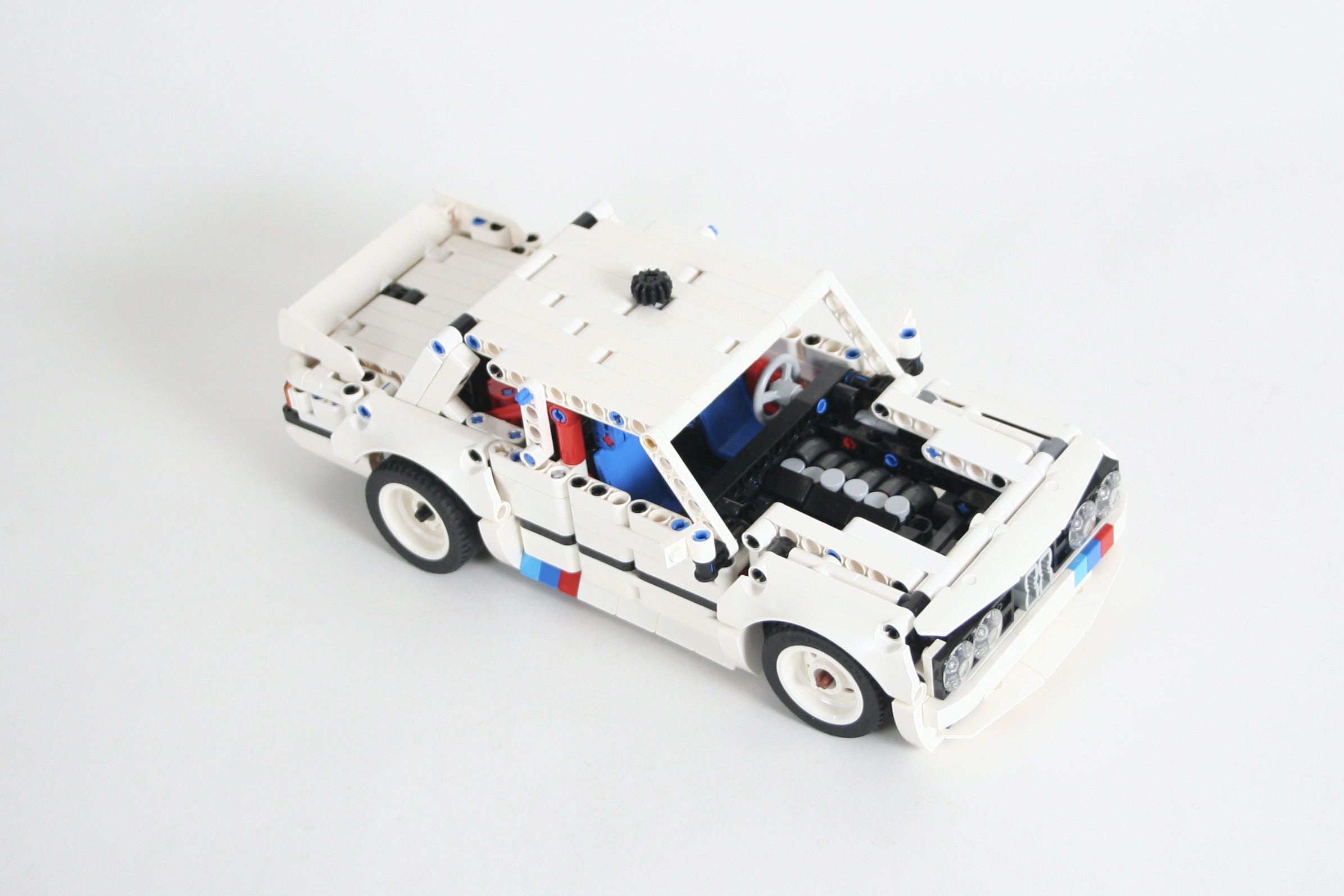
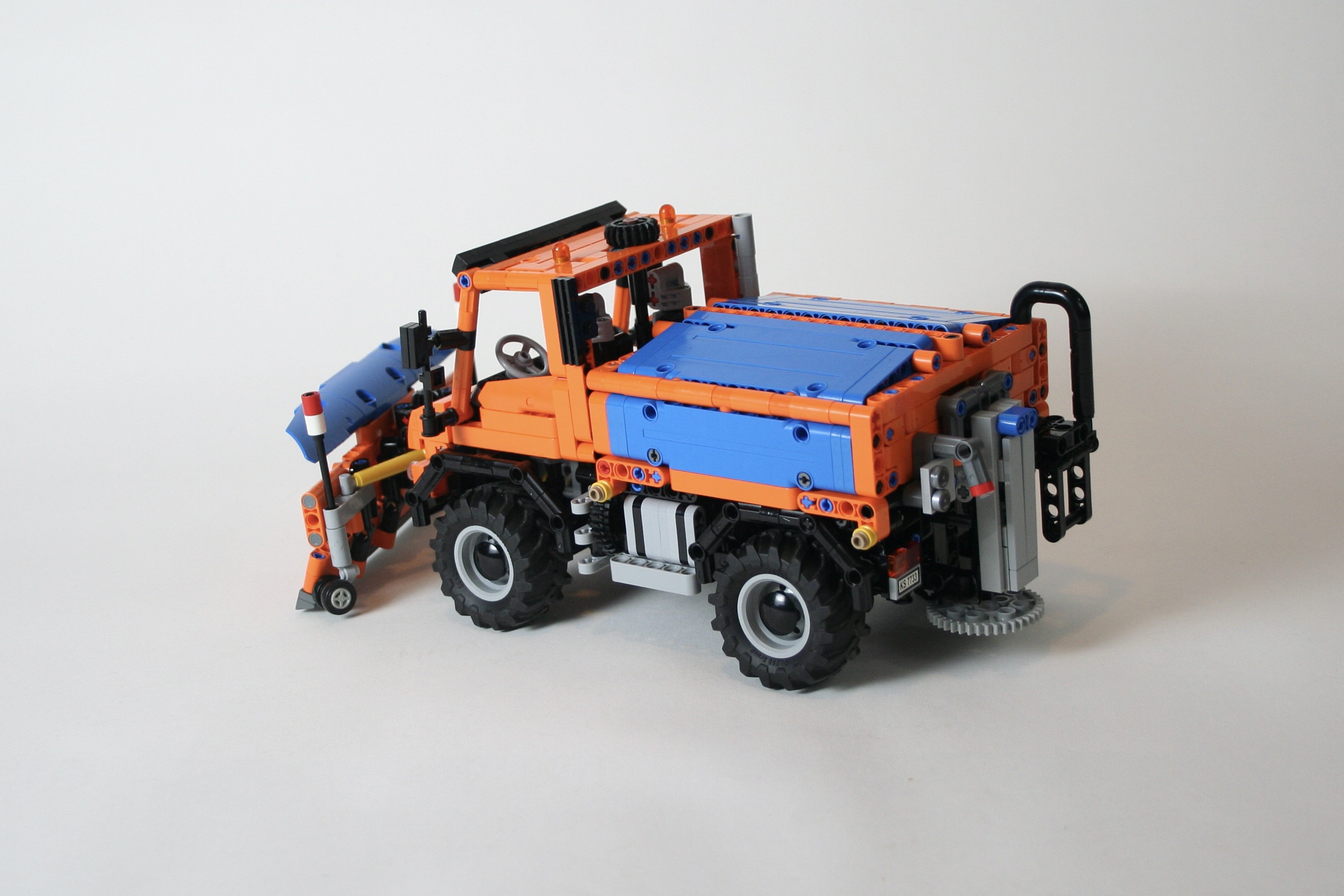
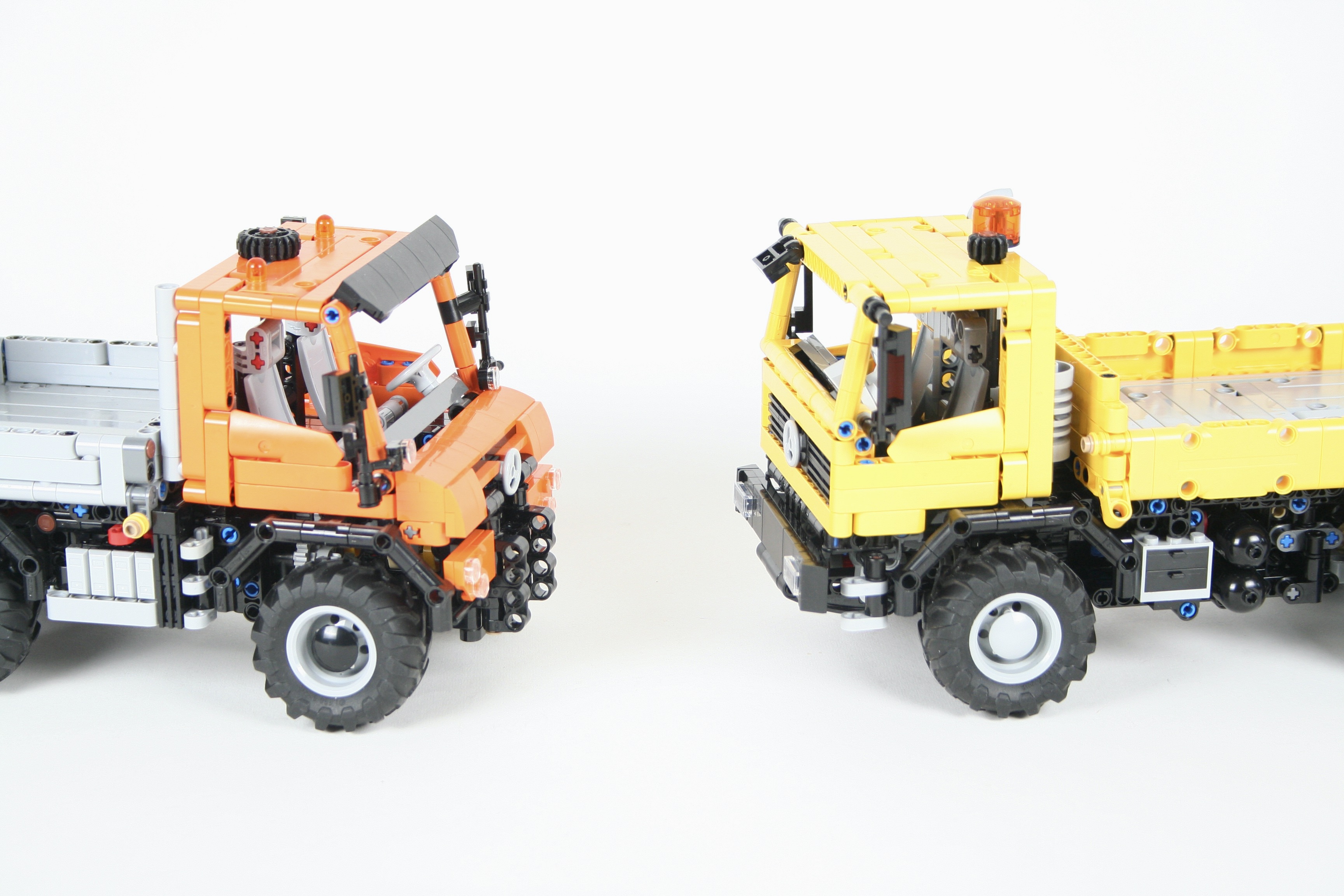
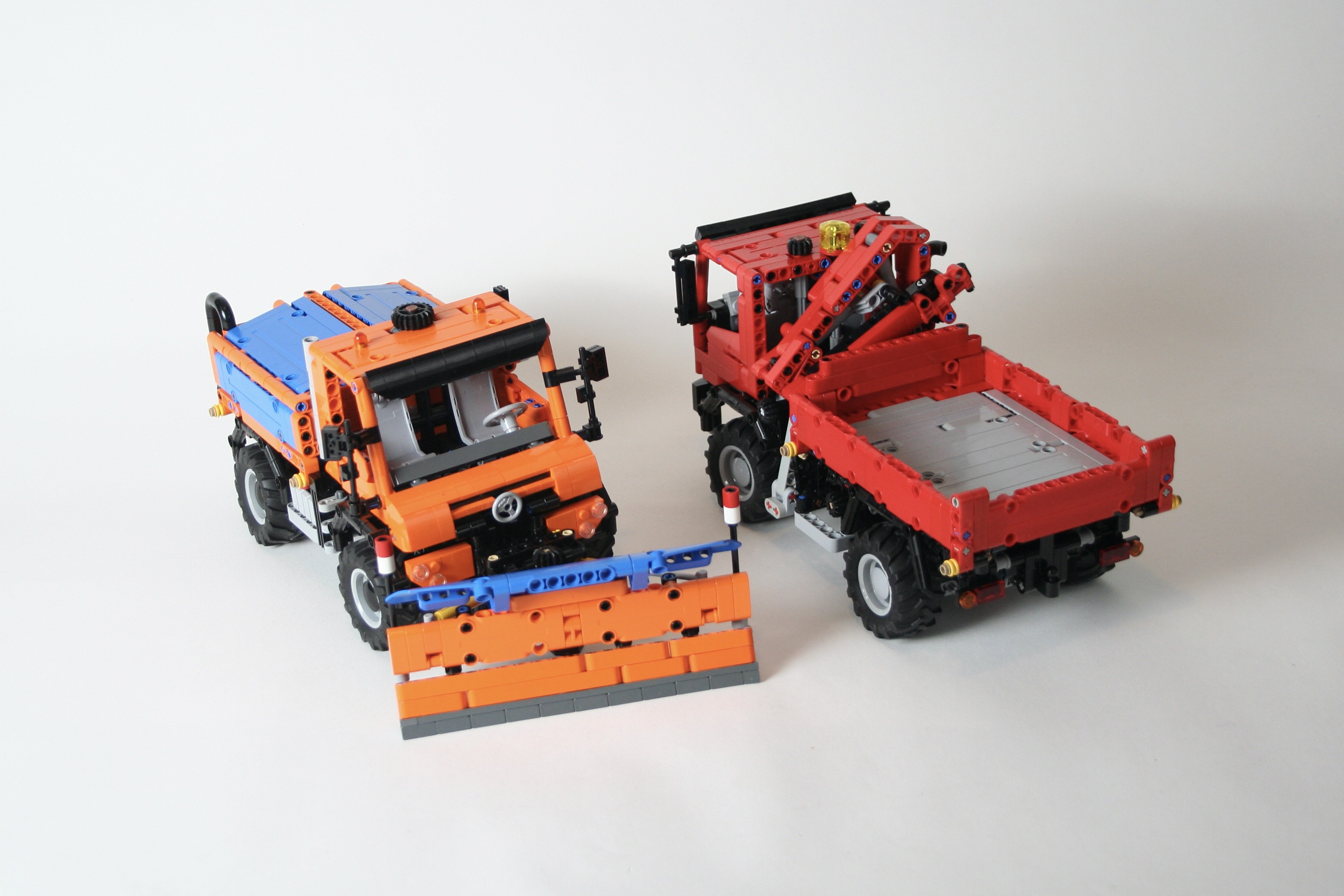
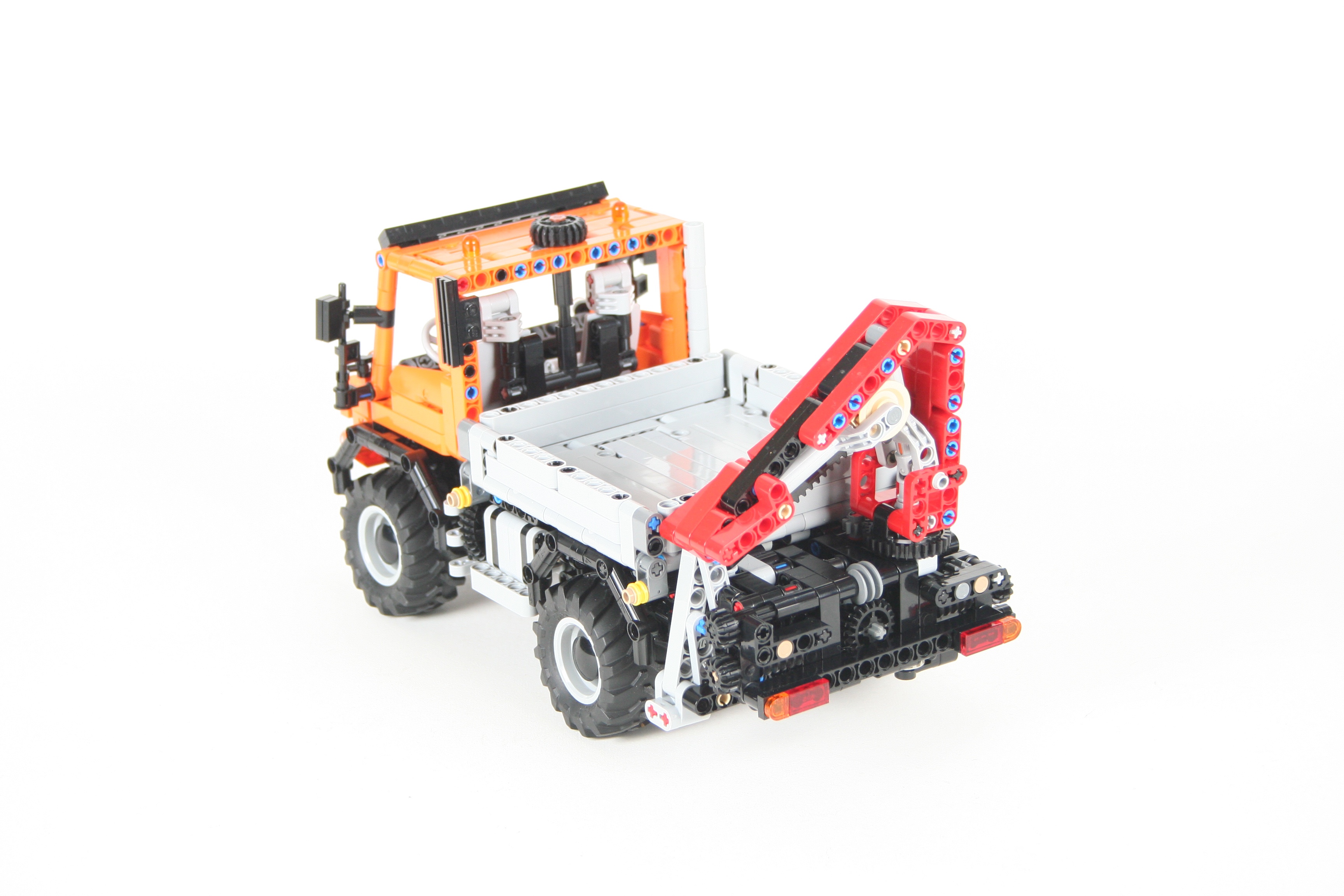
Unimog U423


For my 100th Rebrickable MOC I had to celebrate with a Unimog.

Free Instructions can be found at Rebrickable.com.

So it turns out that I have built a lot of MOCs over the years, and many of them have instructions posted on Rebrickable. Late last year, I recognized I was going to post my 100th MOC on Rebrickable, so I wanted to celebrate the occasion in some meaningful way. After a little thought, it became clear that building another Unimog was the only way to celebrate!

I have build a number of Unimogs over the years, but if one thing has happened during this time, it is the consolidation of the 1:21 scale truck that has become a standard in the LEGO MOC community. LEGO sets like 42098, 42078, and 42128 have helped to standardize the 1:21 scale truck, and many other MOCs have followed suit. Building a Unimog in this scale seemed like a good idea.

I planned right from the beginning that multiple implements would be available for the truck, so the design would need to be able to accommodate each attachment. To support this, a front, rear, and center PTO would be needed, and mounting points on the front, rear, and bed would need to be easily accessible. Once these standards were set, I measured the scale, and made a draft with all the set points fixed. As I built, the steering was finalized as well as the 2 cylinder fake engine. The truck used a rear wheel drive setup, and the rear axle has portal axles and a pendular suspension. Right above the rear axle, I placed a linear actuator to move the tipping bed. After some tinkering, I decided to use a large 36z gear on the left of the truck to move the bed up and down. It is placed just behind the steps, and looks like the left side radiator. Finally, there is a PTO on/off switch on the right of the truck that turns the rear and center PTO on and off.

As I was building the truck, I built the attachments as well, which allowed me to make sure the attachment connection points were ridged, accessible, and standardized. From the beginning I planned on the following attachments: plow, gritter, front winch, rear crane, and bed crane. The front attachments are connected using a 5l axle with stop, and the bed mounts are connected using four 3l axles with stop.

The front plow has worm gear lift and can tilt left and right. Free instructions for the plow may be found here. The rear gritter attaches at the rear and connects to the center PTO gear. When the PTO is turned on, the center auger and the rear spreader both turn. The top of the gritter can open to drop small 1×1 round plates to use as salt. Free instructions for the gritter may be found here.

The front winch and center crane and bed can be easily attached as well. The front winch has a locking mechanism that allows the winch to be locked as needed. The rear bed has a knuckleboom crane that folds up for transportation. Instructions may be found for both here.

Finally, a rear knuckleboom crane is also available. This crane uses the same crane as above, but uses a different attachment point. A small interior cam mechanism that is worm driven is used to connect the rear crane to the truck. Two outriggers are on both sides of the crane and are locked by worm gears as well. The crane folds completely and extends as needed. Again, free instructions for the crane can be found here.

Maybe I will find additional attachments, trailers, and implements for the truck but for now I am done. This project worked just a well as I had hoped and was perfect for my 100th MOC. The truck is just the right size, and has all the features I wanted it to have. The functions work well and integrate with each other well. Each attachment was great addition as well, and gave the truck lots of distinctive styles and looks. I hope you enjoyed the build as well.

Happy building!

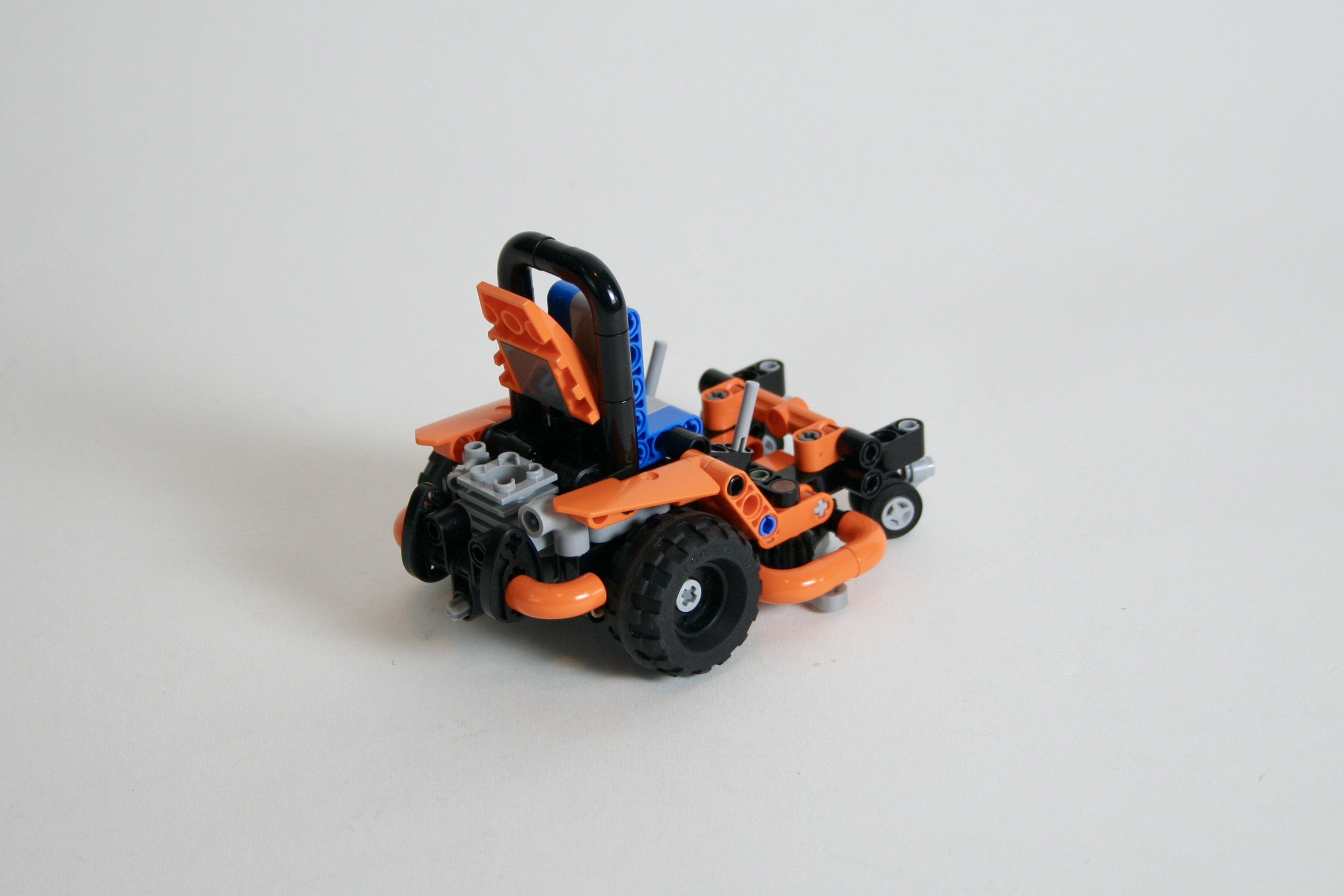
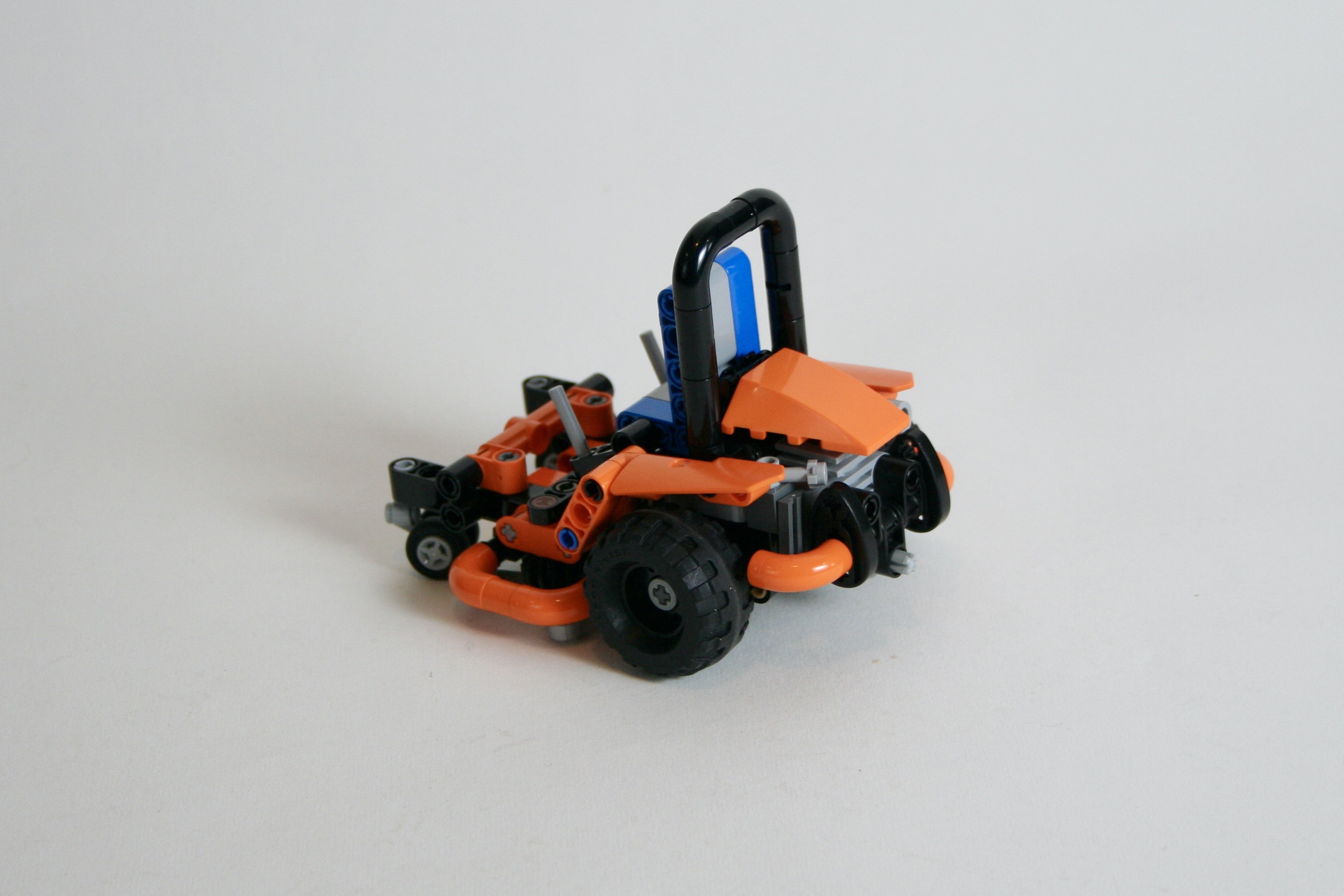
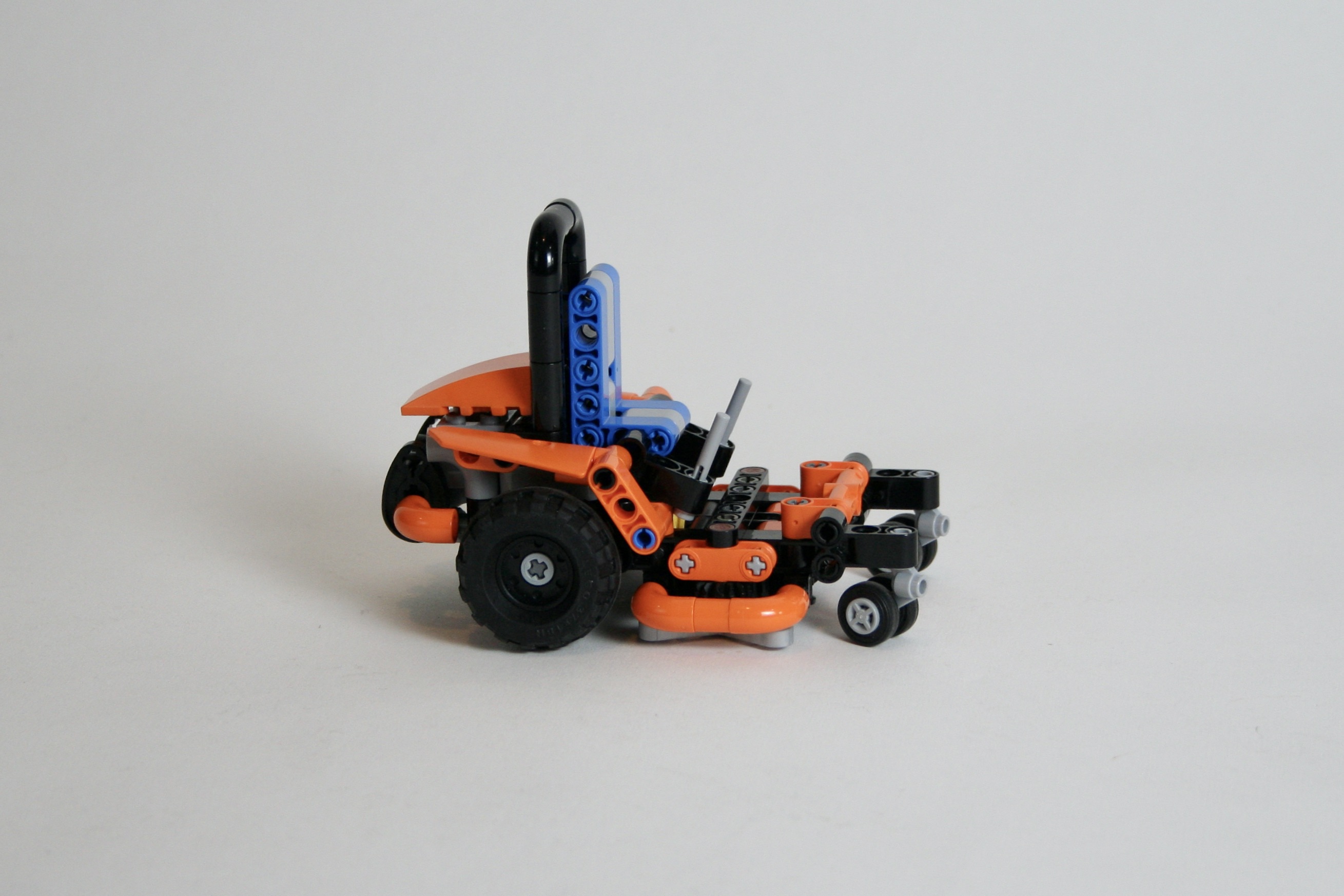
Zero Turn Mower


Sometimes I see something, and quickly turn it into a build.

Free instructions at Rebrickable.com.

Recently, there was a little John Deere zero turn mower in my neighborhood, and after building some other machines for the Thirdwigg Farm, I decided maybe a little mower for the farm would be a nice addition. A quick afternoon later, I had thrown together a little chassis and had the rough idea for the build.

For something this small, features can be difficult to add. I wanted to have mower blades connected to the drive wheels, and an engine if I could figure it out. The result was one drive wheel on the rear of the mower which powers a single cylinder engine hanging off the rear of the mower. The same drive wheel turns a couple of gears to drive two mower blades. The rotation speed is sufficient for both, and spin well with a little movement of the mower. I used the little airplane nose wheels as front casters for the mower, which resulted in a perfect ride height for the mower blades.

Then I styled for the mower. I love the look of orange parts, so that was the decision for the mower. I used the round macaroni parts for the blade guards and for the roll-over structure which gives it a playful look. A simple fender was designed and a rear bumper and the build was done. Quick and 157 parts.

I do not usually build this small, but it was a fun little project; a little palette cleanser from some of the more complicated builds that I sometimes do. We’ll see if I do more like this.

Happy Building.
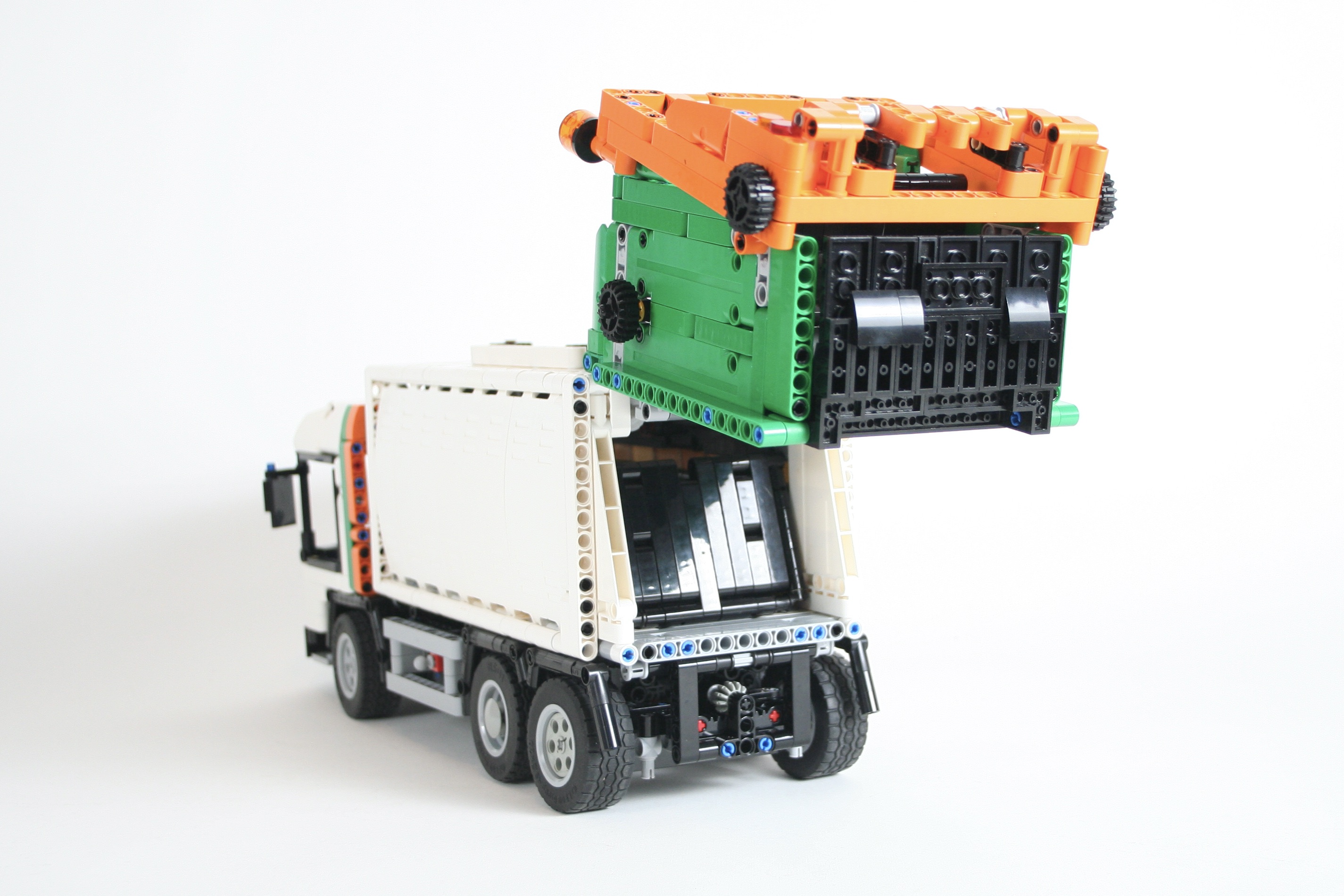
Off Road Knuckleboom Truck


It was time for another truck! Free instructions can be found at Rebrickable.
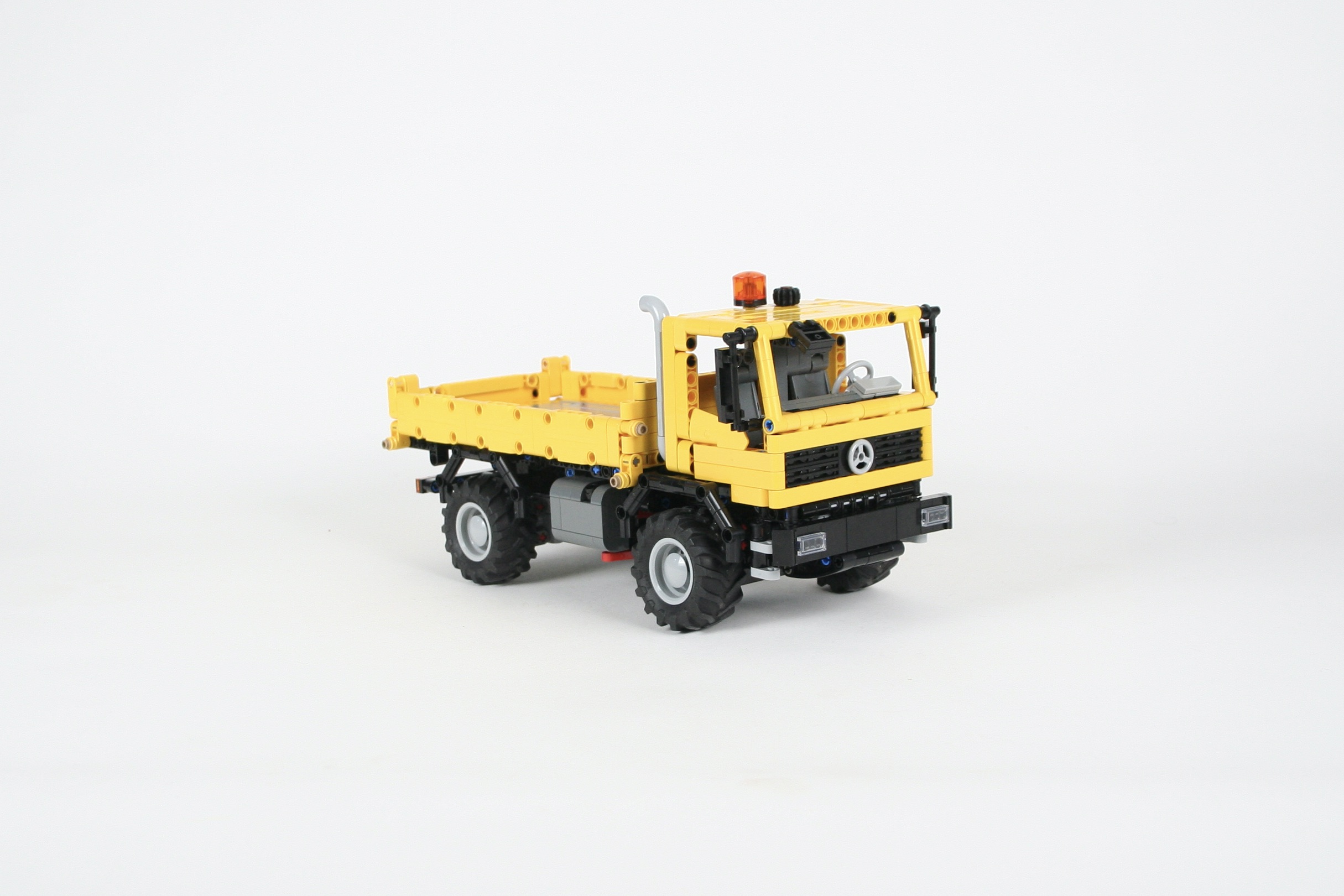
I have been building a lot of tractors and construction vehicles lately. I love building them as they offer a lot of movement and features. But it was time to build another truck. LEGO truck MOCs are beginning to coalesce around the “Mack Anthem standard” which is a 15 module wide truck in about 1:20 scale. Many MOCs are being designed in this scale as it is a good playable size, and fits the scale of some of the more recent LEGO trucks that have been released. I wanted to offer another truck in this scale, with some fun playable features.

I started with a chassis that uses a simple pendular suspension on the rear axle, which is damped by 2×1 rubber connectors. The rear axle drives a simple I3 fake engine under the cab through a two speed transmission. The transmission changeover is on the right side of the truck. Front steering is controlled though the HOG light on the top of the cab.

I have found a simple way to add a three way tipper bed in my trucks, and I have used it many times before. A mini linear actuator moves simple linkage under the bed that can pivot in three different directions. Each corner of the bed has a removable axle that allows control for which way the bed tiles. But in the past the control for this tipping function was in a tricky place to reach, so I wanted to route the control to the top of the cab. I managed to add this right next to steering light. I used a top pivot design on the bed sides and rear, locked by a 3/4 pin on the bottom.

Finally, I added a crane, and since I had a little space left over, two stabilizing outriggers. The outriggers are a simple two link design that are controlled with a worm gear mechanism. The crane is a little more complicated. It is mounted on a small turntable with a rotation control on the left side of the truck. The first lift mini linear actuator is controlled by the third HOG on the top of the cab. The second lift stage is controlled by another mini linear actuator. Finally, the third stage has an extending boom that allows the reach of the crane to extend a little more. The crane can lift some; not a lot, particularly when the boom is fully extended. By removing the three HOG knobs, the cab tips to show the engine. Also, both doors open.

I loved the way this trucks looks. The beefy tires, and the cabover design give the truck presence and look of toughness. The crane was a lot of fun to play with even if it could be a little stiffer. However, this may be the last time I use this three way tipper design. I am happy I moved the control to the top of the cab, but the linkage does not have the power it needs at the start of the tip. I will have to come up with something better for the next truck.

Stay tuned, and happy building until then.

Skid Excavator


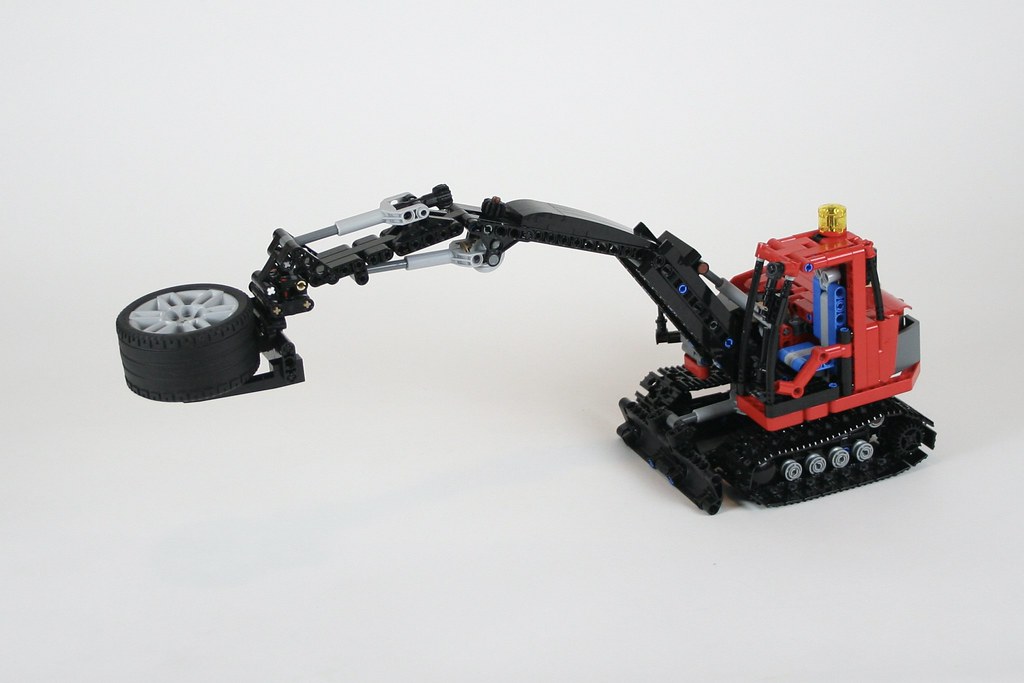
Another little contest build, complete with Free Instructions.

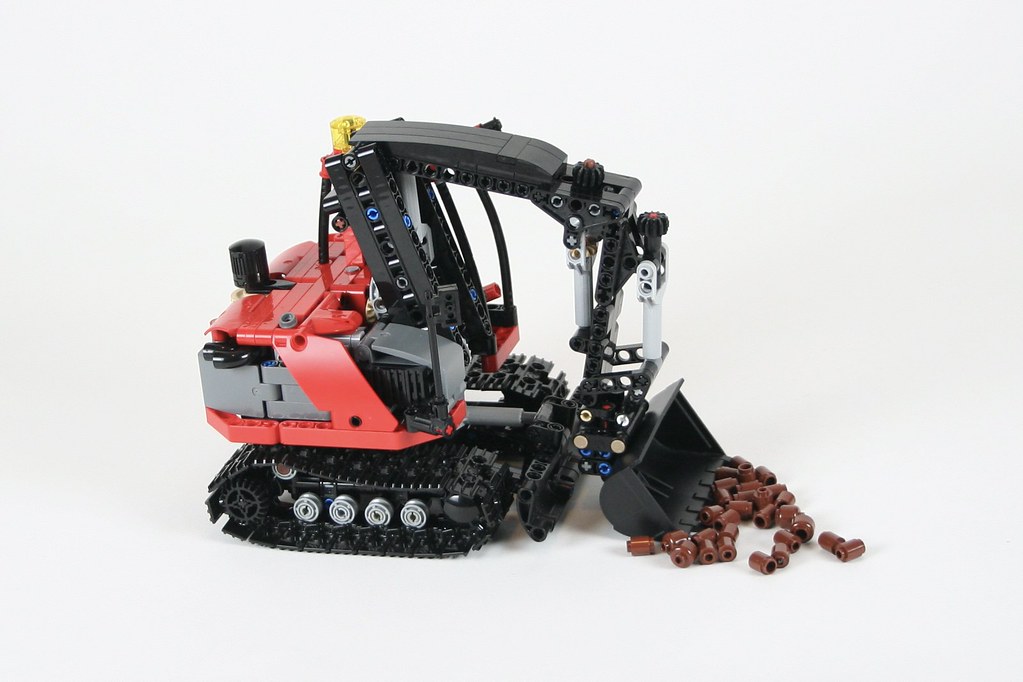
I participate in a number of LEGO Technic contests, and Eurobricks hosts a number of them. The requirements for the TC22 Contest was to build a Technic construction vehicle that could fit in a 10,000 stud bounding box. It had been a while since I built an excavator, and they allow for a lot of functions in a little bit of space. I have always been intrigued with the machines built by the French company Mecalac, and after looking at their cute little Skid Steer Excavators, I had my subject. Setting the scale was important as I only had so much space. I decided on the large tracks as I think they look a little better. Setting the width with the tracks at 17 studs, would give the stability needed, and would give me some working space. Calculating the rest of the excavator would allow for 28 studs in length, and 21 studs in height for a total of 9,996 total cubic studs.

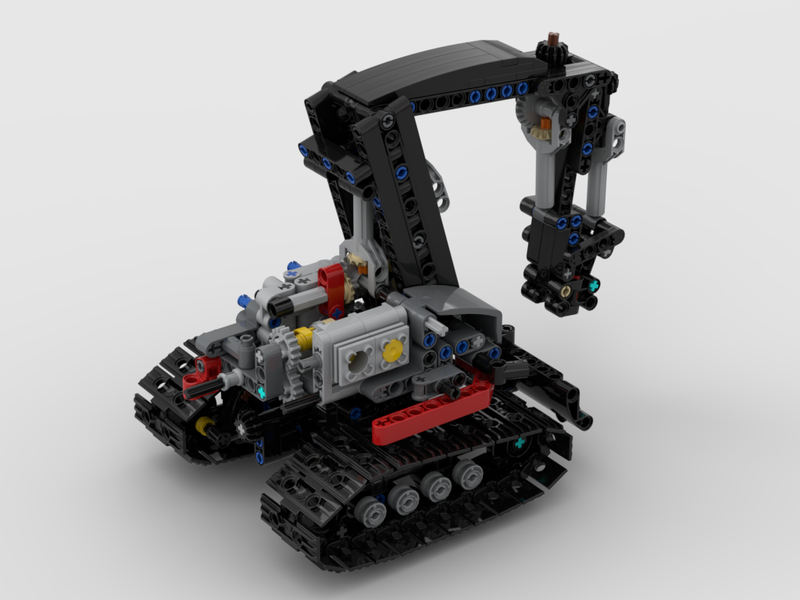
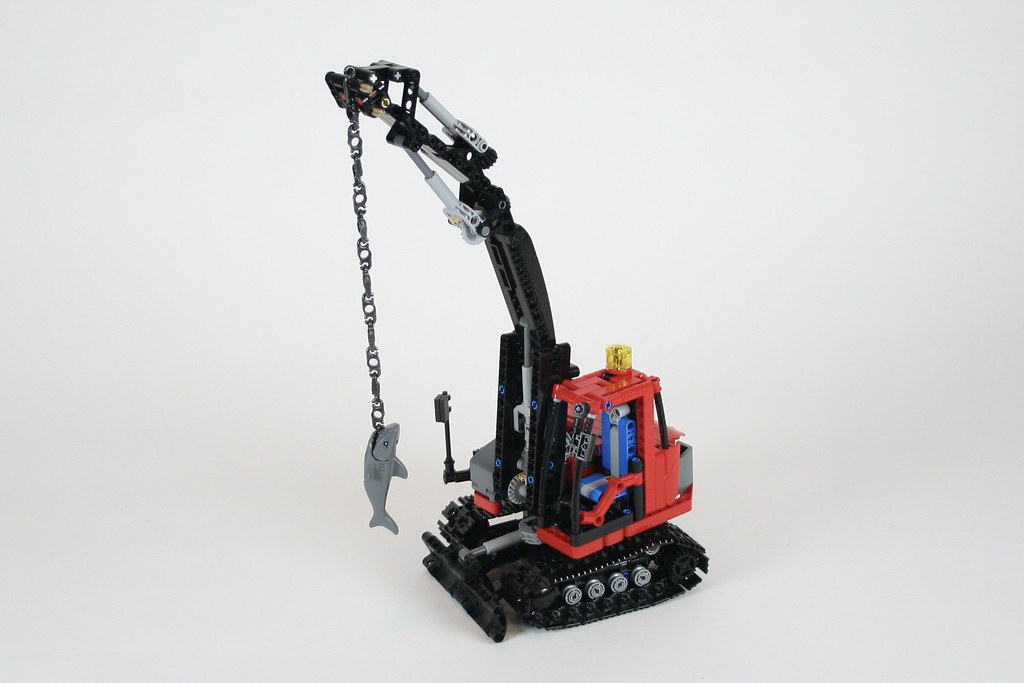
I stared with the boom, which is a little complicated. The boom is a 3 section design, and should reach far, and tuck in close to the front plow, and be able to dig deep. I planned the movements with mini linear actuators, and wanted to keep the controls easily accessible. This resulted in a design where two actuators had controls on the boom, and two actuators had controls on the back of the superstructure.

I thought I had the hardest part done one the arm was finalized, but I quickly discovered that the rest of the superstructure was going to cause some problems. First, I was not sure on the shape I wanted. It took a couple of drafts to get the rear shape right. Once I did I realized I had some space for a little engine, so I added this, and connected it to one of the boom lifts. Now a little engine turns when the arm moves. Once these features were done, it took another four drafts to make sure the tractor would not fall apart.

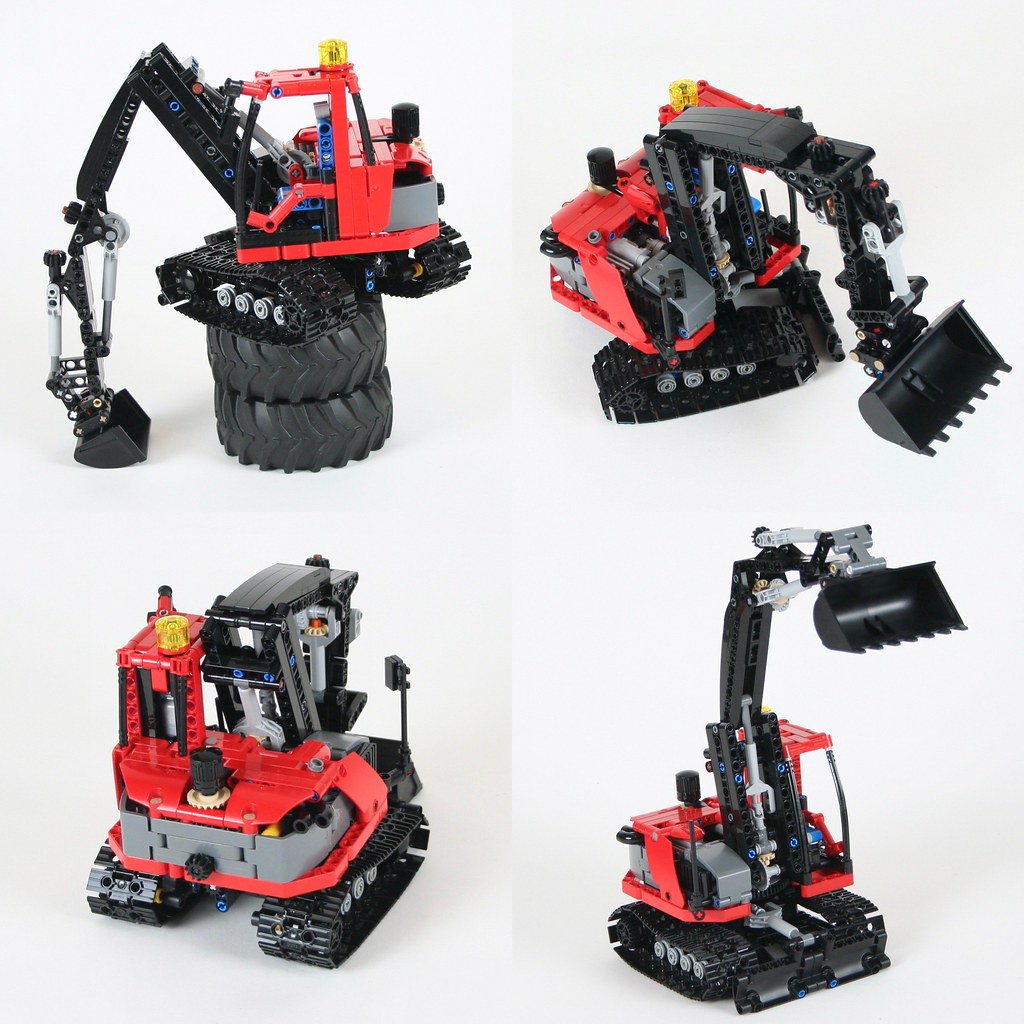
Then off to the cab and the attachments. The can was simple enough, with a simple chair and the HOG mounted to turn the superstructure. I created four different attachments, including two excavator buckets, a skid bucket, and a set of forks. In what is becoming a standard feature of my builds, each can be changed over by pulling a couple of axles on the boom.

I was pleased with how this build turned out, and it was good enough for a third place in the Eurobricks contests. All the attachment options made for a fun, playable model, and the movement of the boom was perfect. Feel free to build one of your own.

Happy building.