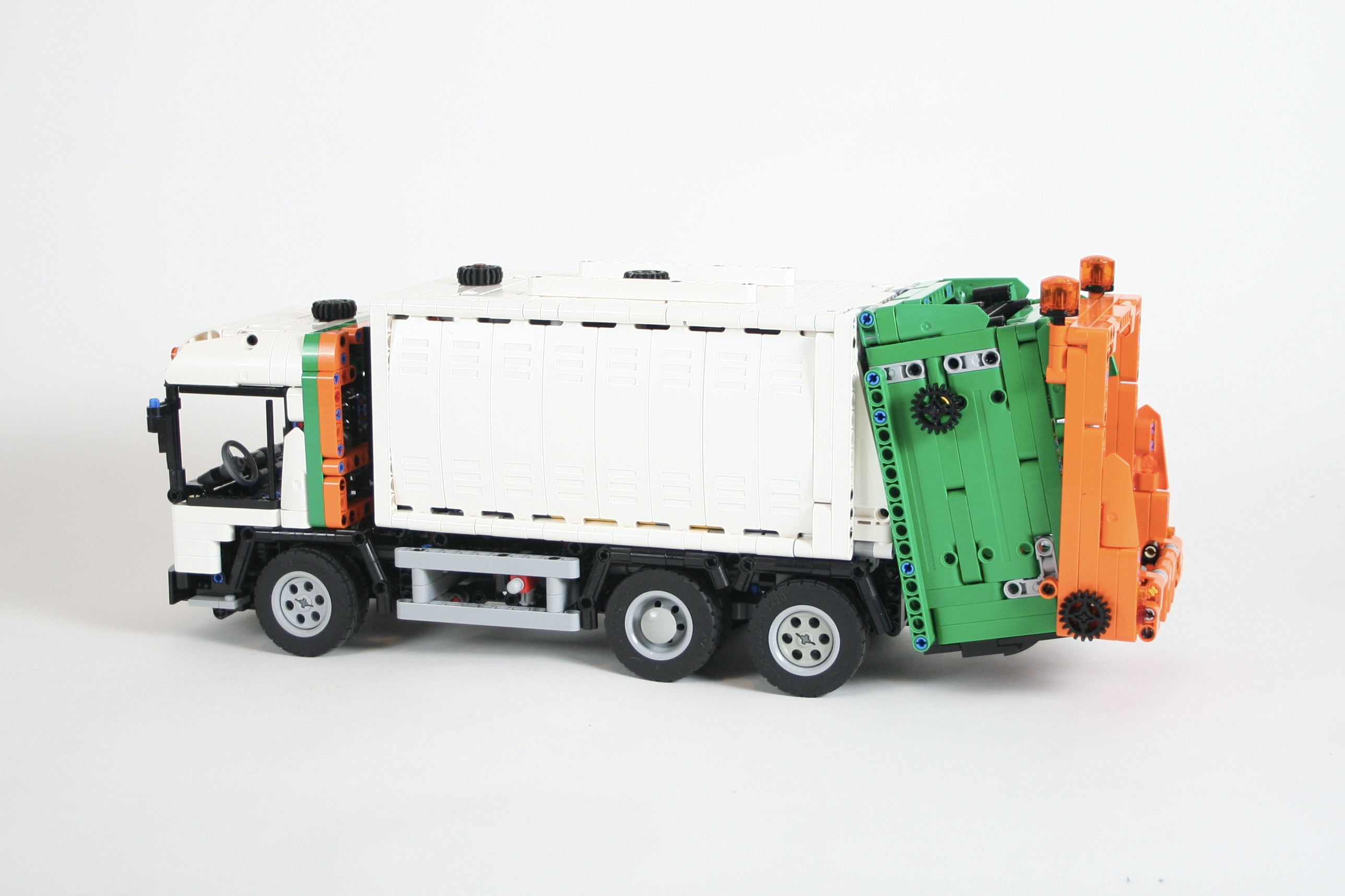
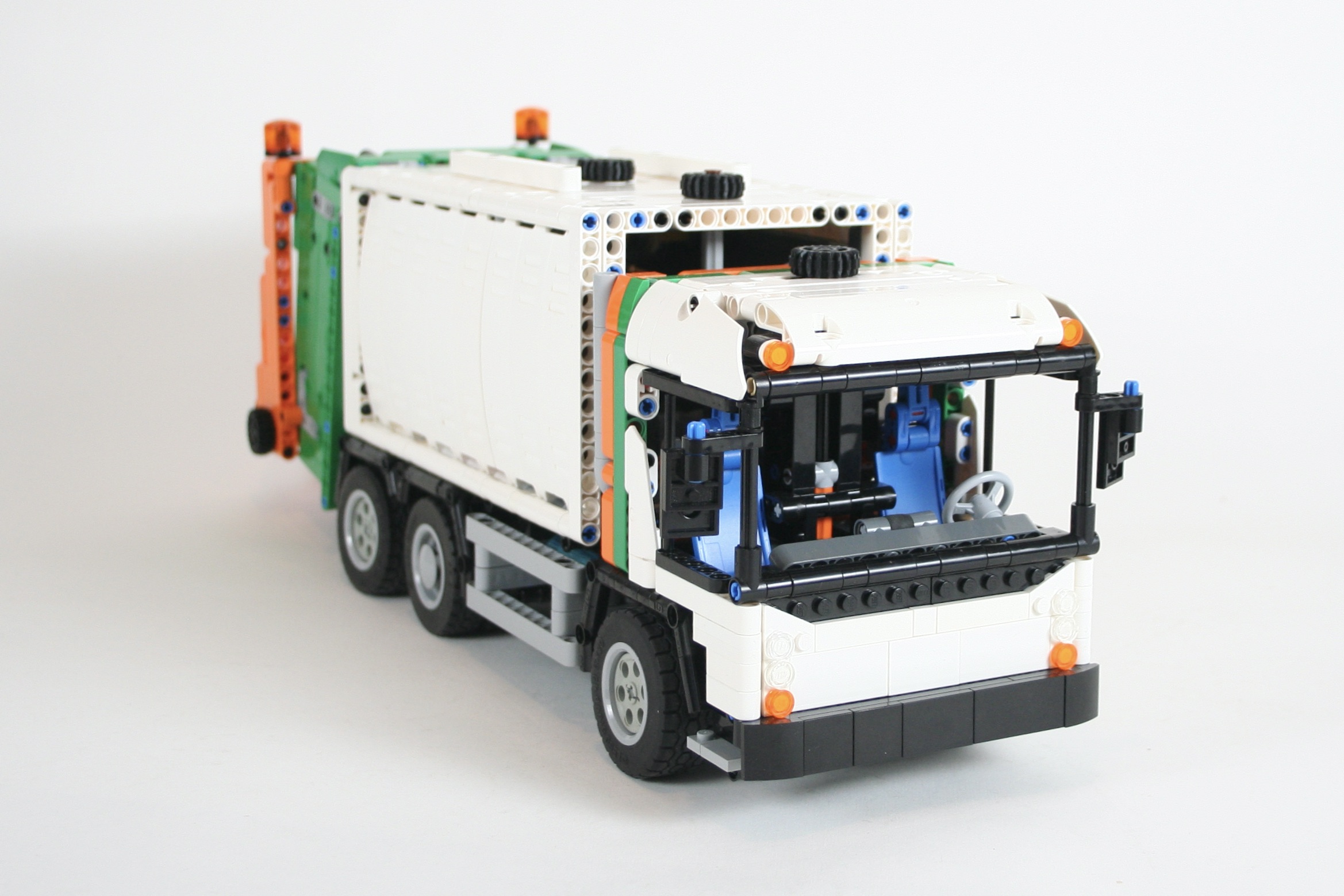
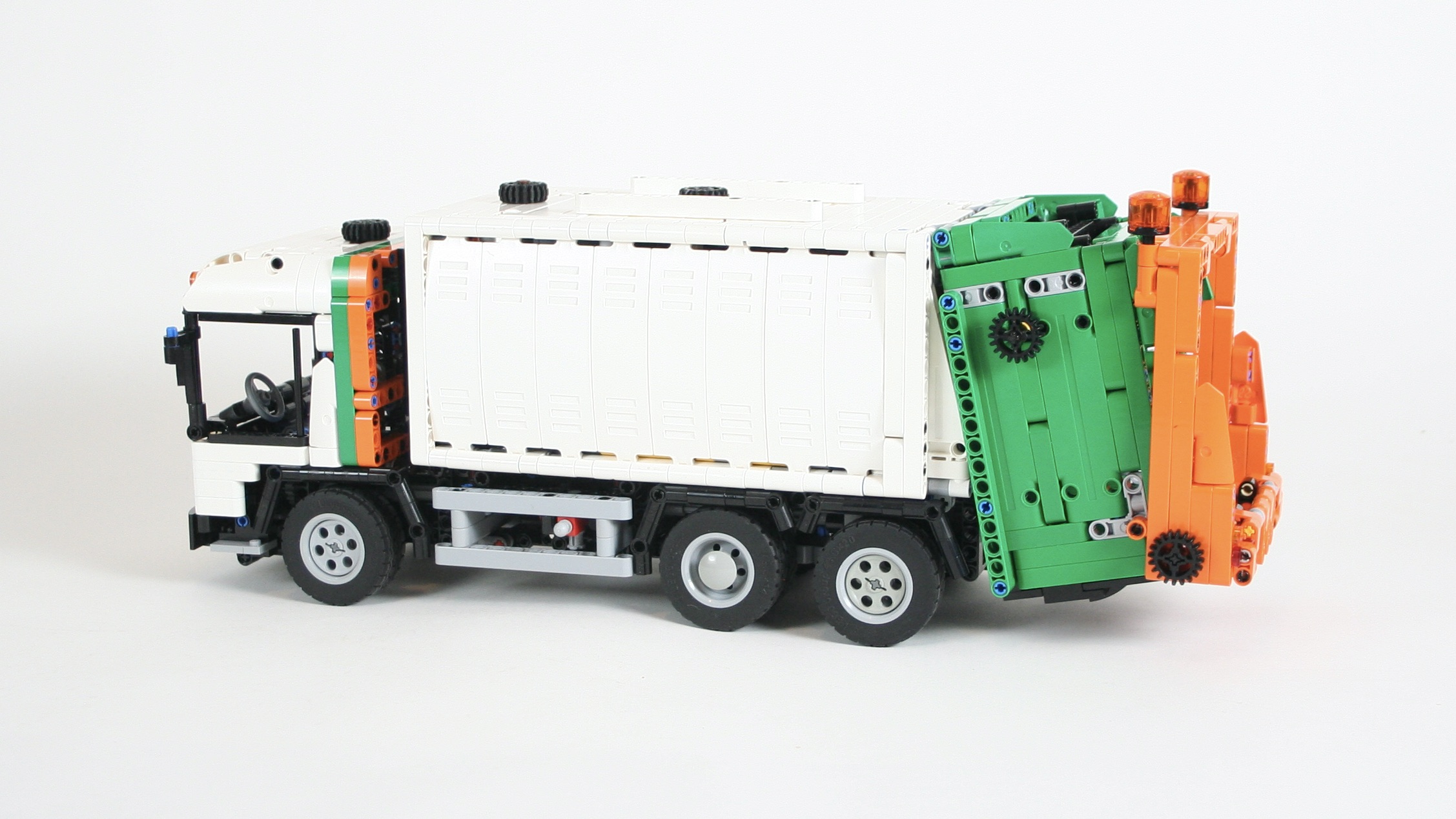
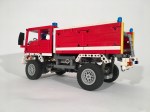
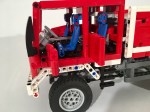
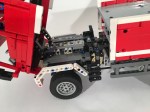
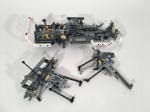
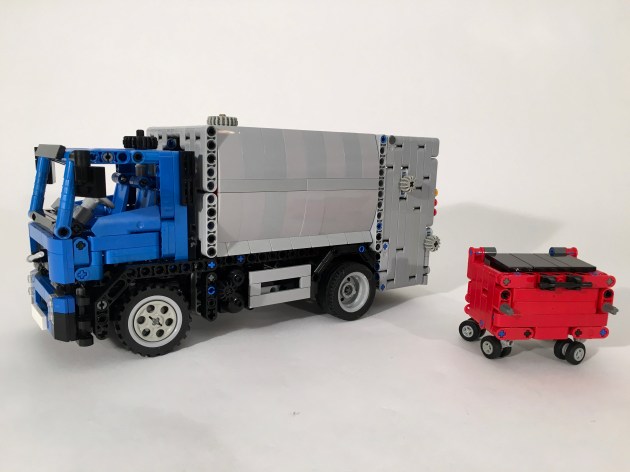
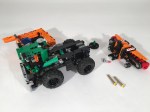
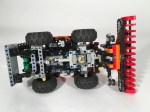
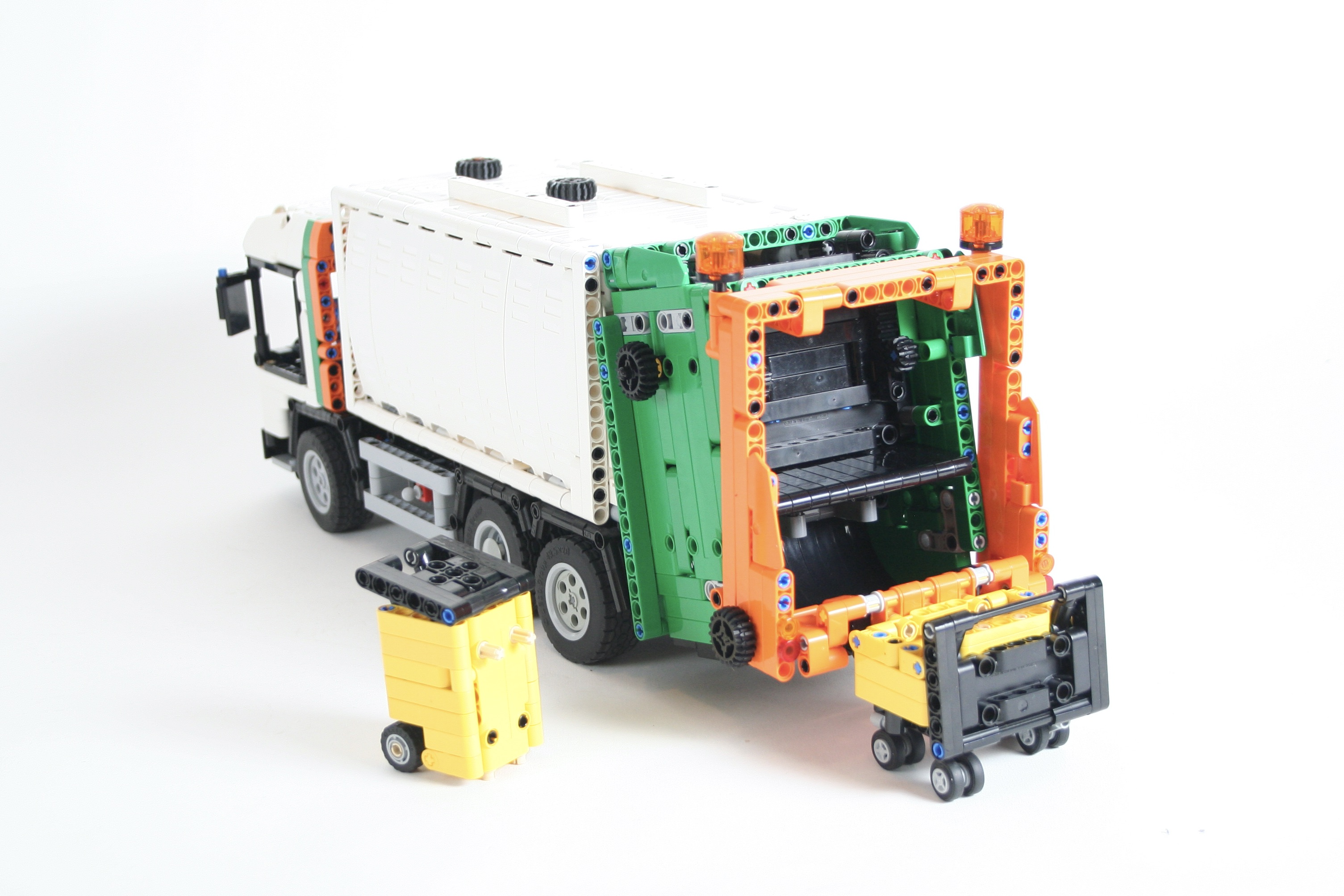
Hybrid Garbage Truck


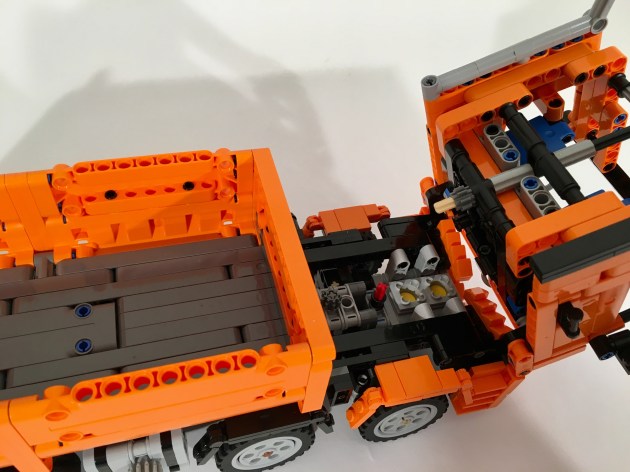
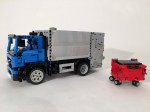
I had on my goals to complete another Garbage Truck for while. Now it is finally completed.

Instructions are available at Rebrickable.com.

I like trucks, and I like building them. Garbage trucks are the most interested to me. Not only do they look interesting to my eyes, but mechanically they have a lot going on inside of them. Naturally, recreating this out of LEGO fits well with the type of building I enjoy. When I started on this project, I settled on a couple of standards. First, it would be 1:21 scale, second, it would be manually functioned, and finally, it would be a rear loader.

I worked on this model differently than I normally do. Generally I design a crude frame, and place all the mechanical aspects on this frame, and slowly build out the rest of model until it is done. On the garbage truck, I worked on three sections on the build in tandem: the chassis, the body, and the compactor.

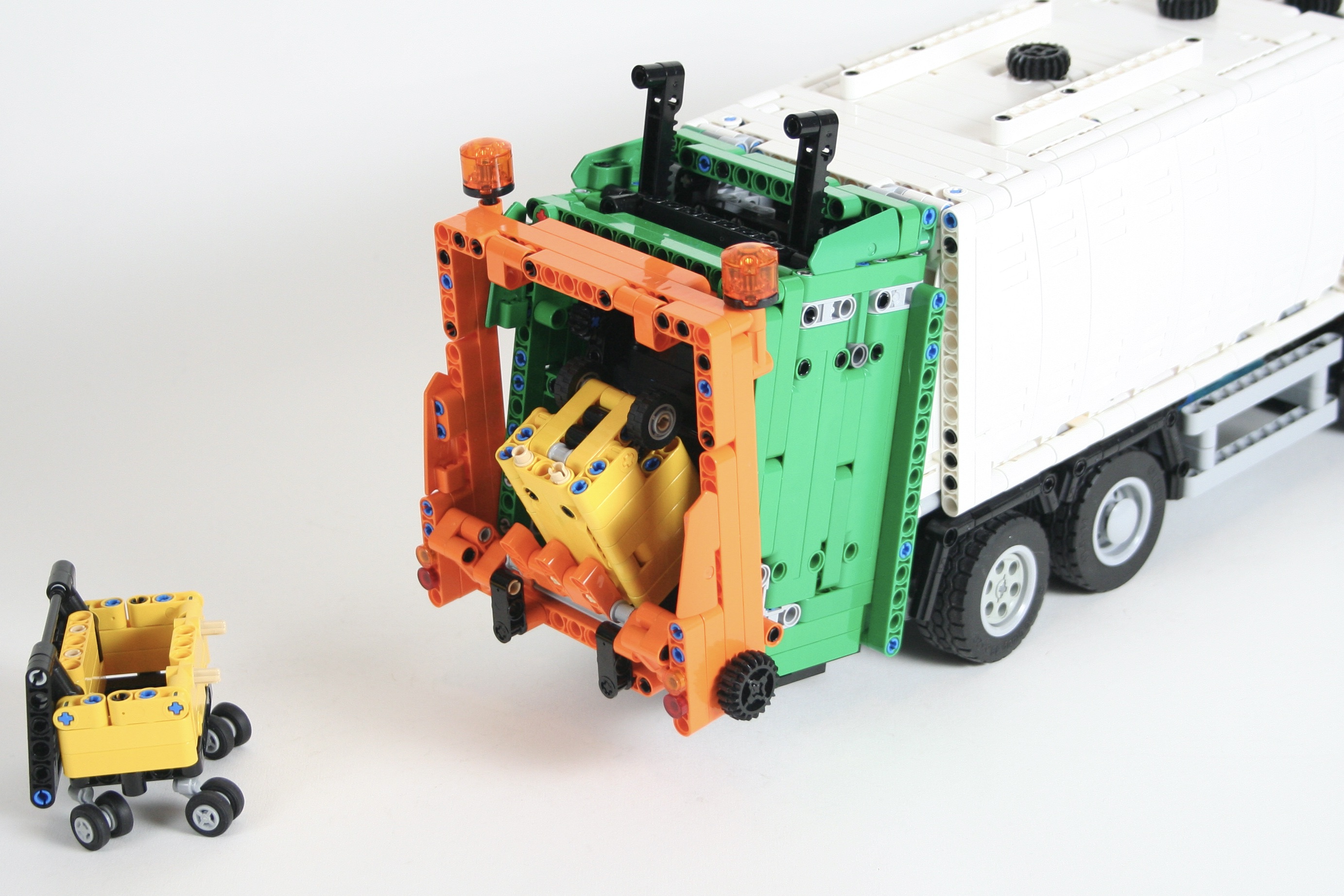
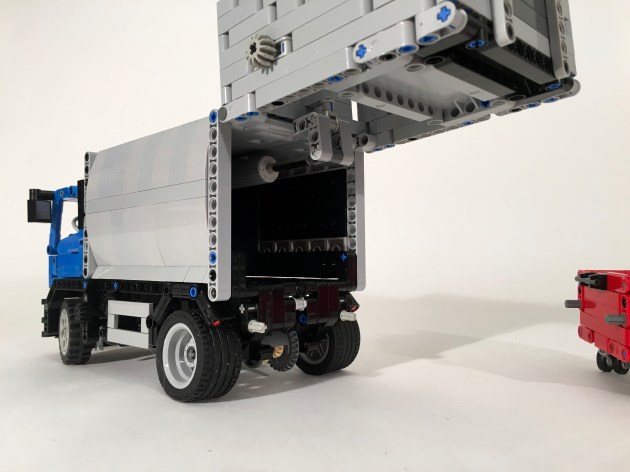
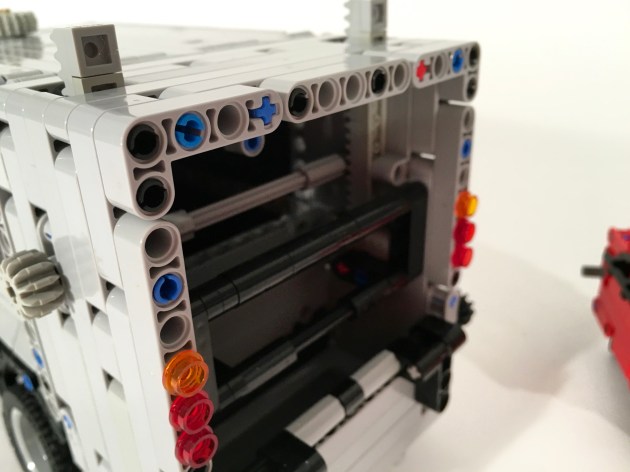
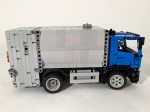
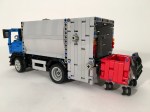
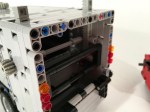
The compactor started first, and was the hardest to get right. I settled on a function that is controlled by one gear on the left of the truck. The gear moves the compactor door mount, and an interval resistance gear allows for movement of the compactor plate. The one gear controls the two movements. So when trash is added to the hopper, moving the gear extends the door down, pivots the plate, moves the door up, and then pivots the plate open again.

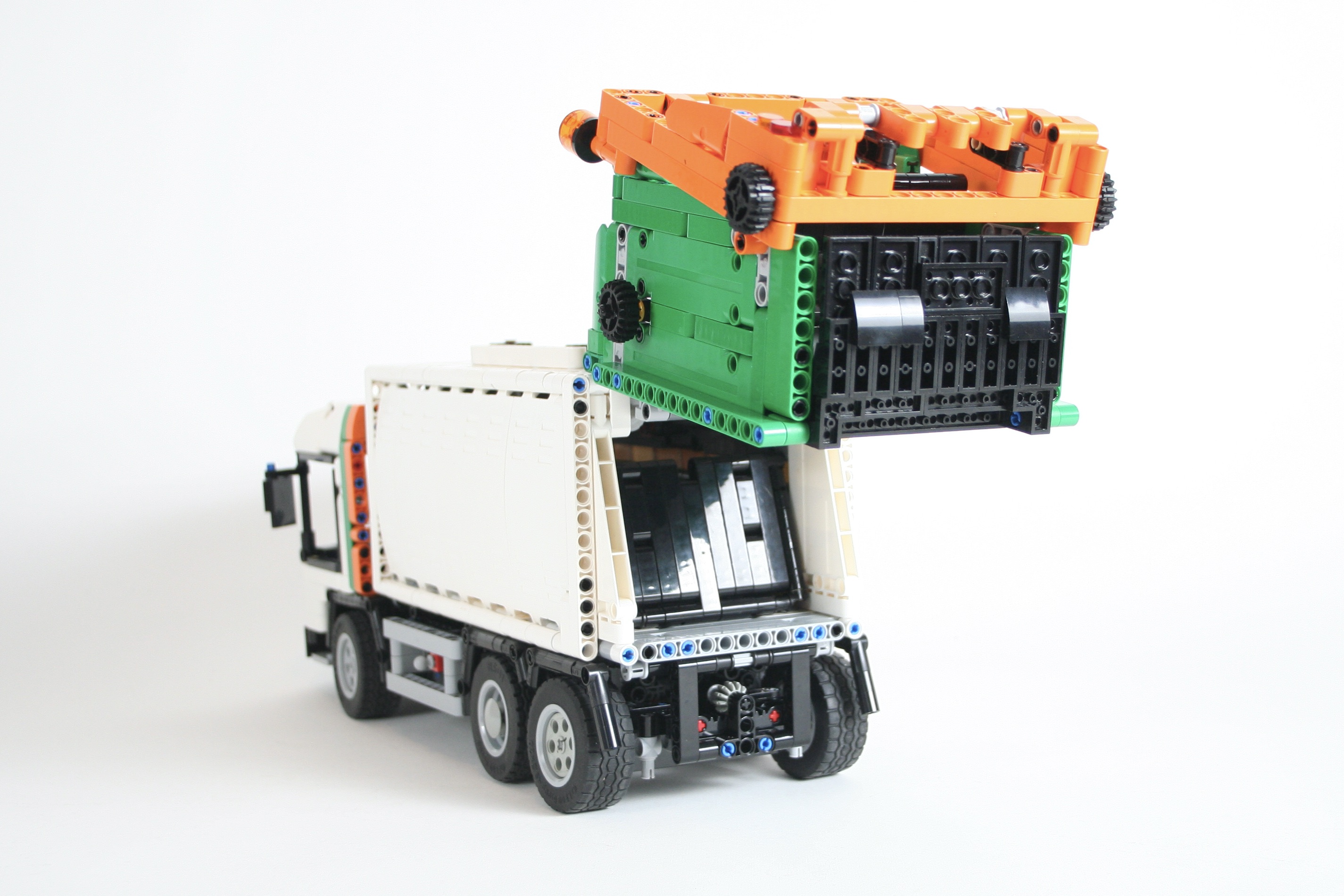
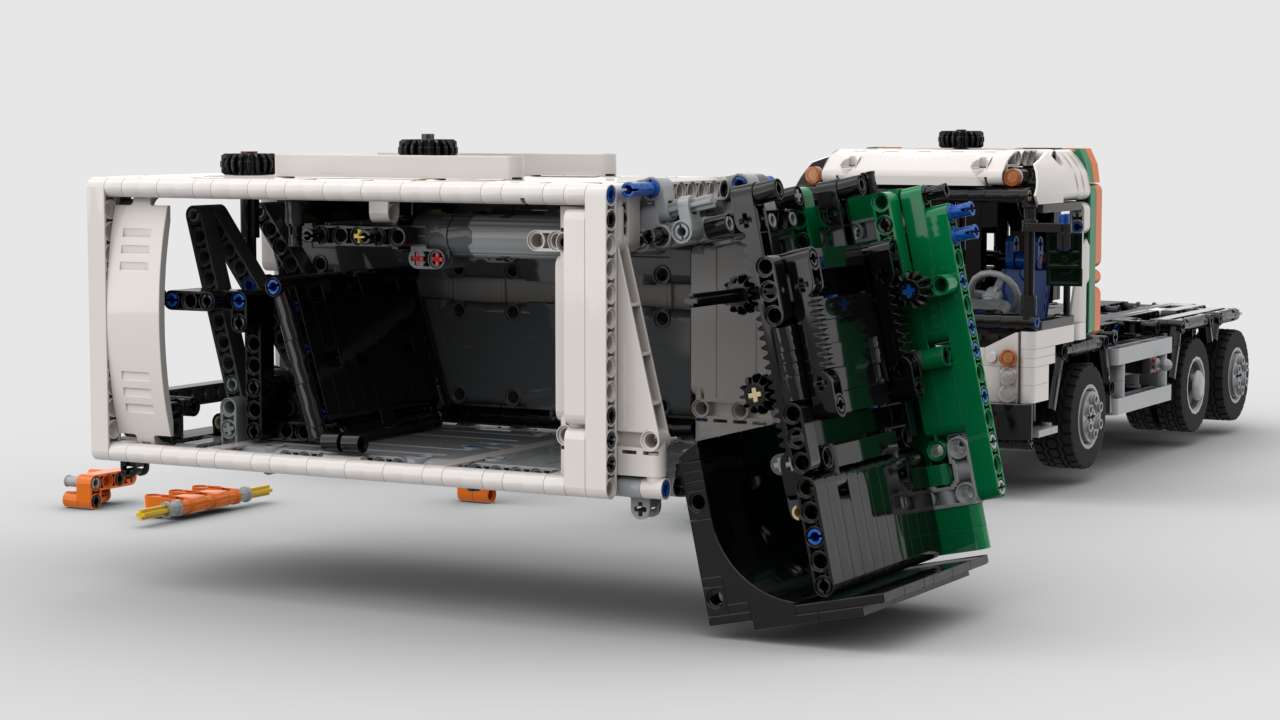
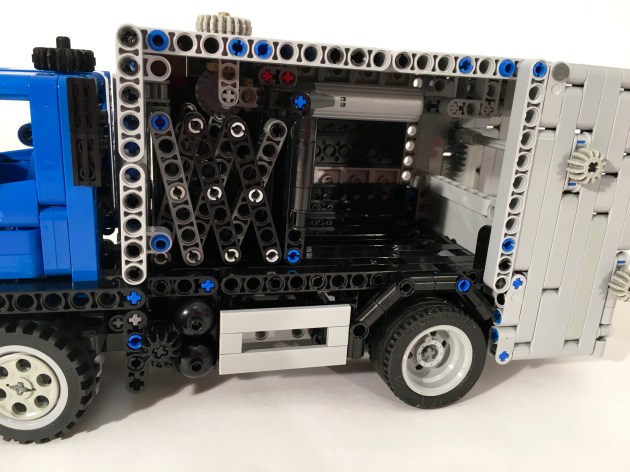
The body was started soon, and would need to work hand in hand with both the compactor and the chassis. The body would house both the extractor plate to push trash out of the truck, and the mechanism to pivot the compactor up to open. These two functions were simple to design, but what took the most time was making sure the body was strong to support the functions and the rear compactor, and to be smooth internally to make sure trash would not get stuck.

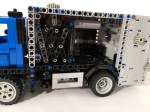
The chassis followed a more common building process. I started with the hardpoints like the wheelbase, length and engine placement, and slowly added in all the other parts needed. Right from the beginning I decided on a three axle chassis with axle 1 and axle 3 steering. Axle 2 would be the drive axle. As I built, it was clear there was a lot of extra space in the chassis. I added a little hybrid/EV drive to fill the space. The torque from the drive axle routes through a center differential that splits the torque between a fake electric motor and a fake piston engine. A resistance plate is added to the front of the piston engine so the torque will always start with the electric motor. When the speed increases, the torque will overwhelm the resistance plate and start using the fake piston engine too. It works just like a real hybrid engine. A selector is on the left side of the truck to select EV only where only the electric motors is used, or to select hybrid where both are used.

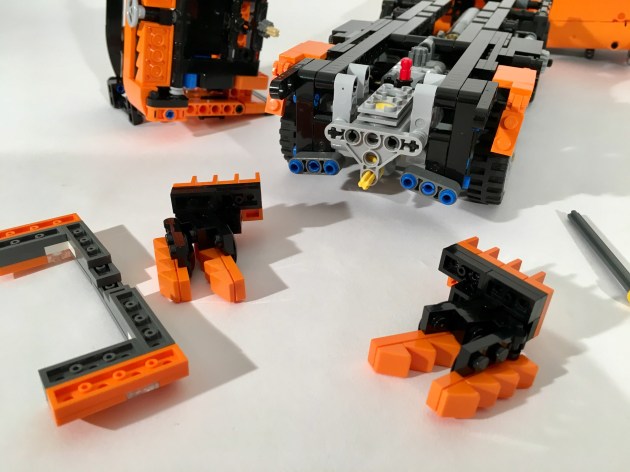
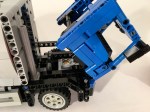
The truck and body are easily connected by four pins at the corner of the body. The cab tilts to make it easy to work on the engine. Finally, I created two small dumpsters for to hold trash. A small one and a larger one, and each fits with on the rear of the truck.

This ended up being one of my favorite models since the Ionos. The truck looks great, but packs lots of functional elements. The hybrid function works great and will be used again for another project. When I presented it at a show people could not get enough of watching the trash get cycled through the compactor. I always enjoy building a garbage truck, and I look forward to the next one I make.

Happy building.
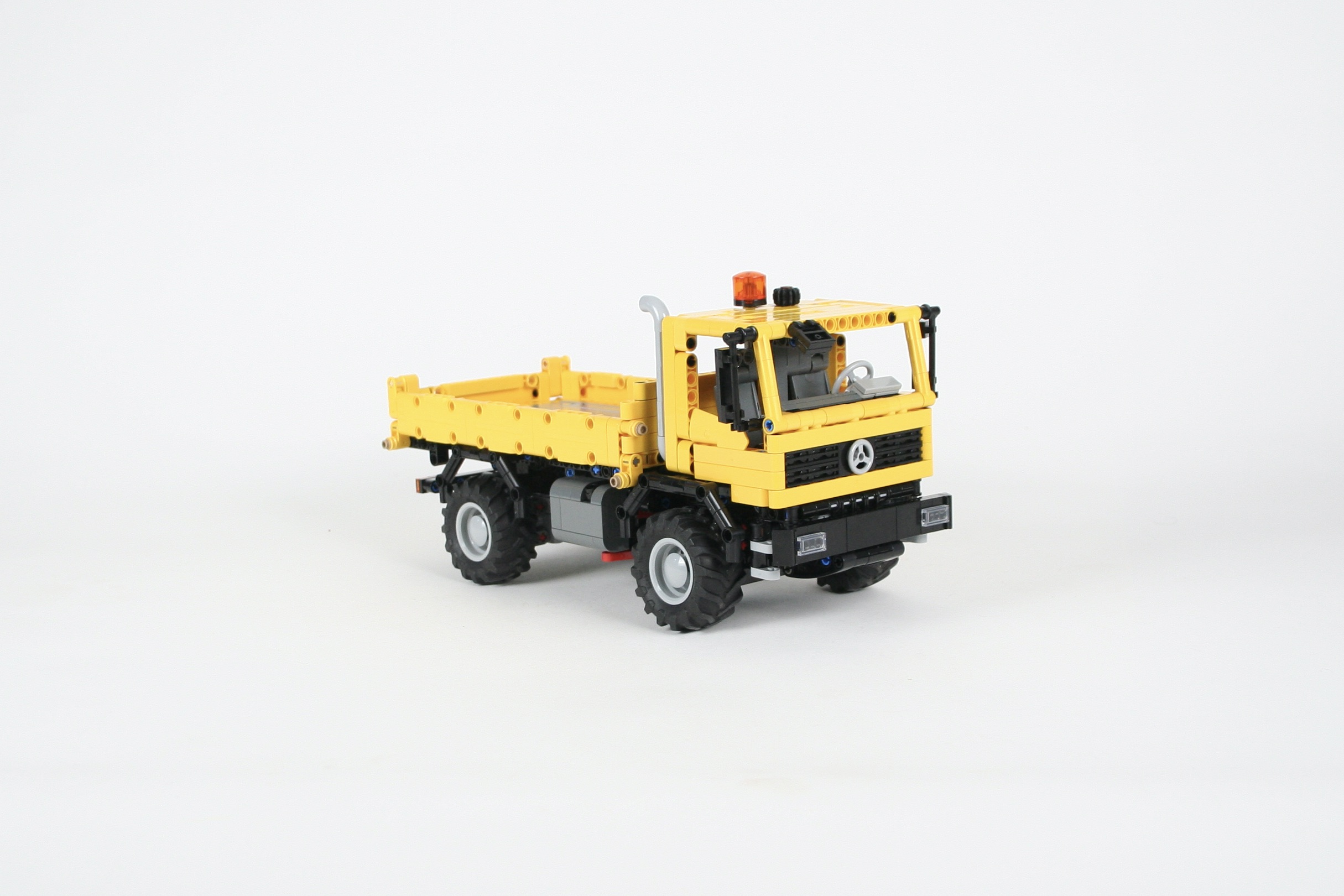
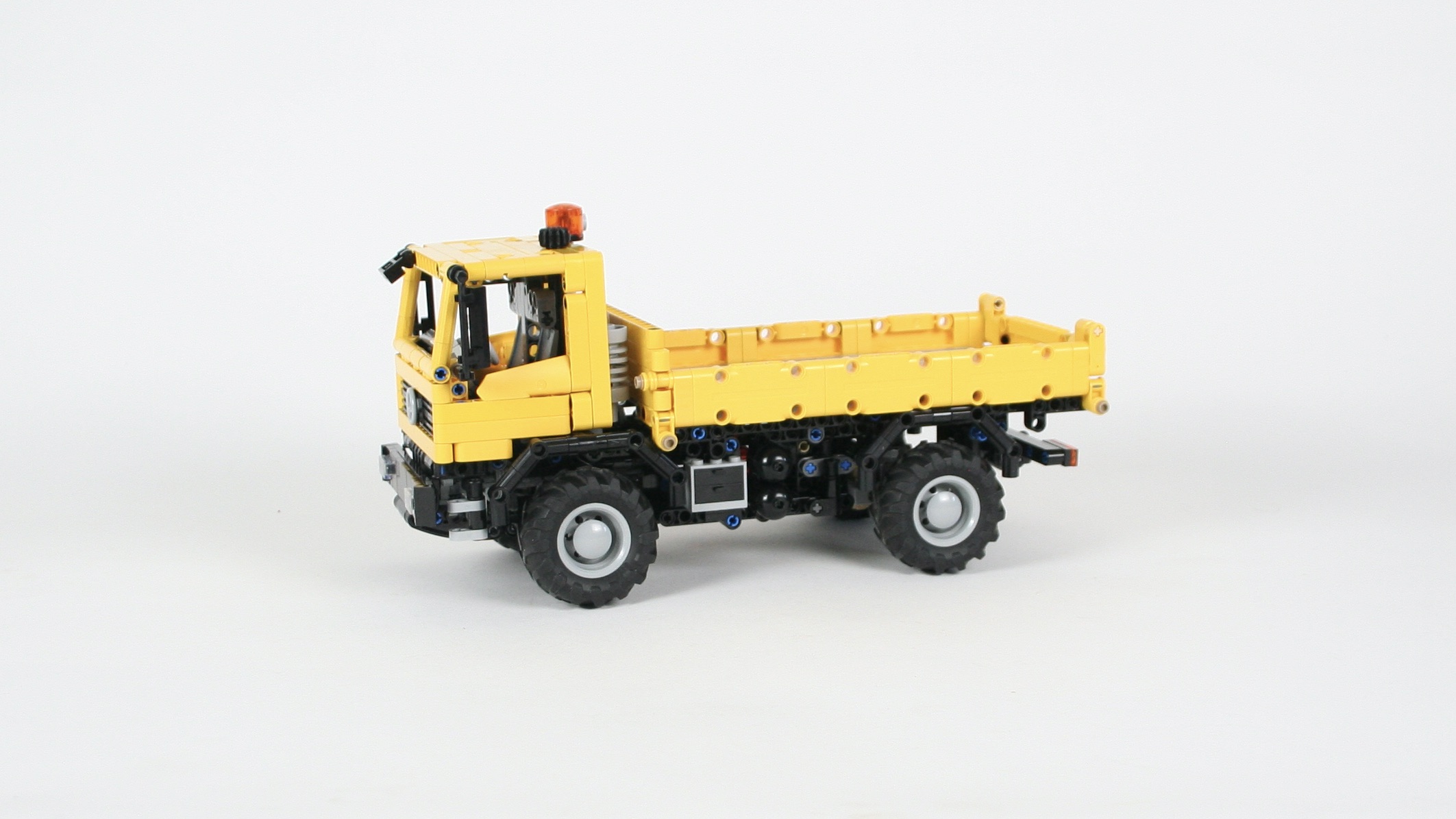
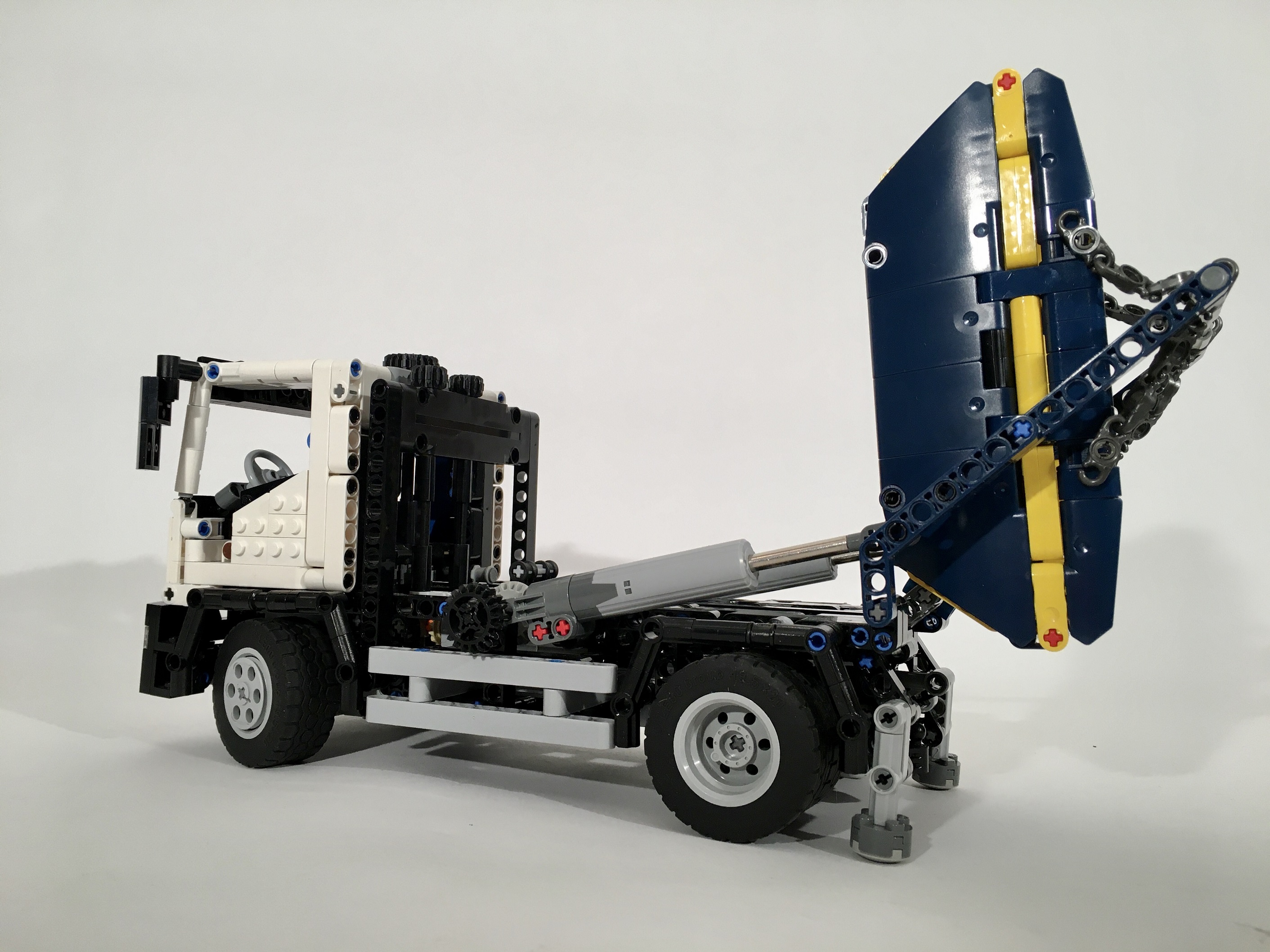
Mercedes 917


A simple, but iconic truck.

Free instructions may be found at Rebrickable.com.

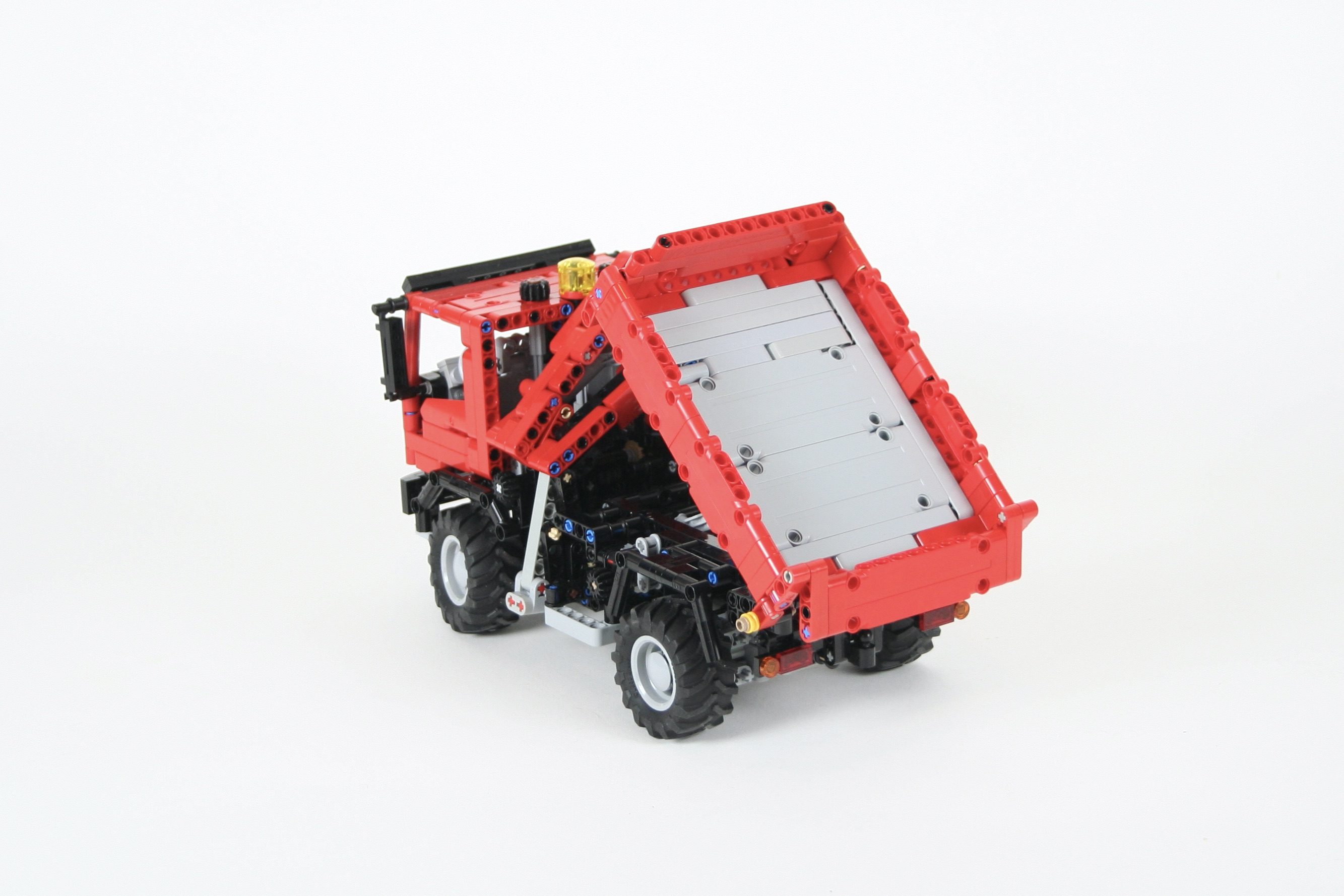
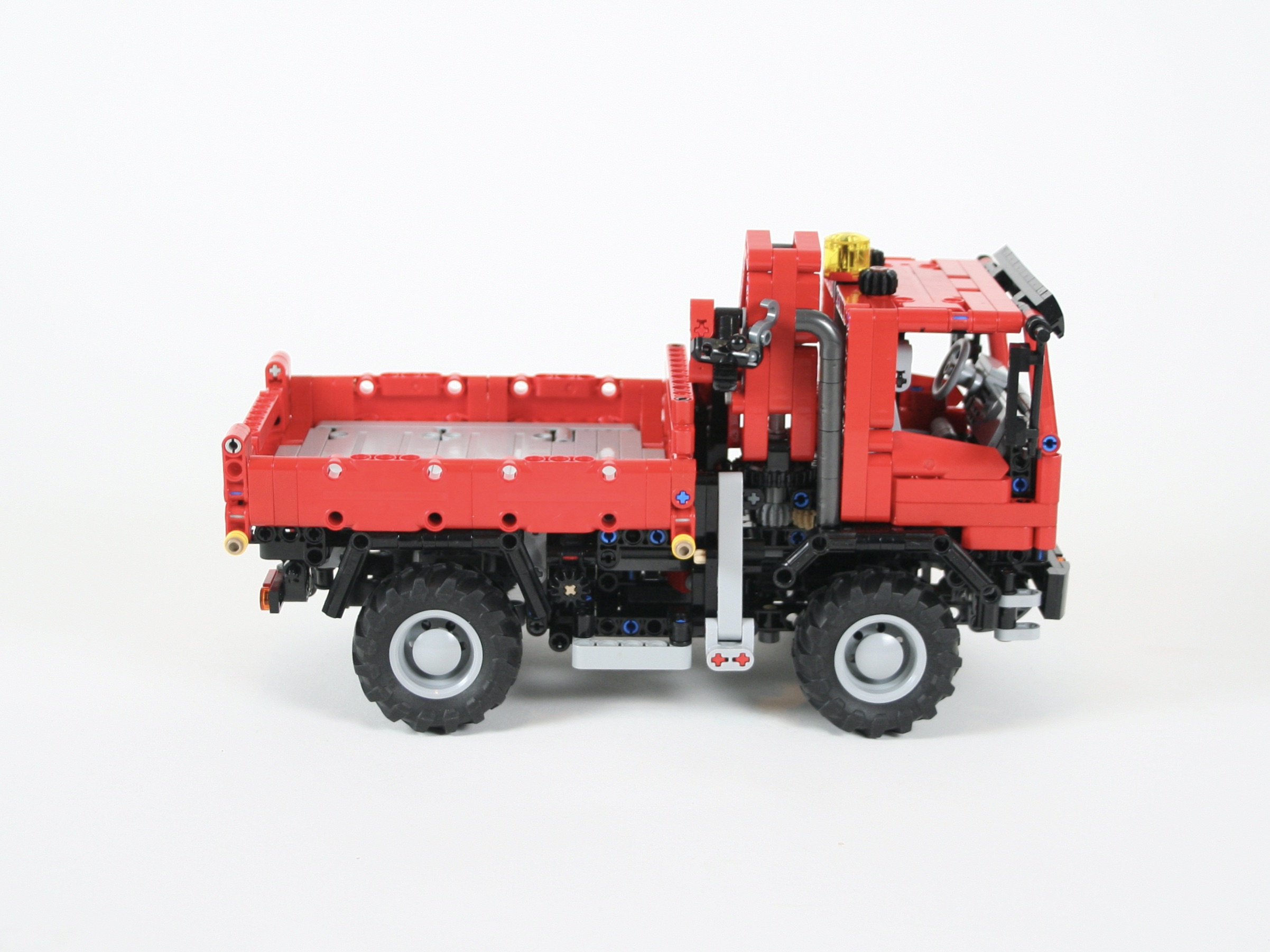
I am beginning to get more efficient in my builds. Many of the axles, drivetrains, and little mechanisms I have designed over the years are finding their ways into other builds. When I completed the Off Road Truck, it was clear there was a lot that could be turned into another build, rather quickly. The Off Road Truck had a great, strong chassis, a little fake engine, a working transmission, and a tipping bed. With a couple of changes it could turn into another truck.

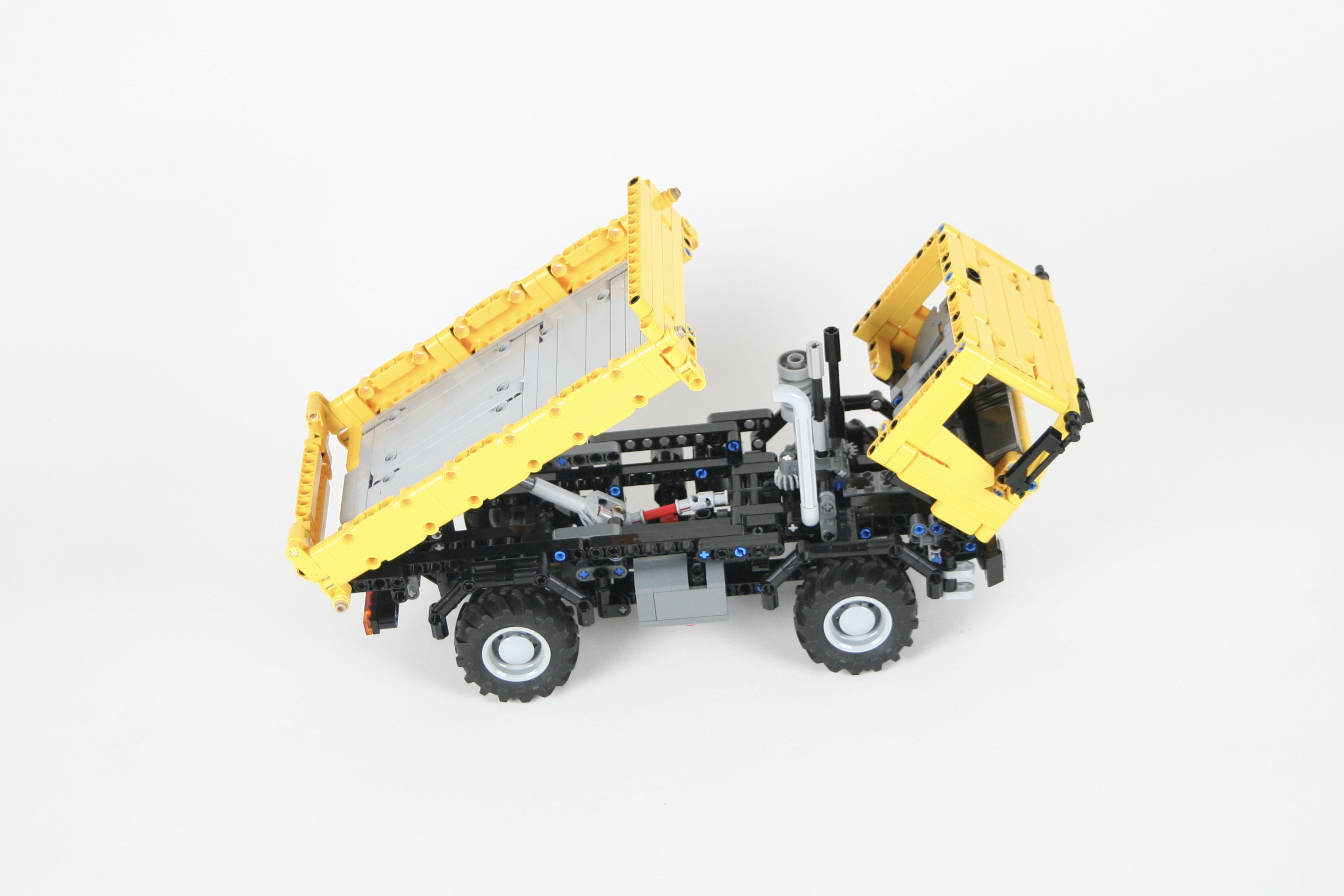
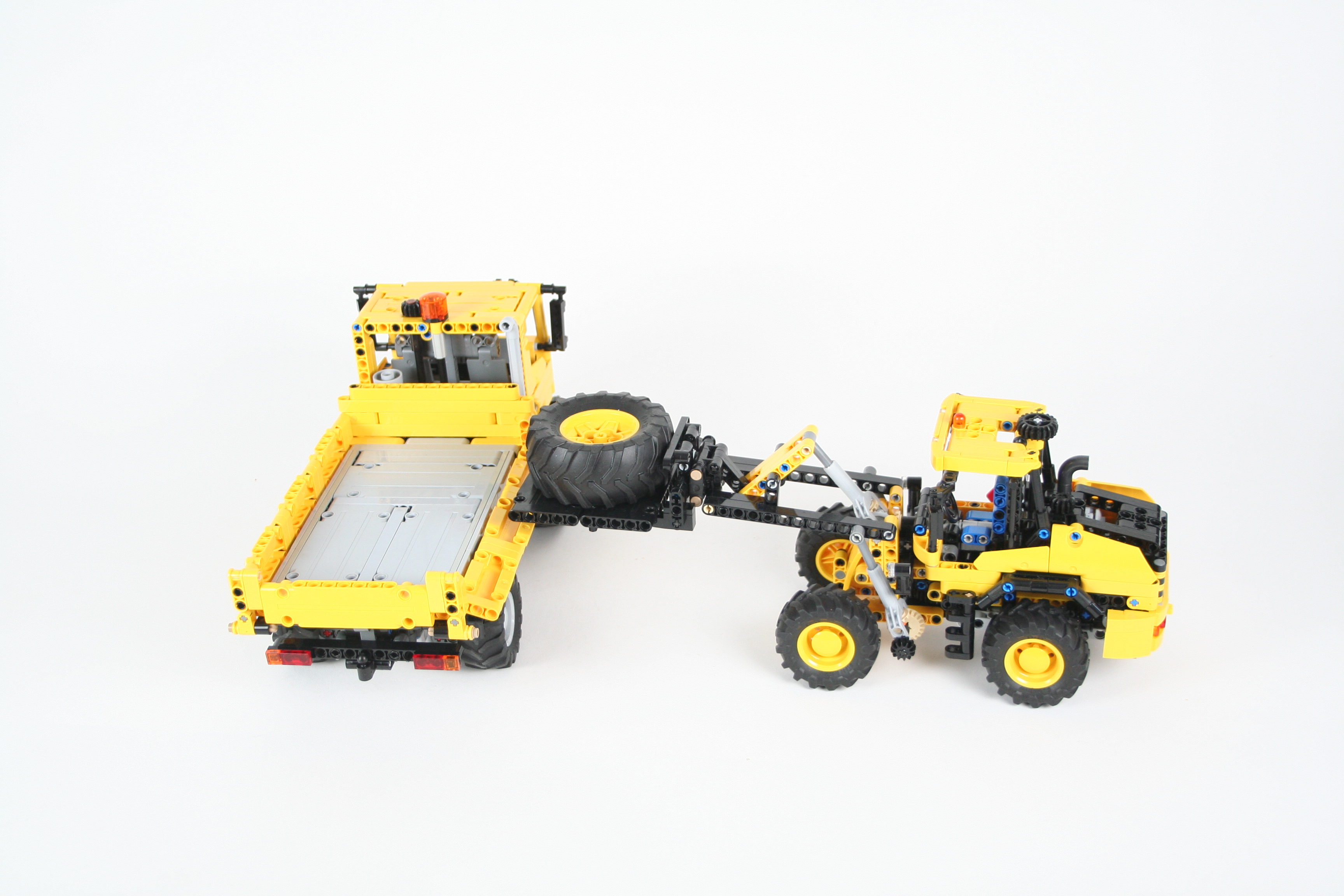
I lengthened the chassis, and removed the crane. I added a longer bed and changed how the tipping function worked. The cab stayed the same for the most part, but I changed the grill to match the look of the Mercedes Benz 917 truck. Since much of the truck is the same as the Off Road Truck, this one still retains the I3 fake engine, the pendular rear suspension, rear wheel drive with two speed transmission, and the tilting cab. Two HOGs are on the roof, one for the steering, and one for the bed tipping function. The bed can tip in all three directions.

Sometimes these type of builds feel a little bit like cheating, as they use much of a previous build. But this little truck was a nice addition to my builds that is fun to play with and is easily built by others people who have a moderate Technic collection.

Happy building.

Off Road Knuckleboom Truck


It was time for another truck! Free instructions can be found at Rebrickable.

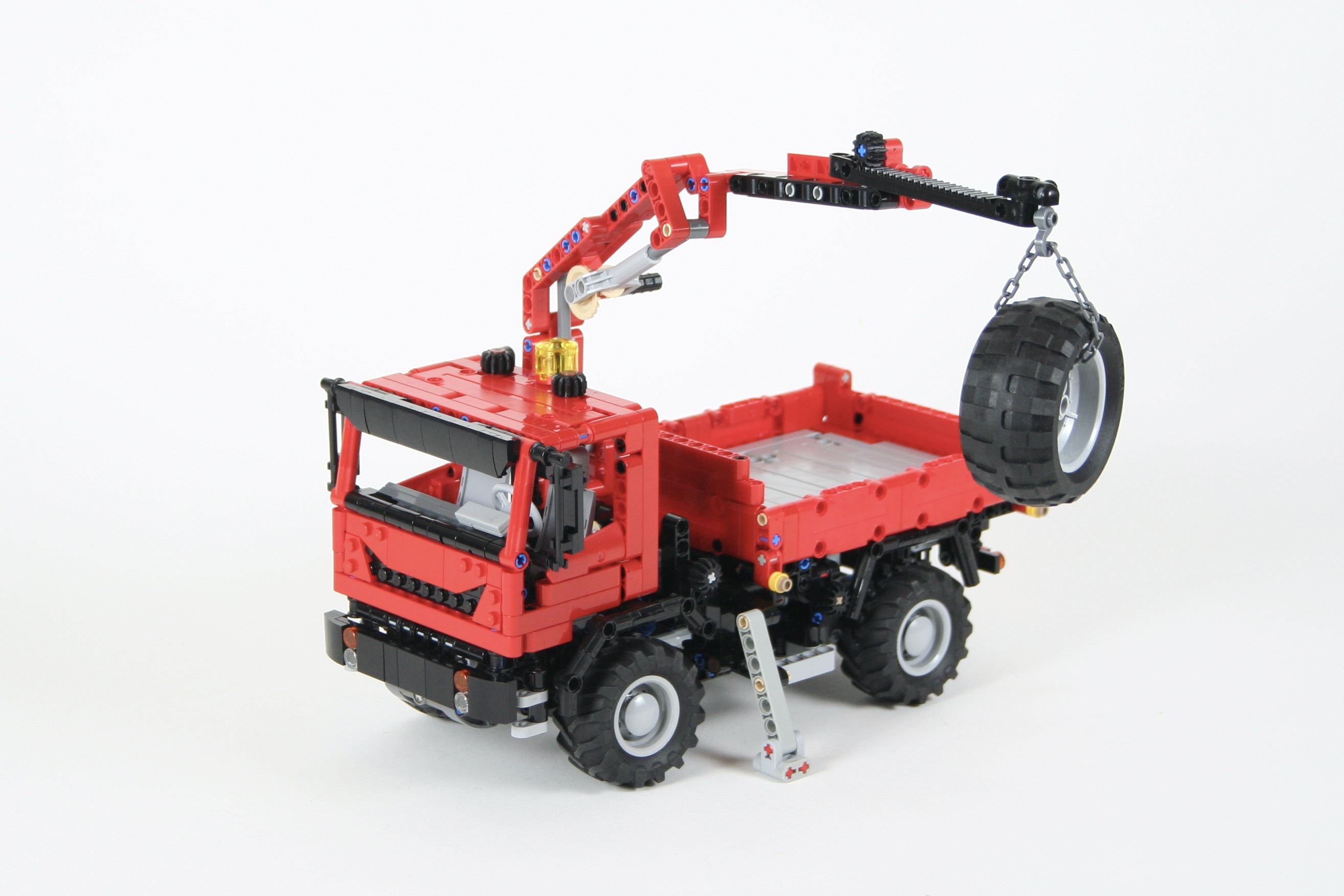
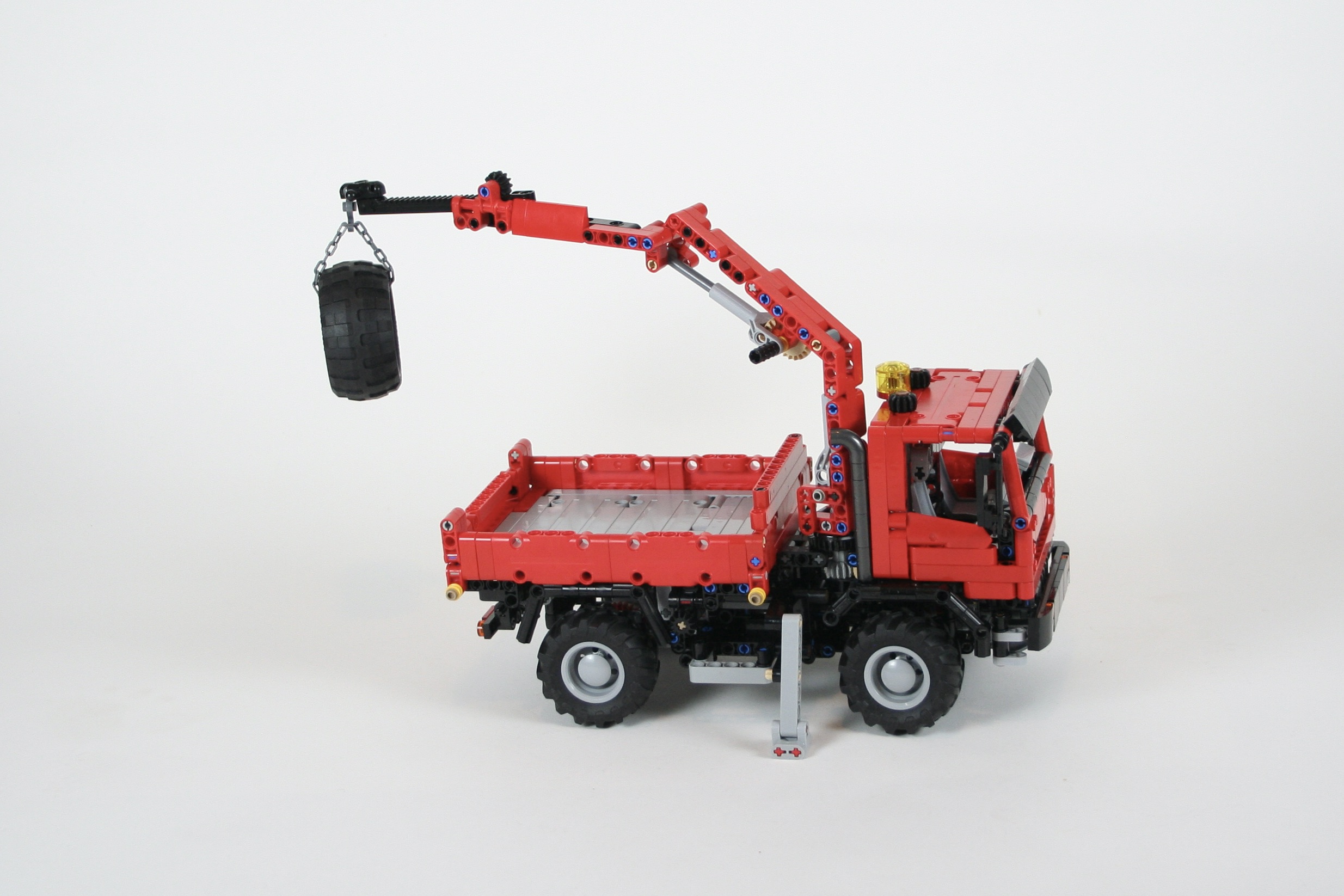
I have been building a lot of tractors and construction vehicles lately. I love building them as they offer a lot of movement and features. But it was time to build another truck. LEGO truck MOCs are beginning to coalesce around the “Mack Anthem standard” which is a 15 module wide truck in about 1:20 scale. Many MOCs are being designed in this scale as it is a good playable size, and fits the scale of some of the more recent LEGO trucks that have been released. I wanted to offer another truck in this scale, with some fun playable features.

I started with a chassis that uses a simple pendular suspension on the rear axle, which is damped by 2×1 rubber connectors. The rear axle drives a simple I3 fake engine under the cab through a two speed transmission. The transmission changeover is on the right side of the truck. Front steering is controlled though the HOG light on the top of the cab.

I have found a simple way to add a three way tipper bed in my trucks, and I have used it many times before. A mini linear actuator moves simple linkage under the bed that can pivot in three different directions. Each corner of the bed has a removable axle that allows control for which way the bed tiles. But in the past the control for this tipping function was in a tricky place to reach, so I wanted to route the control to the top of the cab. I managed to add this right next to steering light. I used a top pivot design on the bed sides and rear, locked by a 3/4 pin on the bottom.

Finally, I added a crane, and since I had a little space left over, two stabilizing outriggers. The outriggers are a simple two link design that are controlled with a worm gear mechanism. The crane is a little more complicated. It is mounted on a small turntable with a rotation control on the left side of the truck. The first lift mini linear actuator is controlled by the third HOG on the top of the cab. The second lift stage is controlled by another mini linear actuator. Finally, the third stage has an extending boom that allows the reach of the crane to extend a little more. The crane can lift some; not a lot, particularly when the boom is fully extended. By removing the three HOG knobs, the cab tips to show the engine. Also, both doors open.

I loved the way this trucks looks. The beefy tires, and the cabover design give the truck presence and look of toughness. The crane was a lot of fun to play with even if it could be a little stiffer. However, this may be the last time I use this three way tipper design. I am happy I moved the control to the top of the cab, but the linkage does not have the power it needs at the start of the tip. I will have to come up with something better for the next truck.

Stay tuned, and happy building until then.

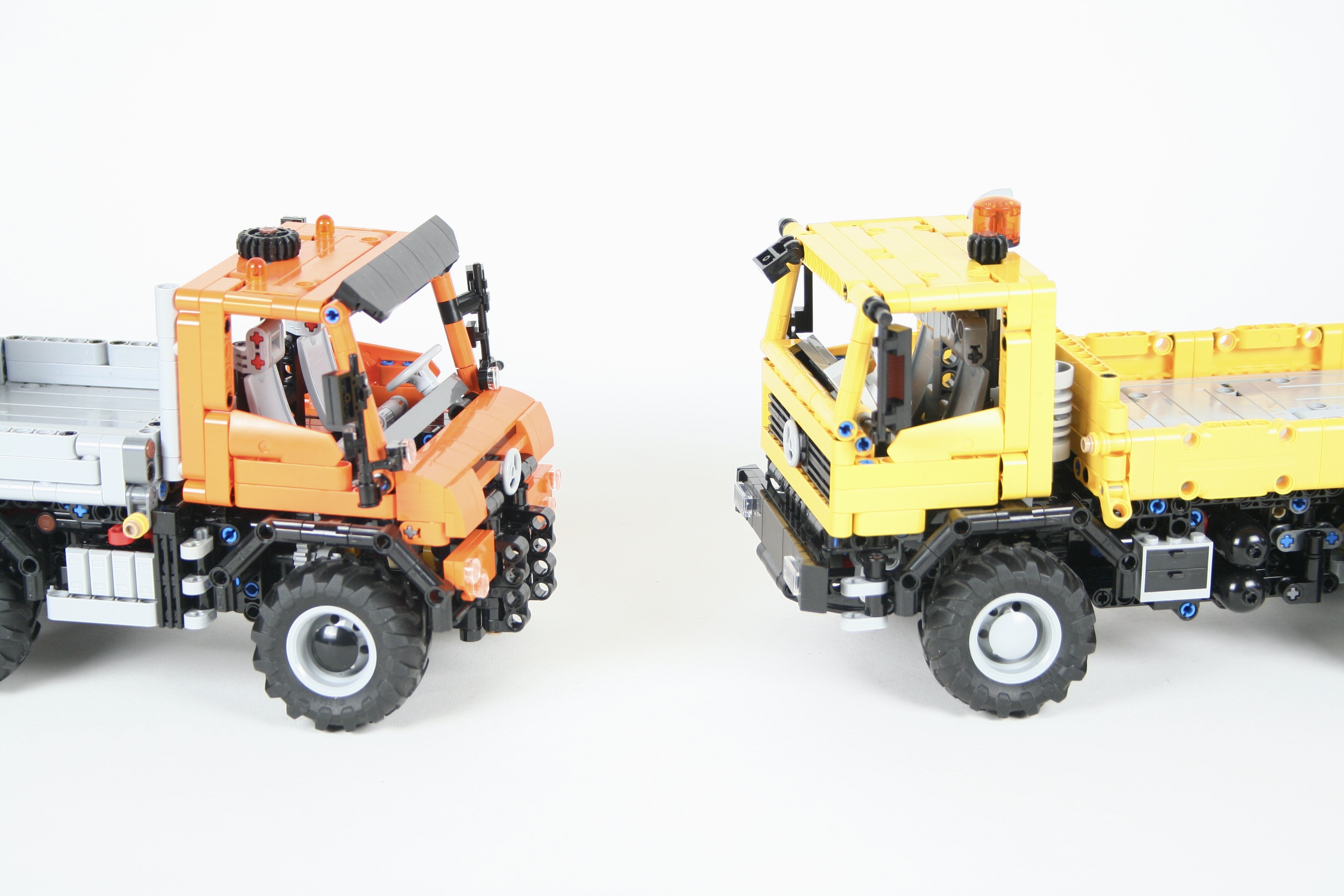
Unimog U500 (405.201)


Every couple of years I build another Unimog; they tend to be a favorite subject.

Instructions may be found here.

Unimog U500 (405.201)

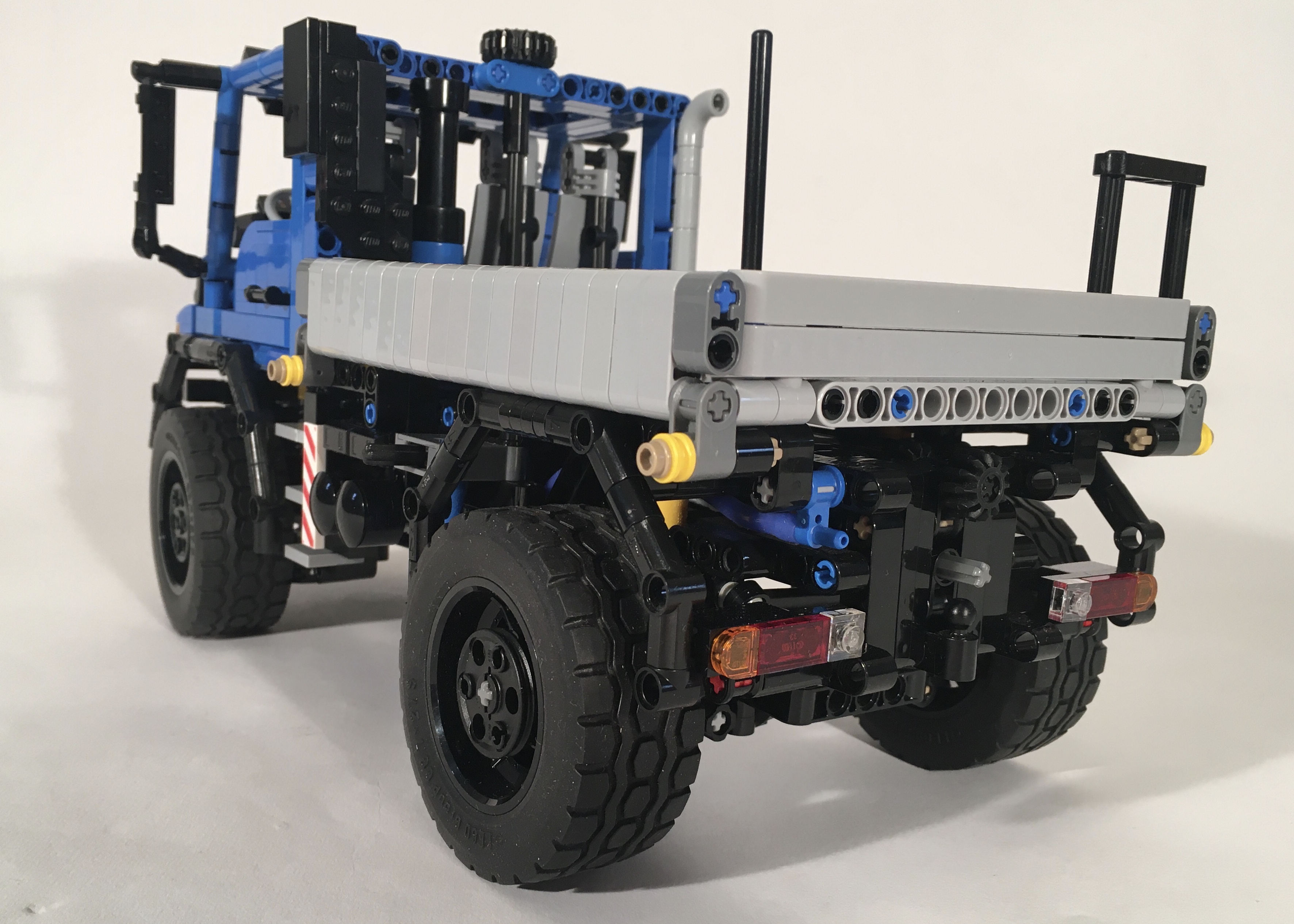
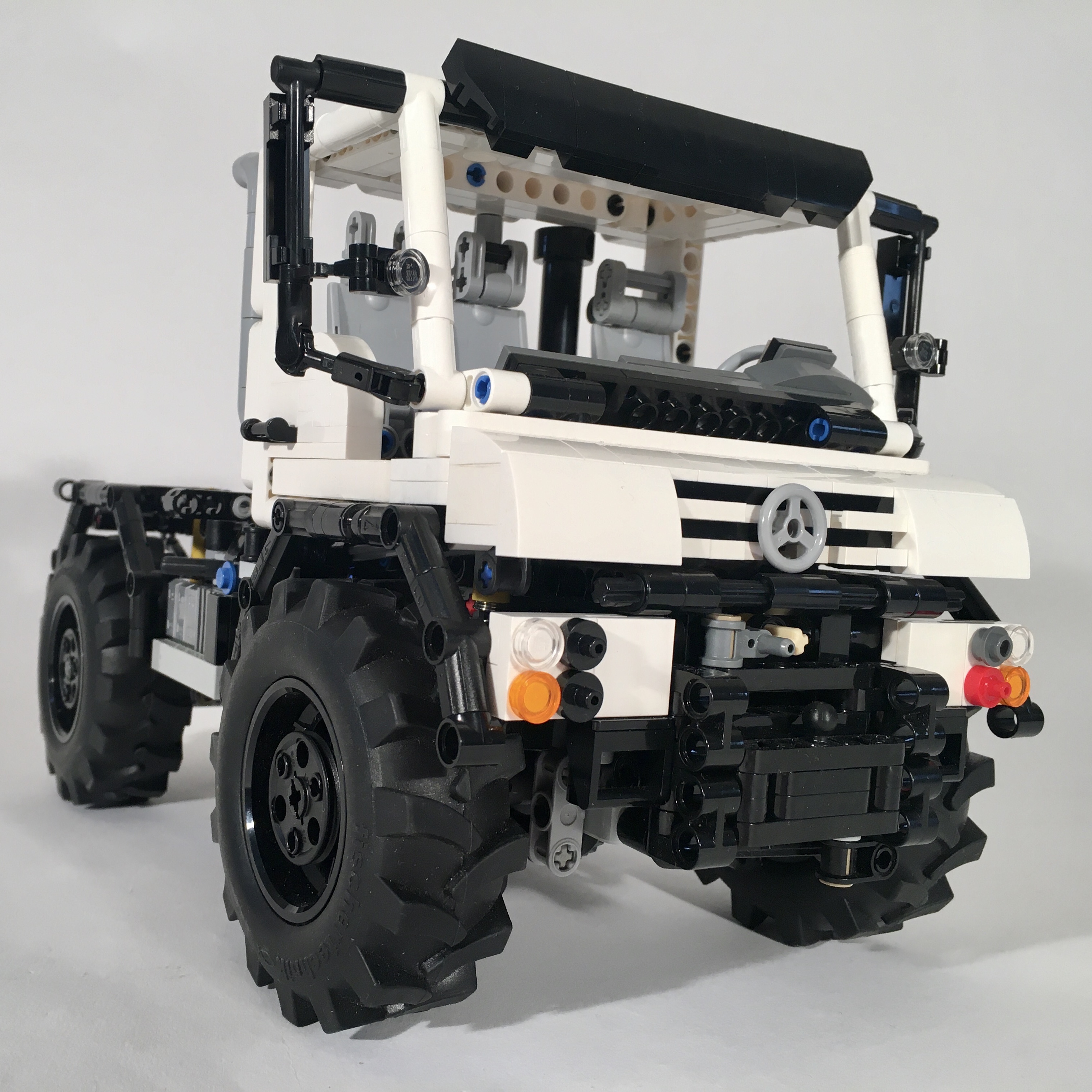
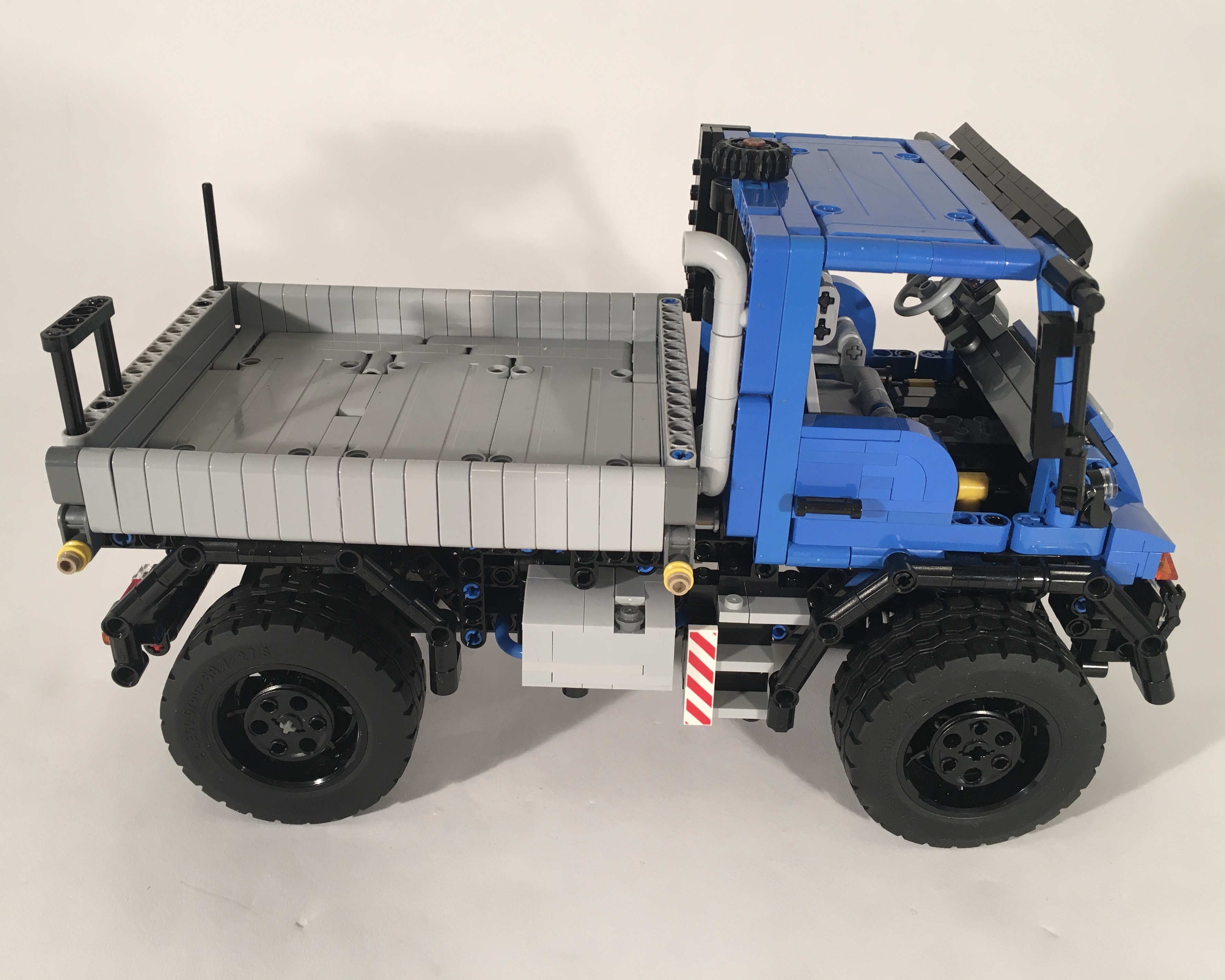
Right after the LEGO Batmobile 76139 was released, I saw the front tires, and immediately planned this Unimog. The tires were perfect for a U500. I stared working on a draft before I had acquired the tires. I wanted the build to be in the theme of my Unimog 437 in that it was about 1:18 in scale, and had modular cabins and bed options. But I wanted to take this idea to the next level so that front and rear attachments could be added, as well as trailers. Many of my builds as of late are more system focused, in that a main build supports lots of other attachments, trailers, and versions of the same build. With this one, standard attachment points on the front, rear, bed, cab, and hitches allow for a variety of versions and attachments to be added quickly. I’ll make more of these soon.

Rear Hitch, Attachment point, PTO, and PPTO

I quickly set up a front and rear suspension using what was learned on the 437. The MOC has front and rear live axle suspension, four wheel drive, and front steering. A I4 engine is placed under the cab, over the front axle. Unlike the 437, I added a front and rear PTO. The rear PTO has an on/off switch. A center PTO is present as well for attachments that go in place of the rear bed. Finally, I added a Pneumatic pump behind the cabin to run pneumatics on the front or rear of the truck. A value determines if the preasure goes to the front or rear.

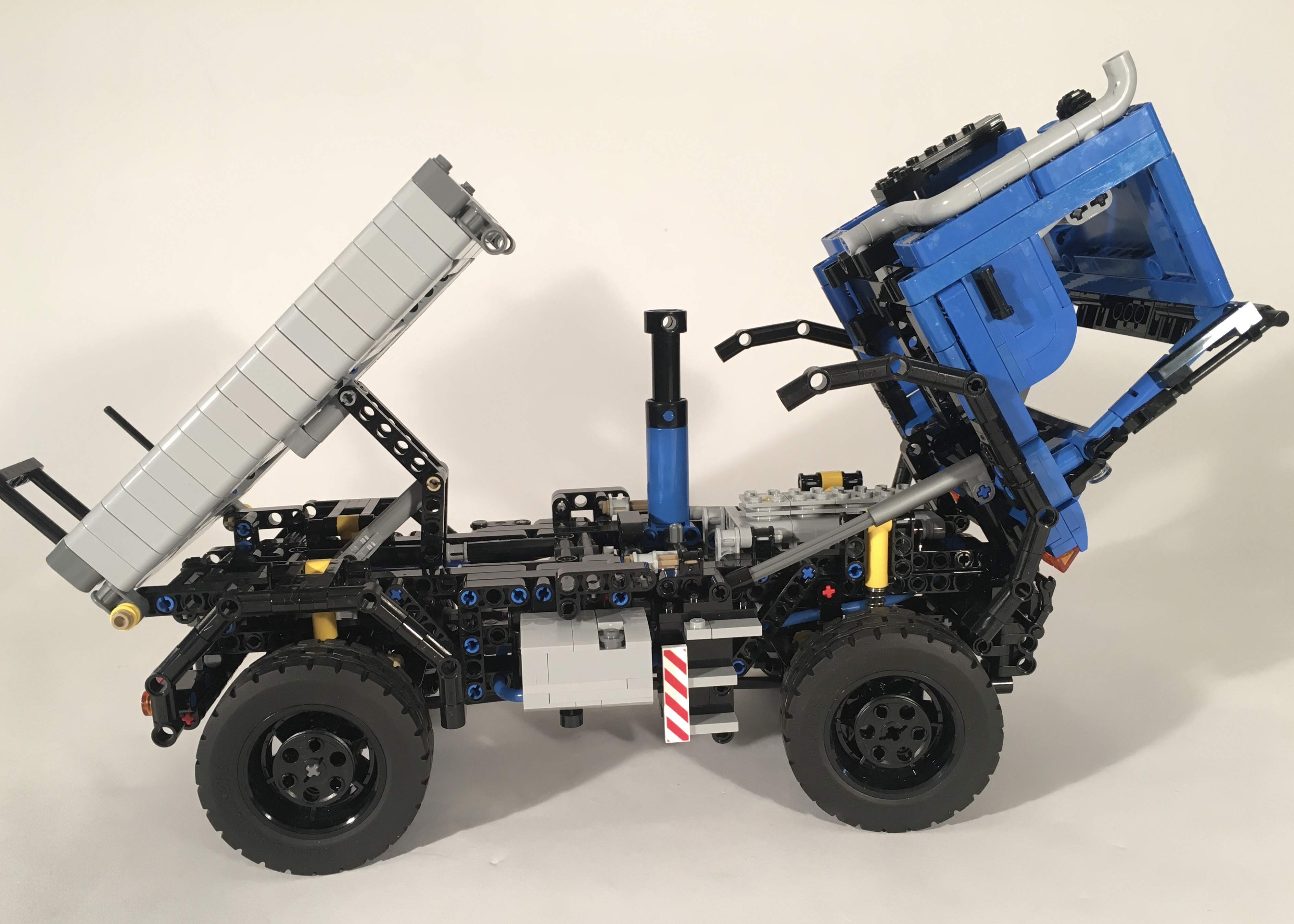
U500 Chassis

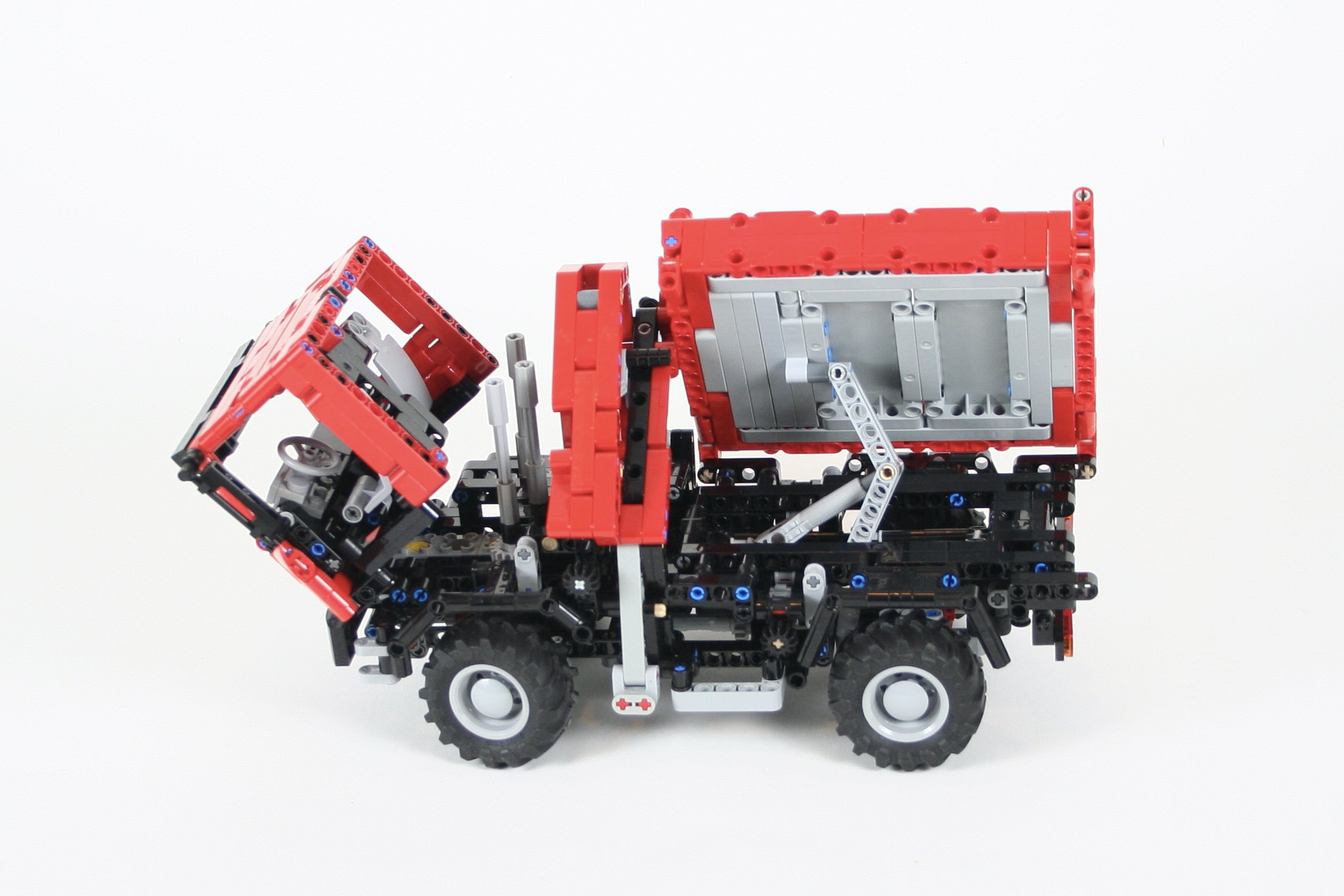
I added a three way tipper bed on the rear of the chassis, and created a way for the cab to be tilted. Both can be released by pulling a couple of axles out to allow for the tipping. The cab has seating for three, and both doors open. Finally, I added a front winch that is released and wound up using the fake air tanks on the left of the truck.

In the coming months I will make some attachments and trailers for this truck and for a U400/430 version that use the chassis of the U500 with some adjustments.

2016 Unimog U430

The truck turned out how I wanted it too, and had the features work the way as intended. The suspension is a little hard, but that supports various attachments well. This tipper bed and winch are a little addictive to play with. I did not spend much time making attachments for this truck, but I hope to do so soon. Until the next build or Unimog, Happy Building.

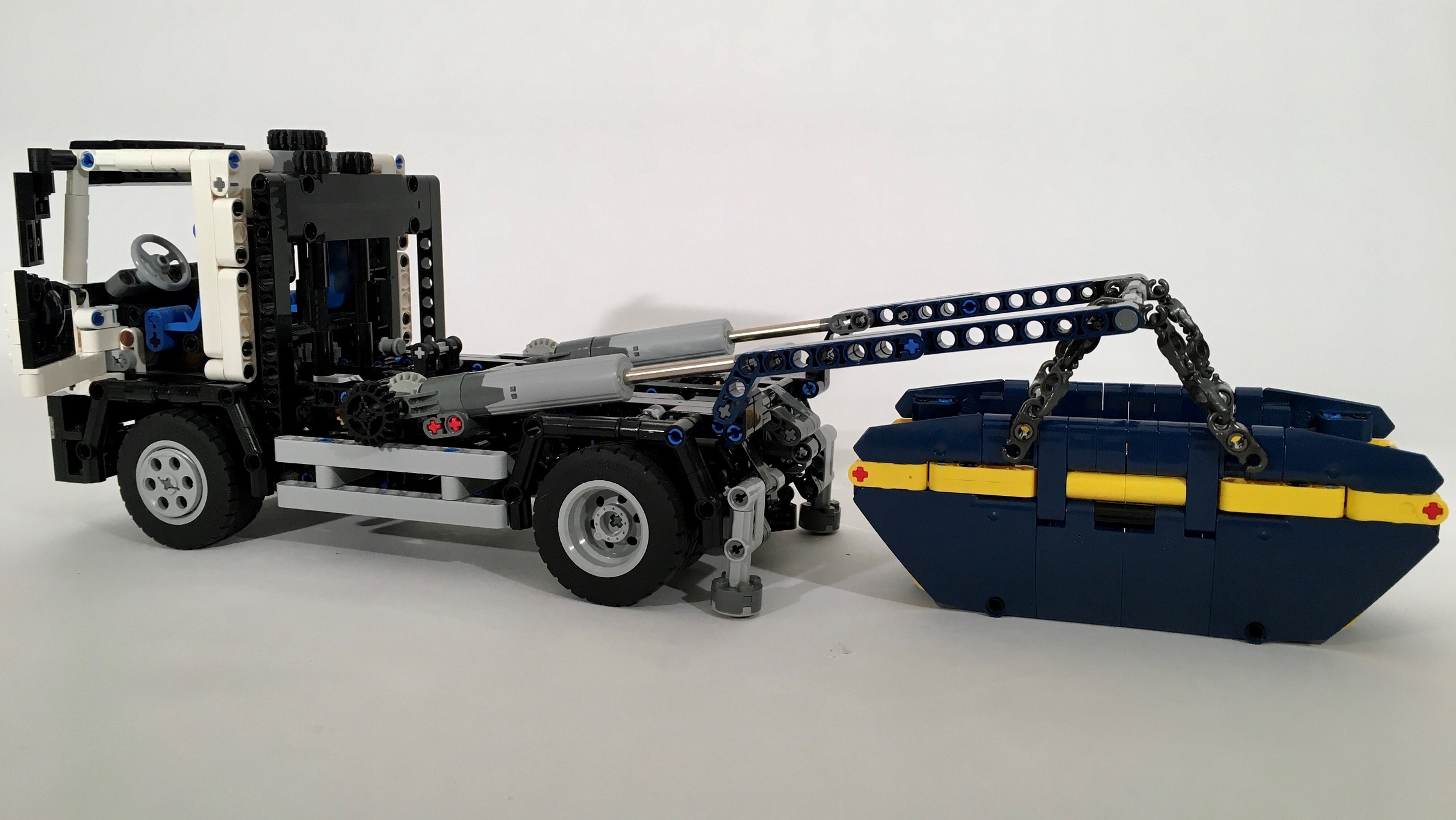
Iveco Skip Loader


I have done a lot of small scale trucks, and it was time for me to do something bigger. 2 studs bigger to be precise.

Full gallery is here.

01

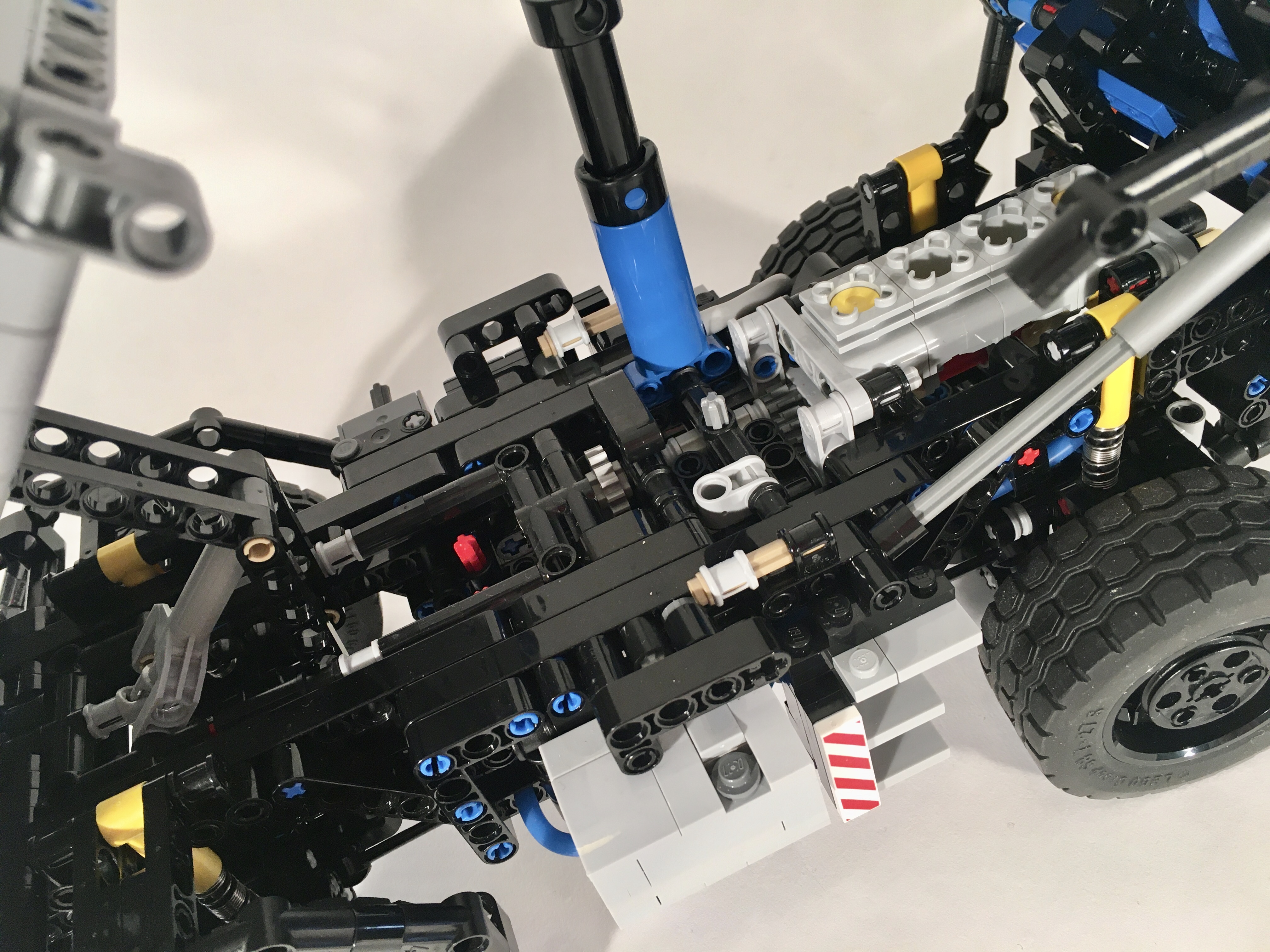
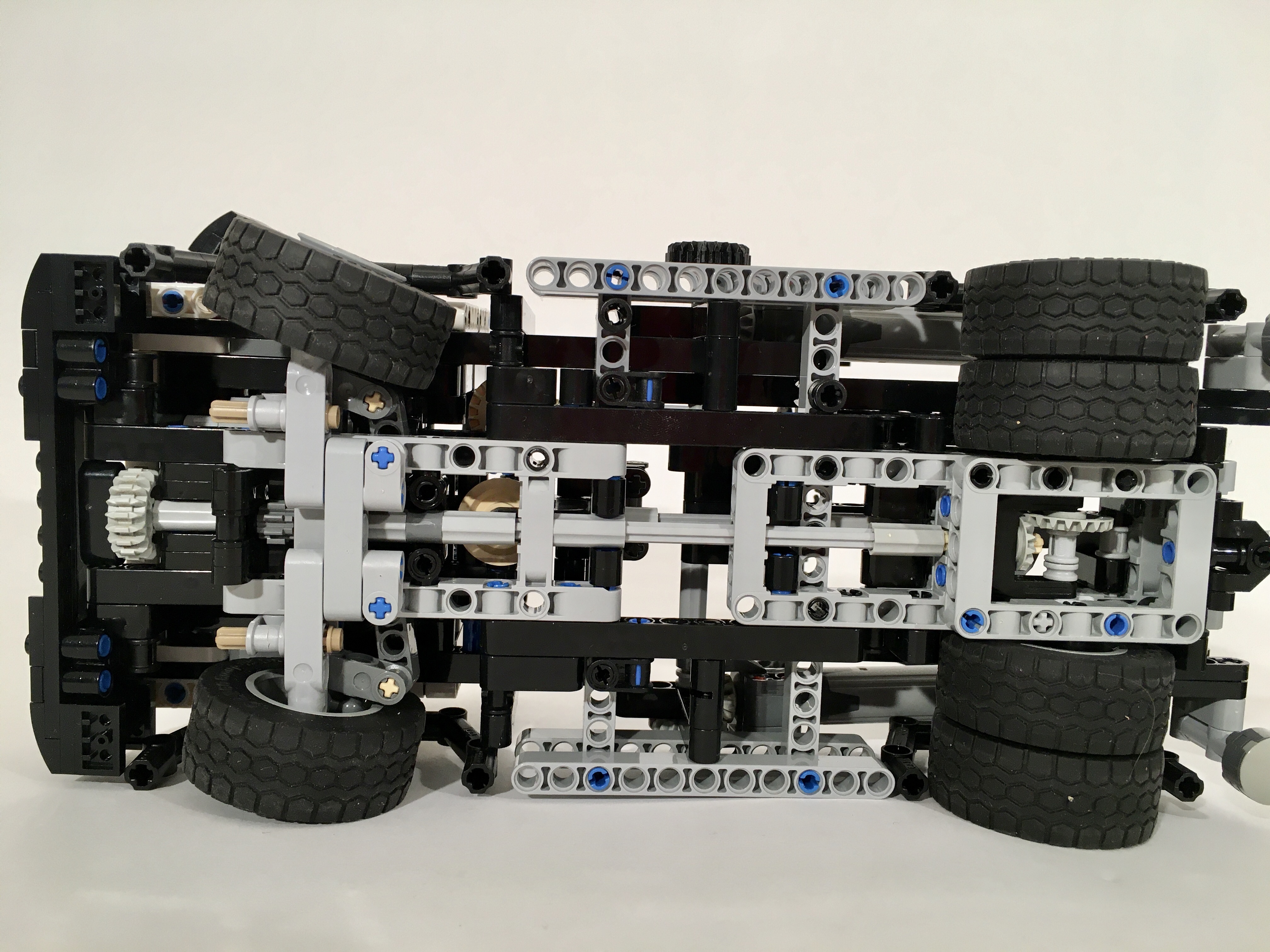
This project stared as a desire to make another small truck. I have used the 43.2mm tire in my trucks a lot, and I have used the 49.5mm tire only once. I was ready for the newer size again, so I found a nice little truck to model, and I was off. I very much like the shape of the 49.5mm tire, but it presents some challenges to scale. I works much better as a 15 stud wide size, and trucks often have a dual tires on the drive axle. This leaves only 5 studs of width to work with for the chassis and driveline. While a differential will fit within this space, keeping the axle connected to the differential does not happen when driving the finished truck. So I have a 8l axle with stop connected to a bevel gear on one side, and a 5l axle with stop. The gear then runs to the front of the truck where it connects to a V-4 engine.

fullsizeoutput_190b.jpeg

Adding the skip functions were the next challenge. Adding the rear outriggers was not very difficult, but then it was complicated by adding the skip hook. Both are moved by mLA that are mounted far forward in the truck and connected by long liftarms to the back. It took a while to get the geometry of all of this to work together in conjunction with the lifting arms, but in the end it all worked well. The lifting actuators are moved by a gear on the side, and the other two functions are moved by two gears on the top of the cab protector.

11

Working on the cab came next, and I used a mix of system and technic bricks. I made sure the cab could tilt, and there is a locking mechanism. The steering HOG is on the top of the cabin, and connects when the cab is down.

Finally, I added a little trailer. I added a simple function to lock the skip in place. The trailer can be towed by the truck, and when it is time to add a skip the hitch goes under the truck so it can get close enough to drop the skip.

The truck ended up doing everything I wanted. The tip and lift functions work well, and the trailer was a fun little addition. The colors work well for this truck, and the cab turned out as well. Maybe I will need to do another MOC in this scale.

Happy Building.


Unimog 437


If my previous builds are any indication, I am a big fan of Unimogs. So it was just a matter of time before I built another one. Rather than building one this time, I built a modular system that allows for a number of different versions.

Full instructions can be found here.

This build started with a desired to make another small build with the great Fischertechnik tires I acquired. I wanted to build something small and playful like RM8s FJ or Sheepo’s Defender. As has been happening with many of my recent builds, I wanted to give the MOC some playable options and easy modifications. A Unimog was a perfect option, and who am I to turn down a Unimog? So I gave myself the following constraints: 4×4, I4 fake engine, steering, manual and PF drive options, removable cabs, removable bed, and two chassis. I set off to work.

The axles came together fairly quickly. I decided quickly not to do portal axles, because I wanted the complexity of the MOC to be elsewhere. Both axles have a differential, two soft springs, and are stabilized longitudinally via steering links and laterally via panhard links. All for shocks are mounted on crankshaft parts to get the ride height of the Unimog just right. There is about 1.5 studs of travel for each wheel, which provides adequate articulation.

The axles are connected to a fixed axle that powers a I4 fake motor. Since I wanted the MOC to be easily switched between manual control and PF, the driveline got a little over-complicated quickly. The steering axle and drive axles cross each other twice. This allows for the steering to go to the top for a HOG, and backwards so a PF servo motor can be added. A 16t gear is available at the top of the chassis to power a PTO, or add a PF XL motor to give the Unimog propulsion. The long Chassis can fit a full a full Power Functions pack. When the power pack is not installed lots of open space is available for other additions. I added a three way tipper lift mechanism for both the long and short wheelbase chassis.

Attachment points were added for the rear bed and for the cab. I created three cabs, and each can be added to both chassis (though the Doka looks best on the LWB). Two axles with stop can be pulled to free the cab. I created three beds and a power pack. Four axles with stop are required at each corner to secure the bed. A camper and a crane bed are not far behind on my building queue.

The Unimog turned out exactly as I wanted. The suspension and steering are light and smooth under manual operation, and work great with PF. I am excited about the ability to offer and develop multiple beds and cabs. Instructions are posted, so I look forward to seeing other options people develop to make their own Unimog.

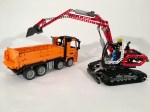
Mercedes Benz Arocs Tipper


I am finding myself building a lot of trucks these days, so let’s add another one to the collection.

Full gallery may be found on Flickr and Brickshelf.

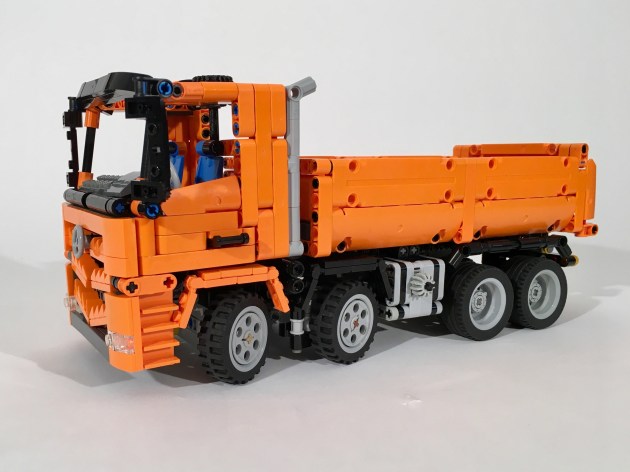
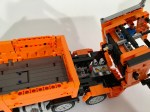
Basically the whole point of this project was to make a mid scale truck that was orange. It seems like the only official LEGO sets I buy these days are the orange ones, so I have to use the parts for something. I found this nice little Arocs tipper truck, and I thought, that’s a great little idea. I started with the chassis which came together quickly. The two rear axles are connected via each differential, and drive a small 2 cylinder fake engine under the cab. The front two axles steer at different ratios, with a HOG gear going to the top of the cabin. A linear actuator is used to tip the bed, with controls on each side.

The tipper bed came together quickly, though I wished some additional parts were available in Orange. No problem, but in this age of LEGO Technic color proliferation, it would be nice to complete a color pallet before starting on another one. Anyway, the cab was little more tricky. Like many modern trucks, the grill is a rather unique. The Arocs uses four rows of little scoops with a large center star. Adding something similar on my truck required some creativity, and compromise. I fit only three rows, and recreated the scoops with cheese slopes. The top row was mounted level, and the two lower rows were mounted on hinge plates connected on the side of the cab.

The final model was sufficient, but not groundbreaking. It looks good enough; you can tell what it is, but it does not win any modeling contests. The steering worked great, as did the drivetrain. The tipper bed worked well, but required a little muscle at the early stage of tipping due to the leverage. The tilting cab worked well, but in its resting state was a little too loose. Maybe someday I will edit the grill to make it better, but for now, it works.

Happy Building

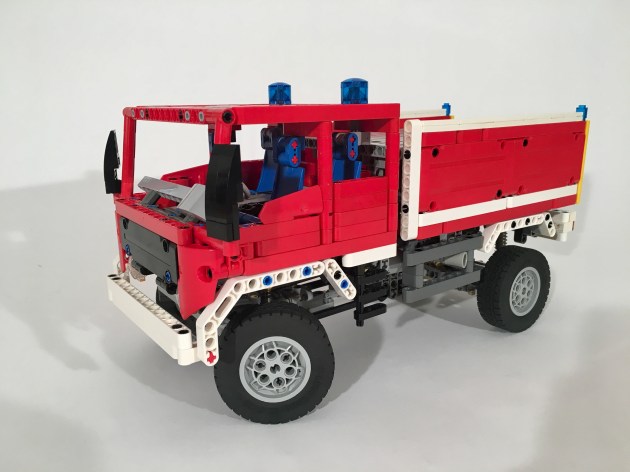
Forest Fire Truck


Everyone once and a while I see a design I like so much, I copy it. So thanks to Horcik Designs on the fun little Fire Truck that I copied. Thanks for the inspiration.

The full gallery may be found on Flickr and Brickshelf.

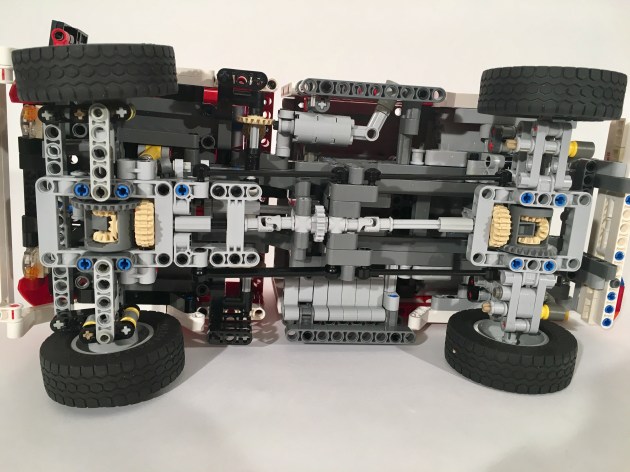
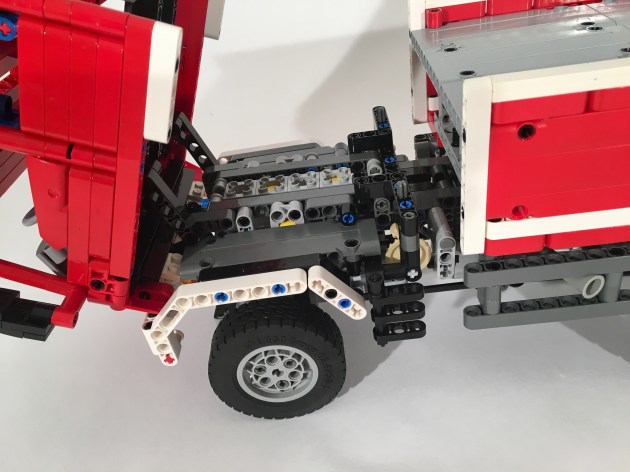
When I found Horcik’s fun little Fire Truck, I was immediately enamored with the look of the truck. After deciding I was going to make it, I started looking for additional features to add to the excellent design. After finding some great ideas of a Renault version (2), I decided to get to work. The truck started with a 4×4 driveline and an I-4 engine. I used a simple live axle setup with 9l steering links to keep the sway movement in check, and both axles used a Panhard link. The steering was actuated with another 9l steering link, rather than the more common rack and pinion setup. This allowed for a lower engine mount, and something a little different in the design. The steering can be moved by both lights on the roof of the cab.

Which brings us to the cab. I wanted to use the face of Horcik’s truck, but wanted to add some changes. I added two doors to make the cab a little longer, and added four of the new panel parts that work great as seats. Then I made sure the cab could be tilted simply, and connected the two roof lights to the steering. You can see the engine and the steering when the cab is tilted.

Then off to the body. It turned out to be more simple than I had planned. I had some ideas for a hose reel, a roof mounted water gun, and various cabinets with tools inside. Every idea I tried was a little ugly, or boring. So, I closed up the design with a couple of water tanks inside the body of panels. It’s not fancy, but the design turned out clean, which is what attracted me to the project in the first place.

The design worked fine, though the front axle could be a little more robust. It was not a complicated build, but it was a fun one. Don’t worry, there will be complicated builds coming soon.

Happy Building.

Volvo FE Garbage Truck


My favorite vehicles to build are garbage trucks (Ok, maybe trial trucks). I enjoy the many functions that I can create. I enjoy the diversity of shapes, sizes and colors, and I enjoy how ubiquitous they are. But I have not built many. So it was time to fix that.

Volvo FE Refuse

I was originally going to do a large scale truck, but as my temporal limitations are becoming ever more apparent, I decided to do something smaller this time. The 13 stud wide truck is popular in the Technic community, so I decided to go with that. I very much enjoy the Volvo FE, so that was my truck. Since my last truck was one with three axles and Power Functions, this one would have two axles and be manually controlled.

Volvo FE Extraction

I searched high and low for garbage box that would work well: Gesink-Norba, Heil, McNeilius, EZ-Pak, Dennis-Eagle, Ros Roca. All required a compactor that would need a round base for the trash to collect. Curves are hard to do in LEGO. I had some trouble with refuse compaction cycle working well on the Axor due to the floor curve on the hopper. I wanted a compaction cycle that was more simple and more reliable. So I designed my own.

It’s dead simple.

There is a angled elevator in the hopper that goes straight up and down. The center gear on the outside of the hopper that moves the elevator. When refuse is placed on the elevator and lifted, the refuse will fall over an internal wall at the top of the cycle. The refuse falls into the compaction bin, until the rear hopper is opened. Bigger parts sometimes gets stuck on the cross axle.

Volvo FE Hopper

Inside the compaction bin, is an extraction plate. Turn the gear down near the front left wheel, and you drive a mLA to move the internal extraction plate. Everything works well for small LEGO refuse parts. I built the side of the compaction bin with slopes and tiles. After a number of panel attempts, this one seemed to be the best looking option. I very much enjoy the shape.

Volvo FE Compactor

Since I had a little more internal room, I added a driveline to the truck. A rear differential powers a small fake inline 2 cylinder engine under the cab. To check it out, the cab tilts forward. The steering axle serves as a friction connector so the cab does not open unless you intend it to tilt. The doors open, and the bodywork was designed to mirror the Volvo FE 2011 body style. I built a small red refuse bin to show off the functions of the truck.

This may be my favorite build of the year. All the functions work perfectly, and the model looks great. I think I could add a tilting bin function, and add another mLA to give more strength to the extraction plate, but other than that I am not sure I would change anything. I will keep this one built for a while.

Happy building.


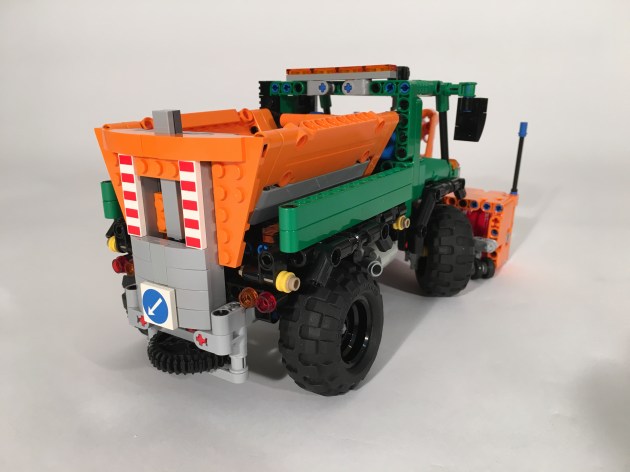
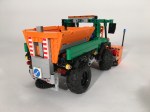
Snowblower/Tractor


I participate in only some of the contests that are available in the online LEGO community. I generally participate if it meets the following criteria: Is the challenge within my competencies? Does the contest align with other responsibilities/projects to which I have already committed? Can I be competitive? Frankly, it is the last question that often stops me. The preceding two questions determine my limitations, and considering how good many other builders are it is not often I participate. With this in mind, I decided to enter the Eurobricks Technic Challenge 9 (nine already!?).

Edit 2016.02.16 : The contest has completed, and this Model came in second! See the results page here, and all the votes here. Thanks to Eurobricks for the contest.

A full gallery with Instructions can be found here.

Snowblower

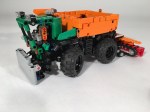
Tractor

What interested me in this contest was the constraints, and to a lesser extent the topic. the constraints stipulated that both MOCs had to fit within 10,000 cubic studs. I got out my calulators, and started playing with numbers. I was hooked. Additionally, building one MOC is hard, and building two from the same parts seemed very hard. It was something I had never done, and only a few builders can develop a good B or C model. The planning stage would be critical. Both models would have to be planned together right from the beginning. I toyed with a Combine/Tractor, and a Pipelayer/Crane, and even a Airplane/Boat. With each of these designs, I realized I would be using too much space with a long appendage, such as the Combine’s implement, or the Pipelayer’s arm. The cubic studs required something more…cube shaped. I eventually settled on a Snowblower and a Tractor. Both were a little more square and had similar components (wheels, engines, colors, chain links). I knew I would need to build both together, and multiple renditions would be needed. I was ready to start building.
Snowblower Rear

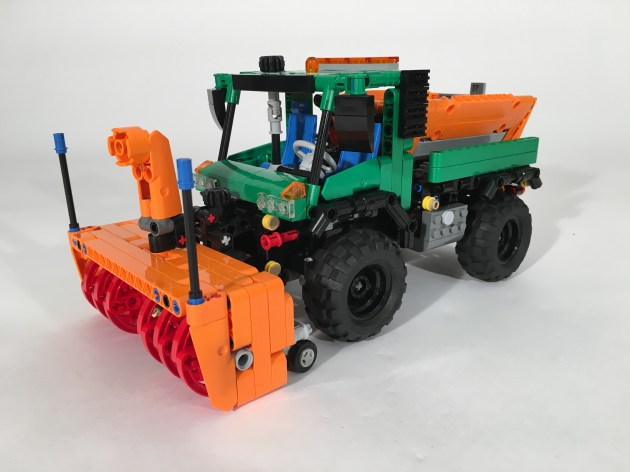
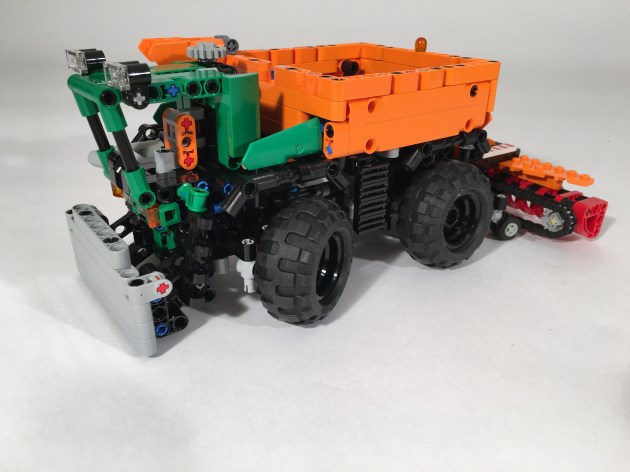
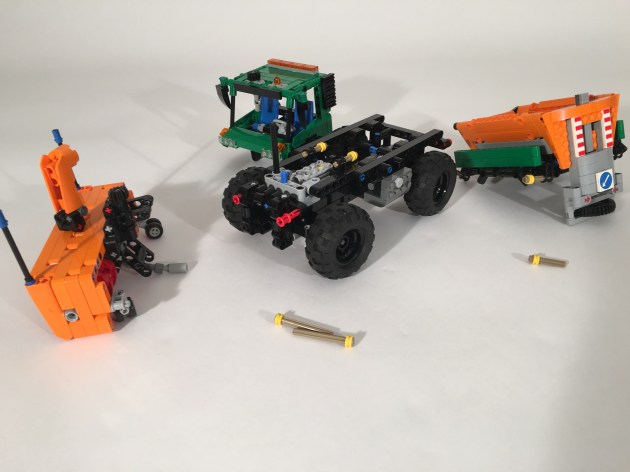
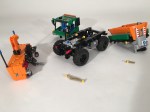
Pretty early, I settled on 17x17x34 studs for the Snowblower. I challenged myself to include steering, a working blower, and a working salt spreader. I build the basics of the blower implement right away, complete with rotation coming from the truck drive. On the rear, I added an implement lift using a worm gear setup, and a quick link to the truck . Next, I worked on the chassis of the truck. I added portal axles, because I could not get the 5L wheel axles to say connected to the differential. This also helped to clear the front PTO from the steering function, which was linked directly to a HOG gear on top of the cabin. The salt spreader needed a take-off gear for the conveyor belt, and the discharge plate would be driven separately from the rear differential. The mechanics were set. I then worked on the cab. I made sure the cab, the blower, and the spreader could be easily removed by removing up to four pins for each. It’s a fun modular function that allow for other attachments.
Snowblower Modules

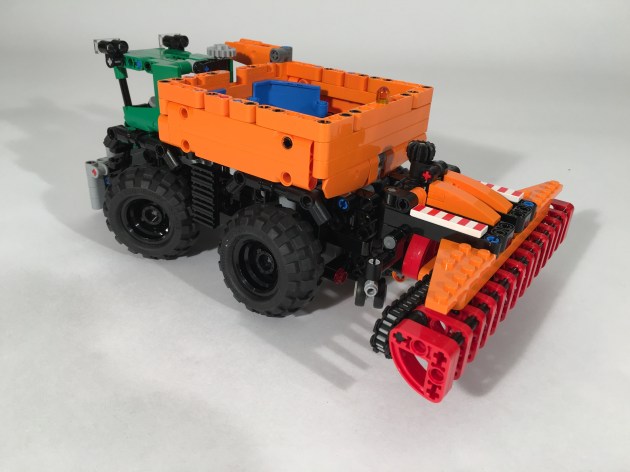
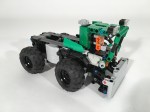
I first made a pile of all the parts used for the truck while it was still built, and made a first draft of the tractor. Based on the parts of the Snowblower, the tractor would have four wheels, a 2 cylinder engine, and something with a whole bunch of 3×3 round, red, liftarms. I first modeled it after a John Deere 7R series, but realized this would leave me with too many left over parts. I then tried modeling it after a Claas Saddletrac. This seemed to be a better fit. I then took apart the Snowblower, making instructions as I went. I then used these parts to make the official model B. Over the course of a week, I made many revisions.

Tractor Rear

Both models worked well, as none of the feature are too complicated. I was pleased with the A model as everything functioned as it should, and it looked great. The tractor was simple, and it’s simple functions worked well. I was pleased with how it all turned out. It was great working with a limited number of parts for the B model, but I would prefer to clean up the look of the tractor a little better. This was a great little contest. I loved the restriction of the cubit studs, and I loved having to make a MOC with a defined group of parts. Now let’s see how the voting shakes out.