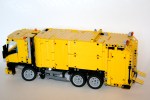
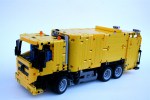
Mercedes Benz Axor Refuse


I am a big fan of garbage trucks.  For some reason I find the combination of a smaller truck,with many features all with a complicated compaction device is a great basis for a complicated LEGO Technic model.  Plus, trucks are fun.
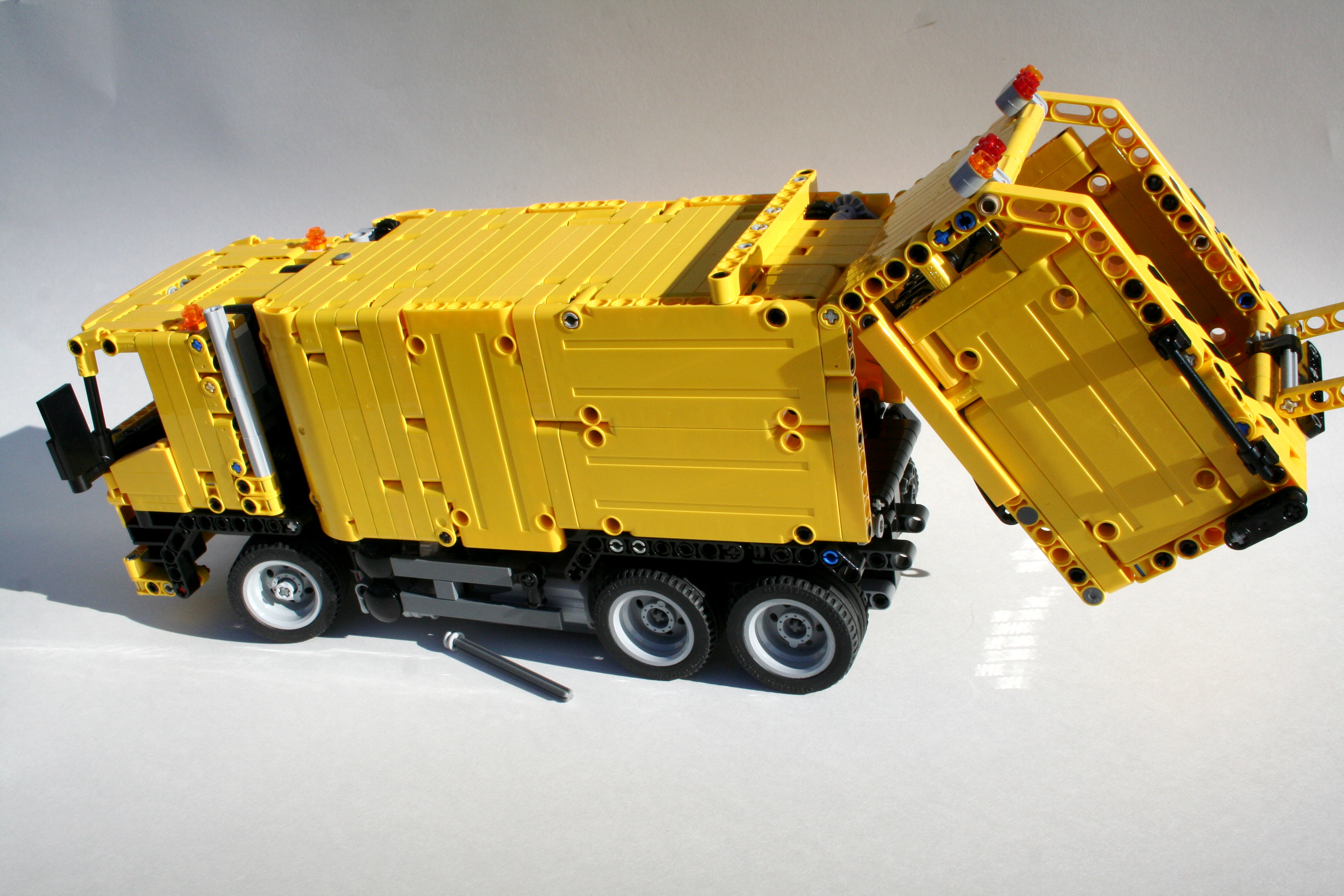
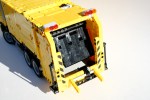
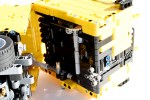
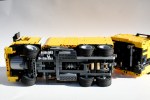
The hardest part was going to be the rear compaction device, so that is where I started.  I decided to use a Geesink Norba design as it would give me the largest opening for the trash in the rear because the mechanicals would be on the bottom on and the top of the opening.  13 studs wide is not much space.  In addition, this would allow me to have the rear hopper pivot up to let the trash out when it was full.  I would need to have three functions going though the pivoting hopper.  One at the pivot, and two connecting at the base when the hopper was closed.

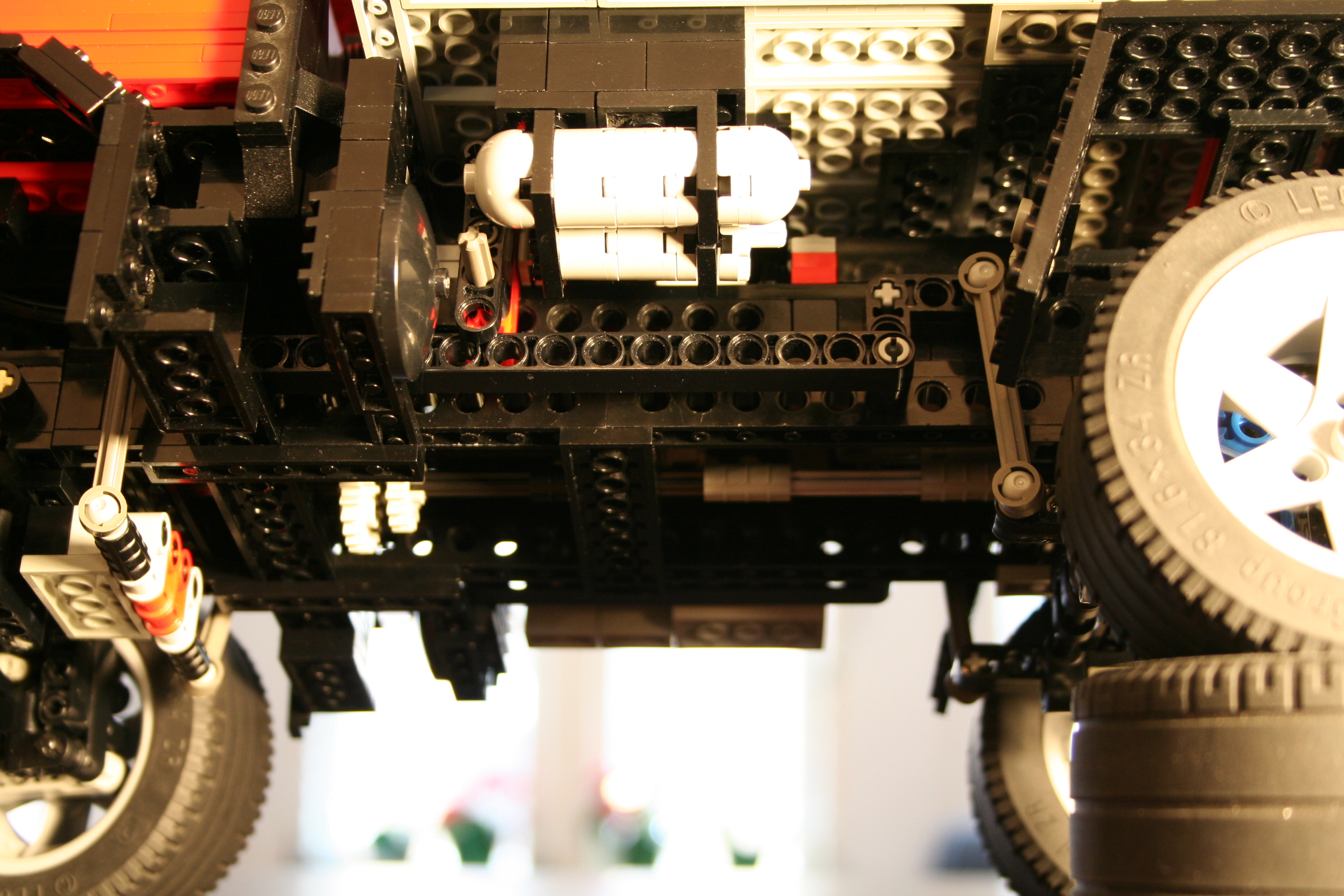
The dumpster lift would be driven through a knob gear when the hopper was closed on the bottom.  The compation device would be operated with a gear on the bottom and a mini linear actuator on the top.  This mini linear actuator would also function as the opener for the rear compactor.  All the motors would be housed on the bottom, with one motor placed next to thebattery box.  The extractor would be operated by another mini linear actuator using a scissors mechanism to move the ejector plate.

The chassis was constructed with a PF XL in front of the steering axle.  The motor would power both the drive, and the extractor changed by a changeover.  The steering motor is placed on the right of the truck.  On the left, another PF M motor powers both the dumpster lift and the lower hopper compaction device.  All power came from a 8878 rechargeable battery box, through two PF IR receivers, and powered four motors: One XL for drive and the extraction plate, one M for steering, one M for the dumpster lift and lower compaction, and one M for upper extraction and hopper opening.

The model worked well, particularly steering and the drive.  However the extraction and the hopper opening was a little less reliable.  The hopper was too heavy for a single mini linear actuator, and the compaction device was not stiff enough.  It happened to get caught on some of the internal edges on the inside of the hopper.  The next garbage truck will need to be built a little more sturdy.

The full gallery may be seen here.
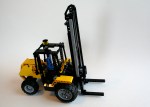
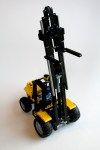
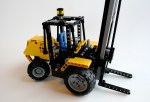
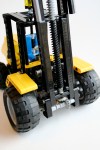
JCB 930 Forklift


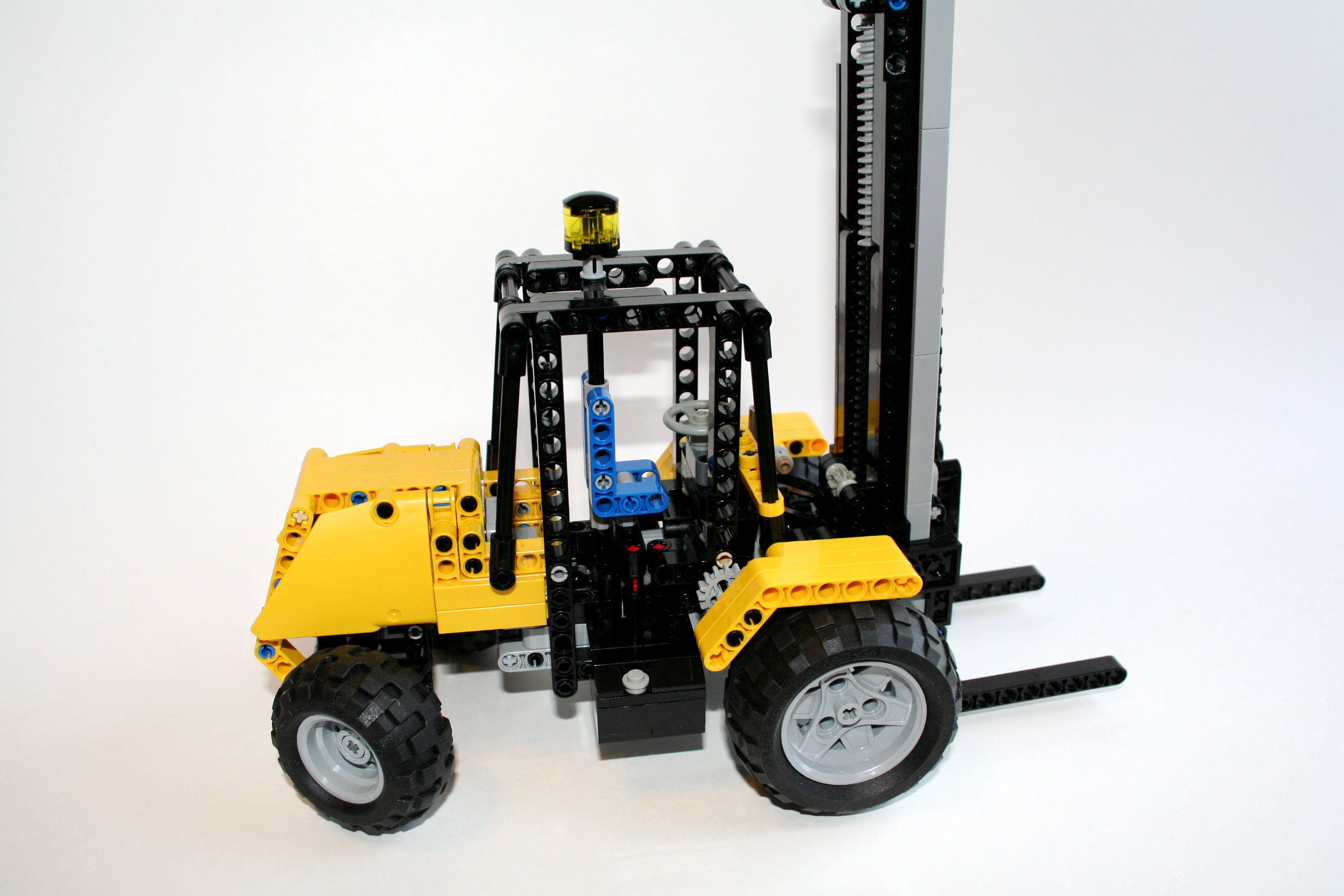
It was time for me to to make something that was a little smaller with a lot of functions.  I kept driving by a JCB forklift on the way to work, and I thought I could make that.  I wanted manual functions, including a working fork tilt and dual stage lift, working steering and drive, and a yellow bodywork.

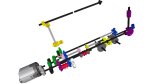
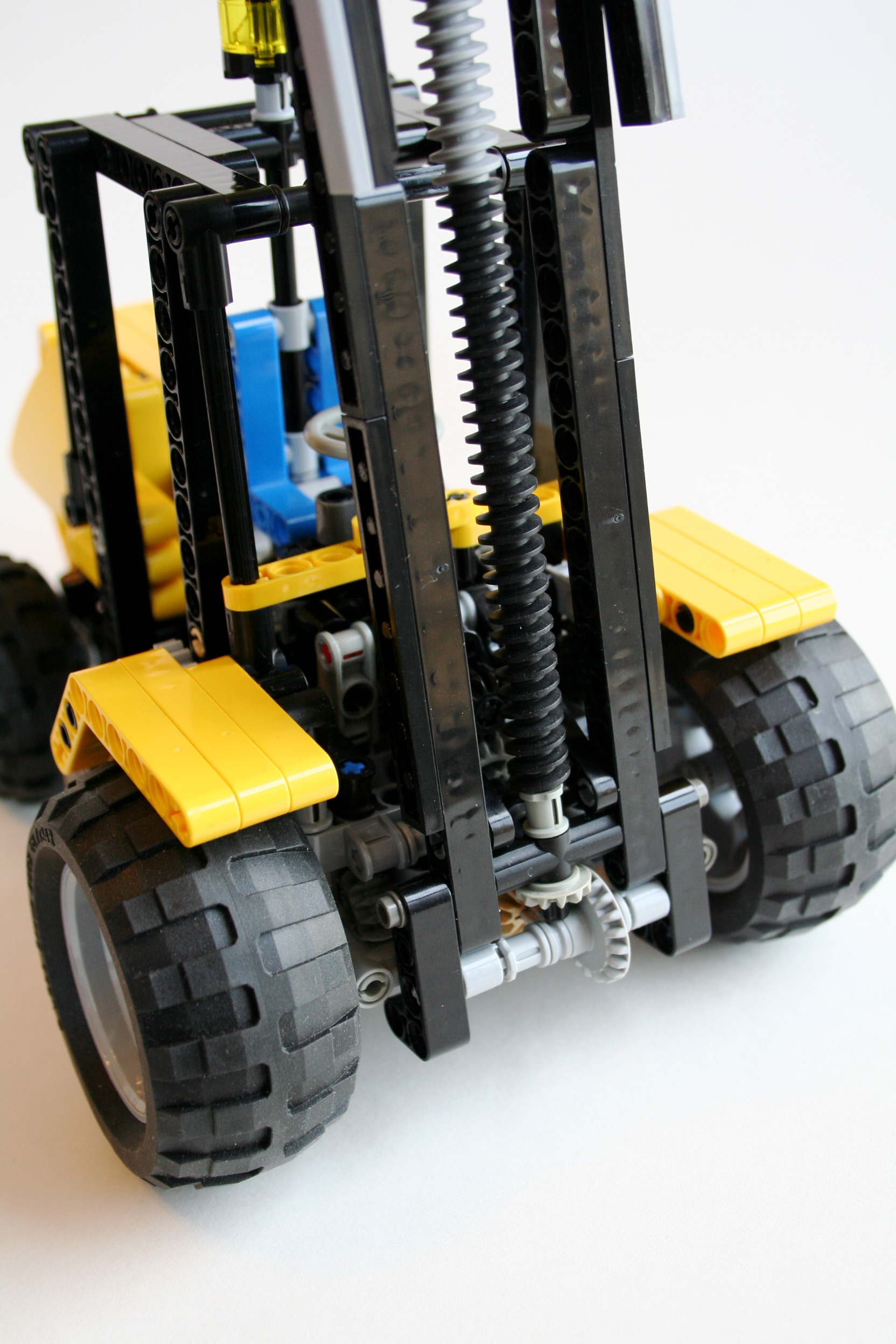
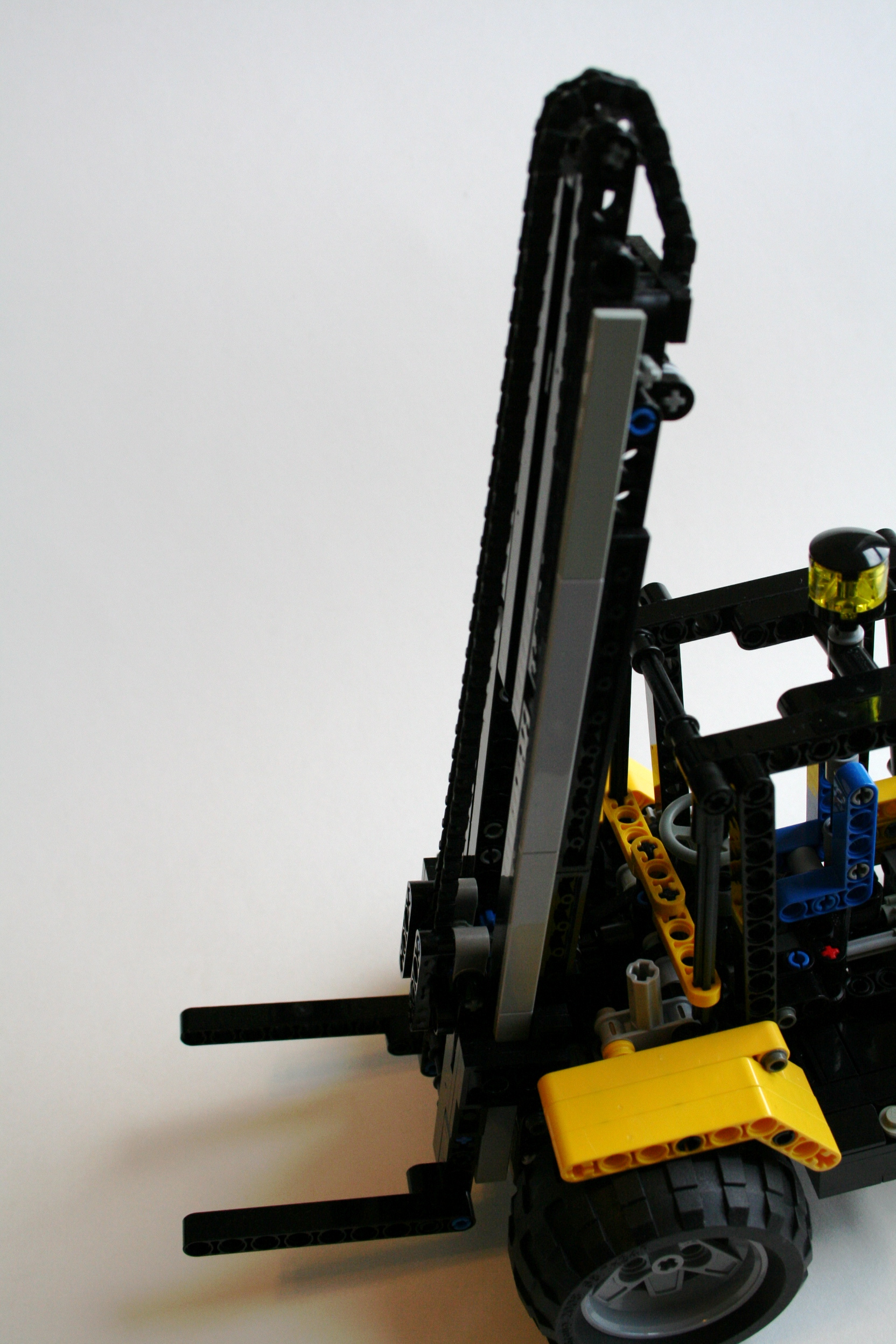
I always start with the hardest part of a model.  For this model, that was the fork.  I wanted to use a dual stage lift as to get the forks to a substantial height.  This design would require a chain that would wrap over a moving frame, and connect on one side to the forks, and on the other side to the body.  The moving frame would be moved by a screw, thereby lifting the forks.  I used a number of worm gears on two 12l axles, connected through the bottom to move the moving frame.  This setup allowed for a pivot point, and a lifting mecanism that would function much like the real JCB 930.  The moving frame consisted of two rows of liftarms, and the forks tied everything together between the moving frame and the worm gears.  A chain went up and over the full assembly to work move the forks as the moving frame was lifted.  It works like this.

I then worked on the driveline.  I added a 3 cylinder motor in the rear, driven by the front wheels, working to keep the functions out of the way of the fork mechanism.  I added a steering axle on the rear, and gave it a pendular suspension setup.  This allowed for some stability on uneven ground, while keeping the front wheels planted for the load as it had no suspension.

I then built the body after the JCB 930, and as I did, I added a tilt freature to the fork.  This feature did not work too well, but it gave me the ability to adjust the pitch of the forks, which we a design requirement.  It was not too stable.  After a little work to the body, and a HOG steering link out the top of the cab, the model was done.

The model worked well, particularly the lift feature.  I was a little disappointed with the tilt feature, as it was a little too wobbly. The drivetrain worked well, and the steering allowed for tight corners.  The suspension give good stability, and offered a little bit of off-road prowess.

The full gallery is here.

Kenworth T55


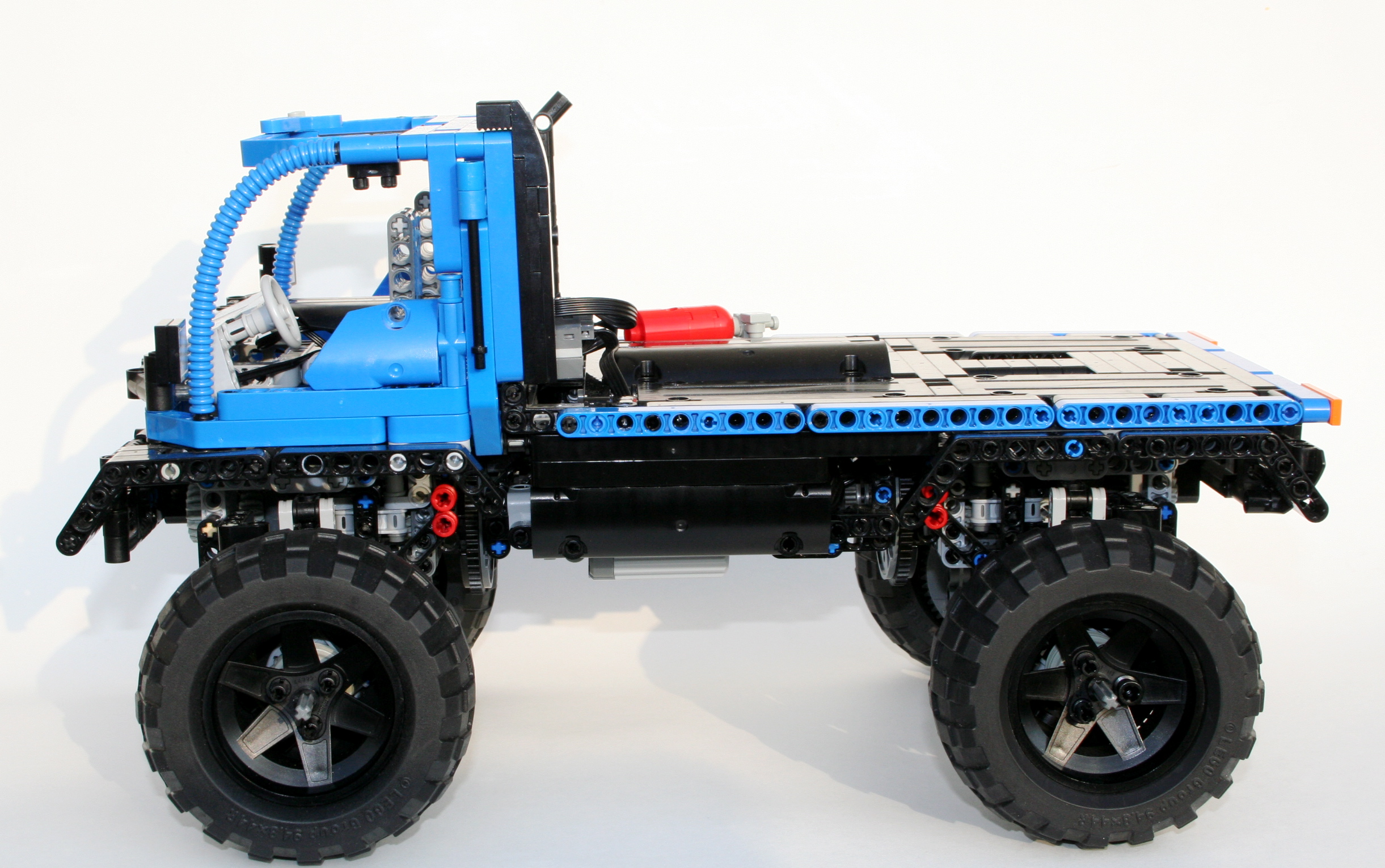
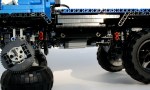
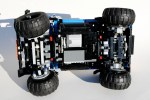
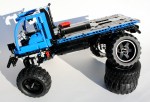
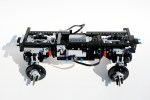
Traction.  It’s all about traction when designing a trial truck.  Because of this, many builders have tried a number of different solutions in designing their own trucks: differentials, gearboxes, various numbers of wheels, various gears ratios, countless suspension designs, and on and on.  So why would it be any different for my trucks?  Every truck I make is a reaction to some set of problems I have encountered with a previous truck.  This is my current solution.

The full gallery is here. Instructions are here.

The Kenworth T55 started as a proof of concept, and turned into a design of a fictional truck.  I wanted to somehow see if there was a way to use differentials in a successful trial truck.  For this to work, two things had to be accomplished.  First, there had to be a way to keep the tires from spinning uncontrollably when they lost contact with the ground.  And second, the torque going through the differential had to be low enough that it would not shred the gears inside the differential when the truck encountered an obstacle.   Could I make axles that had a limited slip differential while having all of the gear reduction at the hub?

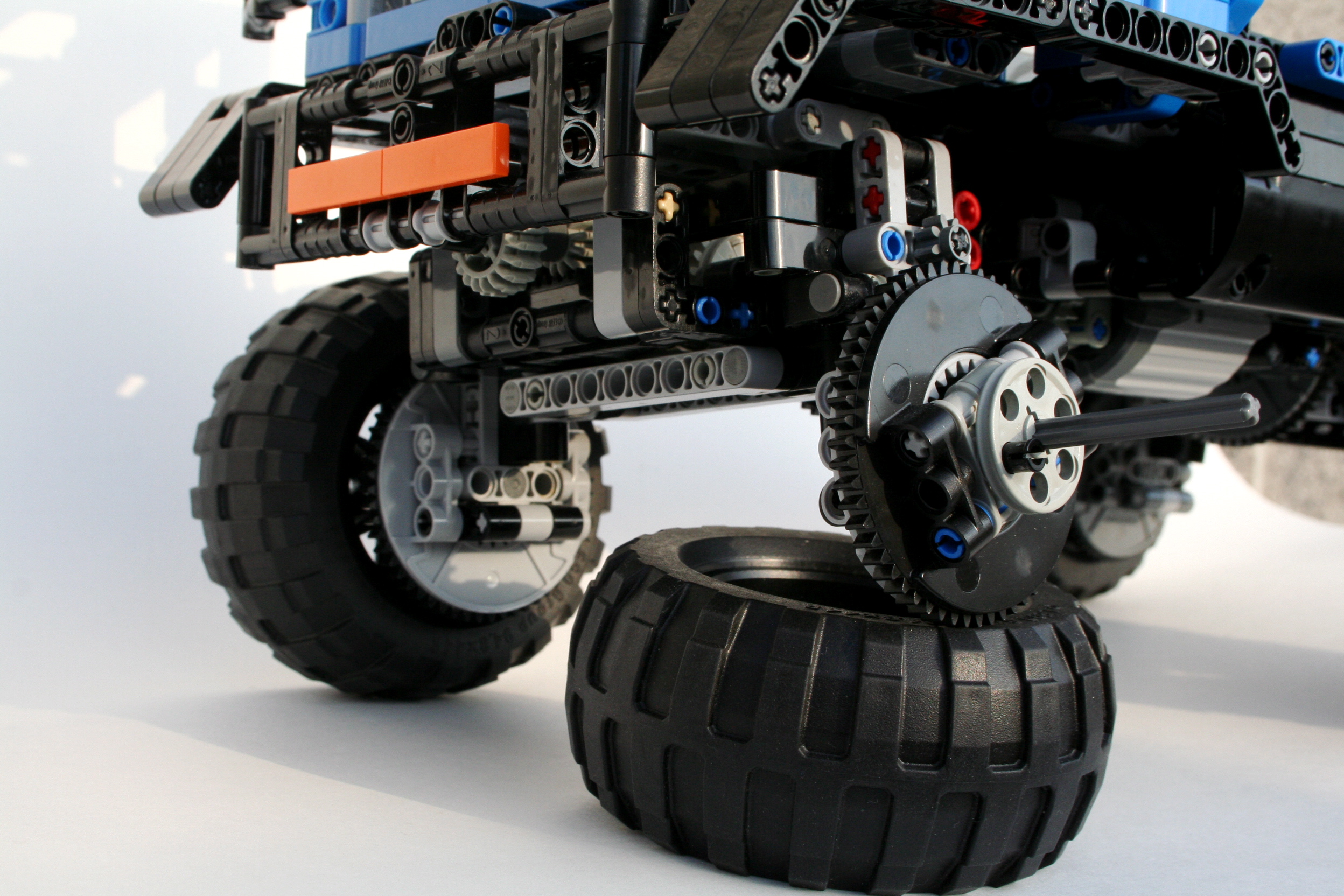
Enter turntables.  I have seen some ideas before, most sigificantly from Borec, including this truck, so I went to work.  I designed a mount for the wheels and tires, and placed the universal joint as close the wheels as I could.  Then I used a limited slip differentail design, and sent the driveshaft back to the body.  A simple steering design was used, and the two fuctions passed through the common design of using a differental body through a turntable.

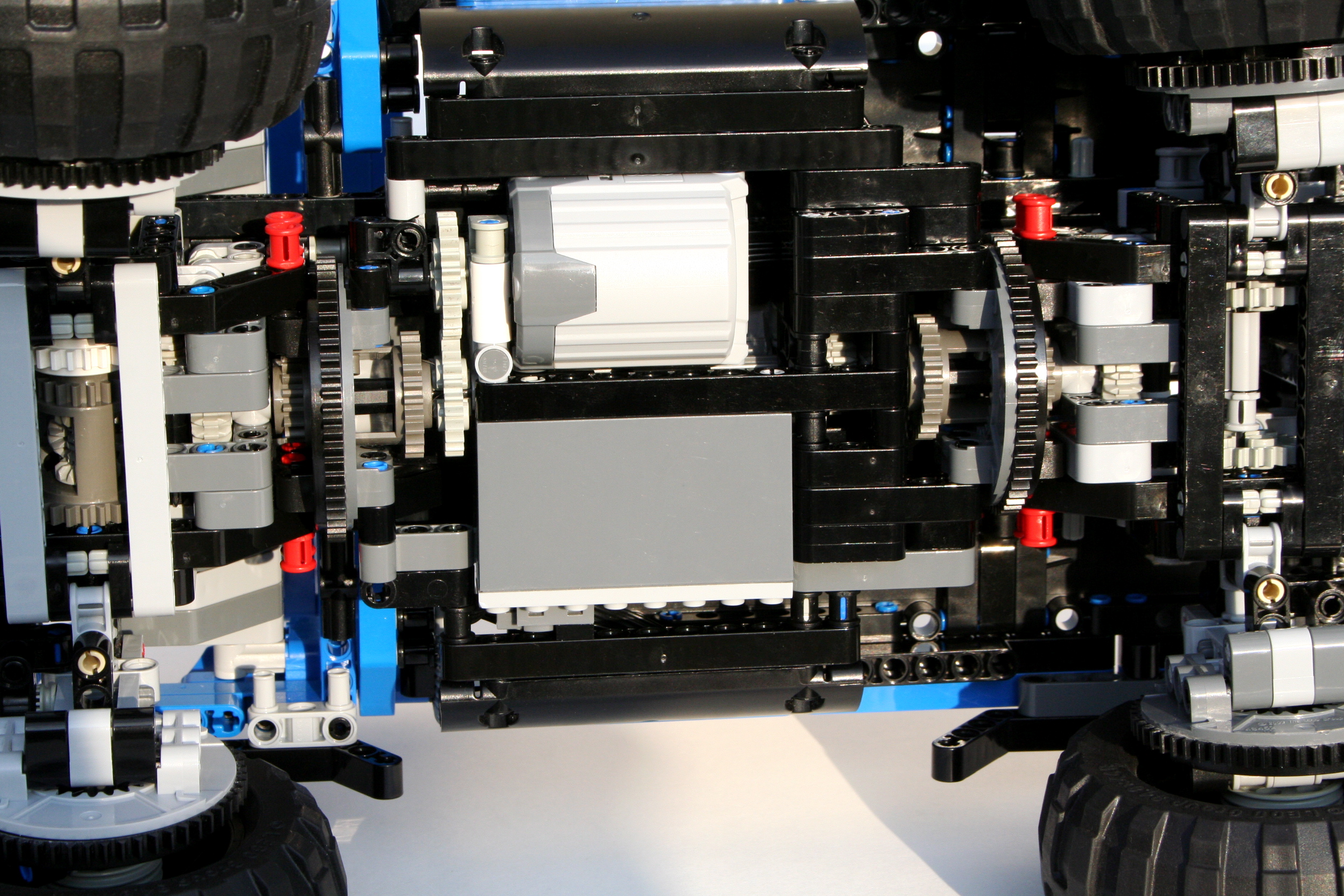
The chassis was designed to keep the weight low, both is mass and location.  As is common, I used the Power Functions XL motor for drive, and I decided to use the 8878 Battery box as it was significally lighter than the other design.  In addition, I would have a drive shaft and a steering shaft running the length of the truck, so the motor and power pack needed to set on both sided of the truck.  Also, because I used the turntables, the drive shaft was very high.  This gave great ground clearance, but I needed to keep the heavy components low.  By having both large components on the side, I was able to keep a short wheelbase of 30 studs, and keep the mass centered and low.  The driveline was complete.

Ever since my GMC 2500, I have held to the belief that a linked suspension is the most efective setup for four wheel trial trucks.  The design keeps all four wheels firmly planned, and does not have the wobbling feel of many pendular suspension designs.  But as is often the case, I ran out of room to place a link rod between the two wheels so I opted with useing the rubber connectors to keep the axles level.    I added a body, and a steering motor, wired everything together, and I was done.

So how did it work.  As you can see in the video, the suspension was effected by the steering and drive shafts.  This further confirms my thoughts on the linked suspension.  Second, the turntables did not really add much.  They added a lot of friction to the driveline, and though they kept the differentials safe because of the tall final gear they did not really isolate the forces on the differential as much as I would have liked.  Third, the limited slip differentials worked well, but still allowed for too much wheel slip.  I ended up replacing the rear with a locked axle, which seemed to work well.  So, for the next truck, bring back the linked suspension, and find a better differential solution.  Maybe then I can find some more traction.