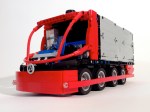
2045 Mercedes-Benz Athane


I enjoy participating in LEGO contests, but I cannot join all of them. Sometimes the timing, my build interest, and the available parts all line up in a way that I can submit an entry. I was able to submit something for the LEGO Technic Mercedes-Benz Future Truck Competition hosted at Rebrick.com because everything fell into place. I hope you enjoy the submission.

The full gallery may be seen here (flickr) or here (brickshelf).
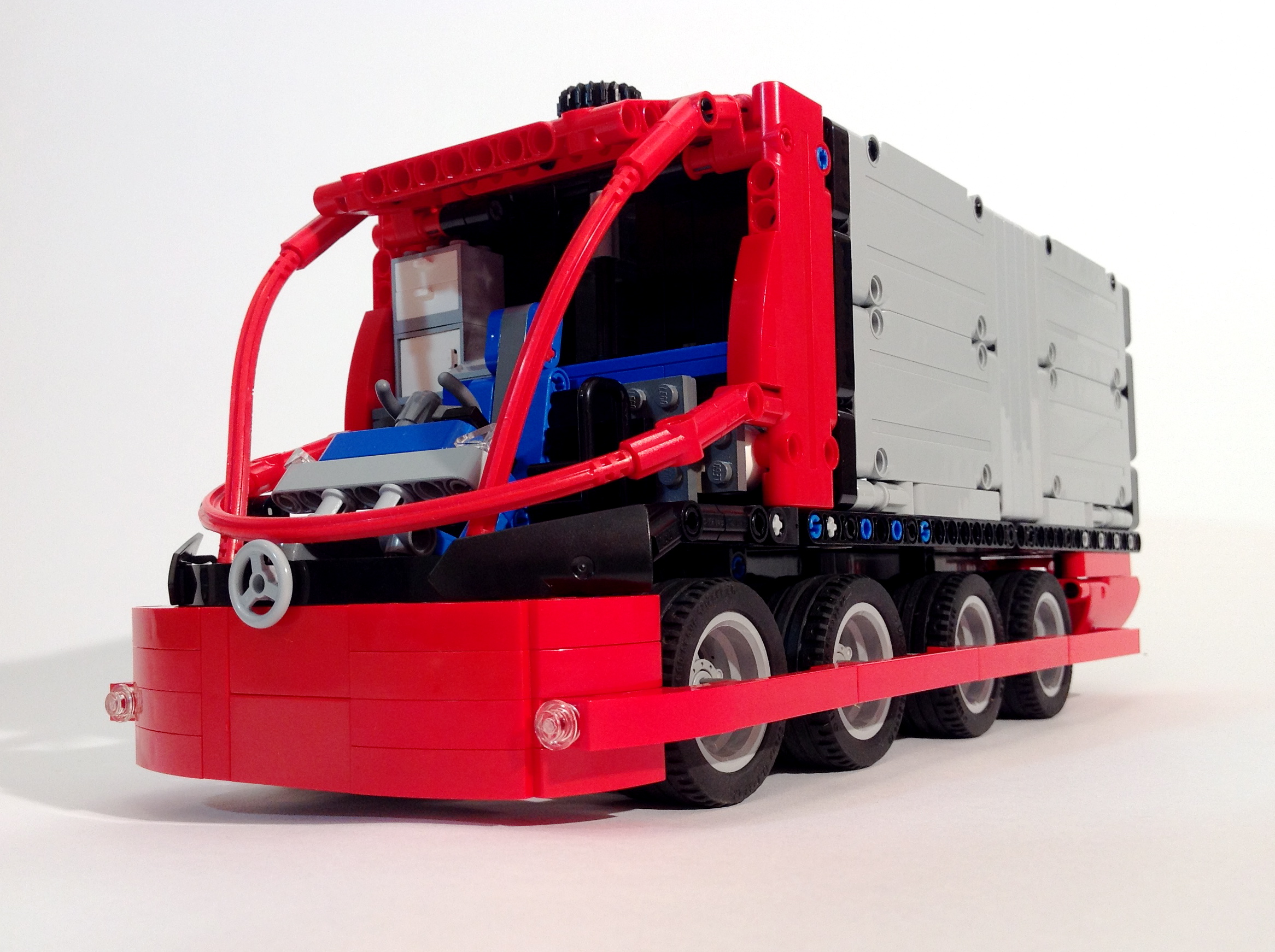
Mercedes Benz Athane

While I would love to see us progress to flying and fully autonomous vehicles, a complete technological and transportational paradigm shift needs more than 30 years; see where we were in 1985. I envision transportation in 2045 will be affected by a couple of features:

  • Cities will be more dense
  • Active transportation will occupy a greater share of road users
  • Electric charging options will be more available and more diverse
  • Vehicles will still have drivers, but the drivers will be heavily assisted with technology
  • Fossil fuels will still be used, but significantly reduced and not limited solely to petroleum
  • Cargo will not change, but storage will
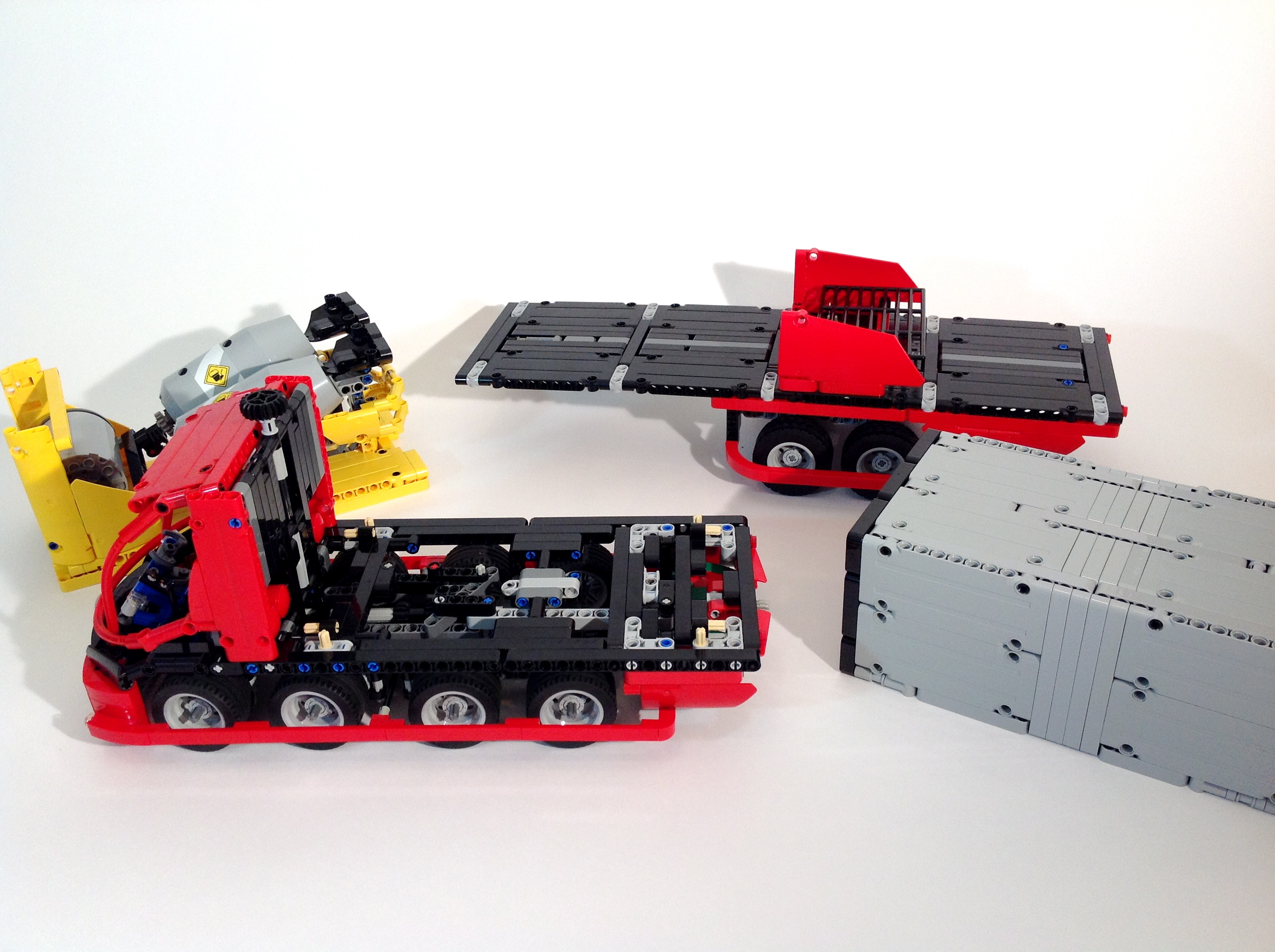
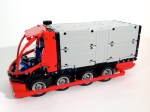
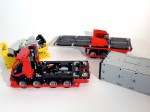
Various loads to apply to the Athane via the SmartStack System.

Various loads to apply to the Athane via the SmartStack System.


With this is mind the 2045 Mercedes-Benz Athane has been designed to best fit within this context. While taking this context into account, the Athane prioritizes three values as most important: Safety, Sustainability, and Versatility.
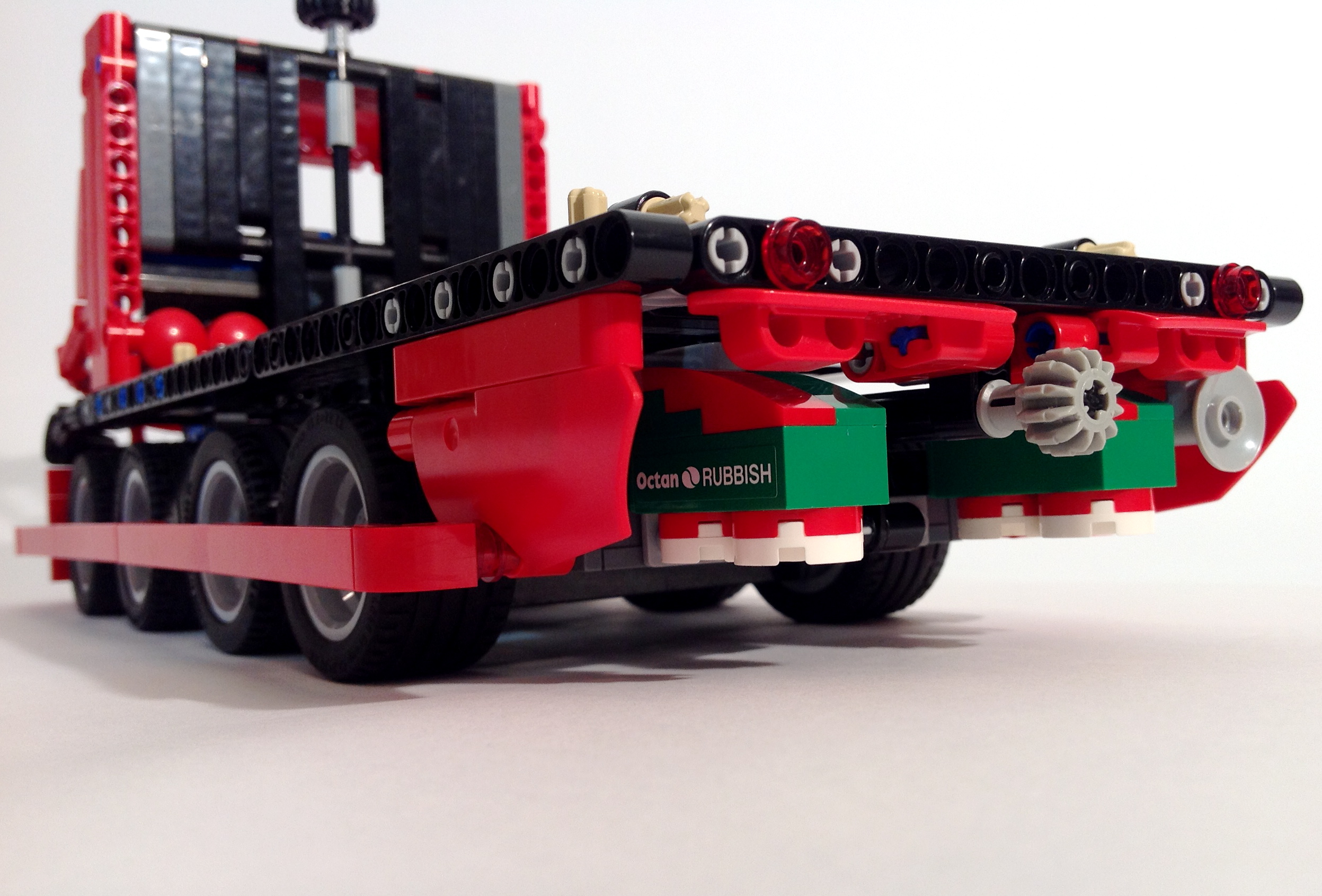
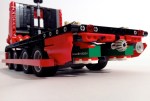
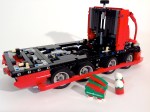
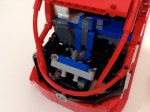
Placement of the large methane tanks. ThermoCommLink on right rear bumper.

Placement of the large methane tanks. ThermoCommLink on right rear bumper.

Here is the Press Release-

May 22, 2045, for immediate release

The 2045 Mercedes Benz Athane prioritizes safety, sustainability, and versatility. The 2045 Athane is the most advanced and cost effective truck in our 150 years of truck building experience.

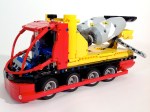
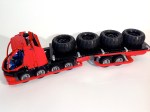
As cities become denser and multiple transportation modes are becoming more prevalent, road safety for all road users must be paramount. The Athane’s ThemoCommLink (TCL), located on the right front and right rear bumpers, allow motorized vehicles to communicate to one another. The TCL also detects the heat signature of pedestrians and cyclists. Identification and communication with other users, keeps all road users safer. The driver is seated in the center and forward in the cab to increase vision. Retention of a human driver allows for relational interaction at the job site, and helps the technology make good decisions about varying road situations. The TCL Technology assists the driver so fewer errors are made. The front bumper shaping and full length wheel guards lowers the severity of crashes with non-motorized users should they occur. The Athane uses eight steerable wheels to improve weight distribution and increase city maneuverability. While many manufactures are switching to floatation and hover type drivetrains, this setup allows for unmatched braking control, and removes disruptive air currents to those walking and cycling close to the moving truck.

The Athane’s Methane-Hybrid driveline continues Mercedes Benz’s prioritization of decreasing fossil fuel use. The Athane uses electric propulsion using energy stored in the batteries under the cab and bed. Battery charging is done by braking and by a small methane powered combustion engine behind the cab. Additionally, the Athane can be ordered with an induction charger under the cab to work with newly developed induction charging roadways being installed in many municipalities. Methane gas is clean burning, and a significant byproduct of the waste and recycling process currently in place with Octan Rubbish. A partnership with Octan Energy and Mercedes Benz has developed a standard way to reap, store, transport, and fuel the Athane’s regeneration engine using methane gas. Removable methane tanks are house behind the rear wheels, and in smaller tanks in the cab.

Today’s logistics companies are searching for ways to improve versatility and lower cost. The Athane’s SmartStack systems allows for interchangeable bodies, cargos, and applications all with one common truck. The SmartStack system makes it easy to change the load in just minutes. The connection fits the international container standard. Many body work designers are applying this standard as well. In one afternoon, you can ship a container, deliver a load of concrete, and pull a fifth-wheel with the standard hitch.

Welcome to the future. The 2045 Mercedes Benz Athane keeps all road users safer, decreases our harm on the planet, and supports all work tasks needed.

Features:

  • 8 wheel steering
  • Sleeping bed
  • Aerodynamic cabin
  • In-cab Storage System
  • ThemoCommLink, front and rear
  • SmartStack System
  • Fifth-Wheel Hitch
  • Wheel Guards
  • Large/Low Bumper
  • Methane Tanks
  • Hybrid Motor
  • Induction Charger
  • Batteries
  • Passenger Jump Seat
  • Front and Rear Lighting
  • Video Mirrors on Each Side of the Steering Wheel
  • Visibility Focused Driver Placement

Iveco XTR


After a couple of more complex projects it is nice to take a break to do two simpler projects. When I need a little bit of a design rest, I do a trial truck, and usually a fictional one, so I can build as I please.

The full gallery can be found here, and free instructions can be found here.

Iveco XTR

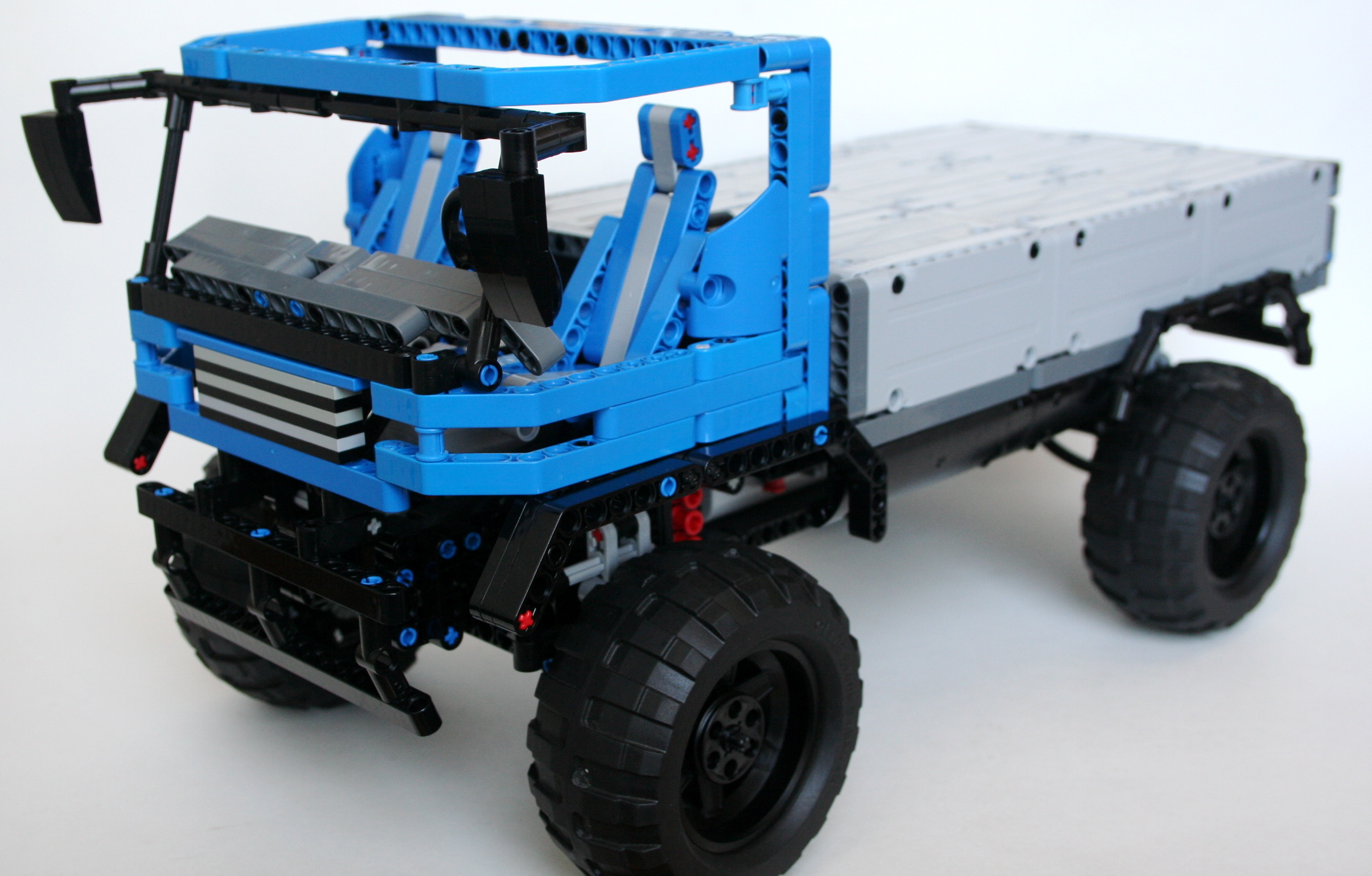
After building a number of trial trucks, I have found some features I like to have on my trucks. Note, these features may be prioritized differently if I was participating in a Truck Trial race. These features I like are linked suspension, PF XL motor for drive, tall clearance, and a center mounted battery box. As I was making this truck for my own pleasure, I forced myself to include all of these features.

I usually start a truck with the axles, and the Iveco was no different. I created the axle with a portal axle build around my favorite piece for both the front and the rear. I also added the space to fit both a differential, or knob wheels for the final drive (though the pictures only show the latter). This would allow me to switch the traction of the truck, and allow for a minor gearing change. While the changeover takes a little bit of time, it’s a nice feature and the gives the truck some versatility. I placed the steering motor directly on the front axle with allowed the middle of the truck to be simplified vastly. In the center of the truck is the battery box mounted longitudinally, and a Power Functions XL motor in the rear. This keeps the heaviest components of the truck in the center and low.

The linked suspension is a setup developed by other that connect two pendualar axles together. Each left side has a linkage that connects the two left wheels together, and the right wheels have the same. This keeps the wheels planted as the pressure from the terrain is balanced across all four wheels. When one wheel has to go up to follow the terrain, the rest of the wheels adjust. It is simple, effective, and keeps the truck a little more planted than a suspension utilizing shock absorbers. Otherwise the truck bounces a little during an obstical.

As you can see in the video, the battery box is getting a little tired, and the snow as a little mushy, but the setup worked well. The truck stayed planted, and it was nice to have two final axle options. It is a simple design that does not require too many hard to find parts, so if you need a good little afternoon project, give the Iveco XTR a build, and tell me what you think.

OK, off to some more complicated builds. Check The Queue. There is some fun stuff coming. Until then, happy building.

MAN TGS Tipper Crane


I like to have a LEGO MOC on my desk at work. I find it to be a good conversation starter for visitors. It also gives my fidgety fingers something to do while I am on the phone. Plus it’s just cool. After I finally removed my 4×4 8081, I figured it would be time to add something new.

The full gallery may be found here. Instructions may be purchased for $5 USD.  Buy Now Button

MAN TGS

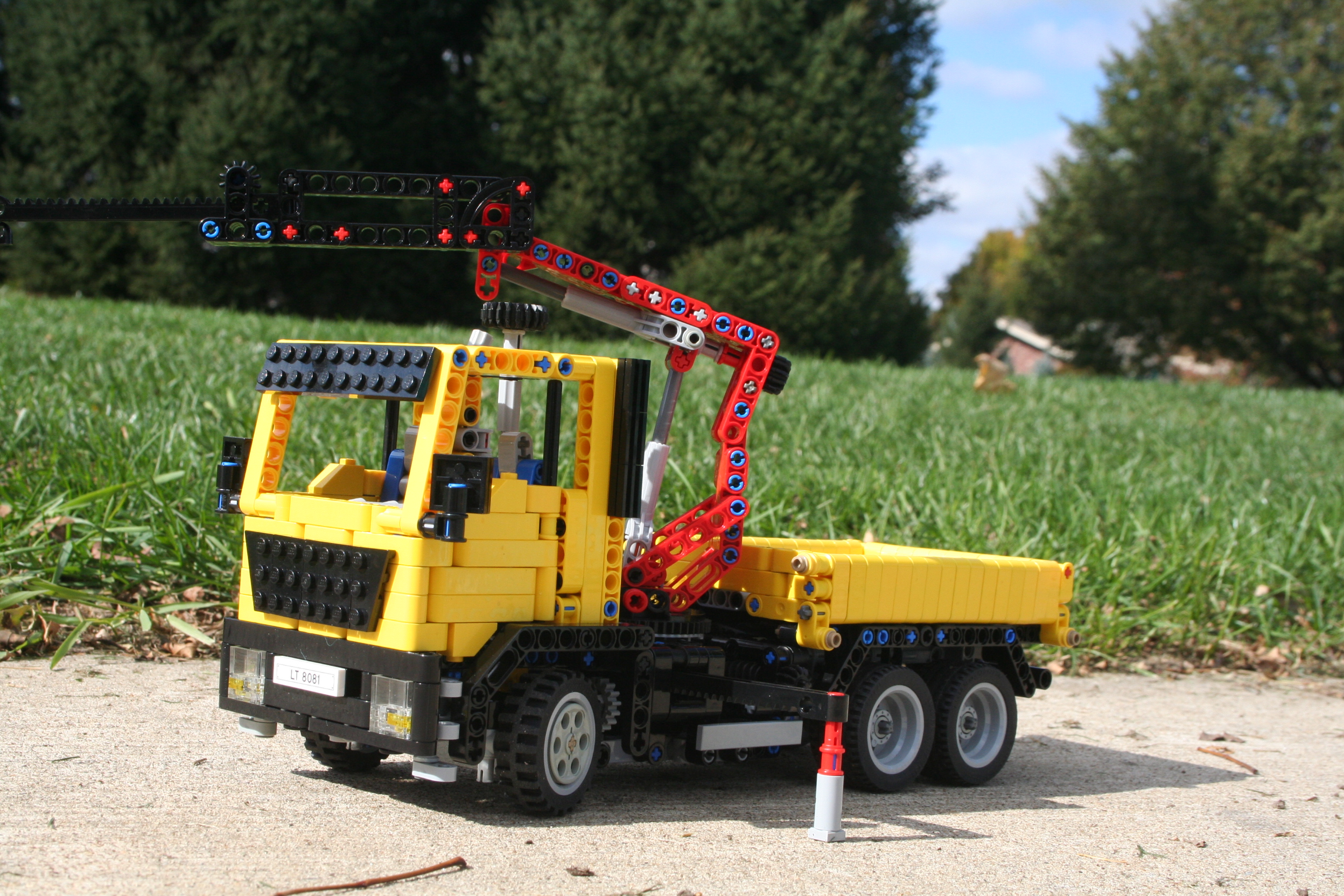
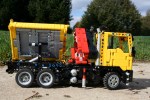
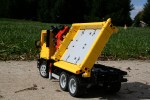
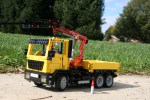
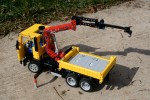
After a little research, I decided to make a MOC based on a MAN TGS tipper crane truck. I knew the MOC would not have any Power Functions, so I had the space to add a number of features. The truck would have 3 axles, a 4 function knuckleboom crane, three way tipper bed with drop sides, working outriggers, and of course working steering.

I started with the crane. It gave me a little trouble, but after trying countless linkages and connections, I came up with a simple design. I worked from the hook down to the truck. I started with the extending boom which was simply a 13L gear rack, and then added it to the main boom. I used a mini linear actuator (I love these) connecting to a simple linkage to the boom could rotate nearly 180 degrees. While the linkage could be a little more sturdy, it functions well and is controlled from a gear on the back of the crane. Finally, I mounted the second mini linear actuator directly on the turntable to lift the crane. This would be controlled with a gear on the back of the truck.

After the crane, I added the outriggers directly to the turntable. After toying with a lot of complex designs, I settled on something simple. Two 13L gear racks would move to out of the truck, and a pin with stop would be connected at the end and would move to stabilize the truck. I worked with the gearing for the stabilizers and the crane, and managed to get a working system. The center of the truck is pretty dense.

Next was the bed. I developed a simple linkage that would allow another mini linear actuator to tip the bed up. I connected the linkage so the bed could tip three ways. The whole system is three studs tall. At each corner of the bed, I added a simple connector so the bed could tip each way. The direction of tip could be adjusted based on which axles are removed. You can also remove a axle for each side, so contents could be dumped in three directions.

Finally, I worked on the body and the finishing of the truck. I think I got the look of the TGS pretty close, and added features like working doors, an exhaust pipe and an intake. Also, every Technic model in this scale needs to have blue seats, so I added them.

I wish the crane on the truck could support a little more, but other than that, I am pleased with the results. I really liked how the bed turned out. It’s simple and effective. And it all looks quite nice on my desk.

Until my next MOC (or MOD?), happy building.

Instructions can be purchased for $5 USD. Send and email to thirdwigg@gmail.com if you want a set.

The Sod Farm


During two summers when I was in college, I worked on a Sod Farm. It was, let’s say, a developmental experience. The days were hot, long, and often included nothing more than sitting on a tractor listening to the diesel drone as I would slowly mow the sod at 1.8 mph (2.9 kph).

While I would often  recite the dialogue of Sgt. Bilko in my head to pass the time, I did manage to develop a deep fascination for the machinery used. Two months ago, Eurobricks decided to hold a contest to create three Technic creations that would work together. After some thought about the rules, the parts I had, I thought I could create an entry, and offer something a little unique.

The full gallery may be found here, and instructions here.

The Sod Farm

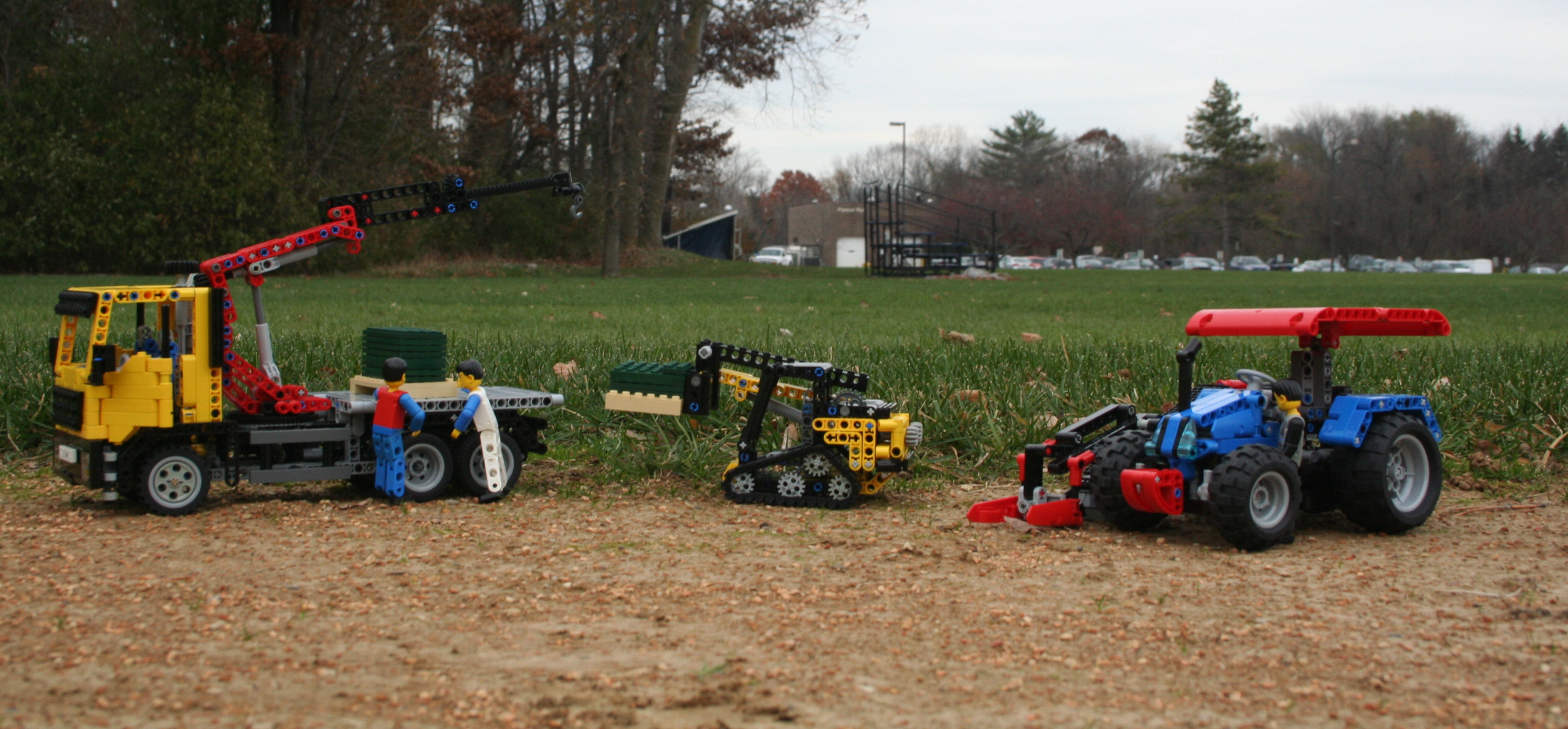
The contest required three models that would work together in a particular setting. Each must have a part count that did not exceed 500 parts, and each had to be unique. While trailers were acceptable, I somehow felt offering an entry with a trailer did not allow for enough creativity. As my thoughts wondered on a bike ride, I decided I would create a small truck, a little forklift, and a sod harvester. My design would harken back to those days on the sod farm. Rather than the Freightliner Columbia and Piggyback Forklift we used, I designed a MAN TGS and a JCB 150T to have little more international flair, and frankly, to have a little more color. We used a Brouwer SH 1576 to harvest the sod, so I thought I should keep that machine.

The MAN TGS went through a number of revisions. Each was done to reach the part limit. The final MOC ended with a three function knuckleboom crane and a simple bed. In addition to the steering and the working doors, the crane is fully functional. The rotation is handled by a wheel on the right of the truck, and the main lift is handled by a wheel in the rear of the truck. The second stage lift and boom extension is handled by a small wheel at the top of the crane.

The JCB 150T was a simple and straightforward build. Recreating a MOC with a single arm lift created some additional challenges. A single mini linear actuator was used to lift the boom, and a worm gear system was used to adjust the tilt of the forks. The offset cabin caused some frustration, but I eventually figured it out.

Finally, the Brouwer SH 1576 was the purpose of this project. After a little research, I determined the scale of the project. I then started building. I usually add too many features to a MOC, and this harvester was no exception. The rear wheels spun a single differential, which ran straight to the front to power a two cylinder motor. Off the driveline was a PTO between the motor and the differential which would run the harvesting arm. The harvesting arm has a track system to drive the pieces of sod up to the back of the harvester to load the sod on the pallets. A simple cutting head was added to the front which had a cutter to cut the sod off the ground, and a timed cutter on the top to make sure each piece of sod was the correct size. After some work I added a simple steering system controlled by the smoke stack. Finally, I added a forklift system to hold and drop the pallets of sod off the back, and a small standing pad for the pallet worker.

This was the first LEGO contest I have entered since 1994. I hope you enjoy my entry. Thanks to Eurobricks.com for the contest. I appreciate your vote at eurobricks.com. In addition, instructions for the models can be found here.

For those counting (me), the number of parts needed for each MOC are: MAN TGS- 557, JCB 150T- 287 (inc 58 tracks), Brouwer 1576- 484 (inc 43 tracks)